Tunisia Bisphenol A Market Size Growth Rate
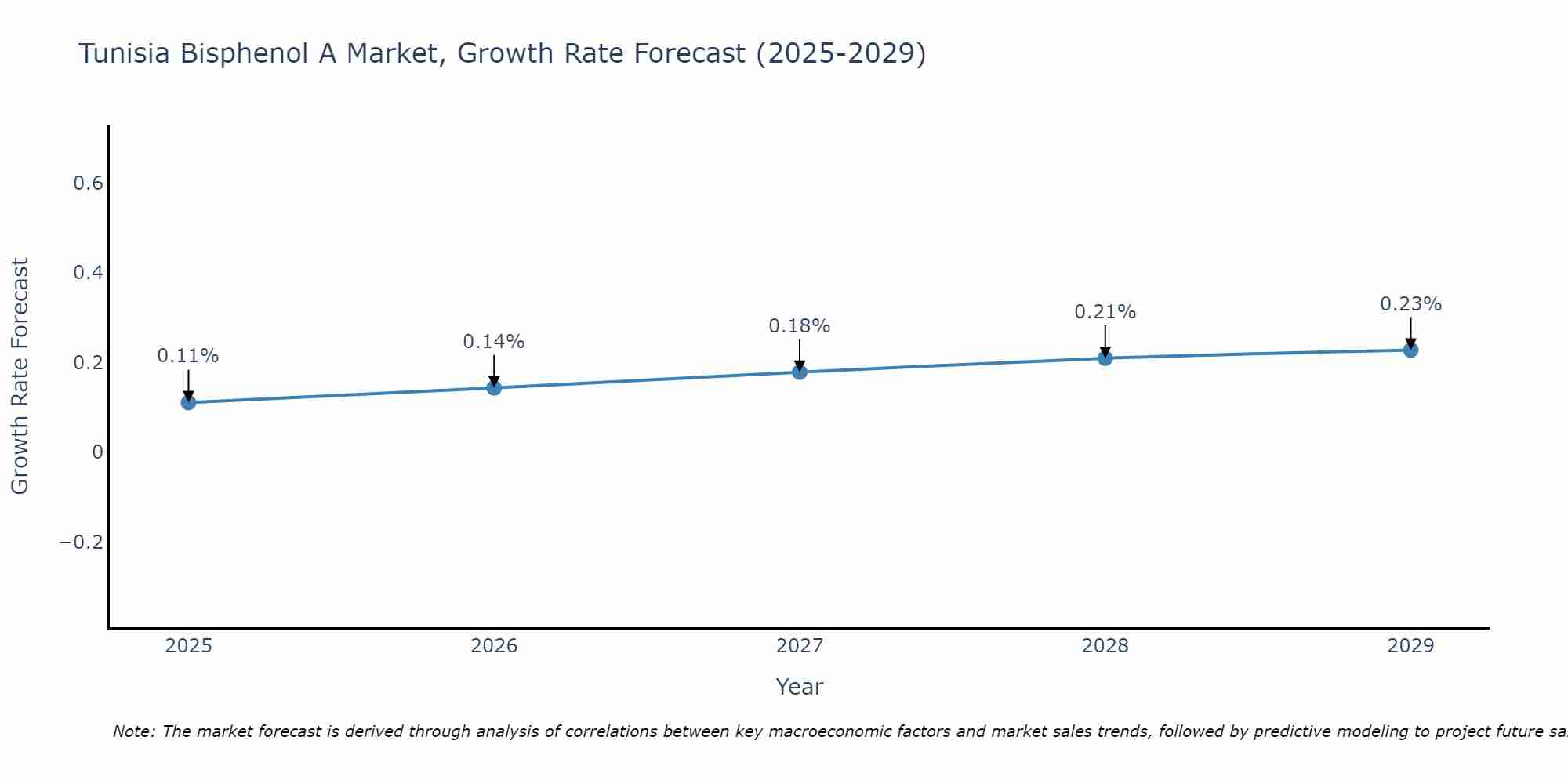
The Tunisia Bisphenol A Market is likely to experience consistent growth rate gains over the period 2025 to 2029. Commencing at 0.11% in 2025, growth builds up to 0.23% by 2029.
Bisphenol A Market: Tunisia vs Top 5 Major Economies in 2027 (Africa)
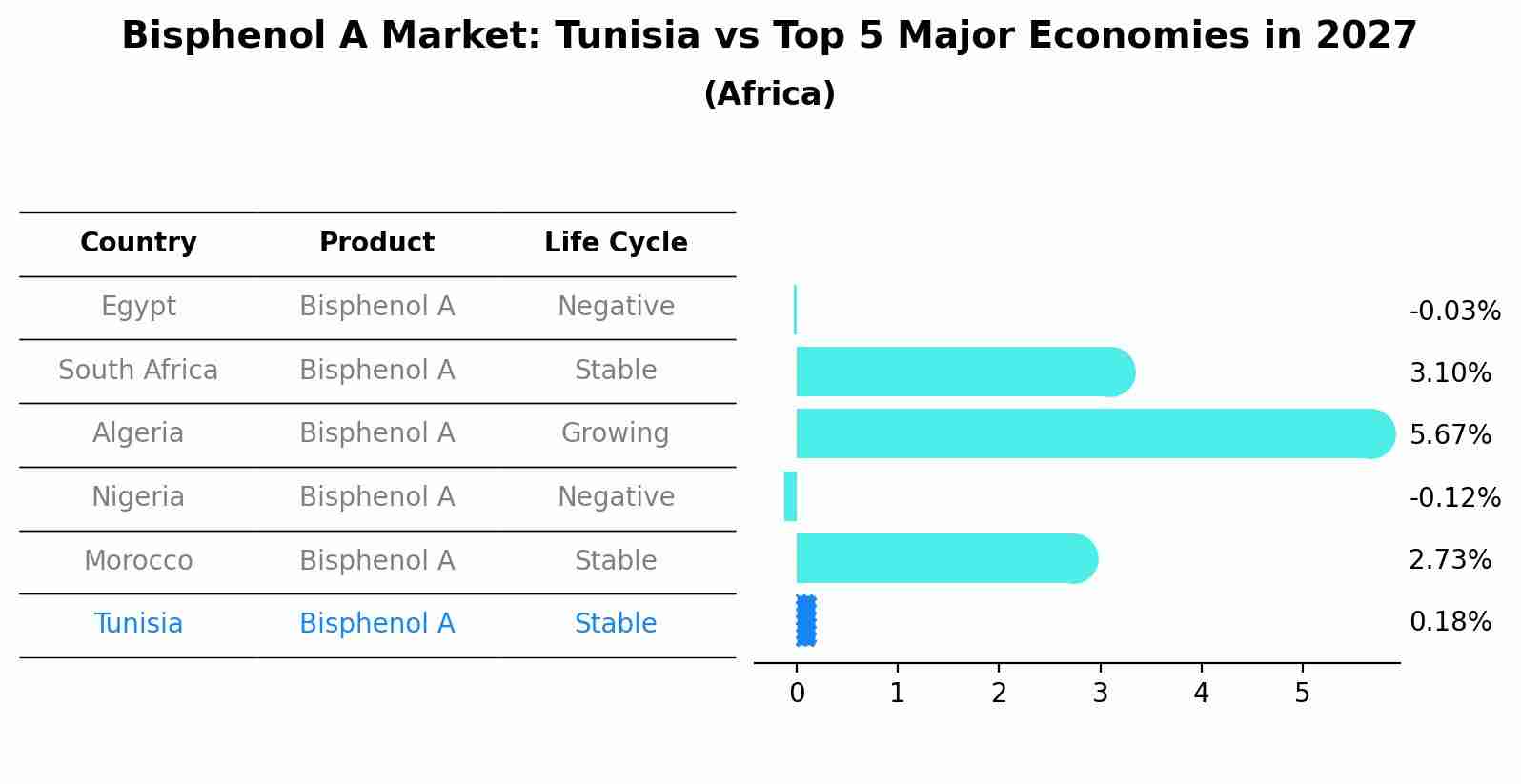
The Bisphenol A market in Tunisia is projected to grow at a stable growth rate of 0.18% by 2027, within the Africa region led by Egypt, along with other countries like South Africa, Algeria, Nigeria and Morocco, collectively shaping a dynamic and evolving market environment driven by innovation and increasing adoption of emerging technologies.
Tunisia Bisphenol A Market Overview
The Tunisia Bisphenol A market is experiencing steady growth driven by increasing demand from various end-use industries such as packaging, automotive, and electronics. Bisphenol A is widely used in the production of polycarbonate plastics and epoxy resins, which are essential materials in these sectors. The market is also influenced by stringent regulations aiming to restrict the use of Bisphenol A due to its potential health risks, leading to a shift towards alternative materials in some applications. Key players in the Tunisia Bisphenol A market include manufacturers such as SABIC, DowDuPont, and LG Chem. Overall, the market is expected to continue growing as industries seek innovative solutions to meet consumer demands while adhering to regulatory standards.
Tunisia Bisphenol A Market Trends
The Tunisia Bisphenol A market is witnessing a growing demand due to its widespread use in the production of polycarbonate plastics and epoxy resins. The market is experiencing a shift towards BPA-free alternatives in response to increasing health concerns associated with Bisphenol A exposure. This trend is driven by regulatory initiatives focusing on the restriction of BPA use in consumer products, particularly in food and beverage packaging. Manufacturers are investing in research and development to innovate and introduce Bisphenol A substitutes that offer similar performance characteristics but without the associated health risks. The market is also witnessing an increasing emphasis on sustainability, leading to the development of eco-friendly alternatives to Bisphenol A. Overall, the Tunisia Bisphenol A market is evolving towards safer and more environmentally friendly solutions to meet consumer demand and regulatory requirements.
Tunisia Bisphenol A Market Challenges
In the Tunisia Bisphenol A market, there are several challenges that companies may face. These include regulatory restrictions and increasing consumer awareness regarding the potential health risks associated with Bisphenol A. The Tunisian government has been implementing stricter regulations on the use of Bisphenol A in various products such as food packaging and plastic containers, which can impact the market demand. Additionally, as consumers become more informed about the health concerns related to Bisphenol A exposure, there is a growing demand for BPA-free alternatives, forcing companies to invest in research and development to meet these changing consumer preferences. Adapting to these regulatory changes and consumer demands while maintaining product quality and competitiveness can be a significant challenge for companies operating in the Tunisia Bisphenol A market.
Tunisia Bisphenol A Market Investment Opportunities
In the Tunisia Bisphenol A market, there are promising investment opportunities driven by the increasing demand for this chemical compound in various industries such as automotive, construction, and packaging. Bisphenol A is primarily used in the production of polycarbonate plastics and epoxy resins, which are essential materials in manufacturing a wide range of products. With the growing industrialization and infrastructure development in Tunisia, the demand for Bisphenol A is expected to continue rising. Investors could consider opportunities in establishing manufacturing facilities for Bisphenol A or partnering with existing manufacturers to capitalize on this trend. Additionally, investing in research and development for innovative applications of Bisphenol A in emerging sectors could also yield significant returns in the Tunisia market.
Tunisia Bisphenol A Market Government Policy
The Tunisian government has implemented regulations regarding the use of Bisphenol A (BPA) in products to ensure consumer safety. In 2019, Tunisia banned the import, manufacture, and sale of baby bottles containing BPA due to health concerns. Additionally, the government has set limits on BPA levels in food contact materials to protect public health. These policies aim to reduce exposure to BPA, a chemical known to have potential adverse health effects, especially on children and infants. Companies operating in the Tunisia BPA market are required to comply with these regulations to ensure the safety of their products and consumers. Moving forward, the government may continue to monitor and regulate the use of BPA in various industries to safeguard public health and promote sustainable practices.
Tunisia Bisphenol A Market Future Outlook
The future outlook for the Tunisia Bisphenol A market appears positive, with steady growth expected over the next few years. The increasing demand for Bisphenol A in various end-use industries such as packaging, automotive, and electronics is likely to drive market growth. Additionally, the rising consumer awareness regarding the importance of Bisphenol A in enhancing product performance and durability is expected to further boost market expansion. However, stringent regulations regarding the use of Bisphenol A in certain applications may pose a challenge to market growth. Overall, the Tunisia Bisphenol A market is anticipated to witness growth opportunities driven by increasing industrial activities and technological advancements in the coming years.
Key Highlights of the Report:
- Tunisia Bisphenol A Market Outlook
- Market Size of Tunisia Bisphenol A Market, 2021
- Forecast of Tunisia Bisphenol A Market, 2031
- Historical Data and Forecast of Tunisia Bisphenol A Revenues & Volume for the Period 2021 - 2031
- Tunisia Bisphenol A Market Trend Evolution
- Tunisia Bisphenol A Market Drivers and Challenges
- Tunisia Bisphenol A Price Trends
- Tunisia Bisphenol A Porter's Five Forces
- Tunisia Bisphenol A Industry Life Cycle
- Historical Data and Forecast of Tunisia Bisphenol A Market Revenues & Volume By Application for the Period 2021 - 2031
- Historical Data and Forecast of Tunisia Bisphenol A Market Revenues & Volume By Polycarbonate Resin for the Period 2021 - 2031
- Historical Data and Forecast of Tunisia Bisphenol A Market Revenues & Volume By Epoxy Resin for the Period 2021 - 2031
- Historical Data and Forecast of Tunisia Bisphenol A Market Revenues & Volume By Unsaturated Polyester Resins for the Period 2021 - 2031
- Historical Data and Forecast of Tunisia Bisphenol A Market Revenues & Volume By Flame Retardants for the Period 2021 - 2031
- Historical Data and Forecast of Tunisia Bisphenol A Market Revenues & Volume By Others for the Period 2021 - 2031
- Historical Data and Forecast of Tunisia Bisphenol A Market Revenues & Volume By End-use for the Period 2021 - 2031
- Historical Data and Forecast of Tunisia Bisphenol A Market Revenues & Volume By Eye wear for the Period 2021 - 2031
- Historical Data and Forecast of Tunisia Bisphenol A Market Revenues & Volume By Automotive component for the Period 2021 - 2031
- Historical Data and Forecast of Tunisia Bisphenol A Market Revenues & Volume By Electronics for the Period 2021 - 2031
- Historical Data and Forecast of Tunisia Bisphenol A Market Revenues & Volume By Wind Energy Composites for the Period 2021 - 2031
- Historical Data and Forecast of Tunisia Bisphenol A Market Revenues & Volume By Paint and Coating for the Period 2021 - 2031
- Historical Data and Forecast of Tunisia Bisphenol A Market Revenues & Volume By Green House for the Period 2021 - 2031
- Historical Data and Forecast of Tunisia Bisphenol A Market Revenues & Volume By Others for the Period 2021 - 2031
- Tunisia Bisphenol A Import Export Trade Statistics
- Market Opportunity Assessment By Application
- Market Opportunity Assessment By End-use
- Tunisia Bisphenol A Top Companies Market Share
- Tunisia Bisphenol A Competitive Benchmarking By Technical and Operational Parameters
- Tunisia Bisphenol A Company Profiles
- Tunisia Bisphenol A Key Strategic Recommendations






































