Tunisia Dairy Cream Market Size Growth Rate
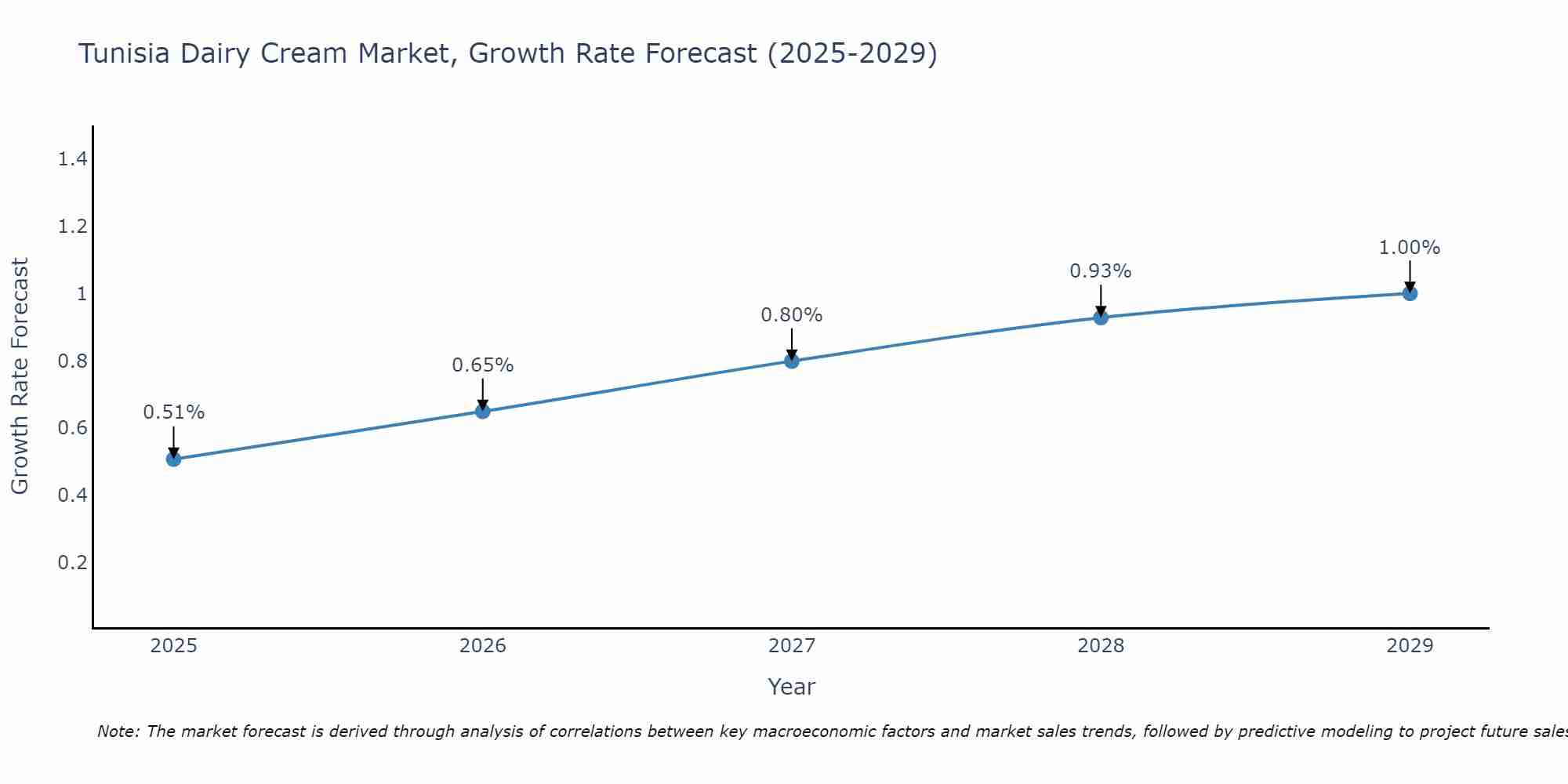
The Tunisia Dairy Cream Market is poised for steady growth rate improvements from 2025 to 2029. The growth rate starts at 0.51% in 2025 and reaches 1.00% by 2029.
Dairy Cream Market: Tunisia vs Top 5 Major Economies in 2027 (Africa)
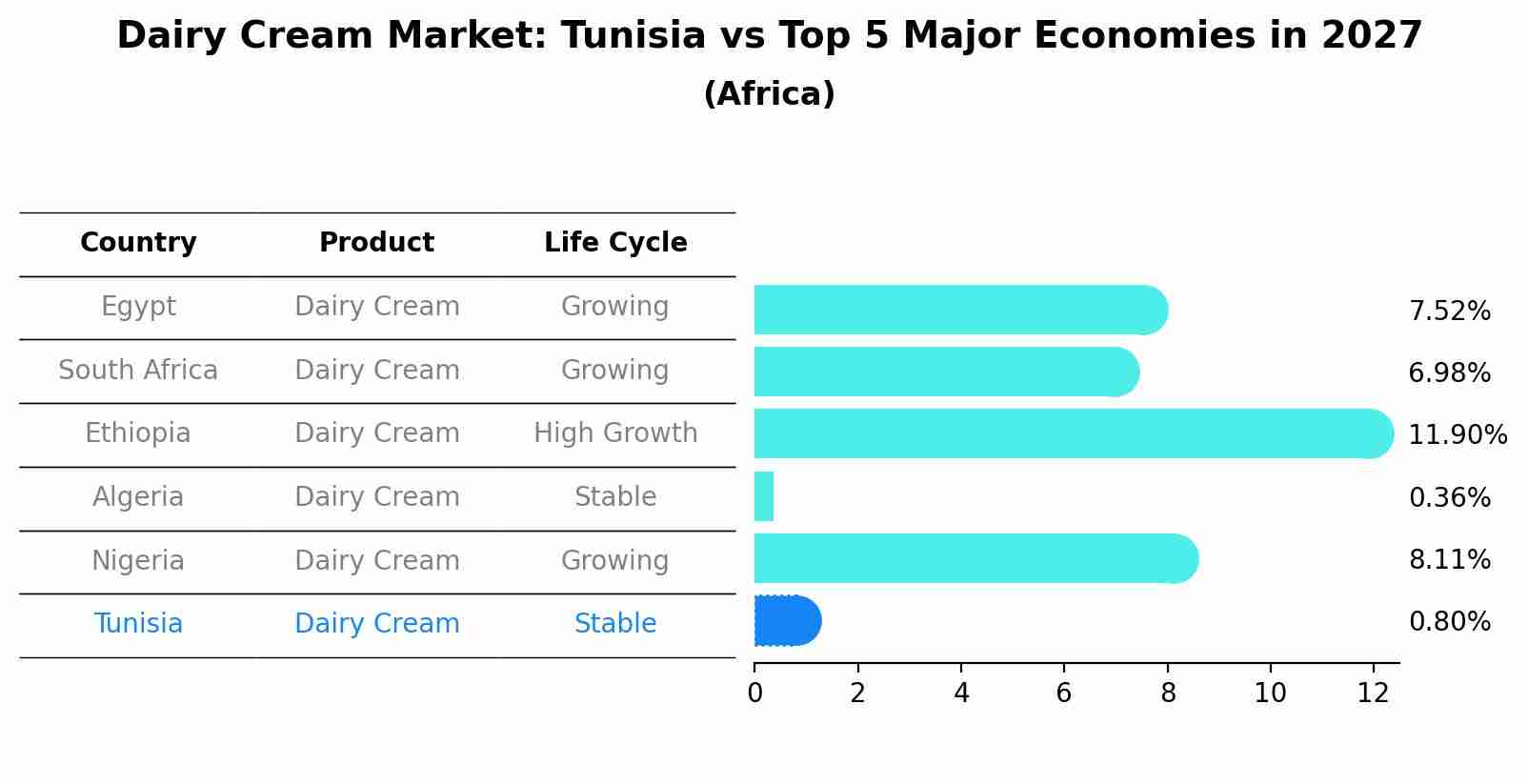
Tunisia's Dairy Cream market is anticipated to experience a stable growth rate of 0.80% by 2027, reflecting trends observed in the largest economy Egypt, followed by South Africa, Ethiopia, Algeria and Nigeria.
Tunisia Dairy Cream Market Overview
The Tunisia Dairy Cream Market is experiencing steady growth driven by increasing consumer demand for convenience and indulgent food products. The market is primarily dominated by local dairy cream producers offering a variety of products including whipping cream, cooking cream, and dessert cream. Factors such as rising disposable incomes, changing consumer lifestyles, and the influence of Western food trends are contributing to the market`s expansion. Key players in the market are focusing on product innovation, packaging enhancements, and marketing strategies to attract a wider consumer base. Additionally, the growing popularity of dairy-based desserts and bakery products in Tunisia is further fueling the demand for dairy cream. Overall, the Tunisia Dairy Cream Market presents opportunities for manufacturers to capitalize on the evolving consumer preferences and expand their market presence.
Tunisia Dairy Cream Market Trends
The Tunisia Dairy Cream Market is experiencing a shift towards healthier options, with a growing demand for low-fat and organic dairy cream products. Consumers are increasingly seeking products that are perceived as more natural and better for their health. Additionally, there is a rising interest in flavored dairy creams, such as vanilla and chocolate, as consumers look for variety and indulgence in their food choices. Convenience is also a key trend, with single-serve dairy cream products gaining popularity among busy consumers looking for on-the-go options. Overall, the market is seeing a diversification of product offerings to cater to changing consumer preferences towards health, variety, and convenience in the dairy cream segment.
Tunisia Dairy Cream Market Challenges
In the Tunisia Dairy Cream Market, some of the key challenges faced include fluctuating milk prices, which can impact the overall production costs for dairy cream manufacturers. Additionally, there is stiff competition among local and international dairy cream brands, leading to pricing pressures and the need for strong marketing strategies to differentiate products. Infrastructure limitations in terms of cold chain logistics and storage facilities can also pose challenges for dairy cream distribution and quality control. Moreover, consumer preferences and dietary trends towards healthier alternatives may require dairy cream producers to innovate and offer products that cater to changing demands in the market. Overall, navigating these challenges requires strategic planning, market research, and a deep understanding of consumer behavior in the Tunisia Dairy Cream Market.
Tunisia Dairy Cream Market Investment Opportunities
The Tunisia Dairy Cream Market presents promising investment opportunities due to increasing consumer demand for dairy products, particularly high-quality and healthy options. Investors can consider opportunities in value-added dairy cream products such as flavored creams, low-fat options, and premium quality creams targeting health-conscious consumers. With the growing trend of culinary experimentation and the rise of cafes and bakeries in Tunisia, there is a potential market for dairy cream products in the foodservice sector as well. Additionally, investments in innovative packaging solutions, efficient distribution networks, and marketing strategies that emphasize the quality and health benefits of dairy cream products can help companies capture a larger market share and establish a strong presence in the competitive dairy industry in Tunisia.
Tunisia Dairy Cream Market Government Policy
Government policies in the Tunisia Dairy Cream Market aim to support the local dairy industry while also ensuring food safety and quality standards. The Tunisian government has implemented regulations to control the production, distribution, and marketing of dairy cream products, with a focus on ensuring compliance with hygiene and sanitary requirements. Additionally, there are subsidies and incentives in place to support local dairy farmers and encourage domestic production of dairy cream. The government also monitors import and export activities in the dairy cream market to maintain a balance between local production and international trade. Overall, the government policies in Tunisia`s Dairy Cream Market are geared towards promoting sustainability, quality, and competitiveness in the industry.
Tunisia Dairy Cream Market Future Outlook
The Tunisia Dairy Cream Market is expected to show steady growth in the coming years due to increasing consumer awareness about the health benefits of dairy products and rising demand for convenience food products. Factors such as urbanization, changing dietary habits, and a growing middle-class population are also driving the market growth. Innovation in product offerings, such as lactose-free and organic dairy cream products, are likely to attract more consumers. Additionally, the expansion of distribution channels, including supermarkets, hypermarkets, and online retail platforms, is expected to further boost market growth. However, challenges such as price fluctuations of raw materials and increasing competition from plant-based cream alternatives may pose a threat to the market. Overall, the Tunisia Dairy Cream Market is poised for growth, with opportunities for manufacturers to capitalize on evolving consumer preferences and market trends.
Key Highlights of the Report:
- Tunisia Dairy Cream Market Outlook
- Market Size of Tunisia Dairy Cream Market, 2021
- Forecast of Tunisia Dairy Cream Market, 2031
- Historical Data and Forecast of Tunisia Dairy Cream Revenues & Volume for the Period 2018 - 2031
- Tunisia Dairy Cream Market Trend Evolution
- Tunisia Dairy Cream Market Drivers and Challenges
- Tunisia Dairy Cream Price Trends
- Tunisia Dairy Cream Porter's Five Forces
- Tunisia Dairy Cream Industry Life Cycle
- Historical Data and Forecast of Tunisia Dairy Cream Market Revenues & Volume By Type for the Period 2018 - 2031
- Historical Data and Forecast of Tunisia Dairy Cream Market Revenues & Volume By Fresh Cream for the Period 2018 - 2031
- Historical Data and Forecast of Tunisia Dairy Cream Market Revenues & Volume By Thickened Cream/Heavy Cream for the Period 2018 - 2031
- Historical Data and Forecast of Tunisia Dairy Cream Market Revenues & Volume By Whipping Cream for the Period 2018 - 2031
- Historical Data and Forecast of Tunisia Dairy Cream Market Revenues & Volume By Sour Cream for the Period 2018 - 2031
- Historical Data and Forecast of Tunisia Dairy Cream Market Revenues & Volume By Other Types for the Period 2018 - 2031
- Historical Data and Forecast of Tunisia Dairy Cream Market Revenues & Volume By Distribution Channel for the Period 2018 - 2031
- Historical Data and Forecast of Tunisia Dairy Cream Market Revenues & Volume By Supermarkets/ Hypermarkets for the Period 2018 - 2031
- Historical Data and Forecast of Tunisia Dairy Cream Market Revenues & Volume By Convenince Stores for the Period 2018 - 2031
- Historical Data and Forecast of Tunisia Dairy Cream Market Revenues & Volume By Online Retail Stores for the Period 2018 - 2031
- Historical Data and Forecast of Tunisia Dairy Cream Market Revenues & Volume By Other Distribution Channels for the Period 2018 - 2031
- Tunisia Dairy Cream Import Export Trade Statistics
- Market Opportunity Assessment By Type
- Market Opportunity Assessment By Distribution Channel
- Tunisia Dairy Cream Top Companies Market Share
- Tunisia Dairy Cream Competitive Benchmarking By Technical and Operational Parameters
- Tunisia Dairy Cream Company Profiles
- Tunisia Dairy Cream Key Strategic Recommendations






































