Tunisia Modular Kitchen Market Size, Share & Growth Rate
The Tunisia Modular Kitchen Market was estimated at USD 476 Million in 2025 and is projected to reach USD 667 Million by 2032, growing at a CAGR of 4.9% from 2026 to 2032. This growth trajectory is propelled by urbanization trends that are reshaping living spaces and an increasing preference for modern kitchen aesthetics. As more Tunisian households embrace the convenience and functionality of modular kitchens, the market stands poised to expand, driven by rising disposable incomes and an evolving real estate sector.
Tunisia Modular Kitchen Market Year-wise Growth Rate and Key Drivers
This graph highlights how the Tunisia Modular Kitchen Market has steadily grown over the years, supported by major growth factors.
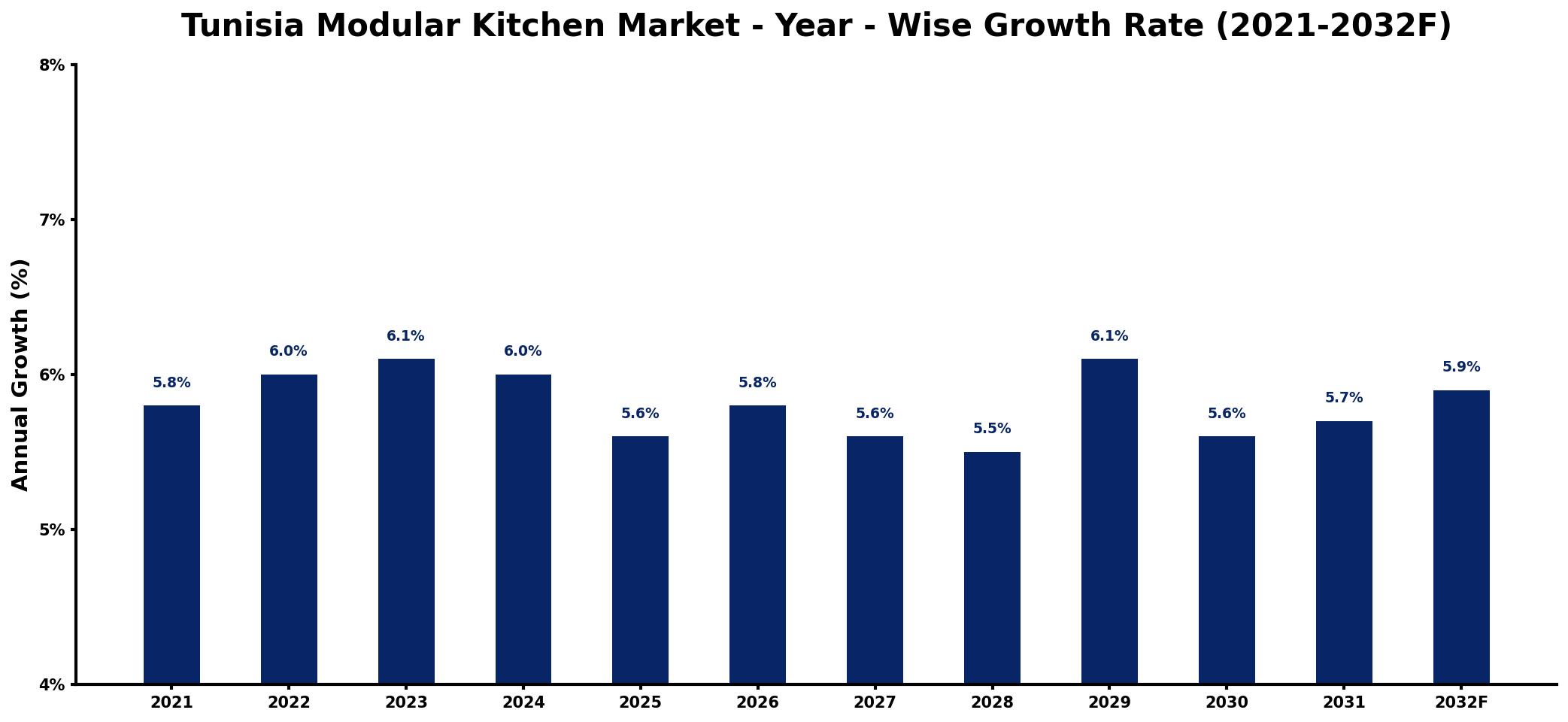
The table below presents the year‑wise growth rates along with the key drivers influencing the market
| Year | Growth Rate | Major Drivers |
| 2021 | 5.8% | Rising disposable income levels |
| 2022 | 6.0% | increased domestic production output |
| 2023 | 6.1% | Growing interest in renovations |
| 2024 | 6.0% | Expansion of real estate sector |
| 2025 | 5.6% | Surge in online home improvement |
| 2026 | 5.8% | Investment in sustainable materials |
| 2027 | 5.6% | Demand for customized solutions |
| 2028 | 5.5% | Growth in lifestyle changes |
| 2029 | 6.1% | Emergence of smart home technologies |
| 2030 | 5.6% | Increase in home ownership rates |
| 2031 | 5.7% | Rising popularity of DIY projects |
| 2032 | 5.9% | strengthening underlying market demand |
Note: Market size estimations and growth projections presented in this report are based on 6Wresearch's proprietary forecasting methodology, utilizing the latest available industry data, government publications, and primary research inputs.
Tunisia Modular Kitchen Market Synopsis
Recent years have seen a noticeable shift in kitchen design preferences in Tunisia, with modular kitchens gaining significant traction among homeowners. These kitchens not only optimize space but also reflect a contemporary lifestyle that values efficiency and aesthetics.
The increasing urban population and changing social dynamics are key factors contributing to the popularity of modular kitchen solutions. As families seek to enhance their living standards, the demand for stylish and functional kitchen environments continues to rise.
Tunisia Modular Kitchen Market Key Takeaways
- The market is driven by urbanization and changing lifestyle preferences that favor modern kitchen designs.
- Modular kitchens are recognized for their aesthetic appeal and space efficiency, making them a preferred choice among homeowners.
- Government support for sustainable housing initiatives is paving the way for increased modular kitchen installations.
- Manufacturers are innovating with sustainable materials and smart technologies to meet evolving consumer expectations.
- Despite growth, traditional kitchen preferences and logistical challenges remain significant hurdles to market penetration.
Evaluation of Restraints in Tunisia Modular Kitchen Market
While the Tunisia Modular Kitchen Market presents considerable growth potential, several factors hinder its full realization. Traditional kitchen setups still hold sway among a segment of consumers who may view modular kitchens as less familiar or appealing. Additionally, there is a prevailing lack of awareness surrounding the benefits of modular designs. The logistical complexities of transporting and installing modular components in both urban and remote areas further complicate market growth, often leading to higher costs and extended timelines that can deter potential buyers.
Tunisia Modular Kitchen Market Trends
The trend toward sustainable living is significantly influencing the modular kitchen sector in Tunisia. Consumers are increasingly seeking environmentally friendly materials and energy-efficient solutions, compelling manufacturers to adapt their offerings accordingly. Furthermore, the integration of smart technologies in modular kitchen designs is becoming prevalent, enhancing functionality and user experience.
Customization is another emerging trend. As homeowners desire unique kitchen spaces that reflect their personal style, manufacturers are expanding their ranges of designs, finishes, and materials. This flexibility allows for tailored solutions that cater to diverse consumer preferences, thereby broadening the market's appeal.
Tunisia Modular Kitchen Market Opportunities
There are significant opportunities for growth in the Tunisia Modular Kitchen Market, especially in urban development projects. As the real estate sector expands, the demand for modern kitchen solutions will inevitably rise. Additionally, investing in educational campaigns that raise awareness about the benefits of modular kitchens could lead to increased acceptance among traditionalist consumers. Manufacturers that focus on innovation and sustainability will likely capture a larger market share as consumers become more environmentally conscious.
Government Initiatives in the Tunisia Modular Kitchen Market
The Tunisian government actively supports the development of modern housing solutions, which includes incentives for the adoption of modular kitchens. Initiatives aimed at promoting sustainable housing and infrastructure improvements are likely to bolster the market. By fostering an environment conducive to innovation and sustainability, governmental policies encourage both public and private sectors to invest in modern kitchen installations.
Future Insights of the Tunisia Modular Kitchen Market
Looking ahead to the period from 2026 to 2032, the Tunisia Modular Kitchen Market is set for a promising trajectory. As urbanization accelerates and the younger population seeks out modern living solutions, the demand for modular kitchens will likely increase. The combination of rising disposable incomes and government support for sustainable housing will further fuel this growth. Consumers are expected to embrace technology-driven solutions that enhance the functionality and aesthetics of their kitchen spaces, making the next few years pivotal for market expansion.
Tunisia Modular Kitchen Market Latest Developments (2025 - 2026)
Recent industry developments indicate a focused shift towards innovative designs and sustainable materials in modular kitchens. Manufacturers are also investing in smart technologies to improve usability and integration within modern homes. Public interest in modular kitchen solutions is surging, driven by ongoing government initiatives aimed at enhancing living standards through modern infrastructure. The market is entering a dynamic phase characterized by increasing consumer engagement and evolving preferences.
Tunisia Modular Kitchen Market - Key Attractiveness of the Report
- 10 Years of Market Numbers
- Historical Data Starting from 2022 to 2025
- Base Year: 2025
- Forecast Data until 2032
- Key Performance Indicators Impacting the Market
- Major Upcoming Developments and Projects
Key Highlights of the Report:
- Tunisia Modular Kitchen Market Outlook
- Market Size of Tunisia Modular Kitchen Market, 2025
- Forecast of Tunisia Modular Kitchen Market, 2032
- Historical Data and Forecast of Tunisia Modular Kitchen Revenues & Volume for the Period 2022-2032F
- Tunisia Modular Kitchen Market Trend Evolution
- Tunisia Modular Kitchen Market Drivers and Challenges
- Tunisia Modular Kitchen Price Trends
- Tunisia Modular Kitchen Porter's Five Forces
- Tunisia Modular Kitchen Industry Life Cycle
- Historical Data and Forecast of Tunisia Modular Kitchen Market Revenues & Volume By Product for the Period 2022-2032F
- Historical Data and Forecast of Tunisia Modular Kitchen Market Revenues & Volume By Floor Cabinet & Wall Cabinets for the Period 2022-2032F
- Historical Data and Forecast of Tunisia Modular Kitchen Market Revenues & Volume By Tall Storage Cabinets for the Period 2022-2032F
- Historical Data and Forecast of Tunisia Modular Kitchen Market Revenues & Volume By Others for the Period 2022-2032F
- Historical Data and Forecast of Tunisia Modular Kitchen Market Revenues & Volume By End-User for the Period 2022-2032F
- Historical Data and Forecast of Tunisia Modular Kitchen Market Revenues & Volume By Residential for the Period 2022-2032F
- Historical Data and Forecast of Tunisia Modular Kitchen Market Revenues & Volume By Commercial for the Period 2022-2032F
- Historical Data and Forecast of Tunisia Modular Kitchen Market Revenues & Volume By Distribution Channel for the Period 2022-2032F
- Historical Data and Forecast of Tunisia Modular Kitchen Market Revenues & Volume By Offline (Contractors, Builders, and Others) for the Period 2022-2032F
- Historical Data and Forecast of Tunisia Modular Kitchen Market Revenues & Volume By Online for the Period 2022-2032F
- Tunisia Modular Kitchen Import Export Trade Statistics
- Market Opportunity Assessment By Product
- Market Opportunity Assessment By End-User
- Market Opportunity Assessment By Distribution Channel
- Tunisia Modular Kitchen Top Companies Market Share
- Tunisia Modular Kitchen Competitive Benchmarking By Technical and Operational Parameters
- Tunisia Modular Kitchen Company Profiles
- Tunisia Modular Kitchen Key Strategic Recommendations






































