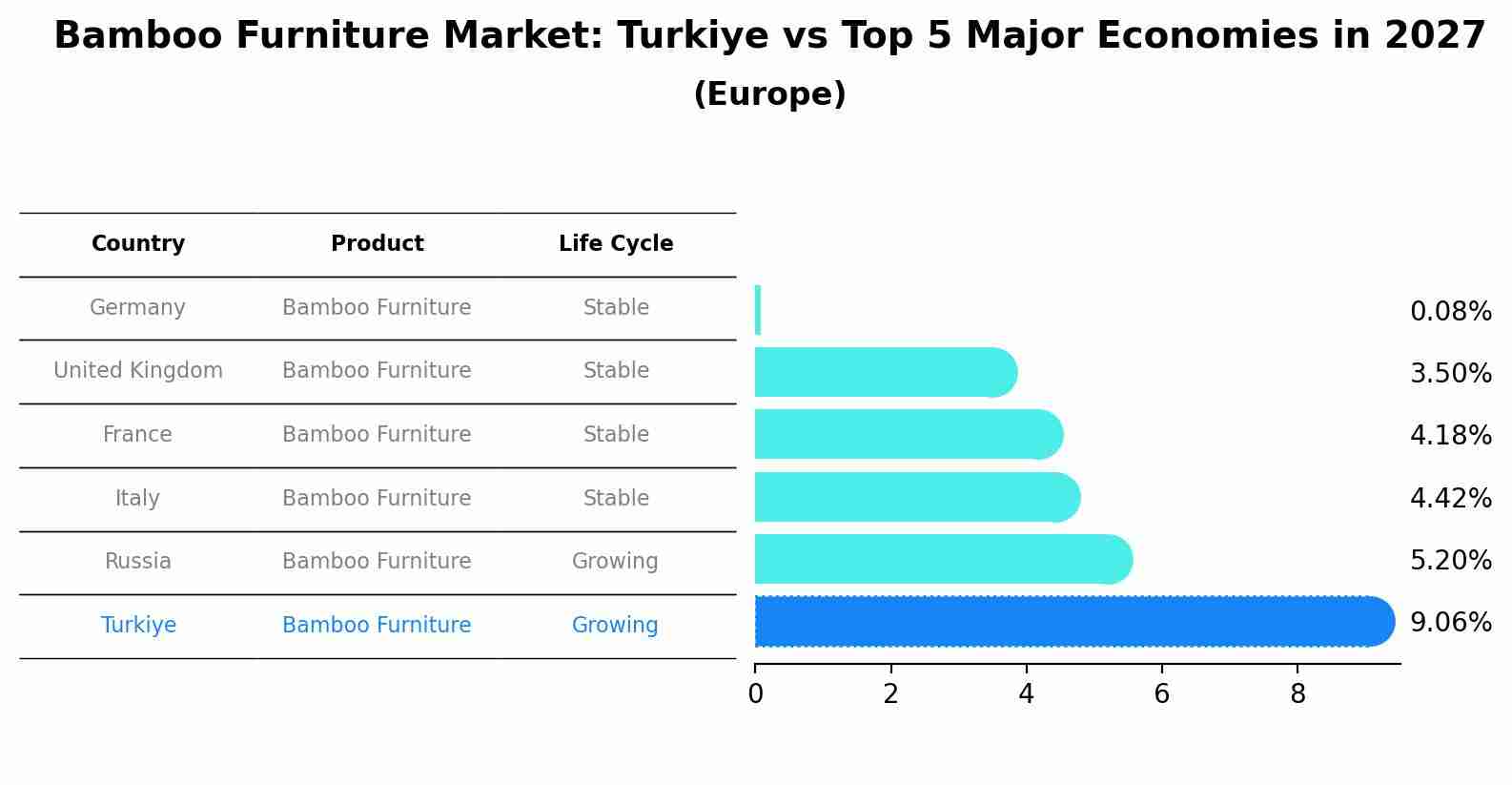
Bamboo Furniture Market: Turkiye vs Top 5 Major Economies in 2027 (Europe)
The Bamboo Furniture market in Turkiye is projected to grow at a growing growth rate of 9.06% by 2027, highlighting the country's increasing focus on advanced technologies within the Europe region, where Germany holds the dominant position, followed closely by United Kingdom, France, Italy and Russia, shaping overall regional demand.
Turkey Bamboo Furniture Market Synopsis
The Turkey bamboo furniture market is experiencing steady growth driven by increasing consumer awareness of sustainability and eco-friendly products. Bamboo furniture is gaining popularity due to its durability, light weight, and natural aesthetic appeal. The market is witnessing a shift towards environmentally conscious purchasing behavior, with consumers seeking alternatives to traditional wood furniture. Turkish manufacturers are focusing on innovative designs and high-quality craftsmanship to meet the growing demand for bamboo furniture. Key players in the market are investing in research and development to improve the durability and functionality of bamboo furniture, further enhancing its appeal to consumers. As sustainability continues to be a key trend in the furniture industry, the Turkey bamboo furniture market is expected to expand further in the coming years.
Turkey Bamboo Furniture Market Trends
The Turkey Bamboo Furniture Market is experiencing a growing trend towards sustainable and eco-friendly products, with consumers increasingly seeking environmentally conscious options. Bamboo furniture, known for its durability, versatility, and renewable nature, is gaining popularity in the market. Demand for stylish and modern designs that incorporate bamboo`s natural aesthetic appeal is on the rise. Additionally, the shift towards minimalist and compact living spaces is driving the demand for space-saving bamboo furniture pieces. Manufacturers in the Turkey Bamboo Furniture Market are focusing on innovative designs, using sustainable practices in production, and promoting the benefits of bamboo as a material, aligning with the growing consumer preference for sustainable and ethical shopping choices.
Turkey Bamboo Furniture Market Challenges
In the Turkey Bamboo Furniture Market, one of the main challenges faced is the limited awareness and understanding of the benefits of bamboo furniture among consumers. Many people are not familiar with the durability, sustainability, and eco-friendliness of bamboo as a material for furniture, leading to lower demand for such products. Additionally, the availability of high-quality and well-designed bamboo furniture options may be limited in the market, further hindering its adoption. Another challenge is the competition from more traditional furniture materials like wood and metal, which are more commonly used and trusted by consumers. Overcoming these challenges will require education and marketing efforts to raise awareness about the advantages of bamboo furniture, as well as innovation in design and production to meet the diverse preferences of consumers.
Turkey Bamboo Furniture Market Investment Opportunities
The Turkey Bamboo Furniture Market offers promising investment opportunities due to the growing trend towards sustainable and eco-friendly products. Bamboo furniture is gaining popularity in Turkey for its durability, aesthetic appeal, and environmental benefits. Investors can capitalize on this trend by entering the market through partnerships with local manufacturers, setting up distribution channels, or launching their own bamboo furniture brands. Additionally, there is potential for innovation in design and technology to further enhance the quality and appeal of bamboo furniture to attract a wider consumer base. With increasing awareness of sustainability and a shift towards green living, the Turkey Bamboo Furniture Market presents a lucrative investment option with long-term growth prospects.
Jordan Agar Market Government Policies
The Turkish government has implemented policies to encourage sustainable production and consumption practices in the bamboo furniture market. This includes providing financial incentives and subsidies to businesses that adopt eco-friendly manufacturing processes and use bamboo as a renewable resource. Additionally, the government has introduced regulations to ensure the quality and safety of bamboo furniture products to protect consumer interests. In line with global sustainability goals, Turkey is promoting the growth of the bamboo furniture industry through initiatives that support innovation, research, and development in this sector. Overall, government policies in Turkey are focused on fostering a competitive and environmentally responsible bamboo furniture market that contributes to the country`s economic growth and environmental conservation efforts.
Turkey Bamboo Furniture Market Future Outlook
The Turkey Bamboo Furniture Market is poised for significant growth in the coming years, driven by increasing consumer awareness of sustainable and eco-friendly products. As the demand for environmentally friendly furniture options continues to rise, bamboo furniture is gaining popularity due to its renewable nature and durability. Additionally, the government`s initiatives to promote sustainable practices and reduce carbon footprint are likely to further boost the market. The growing trend of minimalist and modern interior design styles also favors the use of bamboo furniture, as it offers a sleek and contemporary aesthetic. With a focus on sustainability becoming a priority for consumers, the Turkey Bamboo Furniture Market is expected to experience steady growth and expansion in the foreseeable future.
Key Highlights of the Report:
- Turkey Bamboo Furniture Market Outlook
- Market Size of Turkey Bamboo Furniture Market, 2024
- Forecast of Turkey Bamboo Furniture Market, 2031
- Historical Data and Forecast of Turkey Bamboo Furniture Revenues & Volume for the Period 2021 - 2031
- Turkey Bamboo Furniture Market Trend Evolution
- Turkey Bamboo Furniture Market Drivers and Challenges
- Turkey Bamboo Furniture Price Trends
- Turkey Bamboo Furniture Porter's Five Forces
- Turkey Bamboo Furniture Industry Life Cycle
- Historical Data and Forecast of Turkey Bamboo Furniture Market Revenues & Volume By Type for the Period 2021 - 2031
- Historical Data and Forecast of Turkey Bamboo Furniture Market Revenues & Volume By Chairs & Tables for the Period 2021 - 2031
- Historical Data and Forecast of Turkey Bamboo Furniture Market Revenues & Volume By Stools for the Period 2021 - 2031
- Historical Data and Forecast of Turkey Bamboo Furniture Market Revenues & Volume By Beds for the Period 2021 - 2031
- Historical Data and Forecast of Turkey Bamboo Furniture Market Revenues & Volume By Others for the Period 2021 - 2031
- Historical Data and Forecast of Turkey Bamboo Furniture Market Revenues & Volume By End User for the Period 2021 - 2031
- Historical Data and Forecast of Turkey Bamboo Furniture Market Revenues & Volume By Residential for the Period 2021 - 2031
- Historical Data and Forecast of Turkey Bamboo Furniture Market Revenues & Volume By Commercial for the Period 2021 - 2031
- Turkey Bamboo Furniture Import Export Trade Statistics
- Market Opportunity Assessment By Type
- Market Opportunity Assessment By End User
- Turkey Bamboo Furniture Top Companies Market Share
- Turkey Bamboo Furniture Competitive Benchmarking By Technical and Operational Parameters
- Turkey Bamboo Furniture Company Profiles
- Turkey Bamboo Furniture Key Strategic Recommendations






































