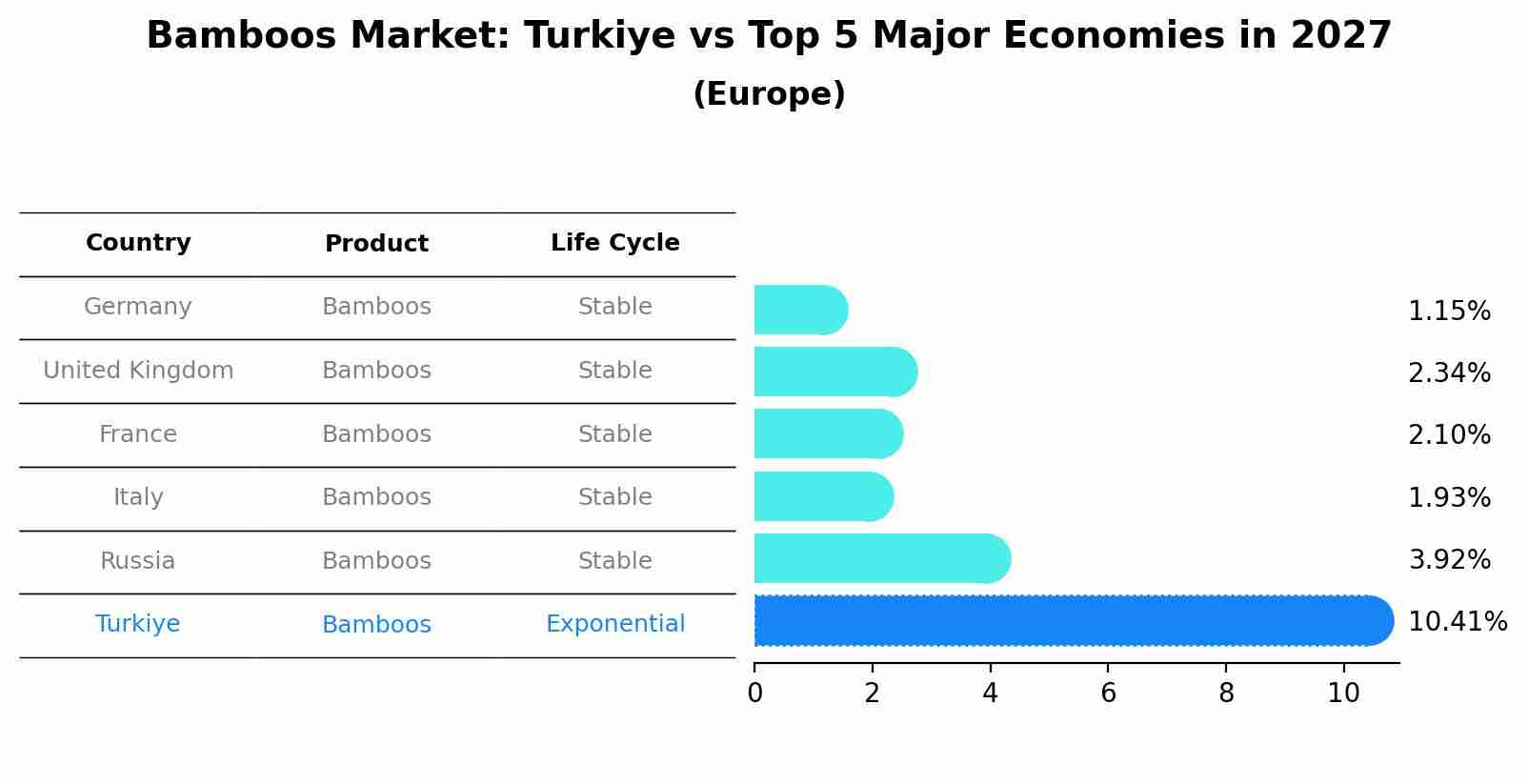
Bamboos Market: Turkiye vs Top 5 Major Economies in 2027 (Europe)
Turkiye's Bamboos market is anticipated to experience a high growth rate of 10.41% by 2027, reflecting trends observed in the largest economy Germany, followed by United Kingdom, France, Italy and Russia.
Turkey Bamboos Market Overview
The Turkey bamboos market is experiencing steady growth driven by the increasing demand for sustainable and eco-friendly materials in various industries. Bamboos are being increasingly utilized in construction, furniture, textiles, and paper production due to their versatility, durability, and environmental benefits. The market is witnessing a trend towards innovative bamboo products such as flooring, decking, and household items, catering to the growing consumer preference for natural and renewable materials. Government initiatives promoting bamboo cultivation and the establishment of bamboo plantations are further boosting market growth. However, challenges such as limited awareness about the benefits of bamboo products and the availability of alternative materials may hinder market expansion. Overall, the Turkey bamboos market presents opportunities for manufacturers and retailers to capitalize on the rising demand for sustainable products.
Turkey Bamboos Market Trends
The Turkey Bamboos Market is experiencing a growing trend towards sustainable and eco-friendly products, with increasing awareness of environmental issues driving demand for renewable materials. Consumers are seeking alternatives to traditional wood products, such as bamboo, due to its rapid growth rate and minimal environmental impact. Additionally, there is a rising interest in bamboo-based products in various industries, including construction, furniture, textiles, and packaging. Companies in the market are focusing on innovation and product development to meet this growing demand for sustainable bamboo products. Overall, the Turkey Bamboos Market is poised for continued growth as sustainability becomes a key factor influencing consumer choices.
Turkey Bamboos Market Challenges
In the Turkey Bamboos Market, some of the key challenges include limited awareness and understanding of the benefits of bamboo products among consumers, competition from traditional materials like wood and plastic, inconsistent quality of bamboo products due to varying manufacturing standards, and limited availability of sustainable and responsibly sourced bamboo. Additionally, fluctuations in bamboo prices and supply chain disruptions can impact the market. Overcoming these challenges will require efforts to educate consumers about the eco-friendly and durable nature of bamboo products, implementing quality control measures across the supply chain, fostering sustainable bamboo cultivation practices, and creating partnerships with suppliers to ensure a consistent and reliable source of bamboo materials for the market.
Turkey Bamboos Market Investment Opportunities
The Turkey bamboos market offers promising investment opportunities due to the increasing demand for sustainable and eco-friendly products. Bamboo is a versatile and fast-growing plant that can be used in various industries such as construction, furniture, textiles, and even as a renewable energy source. Investors can consider opportunities in bamboo plantation and processing facilities, as well as in the development of innovative bamboo-based products for both domestic and international markets. With growing awareness about the environmental benefits of bamboo and its potential to replace traditional materials, investing in the Turkey bamboos market could yield long-term returns while supporting sustainable practices and economic development in the region.
Turkey Bamboos Market Government Policy
Government policies related to the Turkey Bamboos Market include regulations on sustainable harvesting practices to prevent overexploitation of bamboo resources, promoting the use of bamboo in various industries to boost economic growth, and providing financial incentives or subsidies to encourage bamboo cultivation. Additionally, there may be quality standards and certifications in place to ensure the safety and quality of bamboo products for consumers. The government may also support research and development initiatives to enhance the overall competitiveness of the Turkish bamboo industry both domestically and internationally. Overall, these policies aim to promote the sustainable growth of the Turkey Bamboos Market while ensuring environmental protection and economic development.
Turkey Bamboos Market Future Outlook
The Turkey Bamboos Market is expected to show steady growth in the coming years due to increasing awareness about sustainable and eco-friendly materials for various applications. With a rising focus on environmentally friendly products, the demand for bamboo as a renewable resource is projected to rise in Turkey. Bamboo`s versatility, durability, and aesthetic appeal make it an attractive choice for industries such as construction, furniture, and textiles. Moreover, the government`s initiatives to promote sustainable practices and reduce carbon footprint will further drive the market growth. Overall, the Turkey Bamboos Market is poised for expansion as consumers and industries continue to prioritize sustainability and environmental responsibility in their purchasing decisions.
Key Highlights of the Report:
- Turkey Bamboos Market Outlook
- Market Size of Turkey Bamboos Market, 2021
- Forecast of Turkey Bamboos Market, 2031
- Historical Data and Forecast of Turkey Bamboos Revenues & Volume for the Period 2018 - 2031
- Turkey Bamboos Market Trend Evolution
- Turkey Bamboos Market Drivers and Challenges
- Turkey Bamboos Price Trends
- Turkey Bamboos Porter's Five Forces
- Turkey Bamboos Industry Life Cycle
- Historical Data and Forecast of Turkey Bamboos Market Revenues & Volume By Application for the Period 2018 - 2031
- Historical Data and Forecast of Turkey Bamboos Market Revenues & Volume By Raw Materials for the Period 2018 - 2031
- Historical Data and Forecast of Turkey Bamboos Market Revenues & Volume By Industrial Products for the Period 2018 - 2031
- Historical Data and Forecast of Turkey Bamboos Market Revenues & Volume By Furniture for the Period 2018 - 2031
- Historical Data and Forecast of Turkey Bamboos Market Revenues & Volume By Shoots for the Period 2018 - 2031
- Historical Data and Forecast of Turkey Bamboos Market Revenues & Volume By Others for the Period 2018 - 2031
- Turkey Bamboos Import Export Trade Statistics
- Market Opportunity Assessment By Application
- Turkey Bamboos Top Companies Market Share
- Turkey Bamboos Competitive Benchmarking By Technical and Operational Parameters
- Turkey Bamboos Company Profiles
- Turkey Bamboos Key Strategic Recommendations






































