United Arab Emirates (UAE) Hybrid Cloud Market Size & Growth Rate (2026-2032)
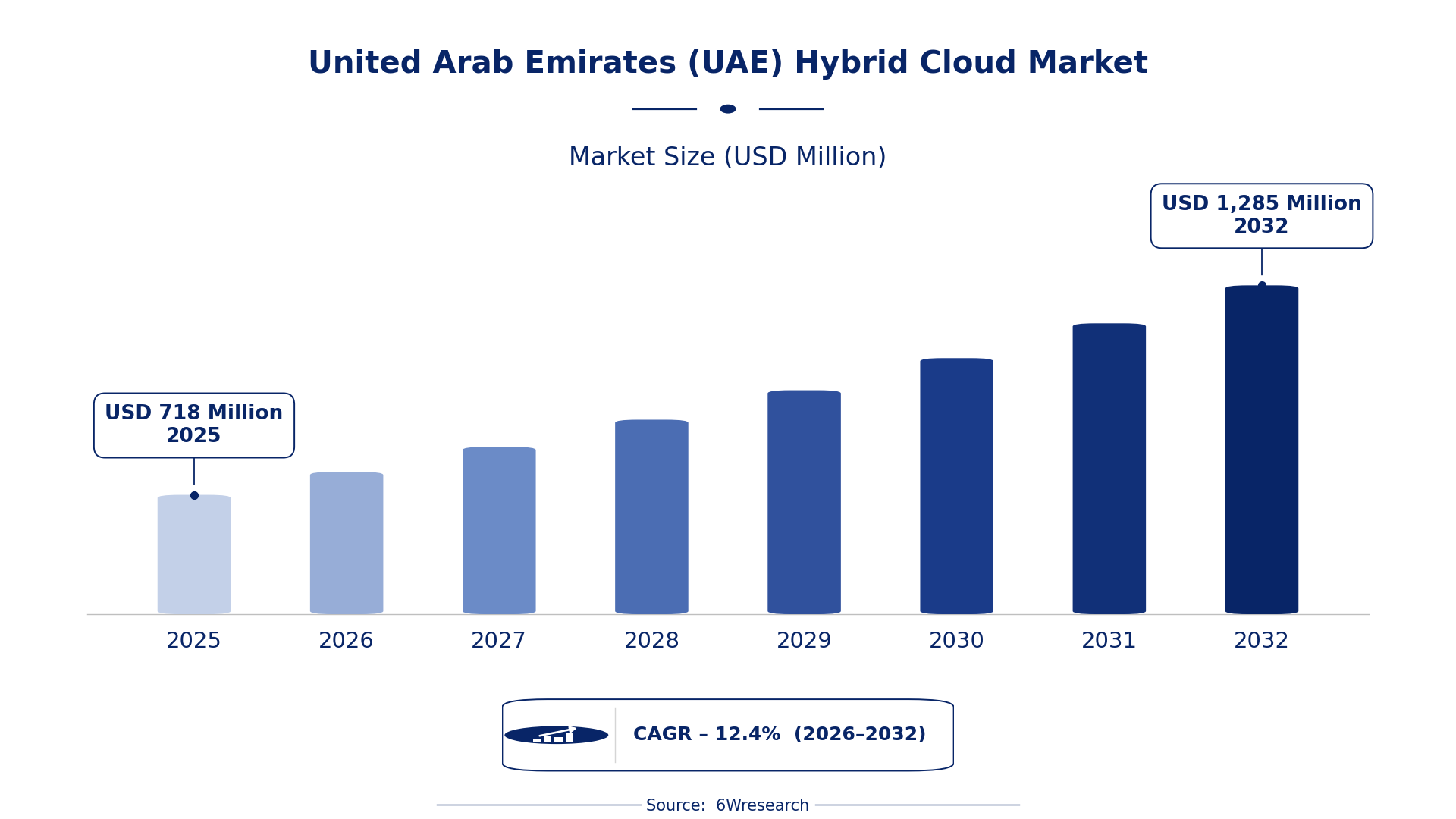
The United Arab Emirates (UAE) Hybrid Cloud Market was estimated at USD 718 Million in 2025 and is projected to reach USD 1285 Million by 2032, growing at a CAGR of 12.4% from 2026 to 2032.
United Arab Emirates (UAE) Hybrid Cloud Market Synopsis
The UAE Hybrid Cloud Market has become increasingly vital for organizations looking to blend their on-premises infrastructure with both public and private cloud resources. This hybrid approach not only enhances operational flexibility but also allows companies to optimize their workloads and data storage solutions tailored to their unique needs.
Several factors are propelling the demand for hybrid cloud solutions in the UAE. Concerns over data sovereignty, stringent regulatory compliance, and the necessity for integrating legacy systems with modern cloud applications are driving enterprises to adopt this model aggressively.
United Arab Emirates (UAE) Hybrid Cloud Market Year-wise Growth Rate and Key Drivers
This graph illustrates the annual growth rates of the United Arab Emirates (UAE) Hybrid Cloud Market from 2021 to 2032, highlighting a steady upward trajectory and projected expansion over the forecast period.
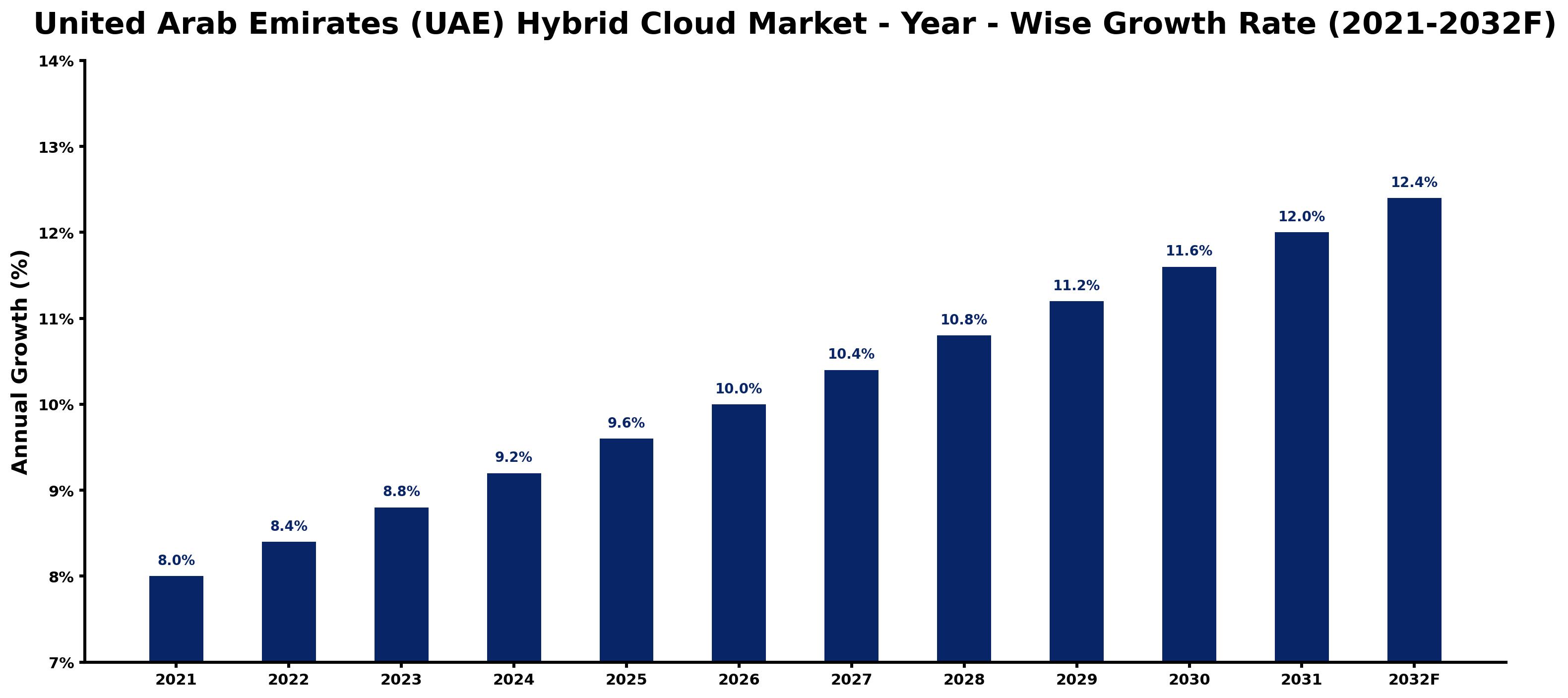
The table below presents the year‑wise growth rates along with the key drivers influencing the market
| Year | Growth Rate | Major Drivers |
| 2021 | 8.0% | UAE government cloud-first policy encouraging digital transformation. |
| 2022 | 8.4% | Rapid growth of fintech companies demanding hybrid solutions. |
| 2023 | 8.8% | Increased cybersecurity regulations boosting hybrid cloud adoption. |
| 2024 | 9.2% | Rising internet penetration driving data center expansions. |
| 2025 | 9.6% | Significant investments in AI projects requiring hybrid infrastructures. |
| 2026 | 10.0% | Increased remote work trends fueling cloud service deployment. |
| 2027 | 10.4% | Emergence of 5G technology enhancing cloud connectivity. |
| 2028 | 10.8% | UAE Vision 2030 priorities emphasizing smart cities and cloud. |
| 2029 | 11.2% | Demand for disaster recovery solutions drives hybrid adoption. |
| 2030 | 11.6% | Growing awareness of data sovereignty impacts cloud strategy. |
| 2031 | 12.0% | Local enterprises shifting to hybrid due to scalability needs. |
| 2032 | 12.4% | Increased collaboration between telecom operators and cloud providers. |
Note: Market size estimations and growth projections presented in this report are based on 6Wresearch's proprietary forecasting methodology, utilizing the latest available industry data, government publications, and primary research inputs.
United Arab Emirates (UAE) Hybrid Cloud Market Key Takeaways
Below are some of the specific key takeaways from the market, including:
- The hybrid cloud model is increasingly favored by organizations for its balance between flexibility and control.
- Key sectors driving adoption include finance, healthcare, and telecommunications, primarily due to regulatory pressures.
- The impact of the COVID-19 pandemic has accelerated the shift towards hybrid cloud solutions to ensure business continuity.
- Data governance remains a critical concern, necessitating robust frameworks for effective management.
- Investment in hybrid cloud technologies is expected to surge as organizations prioritize IT agility and scalability.
Evaluation of Restraints in United Arab Emirates (UAE) Hybrid Cloud Market
Despite the rapid growth of the UAE Hybrid Cloud Market, certain constraints hinder its full potential. Organizations are often challenged by the complex regulatory landscape surrounding data protection and compliance. Adapting to these regulations requires not only resources but also a deep understanding of the local and international legal framework. on top of that, businesses face difficulties in establishing robust governance models that can effectively manage data across hybrid environments, limiting their ability to fully harness the advantages of hybrid cloud solutions.
United Arab Emirates (UAE) Hybrid Cloud Market Trends
Several key trends are influencing the direction of the hybrid cloud market in the UAE. A noticeable shift towards multi-cloud strategies is occurring as organizations seek to diversify their cloud usage to avoid vendor lock-in. This strategy allows them to optimize costs while improving resilience. on top of that, the rise of edge computing is becoming increasingly relevant, with businesses recognizing the need for real-time data processing at the source. Security, particularly in relation to data encryption and access management, is also becoming a focal point as enterprises adopt hybrid cloud solutions.
United Arab Emirates (UAE) Hybrid Cloud Market Opportunities
The hybrid cloud market in the UAE is ripe with opportunities, particularly as businesses continue to digitize operations. Companies focused on developing innovative hybrid cloud solutions that emphasize security and compliance will find a receptive market. Additionally, there is a growing demand for hybrid cloud consulting services, as organizations seek expert guidance to navigate the complexities of implementation. Investing in automation tools that enhance operational efficiency within hybrid environments also presents a lucrative avenue for growth.
Government Initiatives in the United Arab Emirates (UAE) Hybrid Cloud Market
Government policy plays a crucial role in shaping the UAE Hybrid Cloud Market, with a clear focus on enhancing the country's digital infrastructure. The government has prioritized initiatives that not only support the adoption of hybrid cloud solutions but also ensure compliance with regulatory standards. This proactive stance is crucial for fostering a conducive environment for businesses looking to innovate and expand.
- A national digital infrastructure upgrade programme was recently completed to enhance cloud service capabilities across public sectors.
- The establishment of a regulatory framework in 2025 mandating data residency for certain sectors is currently underway.
- A public-private partnership initiative aimed at expanding cloud access in rural areas is planned for rollout in 2026.
- Ongoing workshops and training programs focus on upskilling IT professionals in cloud technologies to meet market demand.
- Future regulations expected to focus on enhancing cybersecurity measures for cloud-based services are under discussion.
Future Insights of the United Arab Emirates (UAE) Hybrid Cloud Market
Looking ahead, the UAE Hybrid Cloud Market is set for dynamic growth driven by increased digital transformation efforts across industries. As organizations prioritize agility and adaptability, hybrid cloud solutions will become essential in supporting diverse workloads. The next few years will likely see an uptick in investments in hybrid cloud technologies, particularly in areas such as AI and machine learning, aimed at optimizing operations. As regulatory landscapes evolve, the demand for compliance-focused hybrid solutions will also rise, further shaping the market's trajectory.
United Arab Emirates (UAE) Hybrid Cloud Market Latest Developments
Recent developments in the UAE Hybrid Cloud Market reflect a strong commitment to innovation and compliance. Over the past year, organizations have ramped up their investments in hybrid cloud technologies, focusing on enhancing their operational capabilities and data governance frameworks.
- A major technology vendor announced the launch of a new hybrid cloud platform in early 2025, aimed at improving integration with existing on-premises systems.
- Several regional operators are currently underway with initiatives that enhance cloud service offerings tailored for specific industries.
- An ongoing project focused on developing a comprehensive cybersecurity framework for hybrid cloud environments is expected to be completed by mid-2026.
- A leading consulting firm is planning a series of webinars in late 2025 to educate businesses about hybrid cloud strategies and best practices.
- A partnership between local businesses and international cloud providers is set to kick off in early 2026, aimed at fostering innovation in cloud services.
United Arab Emirates (UAE) Hybrid Cloud Market - Key Attractiveness of the Report
- 10 Years of Market Numbers
- Historical Data Starting from 2022 to 2025
- Base Year: 2025
- Forecast Data until 2032
- Key Performance Indicators Impacting the Market
- Major Upcoming Developments and Projects
Key Highlights of the Report:
- United Arab Emirates (UAE) Hybrid Cloud Market Outlook
- Market Size of United Arab Emirates (UAE) Hybrid Cloud Market, 2025
- Forecast of United Arab Emirates (UAE) Hybrid Cloud Market, 2032
- Historical Data and Forecast of United Arab Emirates (UAE) Hybrid Cloud Revenues & Volume for the Period 2022-2032F
- United Arab Emirates (UAE) Hybrid Cloud Market Trend Evolution
- United Arab Emirates (UAE) Hybrid Cloud Market Drivers and Challenges
- United Arab Emirates (UAE) Hybrid Cloud Price Trends
- United Arab Emirates (UAE) Hybrid Cloud Porter's Five Forces
- United Arab Emirates (UAE) Hybrid Cloud Industry Life Cycle
- Historical Data and Forecast of United Arab Emirates (UAE) Hybrid Cloud Market Revenues & Volume By Service Type for the Period 2022-2032F
- Historical Data and Forecast of United Arab Emirates (UAE) Hybrid Cloud Market Revenues & Volume By Cloud management and orchestration for the Period 2022-2032F
- Historical Data and Forecast of United Arab Emirates (UAE) Hybrid Cloud Market Revenues & Volume By Disaster recovery for the Period 2022-2032F
- Historical Data and Forecast of United Arab Emirates (UAE) Hybrid Cloud Market Revenues & Volume By Hybrid hosting for the Period 2022-2032F
- Historical Data and Forecast of United Arab Emirates (UAE) Hybrid Cloud Market Revenues & Volume By Component for the Period 2022-2032F
- Historical Data and Forecast of United Arab Emirates (UAE) Hybrid Cloud Market Revenues & Volume By Solution for the Period 2022-2032F
- Historical Data and Forecast of United Arab Emirates (UAE) Hybrid Cloud Market Revenues & Volume By Services for the Period 2022-2032F
- Historical Data and Forecast of United Arab Emirates (UAE) Hybrid Cloud Market Revenues & Volume By Organization Size for the Period 2022-2032F
- Historical Data and Forecast of United Arab Emirates (UAE) Hybrid Cloud Market Revenues & Volume By SMEs for the Period 2022-2032F
- Historical Data and Forecast of United Arab Emirates (UAE) Hybrid Cloud Market Revenues & Volume By Large Enterprises for the Period 2022-2032F
- Historical Data and Forecast of United Arab Emirates (UAE) Hybrid Cloud Market Revenues & Volume By Service Model for the Period 2022-2032F
- Historical Data and Forecast of United Arab Emirates (UAE) Hybrid Cloud Market Revenues & Volume By Infrastructure-as-a-Service for the Period 2022-2032F
- Historical Data and Forecast of United Arab Emirates (UAE) Hybrid Cloud Market Revenues & Volume By Platform-as-a-Service for the Period 2022-2032F
- Historical Data and Forecast of United Arab Emirates (UAE) Hybrid Cloud Market Revenues & Volume By Software-as-a-Service for the Period 2022-2032F
- Historical Data and Forecast of United Arab Emirates (UAE) Hybrid Cloud Market Revenues & Volume By Vertical for the Period 2022-2032F
- Historical Data and Forecast of United Arab Emirates (UAE) Hybrid Cloud Market Revenues & Volume By BFSI for the Period 2022-2032F
- Historical Data and Forecast of United Arab Emirates (UAE) Hybrid Cloud Market Revenues & Volume By IT and Telecommunications for the Period 2022-2032F
- Historical Data and Forecast of United Arab Emirates (UAE) Hybrid Cloud Market Revenues & Volume By Healthcare for the Period 2022-2032F
- Historical Data and Forecast of United Arab Emirates (UAE) Hybrid Cloud Market Revenues & Volume By Retail for the Period 2022-2032F
- Historical Data and Forecast of United Arab Emirates (UAE) Hybrid Cloud Market Revenues & Volume By Media and entertainment for the Period 2022-2032F
- Historical Data and Forecast of United Arab Emirates (UAE) Hybrid Cloud Market Revenues & Volume By Manufacturing for the Period 2022-2032F
- Historical Data and Forecast of United Arab Emirates (UAE) Hybrid Cloud Market Revenues & Volume By Government for the Period 2022-2032F
- Historical Data and Forecast of United Arab Emirates (UAE) Hybrid Cloud Market Revenues & Volume By Transportation for the Period 2022-2032F
- United Arab Emirates (UAE) Hybrid Cloud Import Export Trade Statistics
- Market Opportunity Assessment By Service Type
- Market Opportunity Assessment By Component
- Market Opportunity Assessment By Organization Size
- Market Opportunity Assessment By Service Model
- Market Opportunity Assessment By Vertical
- United Arab Emirates (UAE) Hybrid Cloud Top Companies Market Share
- United Arab Emirates (UAE) Hybrid Cloud Competitive Benchmarking By Technical and Operational Parameters
- United Arab Emirates (UAE) Hybrid Cloud Company Profiles
- United Arab Emirates (UAE) Hybrid Cloud Key Strategic Recommendations






































