Uruguay Organic Shampoo Market: Import Trend Analysis
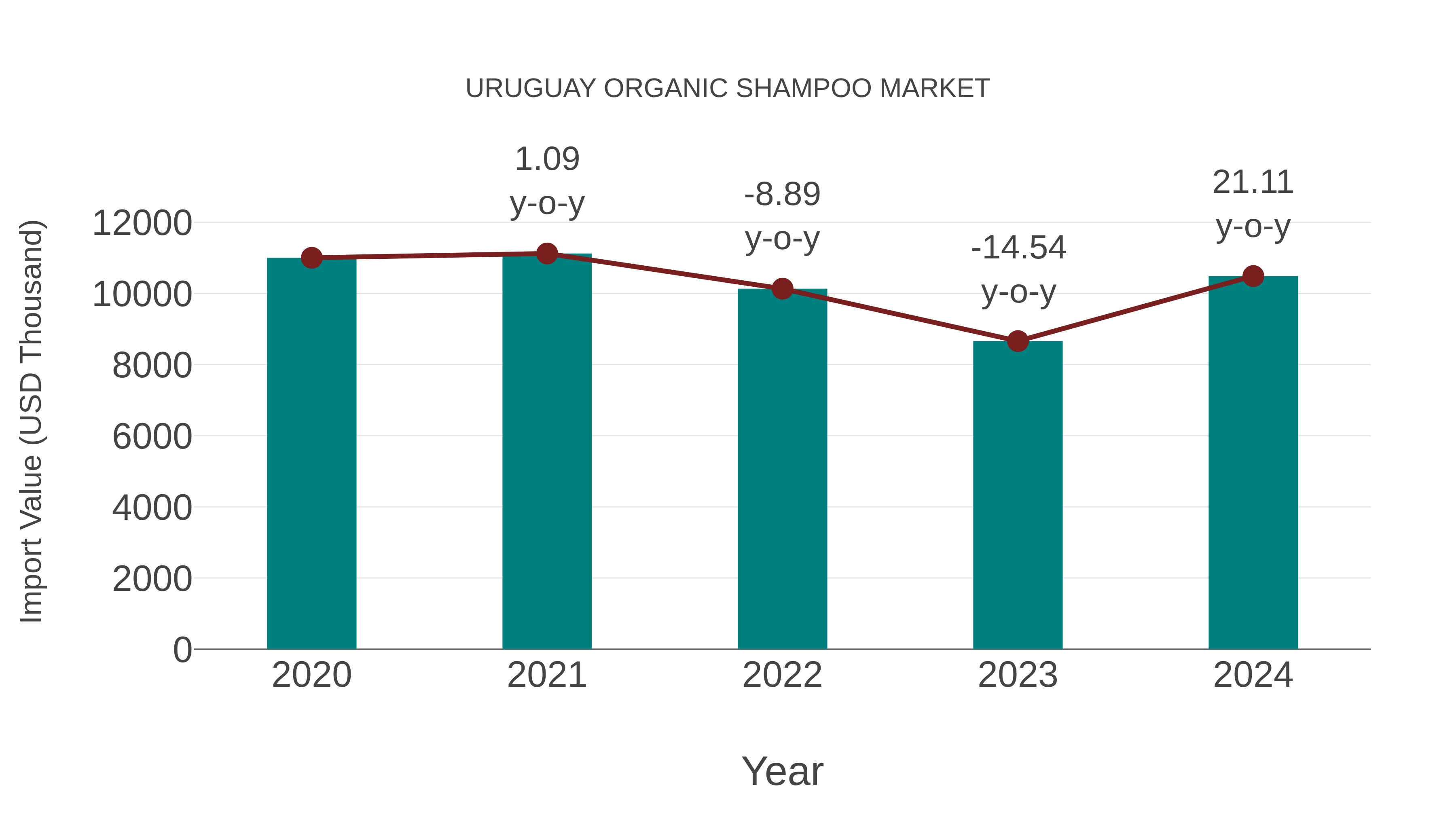
In 2024, Uruguay import trend for organic shampoo experienced a growth rate of 21.11% compared to the previous year. However, the compound annual growth rate (CAGR) for 2020-2024 stood at -1.19%. This decline in CAGR could be attributed to shifting consumer preferences towards locally sourced products or changes in trade policies affecting the import momentum within the market.
Uruguay Organic Shampoo Market Overview
The Uruguay organic shampoo market is experiencing steady growth driven by increasing consumer awareness of the benefits of natural and organic ingredients. Consumers in Uruguay are becoming more conscious of the potential harmful effects of chemicals found in traditional shampoos, leading to a shift towards organic and natural alternatives. Key players in the market are focusing on product innovation, including the use of plant-based ingredients, essential oils, and sustainable packaging to cater to this growing demand. The market is also witnessing a rise in online sales channels, providing consumers with easier access to a wide range of organic shampoo products. Overall, the Uruguay organic shampoo market is expected to continue its growth trajectory as consumers prioritize sustainability and health in their personal care choices.
Uruguay Organic Shampoo Market Trends and Opportunities
The Uruguay Organic Shampoo Market is experiencing a growing demand for natural and sustainable hair care products. Consumers are becoming more conscious of the ingredients in their personal care products, leading to a shift towards organic shampoos that are free from harmful chemicals. This trend is being driven by increasing awareness of the environmental impact of conventional hair care products and a preference for products that are gentle on the skin and scalp. Opportunities in the market lie in the development of innovative formulations using locally sourced organic ingredients, as well as expanding distribution channels to reach a wider consumer base. Collaborations with beauty salons and spas, as well as online retail platforms, can help organic shampoo brands capitalize on the growing interest in natural hair care products in Uruguay.
Uruguay Organic Shampoo Market Challenges
In the Uruguay Organic Shampoo Market, some of the main challenges faced include limited consumer awareness and understanding of organic products, relatively higher price points compared to conventional shampoos, and competition from well-established non-organic brands. Additionally, the availability of organic ingredients and certification requirements can pose challenges for local manufacturers. Distribution channels may also be limited, making it difficult for organic shampoo brands to reach a wider audience. To overcome these challenges, companies operating in the Uruguay Organic Shampoo Market need to invest in marketing and educational campaigns to raise awareness about the benefits of organic products, optimize their supply chains to reduce costs, and expand distribution networks to reach more consumers.
Uruguay Organic Shampoo Market Drivers
The Uruguay Organic Shampoo Market is primarily driven by increasing consumer awareness and concern regarding the harmful effects of chemicals present in traditional shampoos. Consumers are becoming more conscious about their health and are seeking natural and organic products that are free from sulfates, parabens, and other synthetic ingredients. The growing trend towards sustainable and eco-friendly products is also fueling the demand for organic shampoos in Uruguay. Additionally, the rise in disposable income and changing lifestyles are influencing consumers to opt for premium and high-quality organic hair care products. The availability of a wide range of organic shampoo options in the market, along with the perceived benefits of these products such as promoting hair health and environmental sustainability, are further contributing to the growth of the organic shampoo market in Uruguay.
Uruguay Organic Shampoo Market Government Policies
The government of Uruguay has implemented various policies to promote the organic shampoo market in the country. These policies include providing financial incentives and subsidies to organic shampoo producers, supporting research and development in organic agriculture, and implementing regulations to ensure the quality and authenticity of organic products. Additionally, the government has introduced labeling requirements to clearly distinguish organic shampoos from conventional products, thereby increasing consumer awareness and trust in organic options. Overall, these policies aim to stimulate the growth of the organic shampoo market in Uruguay by creating a favorable environment for producers and increasing consumer demand for sustainable and environmentally-friendly products.
Uruguay Organic Shampoo Market Future Outlook
The Uruguay Organic Shampoo Market is expected to experience steady growth in the coming years due to increasing consumer awareness of the benefits of organic and natural products. With a rising trend towards sustainable and eco-friendly products, demand for organic shampoos is likely to continue to rise. The market is also expected to benefit from the growing concern over harmful chemicals in traditional shampoos, driving more consumers to switch to organic alternatives. Additionally, as the beauty and personal care industry as a whole focuses more on clean and green products, the organic shampoo market in Uruguay is poised to expand further. Companies that can effectively market their products as environmentally friendly and safe for personal use are likely to thrive in this evolving market landscape.
Key Highlights of the Report:
- Uruguay Organic Shampoo Market Outlook
- Market Size of Uruguay Organic Shampoo Market, 2025
- Forecast of Uruguay Organic Shampoo Market, 2032
- Historical Data and Forecast of Uruguay Organic Shampoo Revenues & Volume for the Period 2022 - 2032F
- Uruguay Organic Shampoo Market Trend Evolution
- Uruguay Organic Shampoo Market Drivers and Challenges
- Uruguay Organic Shampoo Price Trends
- Uruguay Organic Shampoo Porter's Five Forces
- Uruguay Organic Shampoo Industry Life Cycle
- Historical Data and Forecast of Uruguay Organic Shampoo Market Revenues & Volume By Distribution Channel for the Period 2022 - 2032F
- Historical Data and Forecast of Uruguay Organic Shampoo Market Revenues & Volume By Supermarkets/hypermarkets for the Period 2022 - 2032F
- Historical Data and Forecast of Uruguay Organic Shampoo Market Revenues & Volume By Specialty stores for the Period 2022 - 2032F
- Historical Data and Forecast of Uruguay Organic Shampoo Market Revenues & Volume By Online for the Period 2022 - 2032F
- Uruguay Organic Shampoo Import Export Trade Statistics
- Market Opportunity Assessment By Distribution Channel
- Uruguay Organic Shampoo Top Companies Market Share
- Uruguay Organic Shampoo Competitive Benchmarking By Technical and Operational Parameters
- Uruguay Organic Shampoo Company Profiles
- Uruguay Organic Shampoo Key Strategic Recommendations






































