Honey Market: Zimbabwe vs Top 5 Major Economies in 2027 (Africa)
By 2027, the Honey market in Zimbabwe is anticipated to reach a growth rate of 2.41%, as part of an increasingly competitive Africa region, where Egypt remains at the forefront, supported by South Africa, Ethiopia, Algeria and Nigeria, driving innovations and market adoption across sectors.
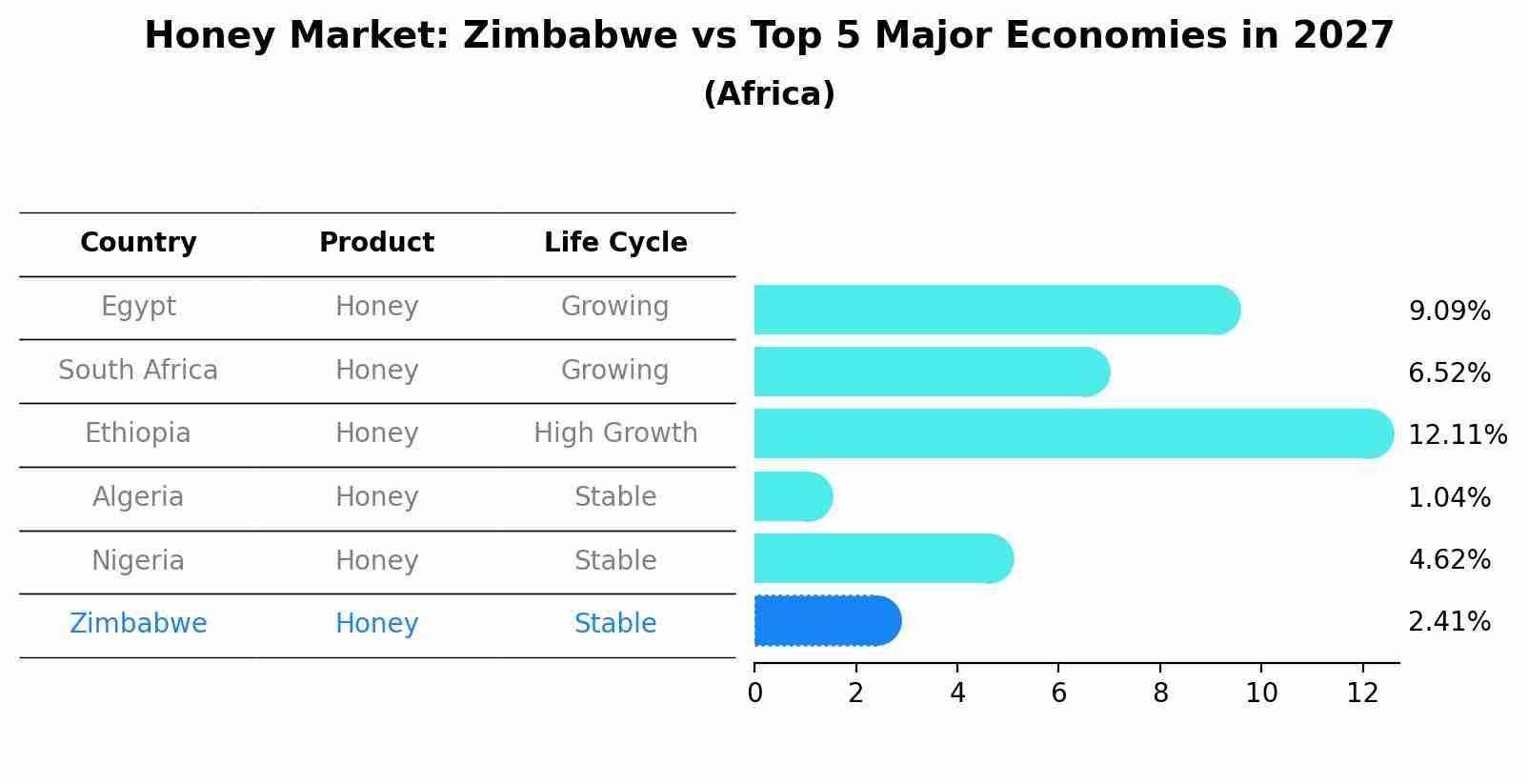
Zimbabwe Honey Market Growth Rate
According to 6Wresearch internal database and industry insights, the Zimbabwe Honey Market is growing at a compound annual growth rate (CAGR) of 8.15% during the forecast period (2026-2032).
Topics Covered in the Zimbabwe Honey Market Report
Zimbabwe Honey Market report thoroughly covers the market by type, applications, and packaging. The market report provides an unbiased and detailed analysis of ongoing market trends, opportunities/high growth areas, and market drivers, which would help stakeholders devise and align their market strategies according to the current and future market dynamics.
Zimbabwe Honey Market Highlights
| Report Name | Zimbabwe Honey Market |
| Forecast Period | 2026-2032 |
| CAGR | 8.15% |
| Growing Sector | Food and Beverage |
Zimbabwe Honey Market Synopsis
The Zimbabwe Honey Market will show significant growth as consumers increasingly prefer natural and organic honey products. The rising health-consciousness among people leads to increased popularity of honey in food and beverage products and personal care items. The country's honey production growth is driven by its suitable climate and government backing and export potential. The food and beverage industry shows rising demand for honey as a natural sweetener, while the personal care and pharmaceutical industries continue to grow.
Evaluation of Growth Drivers in the Zimbabwe Honey Market
Below mentioned are some growth drivers and their impact on market dynamics:
| Drivers | Primary Segments Affected | Why It Matters |
| Increasing Health Consciousness | Type (All Honey Types) | Growing preference for natural and organic honey as a healthy, natural sweetener. |
| Rising Demand for Organic Products | Type (Acacia Honey, Wildflower Honey) | Organic honey is increasingly preferred for its purity, boosting demand. |
| Government Support for Honey Production | Type (All Honey Types) | Increases local honey production, ensuring a steady supply and facilitating exports. |
| Expansion in Food & Beverage Applications | Applications (Food and Beverage) | Honey is becoming a most preferred sweetener in various health-conscious food products. |
| Growth in Personal Care & Pharmaceutical Uses | Applications (Personal Care, Pharmaceuticals) | Increasing use of honey in skincare, cosmetics, and medicinal products. |
The Zimbabwe Honey Market is projected to grow significantly with a CAGR of 8.15% during the forecast period of 2026-2032. The Zimbabwe Honey Market experiences its main drivers through two factors which exist as increasing consumer health-consciousness and rising demand for natural and organic honey. The rising use of honey as a healthier sweetener ingredient in food and beverage products creates additional market expansion. Also, the demand for honey products grows as of the increasing need for honey-based personal care and pharmaceutical applications. Moreover, the market is expecting strong growth potential as government support for local honey production and export initiatives integrates with growing public knowledge about honey's health advantages.
Evaluation of Restraints in the Zimbabwe Honey Market
Below mentioned are some major restraints and their influence on market dynamics:
| Restraints | Primary Segments Affected | What This Means |
| Limited Honey Production Capacity | Type (All Honey Types) | Limited production capacity hampers the supply of honey for local and export markets. |
| High Costs of Organic Certification | Type (Organic Honey) | The high costs of certification restrict small producers from accessing the organic market. |
| Climate Change Impact on Beekeeping | Type (All Honey Types) | Variations in climate can affect honey yields, disrupting supply chains. |
| Counterfeit and Low-Quality Honey | Type (All Honey Types) | The presence of counterfeit products diminishes consumer trust in the market. |
| Regulatory Compliance Challenges | Applications (All Segments) | Strict regulations can increase production costs and limit market access. |
Zimbabwe Honey Market Challenges
The Zimbabwe Honey Market faces operational difficulties as its production capacity limits both supply and potential business expansion. The organic certification process which requires high expenses functions as a barrier that prevents small-scale producers from entering the premium organic honey market. The climate change crisis impacts honey production as temperature variations and weather pattern changes disrupt beekeeping operations. The market faces additional difficulties as fake and substandard honey products undermine consumer confidence while damaging business expansion.
Zimbabwe Honey Market Trends
Some major trends contributing to the Zimbabwe Honey Market Growth are:
- Increasing Health-Consciousness: Growing health consciousness trends among consumer is driving the demand for honey due to its nutrient-rich properties and antibacterial.
- Rise of Organic and Natural Products: The consumers are demanding more of natural and organic honey driven by consumers demand for eating healthy and pure products.
- Growth in Personal Care and Pharmaceutical Applications: Honey is being widely preferred by consumers in skincare and pharmaceutical products due to its healing and antibacterial properties.
Investment Opportunities in the Zimbabwe Honey Market
Here are some investment opportunities in the Zimbabwe Honey Industry:
- Organic Honey Production: The consumers are getting more attracted toward purchasing organic and natural honey products due to increasing health conscious consumer base.
- Expansion of Beekeeping and Production Facilities: More investments in the beekeeping technologies and growth in honey production facilities can increase supply and meet rising demand.
- Honey-based Personal Care Products: The investors can invest more in the honey-based skincare and beauty products capitalizing on the growing demand for natural personal care products.
Top 5 Leading Players in the Zimbabwe Honey Market
Here are some top companies contributing to Zimbabwe Honey Market Share:
1. Honeywood Zimbabwe
| Company Name | Honeywood Zimbabwe |
| Headquarters | Harare, Zimbabwe |
| Established | 1995 |
| Website | - |
Honeywood is one of Zimbabwe’s leading honey producers, specializing in organic and raw honey. It has a strong presence in both domestic and export markets, providing premium-quality honey to health-conscious consumers and food manufacturers.
2. Beekeepers Association of Zimbabwe
| Company Name | Beekeepers Association of Zimbabwe |
| Headquarters | Harare, Zimbabwe |
| Established | 1990 |
| Website | - |
This association represents the interests of local beekeepers, supporting the growth of the honey industry in Zimbabwe. It helps improve production practices and certification standards to meet export market requirements.
3. Afrisweet Honey
| Company Name | Afrisweet Honey |
| Headquarters | Bulawayo, Zimbabwe |
| Established | 2000 |
| Website | - |
Afrisweet is a major player in Zimbabwe’s honey market, focusing on sustainable honey production and processing. The company produces both bulk and packaged honey for local and international markets.
4. Greenhill Honey
| Company Name | Greenhill Honey |
| Headquarters | Harare, Zimbabwe |
| Established | 2010 |
| Website | - |
Greenhill Honey focuses on producing raw, natural honey for the local market. The company emphasizes sustainable beekeeping practices and eco-friendly packaging.
5. ZimHoney
| Company Name | ZimHoney |
| Headquarters | Harare, Zimbabwe |
| Established | 2005 |
| Website | - |
ZimHoney is a key player in Zimbabwe’s honey market, offering a variety of honey products, including honeycomb and pure raw honey. The company is known for quality and sustainable production methods.
Government Regulations Introduced in the Zimbabwe Honey Market
According to Zimbabwean government data, the Ministry of Agriculture regulates honey production through governmental control while maintaining safety and quality standards for honey products. Also, the government has implemented programs to support small-scale honey producers, increase beekeeping practices, and promote the export of honey. Other than that, the organization supports producer initiatives that aim for organic certification as it enables them to access international premium markets. The efforts intend to build a strong honey industry which will establish Zimbabwe as an important country in the worldwide honey trade.
Future Insights of the Zimbabwe Honey Market
The future of the Zimbabwe Honey Market appears strong, driven by increasing consumer demand for natural and organic products. The expanding food and beverage and personal care and pharmaceutical sectors present major opportunities for honey growth. Government support and expansion in domestic production will contribute to increased honey availability, both locally and for export. The market will succeed over the long term as consumers increasingly prefer healthier products.
Market Segmentation Analysis
The report offers a comprehensive study of the subsequent market segments and their leading categories.
Wildflower Honey to Dominate the Market – By Type
According to Guneet Kaur, Senior Research Analyst at 6Wresearch, wildflower honey dominates the market due to its versatility and diverse flavor profile. It is most used in both food products and health-conscious applications, driving its growing demand in domestic and export markets.
Food and Beverage to Dominate the Market – By Application
The food and beverage segment is leading the market. The market growth is driven by increasing consumer preference for natural sweeteners. Also, honey is being incorporated into various health-focused food products, such as energy bars, smoothies, and desserts, boosting its consumption.
Bottle Packaging to Dominate the Market – By Packaging
Bottle packaging is leading the market. This is mainly due to them providing convenience and ease of use. Also, their ability to maintain product freshness makes them a preferred choice. It is widely preferred for both retail and home consumption, contributing to its strong position in the market.
Key attractiveness of the report
- 10 Years Market Numbers.
- Historical Data Starting from 2022 to 2025.
- Base Year: 2025
- Forecast Data until 2032.
- Key Performance Indicators Impacting the Market.
- Major Upcoming Developments and Projects.
Key Highlights of the Report:
- Zimbabwe Honey Market Outlook
- Market Size of Zimbabwe Honey Market, 2025
- Forecast of Zimbabwe Honey Market, 2032
- Historical Data and Forecast of Zimbabwe Honey Revenues & Volume for the Period 2022-2032
- Zimbabwe Honey Market Trend Evolution
- Zimbabwe Honey Market Drivers and Challenges
- Zimbabwe Honey Price Trends
- Zimbabwe Honey Porter`s Five Forces
- Zimbabwe Honey Industry Life Cycle
- Historical Data and Forecast of Zimbabwe Honey Market Revenues & Volume By Type for the Period 2022-2032
- Historical Data and Forecast of Zimbabwe Honey Market Revenues & Volume By Alfalfa Honey for the Period 2022-2032
- Historical Data and Forecast of Zimbabwe Honey Market Revenues & Volume By Wildflower Honey for the Period 2022-2032
- Historical Data and Forecast of Zimbabwe Honey Market Revenues & Volume By Buckwheat Honey for the Period 2022-2032
- Historical Data and Forecast of Zimbabwe Honey Market Revenues & Volume By Acacia Honey for the Period 2022-2032
- Historical Data and Forecast of Zimbabwe Honey Market Revenues & Volume By Clover Honey for the Period 2022-2032
- Historical Data and Forecast of Zimbabwe Honey Market Revenues & Volume By Others for the Period 2022-2032
- Historical Data and Forecast of Zimbabwe Honey Market Revenues & Volume By Applications for the Period 2022-2032
- Historical Data and Forecast of Zimbabwe Honey Market Revenues & Volume By Food and Beverage for the Period 2022-2032
- Historical Data and Forecast of Zimbabwe Honey Market Revenues & Volume By Personal Care Products for the Period 2022-2032
- Historical Data and Forecast of Zimbabwe Honey Market Revenues & Volume By Pharmaceuticals for the Period 2022-2032
- Historical Data and Forecast of Zimbabwe Honey Market Revenues & Volume By Others for the Period 2022-2032
- Historical Data and Forecast of Zimbabwe Honey Market Revenues & Volume By Packaging for the Period 2022-2032
- Historical Data and Forecast of Zimbabwe Honey Market Revenues & Volume By Bottle for the Period 2022-2032
- Historical Data and Forecast of Zimbabwe Honey Market Revenues & Volume By Jar for the Period 2022-2032
- Historical Data and Forecast of Zimbabwe Honey Market Revenues & Volume By Tube for the Period 2022-2032
- Historical Data and Forecast of Zimbabwe Honey Market Revenues & Volume By Tub for the Period 2022-2032
- Historical Data and Forecast of Zimbabwe Honey Market Revenues & Volume By Others for the Period 2022-2032
- Zimbabwe Honey Import Export Trade Statistics
- Market Opportunity Assessment By Type
- Market Opportunity Assessment By Applications
- Market Opportunity Assessment By Packaging
- Zimbabwe Honey Top Companies Market Share
- Zimbabwe Honey Competitive Benchmarking By Technical and Operational Parameters
- Zimbabwe Honey Company Profiles
- Zimbabwe Honey Key Strategic Recommendations
Market covered
The report subsequently covers the market by following segments and subsegments.
By Type
- Alfalfa Honey
- Wildflower Honey
- Buckwheat Honey
- Acacia Honey
- Clover Honey
- Others
By Applications
- Food and Beverage
- Personal Care Products
- Pharmaceuticals
- Others
By Packaging
- Bottle
- Jar
- Tube
- Tub
- Others






































