Zimbabwe Protein Bars Market: Import Trend Analysis
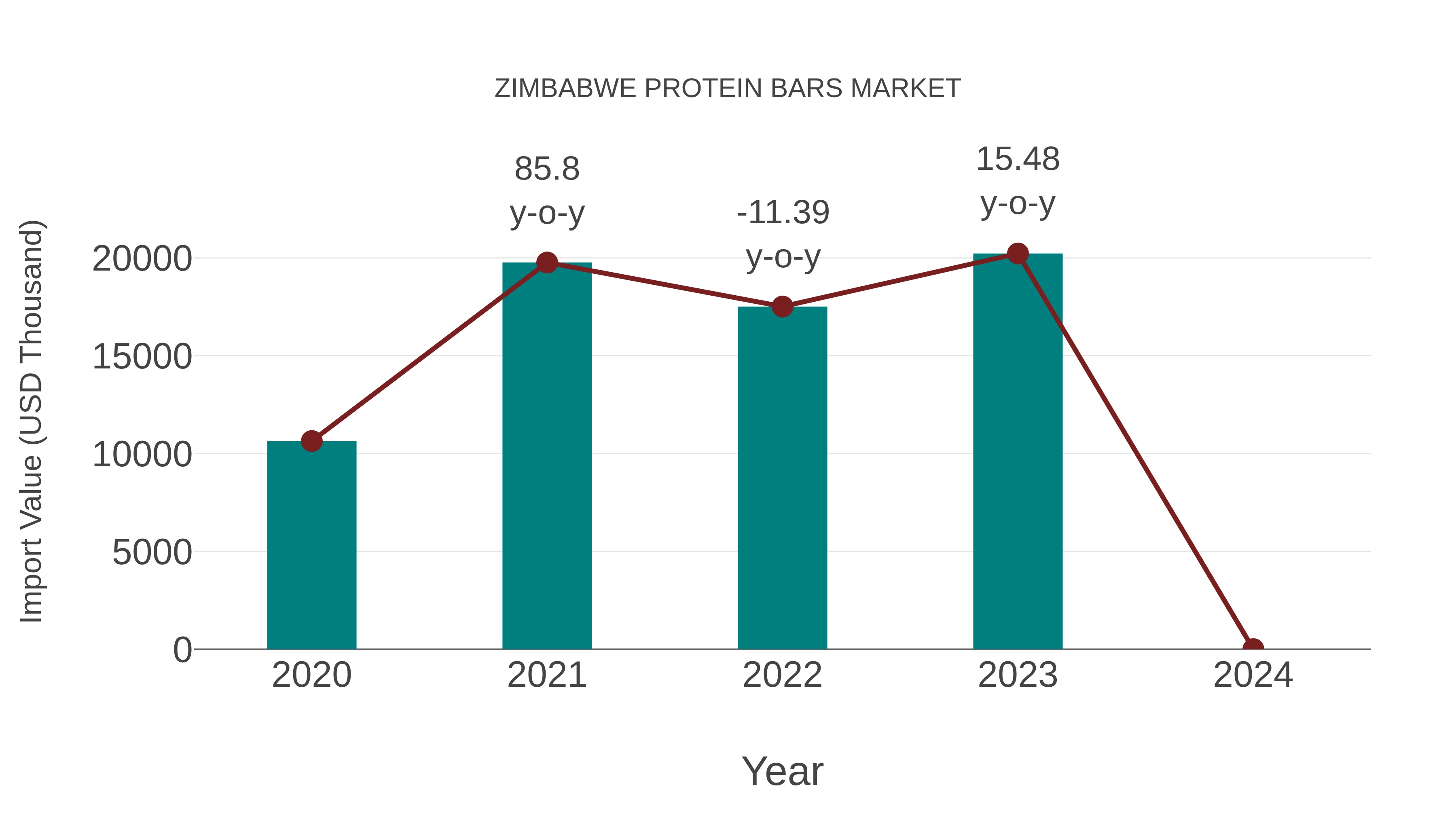
Between 2020 and 2024, the Zimbabwe protein bars market experienced a Compound Annual Growth Rate (CAGR) of 23.88%. The import trend during this period showed a consistent increase year-on-year, with a zero growth rate observed from 2023 to 2024. This overall growth in imports was driven by the steady expansion of the market demand for protein bars in Zimbabwe.
Zimbabwe Protein Bars Market Overview
The Zimbabwe protein bars market is a growing sector within the broader health and wellness industry. With an increasing focus on fitness and healthy eating habits among consumers, the demand for convenient and nutritious snack options like protein bars has been on the rise. Local brands are emerging to cater to this demand, offering a variety of flavors and formulations to appeal to different consumer preferences. The market is also seeing an influx of international brands looking to capitalize on the growing health-conscious trend in Zimbabwe. As disposable incomes rise and awareness about the importance of protein in the diet increases, the Zimbabwe protein bars market is expected to experience further growth and innovation, presenting opportunities for both local and foreign manufacturers to expand their presence in the region.
Zimbabwe Protein Bars Market Trends and Opportunities
The Zimbabwe Protein Bars Market is experiencing significant growth due to increasing health awareness and the rise of fitness trends in the country. Consumers are seeking convenient and nutritious snack options, driving the demand for protein bars as a convenient source of protein on-the-go. There is a growing interest in plant-based and organic protein bars, catering to the preferences of health-conscious consumers. Additionally, the market presents opportunities for innovation in flavors, packaging, and marketing strategies to target specific consumer segments such as athletes, busy professionals, and health enthusiasts. As the market continues to expand, there is potential for collaborations with local gyms, health stores, and online retailers to reach a wider customer base and capitalize on the growing health and wellness trend in Zimbabwe.
Zimbabwe Protein Bars Market Challenges
In the Zimbabwe Protein Bars Market, one of the main challenges faced is the limited consumer awareness and understanding of the benefits of protein bars compared to other snack options. This lack of awareness often leads to lower demand and slower market growth. Additionally, the high cost of producing protein bars due to the importation of key ingredients can make them less affordable for the average Zimbabwean consumer, further restricting market penetration. Distribution and logistics challenges, including limited access to retail outlets and inadequate transportation infrastructure, also hinder the reach of protein bars to a wider consumer base. Overcoming these challenges will require targeted marketing efforts to educate consumers, strategic pricing strategies to improve affordability, and investments in improving distribution networks.
Zimbabwe Protein Bars Market Drivers
The Zimbabwe Protein Bars Market is primarily driven by the increasing health consciousness among consumers, leading to a growing demand for convenient and nutritious snack options. With a rising focus on fitness and wellness, consumers are actively seeking products that offer a balance of protein, fiber, and other essential nutrients. Additionally, the busy lifestyles of Zimbabwean consumers have created a need for on-the-go snack solutions, further fueling the demand for protein bars. The market is also benefitting from the expanding retail sector and the availability of a variety of flavors and formulations catering to different dietary preferences. Overall, the Zimbabwe Protein Bars Market is expected to continue its growth trajectory driven by these factors in the coming years.
Zimbabwe Protein Bars Market Government Policies
The government of Zimbabwe has implemented various policies impacting the Protein Bars Market. These include regulations on food labeling to ensure transparency and consumer safety. Additionally, there are import and export regulations that affect the availability of ingredients and finished products in the market. The government also promotes local production through support programs and incentives for domestic manufacturers. Furthermore, there are health and safety standards enforced by regulatory bodies to maintain the quality of protein bars in the market. Overall, the government`s policies aim to create a competitive and sustainable market environment for protein bars in Zimbabwe while prioritizing consumer health and industry growth.
Zimbabwe Protein Bars Market Future Outlook
The Zimbabwe Protein Bars Market is poised for significant growth in the coming years as consumers increasingly prioritize health and wellness. With rising awareness about the importance of protein in the diet and the convenience of on-the-go snacks, protein bars are expected to gain popularity among Zimbabwean consumers. The market is likely to see an influx of new products catering to different dietary preferences such as vegan, gluten-free, and organic options. Additionally, the increasing urbanization and busy lifestyles in Zimbabwe are driving the demand for convenient and nutritious snack options, further fueling the growth of the protein bars market. Overall, the future outlook for the Zimbabwe Protein Bars Market appears promising with ample opportunities for innovation and market expansion.
Key Highlights of the Report:
- Zimbabwe Protein Bars Market Outlook
- Market Size of Zimbabwe Protein Bars Market, 2025
- Forecast of Zimbabwe Protein Bars Market, 2032
- Historical Data and Forecast of Zimbabwe Protein Bars Revenues & Volume for the Period 2022 - 2032F
- Zimbabwe Protein Bars Market Trend Evolution
- Zimbabwe Protein Bars Market Drivers and Challenges
- Zimbabwe Protein Bars Price Trends
- Zimbabwe Protein Bars Porter's Five Forces
- Zimbabwe Protein Bars Industry Life Cycle
- Historical Data and Forecast of Zimbabwe Protein Bars Market Revenues & Volume By Distribution Channel for the Period 2022 - 2032F
- Historical Data and Forecast of Zimbabwe Protein Bars Market Revenues & Volume By Supermarkets/Hypermarkets for the Period 2022 - 2032F
- Historical Data and Forecast of Zimbabwe Protein Bars Market Revenues & Volume By Convenience Stores for the Period 2022 - 2032F
- Historical Data and Forecast of Zimbabwe Protein Bars Market Revenues & Volume By Specialty Stores for the Period 2022 - 2032F
- Historical Data and Forecast of Zimbabwe Protein Bars Market Revenues & Volume By Online Stores for the Period 2022 - 2032F
- Historical Data and Forecast of Zimbabwe Protein Bars Market Revenues & Volume By Other Distribution Channels for the Period 2022 - 2032F
- Zimbabwe Protein Bars Import Export Trade Statistics
- Market Opportunity Assessment By Distribution Channel
- Zimbabwe Protein Bars Top Companies Market Share
- Zimbabwe Protein Bars Competitive Benchmarking By Technical and Operational Parameters
- Zimbabwe Protein Bars Company Profiles
- Zimbabwe Protein Bars Key Strategic Recommendations






































