Zimbabwe Table Olives Market: Import Trend Analysis
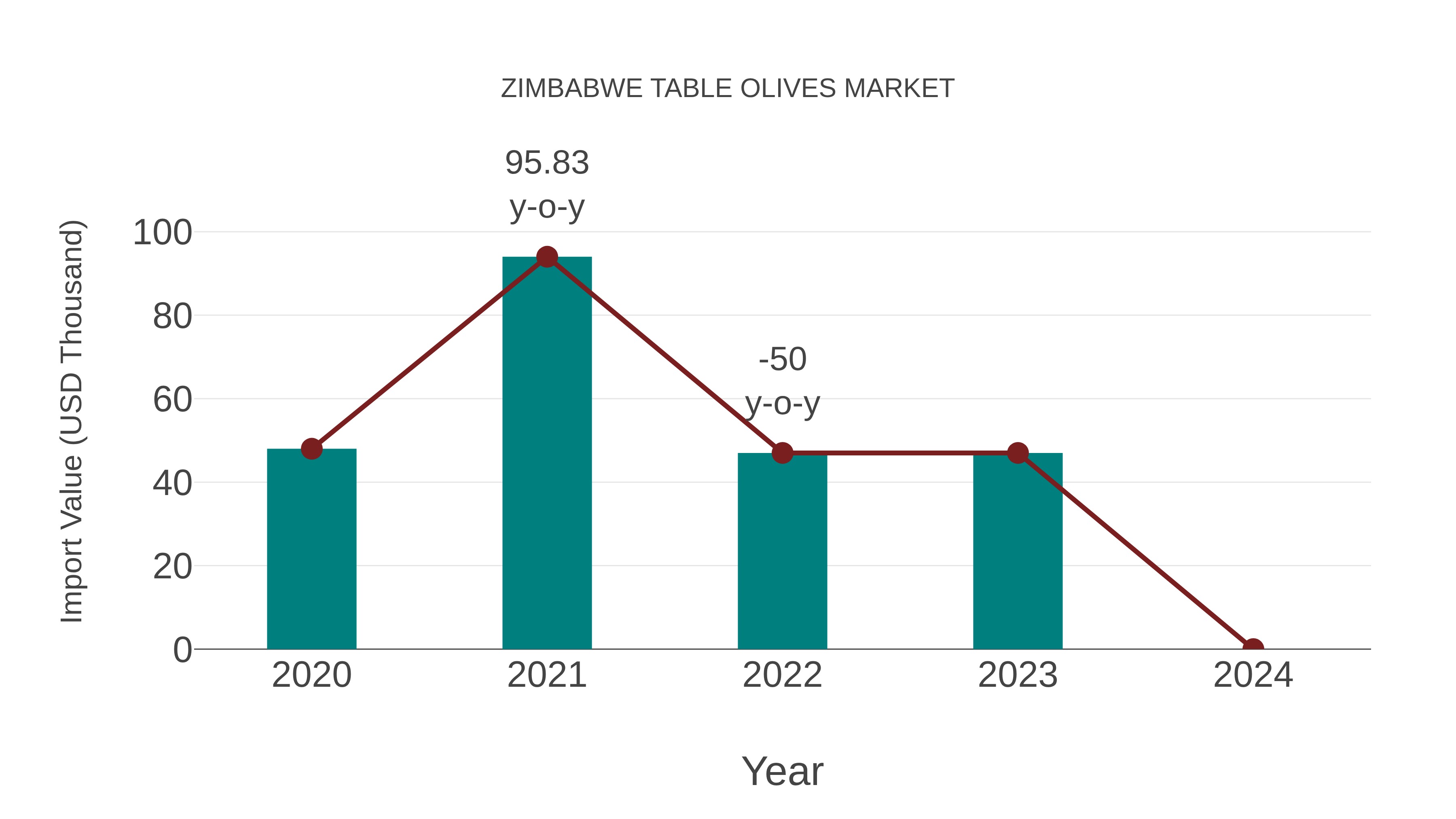
The import trend for Zimbabwe`s table olives market in the past has shown a steady increase due to rising consumer demand and limited domestic production capacity. This has led to a greater reliance on imported table olives to meet market needs.
Zimbabwe Table Olives Market Synopsis
The Zimbabwe Table Olives market is a niche segment within the country`s agricultural industry, primarily concentrated in regions with suitable climate conditions for olive cultivation such as the Eastern Highlands. The market is characterized by small-scale olive farmers producing primarily for the local market, with a limited presence in international trade. Zimbabwean table olives are known for their unique flavor profile and are typically used in local cuisine and traditional dishes. However, the market faces challenges such as limited infrastructure, lack of modern farming techniques, and inconsistent government support. Despite these challenges, there is a growing interest in olive cultivation among farmers, and efforts are being made to improve quality standards and increase production efficiencies to tap into the potential export market.
Zimbabwe Table Olives Market Trends
The Zimbabwe Table Olives Market is experiencing growth opportunities driven by increasing consumer awareness of the health benefits of olives and a growing trend towards healthier eating habits. The market is also benefiting from the rising popularity of Mediterranean cuisine, where olives are a staple ingredient. Additionally, the emergence of small-scale olive farms and producers in Zimbabwe is contributing to the market`s growth by offering a diverse range of high-quality, locally-produced olives. With a focus on sustainability and organic farming practices, there is potential for Zimbabwe to position itself as a niche player in the global olive market. Collaborations with international partners for technology transfer and market access could further enhance the competitiveness of Zimbabwe`s table olives sector.
Zimbabwe Table Olives Market Challenges
In the Zimbabwe Table Olives Market, there are several challenges that impact the industry. One major challenge is the lack of modern agricultural practices and infrastructure, leading to lower production efficiency and quality standards. Additionally, inconsistent government policies and regulations, as well as limited access to financial resources and technology, hinder the growth potential of table olive producers in Zimbabwe. The market also faces competition from imported table olives, which often have lower prices due to economies of scale in larger producing countries. Furthermore, issues related to climate change, such as erratic weather patterns and water scarcity, pose a threat to olive cultivation in Zimbabwe. Overall, addressing these challenges through investment in technology, infrastructure, and sustainable farming practices will be vital for the growth and competitiveness of the Zimbabwe Table Olives Market.
Zimbabwe Table Olives Market Investment Opportunities
The Zimbabwe Table Olives Market is primarily driven by increasing consumer awareness about the health benefits associated with olives, such as their high antioxidant content and potential to reduce the risk of heart disease. Additionally, the rising trend of healthy eating habits and the growing popularity of Mediterranean cuisine in Zimbabwe are fueling the demand for table olives. The expanding retail sector and the presence of a variety of flavors and packaging options are also contributing to market growth. Furthermore, government initiatives to promote agricultural production and exports are supporting the local olive industry, leading to increased cultivation and processing of olives in the country. Overall, these factors are driving the growth of the Zimbabwe Table Olives Market.
Zimbabwe Table Olives Market Government Polices
The Zimbabwean government has implemented various policies to support and promote the Table Olives Market in the country. These policies include providing financial support and incentives to farmers to increase table olive production, facilitating access to agricultural inputs and technologies, and promoting value addition and export-oriented strategies to enhance market competitiveness. The government has also established quality standards and regulations to ensure the safety and quality of table olives for both domestic consumption and export markets. Additionally, there are efforts to promote sustainable farming practices and environmental stewardship to ensure the long-term viability of the table olive industry in Zimbabwe. Overall, these policies aim to boost production, improve market access, and enhance the overall growth and sustainability of the Zimbabwe Table Olives Market.
Zimbabwe Table Olives Market Future Outlook
The future outlook for the Zimbabwe table olives market appears promising, with steady growth expected in the coming years. Factors such as increasing consumer awareness of the health benefits of olives, rising demand for natural and organic food products, and the country`s favorable climate for olive cultivation are likely to drive market expansion. Additionally, with advancements in agricultural practices and technology, Zimbabwean olive producers can enhance productivity and quality, making their products more competitive in both domestic and international markets. As the global trend towards healthier eating habits continues, the Zimbabwe table olives market is well-positioned to capitalize on this opportunity and attract a growing customer base seeking high-quality, nutritious food options.
Key Highlights of the Report:
- Zimbabwe Table Olives Market Outlook
- Market Size of Zimbabwe Table Olives Market, 2025
- Forecast of Zimbabwe Table Olives Market, 2032
- Historical Data and Forecast of Zimbabwe Table Olives Revenues & Volume for the Period 2022 - 2032F
- Zimbabwe Table Olives Market Trend Evolution
- Zimbabwe Table Olives Market Drivers and Challenges
- Zimbabwe Table Olives Price Trends
- Zimbabwe Table Olives Porter's Five Forces
- Zimbabwe Table Olives Industry Life Cycle
- Historical Data and Forecast of Zimbabwe Table Olives Market Revenues & Volume By Type for the Period 2022 - 2032F
- Historical Data and Forecast of Zimbabwe Table Olives Market Revenues & Volume By Black Olive for the Period 2022 - 2032F
- Historical Data and Forecast of Zimbabwe Table Olives Market Revenues & Volume By Green Olive for the Period 2022 - 2032F
- Historical Data and Forecast of Zimbabwe Table Olives Market Revenues & Volume By Application for the Period 2022 - 2032F
- Historical Data and Forecast of Zimbabwe Table Olives Market Revenues & Volume By Online Store for the Period 2022 - 2032F
- Historical Data and Forecast of Zimbabwe Table Olives Market Revenues & Volume By Supermarket for the Period 2022 - 2032F
- Historical Data and Forecast of Zimbabwe Table Olives Market Revenues & Volume By Convenience Store for the Period 2022 - 2032F
- Historical Data and Forecast of Zimbabwe Table Olives Market Revenues & Volume By Other for the Period 2022 - 2032F
- Zimbabwe Table Olives Import Export Trade Statistics
- Market Opportunity Assessment By Type
- Market Opportunity Assessment By Application
- Zimbabwe Table Olives Top Companies Market Share
- Zimbabwe Table Olives Competitive Benchmarking By Technical and Operational Parameters
- Zimbabwe Table Olives Company Profiles
- Zimbabwe Table Olives Key Strategic Recommendations






































