How Will Cloud Adoption and Government Initiatives Drive Saudi Arabia's Managed Security Services Growth?
Saudi Arabia Managed Security Services Market
Objective
This research looked at where Saudi Arabia's managed security services market stands today and where it's headed between 2022 and 2028 — covering service type, organisation size, deployment model, application area and regional variation. The aim was to identify the key drivers and restraints shaping the market and give stakeholders a solid basis for decisions on market entry, product development and investment. We looked to quantify revenue, map out competitive positioning, and assess how government policy is shaping growth — all with a view to helping clients refine their cybersecurity offering and capture opportunity in a digital landscape that's moving fast.
Business Challenge
Saudi Arabia's digital transformation agenda — Vision 2030, the National Cybersecurity Strategy — has pushed ICT infrastructure deeper into critical sectors, and with it, exposed those sectors to a much bigger set of cyber risks. Cloud adoption, IoT, AI, and the shift to remote work during and after COVID have all added to the demand for more sophisticated managed security. At the same time, the market has to contend with the high cost of cybersecurity, a genuine shortage of qualified professionals, and threats that keep evolving faster than most organisations can keep up with. A crowded field of domestic and international providers sharpens competition further, and the cost of deploying and maintaining advanced security tools puts real pressure on smaller organisations in particular. All of this makes for a market that's growing fast but isn't especially easy to navigate without a clear read on where the risk and the opportunity actually sit.
How We Did It
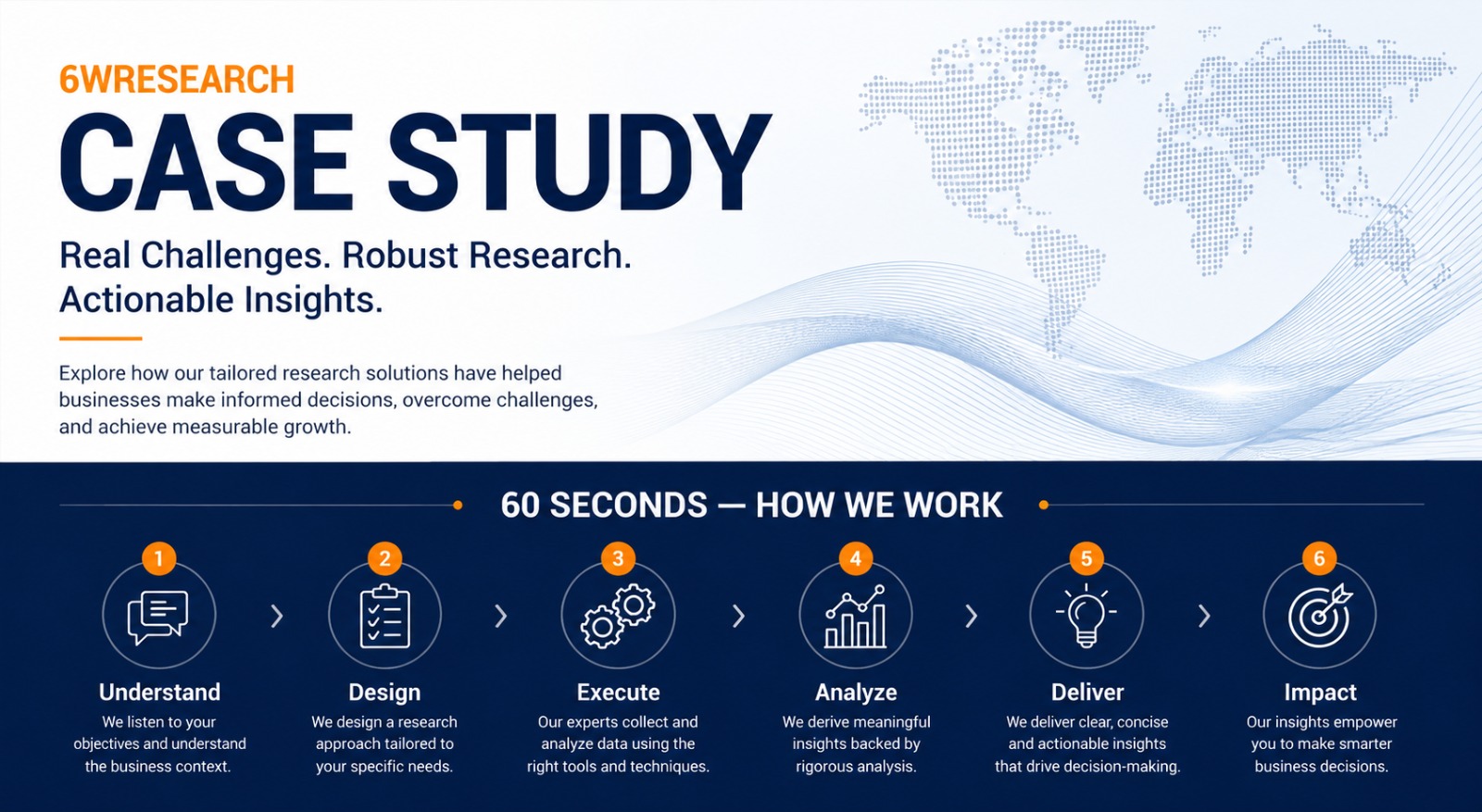
We built this study on primary interviews conducted through 6WForum with cybersecurity providers, government officials and industry leaders, which we used to validate the qualitative picture, and secondary research drawing on company reports, government publications and industry databases. Python handled data cleaning, segmentation and trend forecasting; SQL managed the larger respondent-level datasets. Market sizing combined regression analysis with time-series extrapolation to keep the forecasts grounded, and 6WSurveyIQ supported the survey design and data collection behind the quantitative work. Power BI dashboards gave the client a live view of the key metrics for ongoing decision-making. We also folded in government initiatives and regional development plans throughout, to make sure the numbers sat within the right policy and infrastructure context.
Key Findings
- The market is expected to grow at roughly 12.2% CAGR from 2022 to 2028, driven by digitalisation and a rising volume of cyber threats.
- Market revenues are expected to reach substantial levels across service types, with threat intelligence and assets monitoring leading growth segments.
- Large enterprises still dominate by revenue, but SMEs are likely to grow fastest, helped along by government programmes like CyberIC.
- Cloud-based security services are set to accelerate at a faster rate than on-premise solutions, supported by government policies and infrastructure investments.
- ICT and energy together account for over 70% of the market, given how much data they handle and how critical their infrastructure is.
- Riyadh and the Western region are key regional hubs, with significant investments in smart city projects and ICT infrastructure fueling regional demand.
- Cisco, IBM and local player Security Matterz lead the competitive field, backed by ongoing innovation and partnerships.
Findings
This market is still relatively early in its growth curve but is set for rapid expansion. It slowed in 2020 due to COVID but recovered quickly as digital transformation picked up pace. Vision 2030 and the National Cybersecurity Strategy have created real momentum for cybersecurity investment, and programmes like CyberIC are helping build up local capability and talent. Rising cloud adoption, Industry 4.0 technology, and large infrastructure projects — NEOM, the Red Sea Development among them — are all adding to demand. Large enterprises in energy and ICT, given the sensitivity of the data they hold, remain the biggest buyers of managed security services. Zero Trust Network Access is gaining ground too, largely as a response to the security challenges that came with remote work becoming standard. Altogether, the market looks well set up for both domestic and international providers to expand, riding the government's digital agenda and its broader focus on cybersecurity resilience.
The rising threat landscape and the broader digital push are reshaping how organisations in Saudi Arabia think about security. There's a clear move away from reactive, traditional measures toward proactive threat detection, real-time monitoring and integrated compliance management. More IoT devices and more remote work have widened the attack surface considerably, and that's pushing organisations toward scalable, cloud-based security that's flexible and reasonably cost-effective. Government initiatives like CyberIC are raising awareness and helping bring SMEs into the managed security market for the first time, aided by falling cloud security costs and growing local expertise. As data protection and operational continuity climb up the priority list, demand for threat intelligence, incident response and compliance-specific services should keep growing quickly — which means MSSPs need to keep innovating and tailoring their offering if they want to stay ahead in a market that's moving this fast.
Business Impact
The projected growth to several hundred million dollars in revenue by 2028 points to real opportunity for both new entrants and established providers. Rising adoption of cloud-based and advanced security tools should let MSSPs diversify what they offer, run more efficiently, and expand into high-growth areas like ICT, energy and government. Regional development projects and smart-city initiatives open up room for more tailored security offerings and longer-term client relationships. Government programmes — CyberIC and the national cybersecurity strategy more broadly — should help build up local industry and reduce dependence on imported solutions, letting MSSPs draw more on local talent and homegrown innovation. As awareness grows among both SMEs and large enterprises, service penetration and revenue should follow. Investment in workforce training, technology upgrades and regional expansion will matter most for firms trying to hold a competitive edge and support Saudi Arabia's ambitions around a resilient, digitally-secure economy.


