What Factors Drive Diesel Genset Market Success Across Global Regions?
Global Diesel Genset Market
Objective
This research dug into the global diesel genset market between 2021 and 2027, with a close look at how individual OEMs and brands are performing, what actually drives buyers to choose one over another, and how government regulation is reshaping the picture region by region. We wanted to nail down what really moves purchase decisions — technical specs, brand reputation, regulatory compliance — so clients could use that to sharpen market entry plans, position products more effectively, and benchmark against competitors. The geographic scope was broad: Southeast Asia, South Asia, the Middle East, Africa, Latin America, and the CIS countries, each with its own regional quirks and regulatory environment worth understanding on its own terms. Built for OEMs, distributors, investors, and policymakers, the research leaned on 6Wresearch's data tools — 6WSurveyIQ for primary collection and our broader analytics ecosystem for sizing and forecasting — to help stakeholders shape their product portfolios around emission standards, spot emerging opportunities, and make investment calls with more confidence.
Business Challenge
The diesel genset market doesn't behave the same way twice depending on where you look — it's fragmented by region, moving fast on the technology side, and increasingly boxed in by emission rules that vary from country to country. OEMs are left guessing at regional brand loyalty and how the next policy shift might force a redesign. Day to day, that means competing on price while still meeting technical and environmental standards, keeping spare-parts supply chains running smoothly, and adjusting to regulatory frameworks that rarely line up across borders. Companies also need a real read on what actually drives a purchase in each region — reliability, fuel efficiency, safety, resale value — since these weigh differently depending on the market. With dozens of regional and international brands all fighting for share, standing out takes real positioning work, not guesswork. The bigger goal was spotting growth opportunities, managing regulatory risk, and building marketing and product strategies that actually match what buyers in each region want, using the regional data 6Wresearch already has on hand.
How We Did It
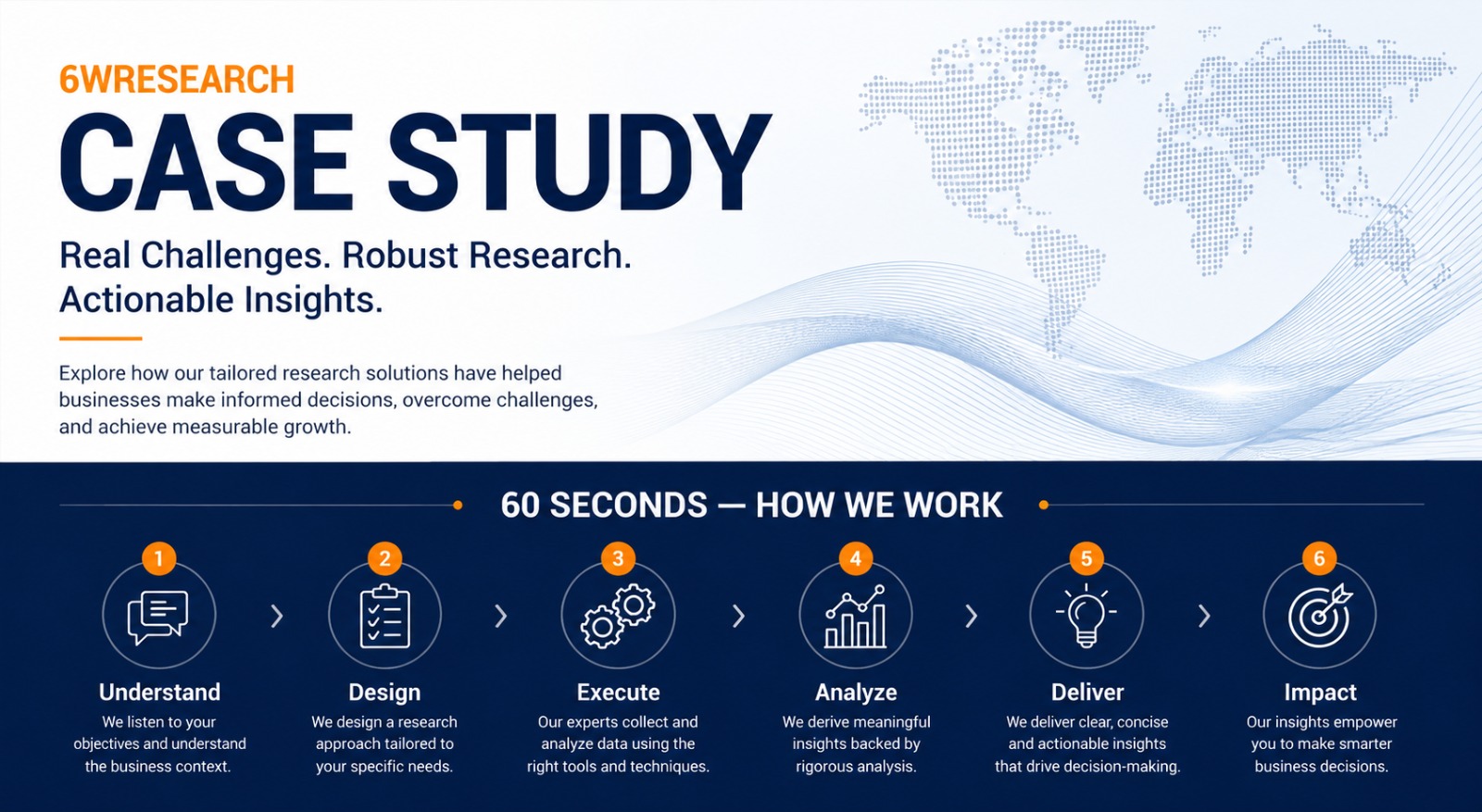
We ran a layered approach, combining primary and secondary research to build a fuller picture. 6WSurveyIQ handled the structured surveys across key regional markets, pulling in feedback from end-users, distributors, and industry experts on brand preferences, technical priorities, and what actually drives a purchase. Stratified, quota-based sampling kept the regional mix honest rather than skewed toward whichever market was easiest to survey. We backed that up with secondary research pulled from industry reports, regulatory filings, and OEM disclosures. Python did the data cleaning, segmentation, and statistical work needed to isolate regional variation and key drivers, while SQL kept the respondent-level data organized and easy to pull from. Market sizing, forecasting, and competitive benchmarking ran through 6Wresearch's proprietary analytics tools, and Power BI and Tableau dashboards turned all of it into something stakeholders could explore in real time rather than just read as a static report. Expert interviews through 6WForum, plus regulatory analysis, rounded out the qualitative side — giving us a fuller sense of how regulation actually plays out on the ground, not just how it's written.
Key Findings
- The global diesel genset market is expected to grow steadily from 2021 to 2027, driven by infrastructure development and industrial expansion in emerging regions.
- Regional OEM brand preferences are very diverse, with Caterpillar, Cummins and local brands like Kirloskar and Aksa dominating their respective markets.
- Customer purchase motivators differ regionally; reliability, fuel efficiency, and safety features are universally valued, but regional factors such as resale value and dealer support influence brand loyalty.
- Stringent emission standards, such as EU Stage V and EPA Tier regulations, are shaping product development, with OEMs adopting compliant technologies to access export markets.
- The use of advanced analytics platforms like 6WSurveyIQ and Power BI has improved data-driven decision-making, allowing OEMs to customize offerings and streamline supply chains.
- Regulatory landscapes vary differently, with some regions lacking strict enforcement. This results in a diverse compliance environment that OEMs must navigate.
- Go-to-market (GTM) strategies should deeply focus on regional regulatory compliance, brand positioning around reliability and efficiency, and leveraging local distribution networks for competitive advantage.
Findings
Who dominates a regional genset market comes down almost entirely to how well an OEM has adapted to local preference, not just brand recognition. In Southeast Asia, Caterpillar and Cummins hold strong positions, largely because their dealer networks are deep and respondents consistently rated them well on durability and safety. African markets tell a different story — local brands like Aksa and other regional OEMs are picking up ground by competing on price and offering service support that's actually reachable, not just promised. Loyalty across the board tracks closely with perceived reliability and operational efficiency; fuel consumption and noise control keep coming up as top purchase drivers. The segmentation work through 6WSurveyIQ made it clear that technical performance and after-sales support are what actually keep customers loyal, particularly in emerging markets where switching costs and trust matter more. All of this points OEMs toward aligning product development with regional emission rules and customer expectations, using the 6Wresearch analytics work to fine-tune both product and distribution.
Buying behavior is shifting toward value — operating costs and resale potential now sit right alongside raw technical performance when it comes to decision-making. In South Asia and Latin America especially, respondents said they'd pay more for better fuel efficiency and lower emissions, which tracks with where regional regulation is heading anyway. The Python-based segmentation and conjoint analysis showed buyers are more sensitive to environmental regulation than you might expect — a lot of respondents flagged EU Stage V and EPA Tier compliance as a real factor in their decision, not just a box to check. Digital channels and regional distributor networks turned out to carry the most weight in shaping brand perception, particularly in markets where physical dealer presence is thin. High upfront cost and weak after-sales infrastructure remain real barriers in some regions, holding back adoption even where demand exists. Taken together, this gives OEMs a clearer sense of which product features actually resonate locally, where to put marketing dollars, and where flexible financing might unlock demand that's currently stuck.
Business Impact
This research gives OEMs and other stakeholders a fairly concrete path forward on market penetration and positioning. Once you understand what a given region actually wants and what its regulators require, it's much easier to build a product portfolio around reliability, fuel efficiency, and compliance — the things that drive both satisfaction and loyalty. The regional brand-performance breakdown also points to where dealer networks and after-sales support need strengthening, since that's where customer retention actually gets won or lost. Having 6Wresearch's Power BI dashboards in the mix means market trends, competitor moves, and regulatory shifts can be tracked in near real time rather than discovered after the fact. Knowing where the real barriers are — high upfront costs, thin distribution — makes it possible to build financing and marketing that actually address them instead of working around them. In short, this supports smarter cost management, closer alignment with regional environmental policy, and more confident expansion into markets that are still developing — which, over time, is what actually drives sustainable growth in this industry.


