How Can Local Engagement Turn Awareness into Adoption?
Impact Assessment of Activations on Rooftop Solar Awareness
Objective
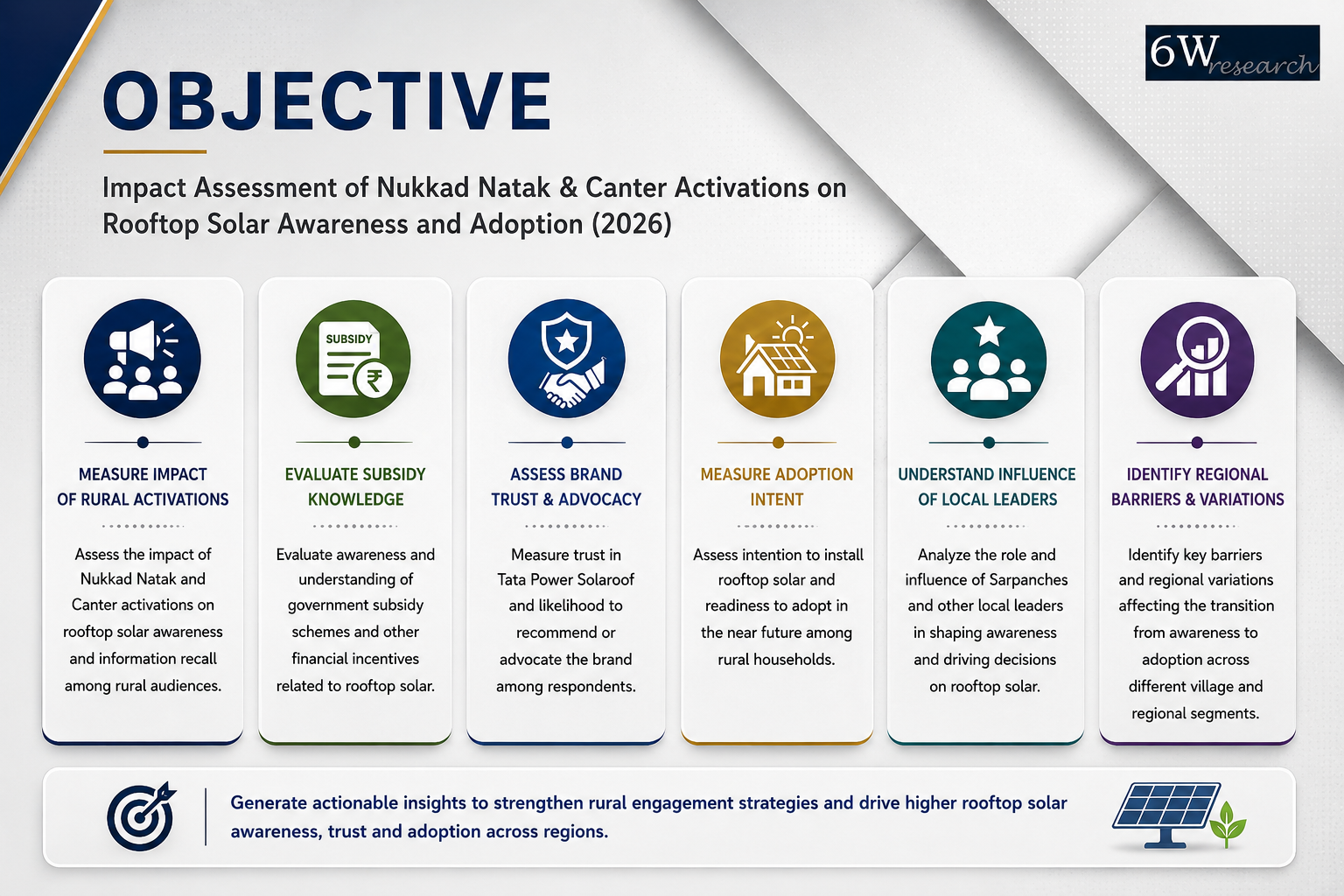
The objective was to measure the impact of rural activations on rooftop-solar awareness, subsidy knowledge, brand trust, advocacy, and adoption intent across different village and regional segments. The study also aimed to identify how local influencers, campaign exposure and regional barriers affected the transition from awareness to adoption.
Business Challenge
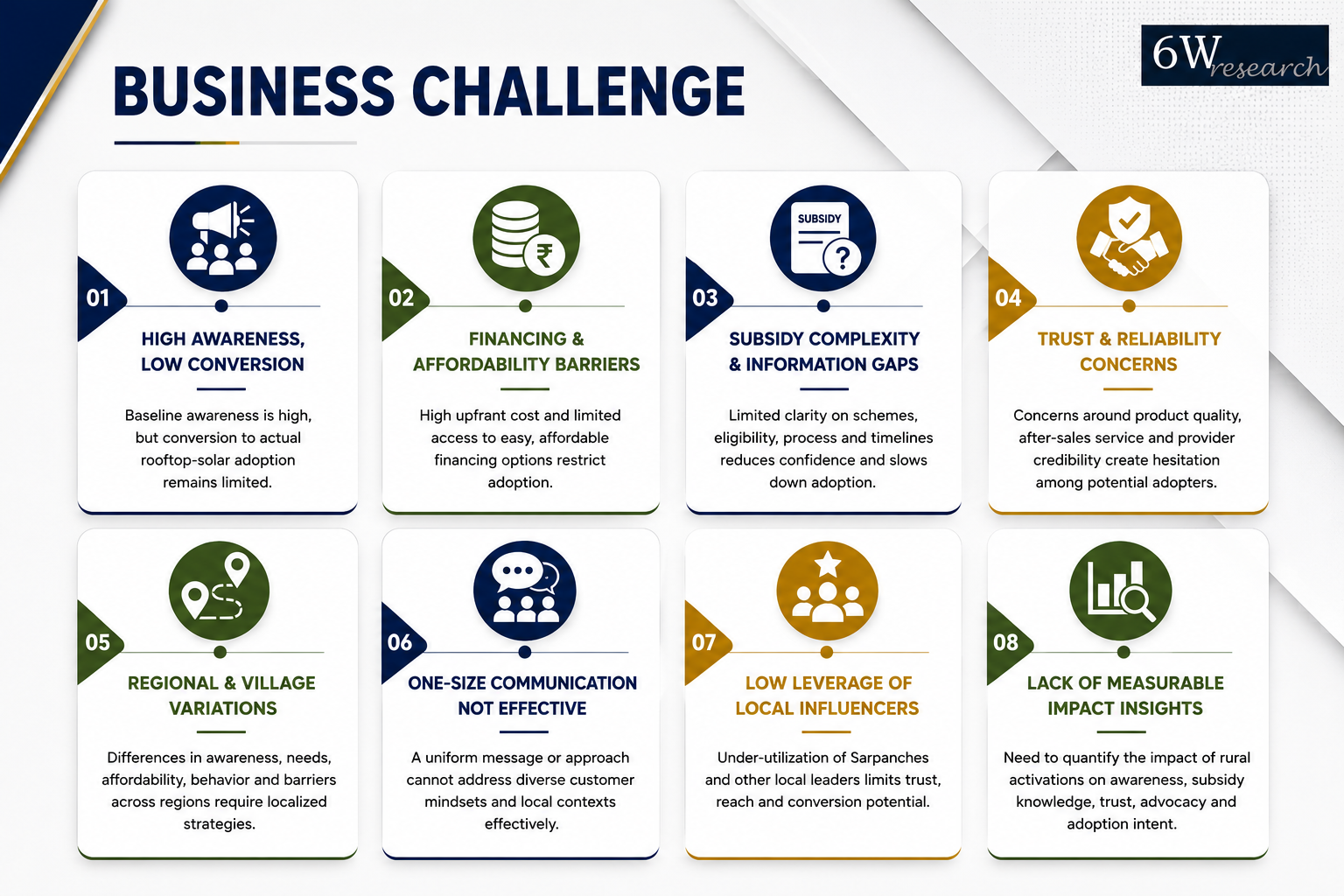
Awareness of the baseline was fairly strong but conversion to actual rooftop-solar adoption remained limited due to barriers of financing, affordability, subsidy complexity, and trust. Different customer behavior across regions meant that a one size fits all communication or conversion strategy would not work effectively across all markets.
How We Did It
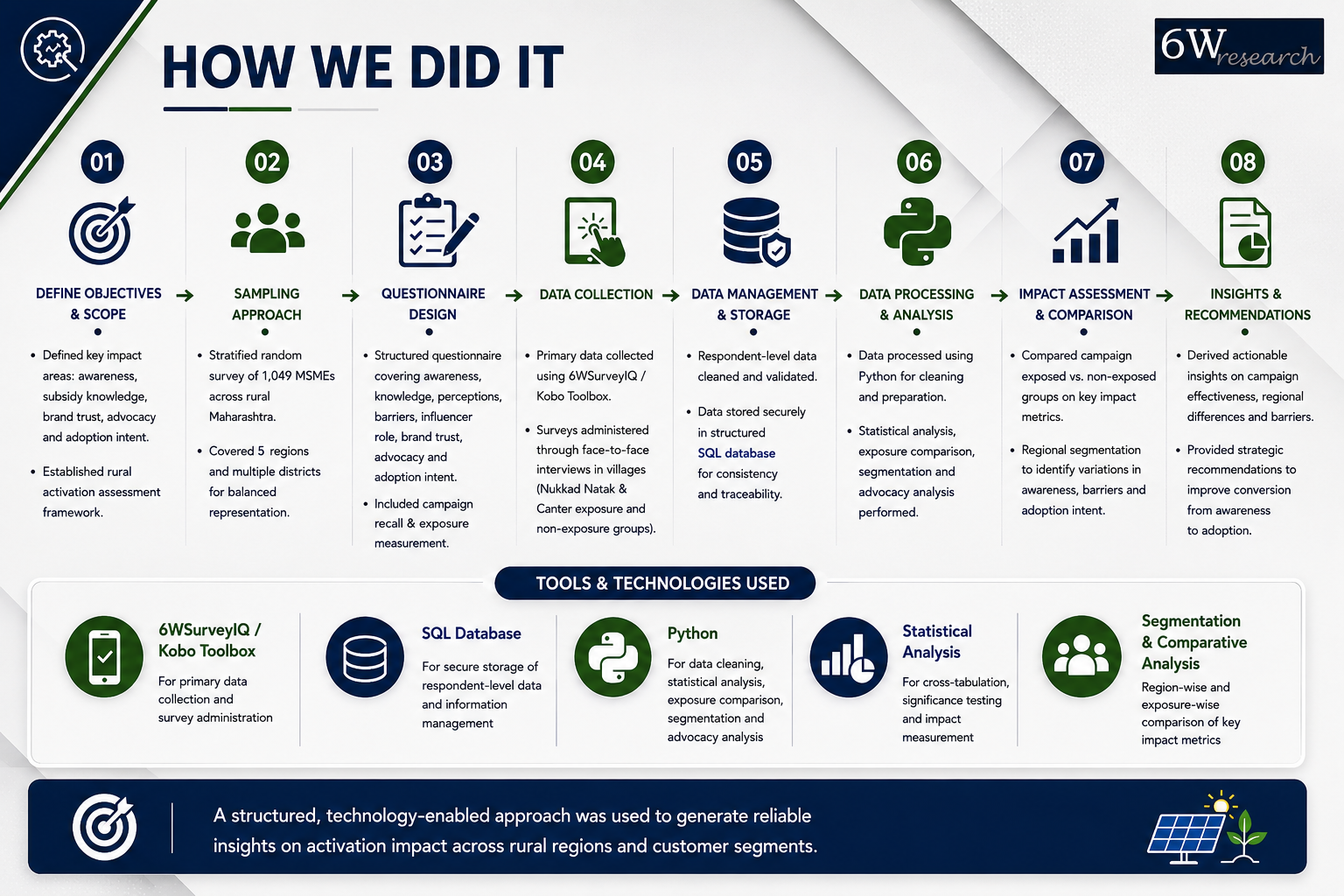
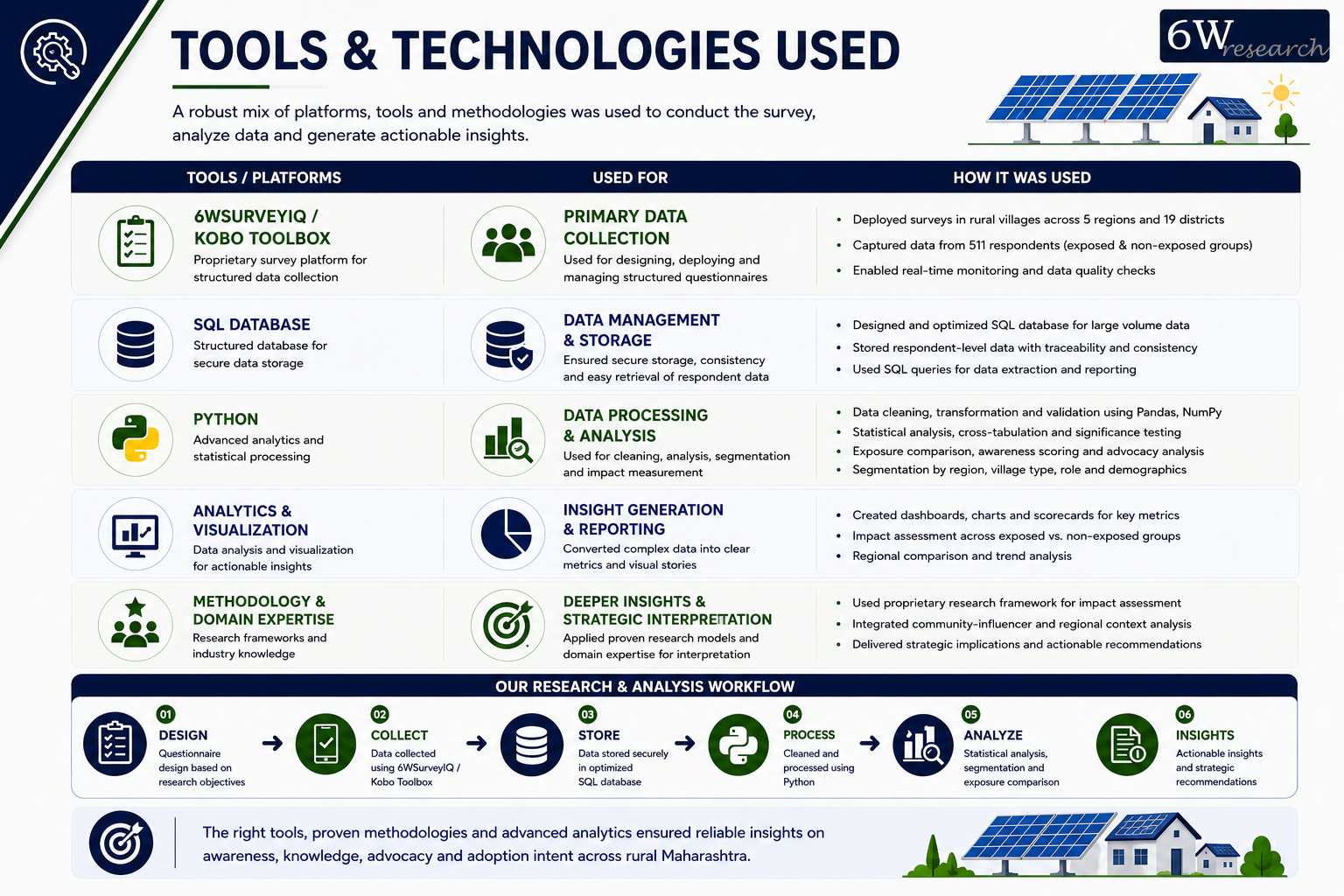
We ran an activation impact assessment to see how effective the on-ground Nukkad Natak and Canter activities actually were at building rooftop solar awareness, understanding, trust and adoption intent across rural Maharashtra. The study covered 511 respondents across five regions — Marathwada, Western Maharashtra, West Vidarbha, North Maharashtra/Khandesh and East Vidarbha — spread across multiple districts to capture regional variation. We compared audiences who'd been exposed to the activations against those who hadn't, to measure the actual incremental impact on reach, recall, solar knowledge, subsidy awareness, brand salience, consideration and adoption intent. We also looked at the role local leadership played — particularly the Sarpanch's influence — along with information sources, media exposure and message retention. Key adoption barriers, including financing constraints, installation costs, limited information and subsidy confusion, were examined to understand what was actually stopping awareness from turning into adoption. We segmented by region to highlight differences in market maturity, financing preferences and conversion potential across Maharashtra. Campaign effectiveness was assessed through message recall and self-reported improvement in understanding among attendees, showing how well the activations actually communicated solar benefits and scheme information. Data was captured via 6WSurveyIQ/Kobo, stored and managed in SQL, with Python handling data cleaning, exposed-versus-non-exposed comparisons, statistical analysis and regional segmentation. We combined descriptive and comparative techniques to identify meaningful differences across audiences and geographies, translating the findings into region-specific, actionable recommendations for activation, communication and financing support going forward.
Key Findings
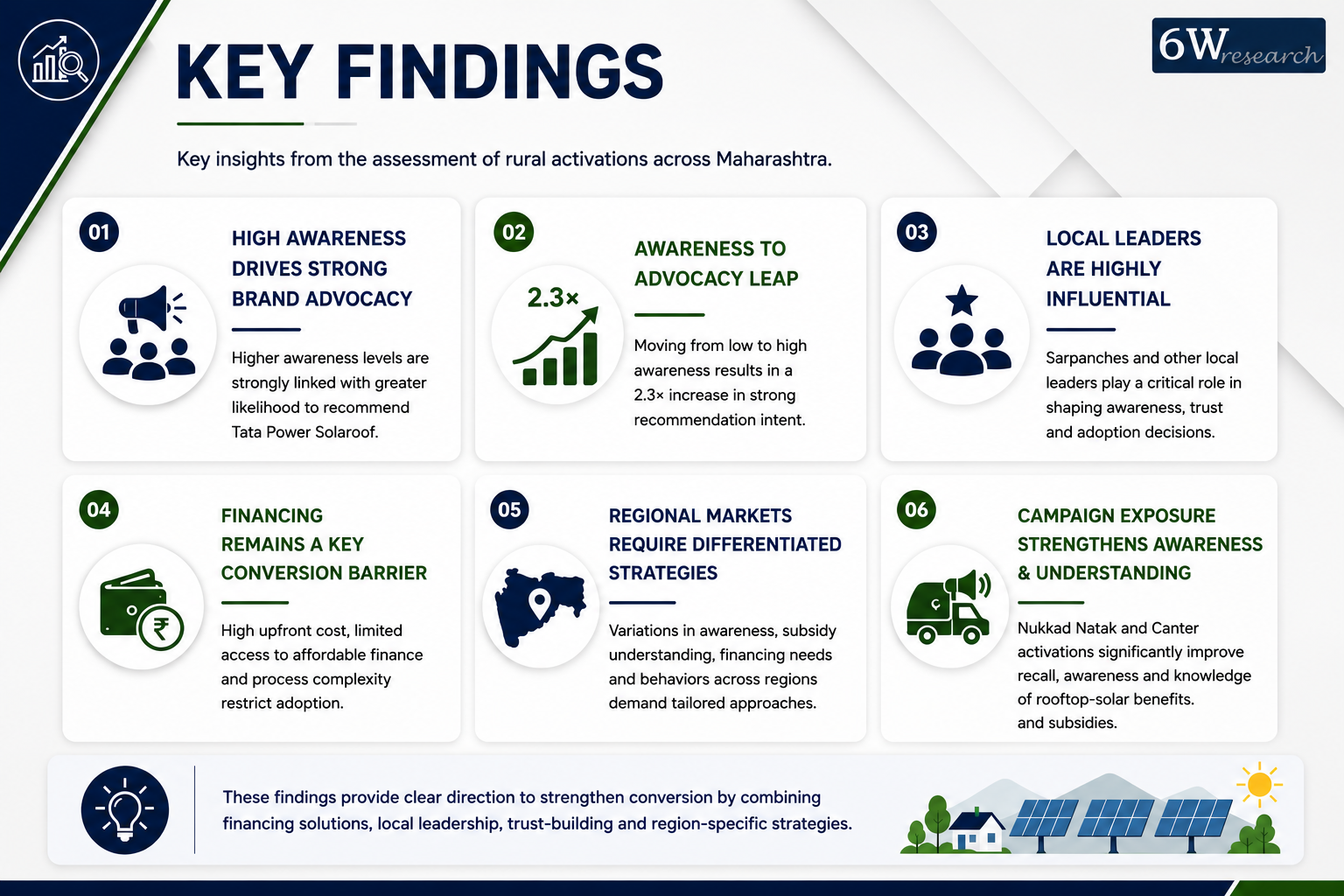
- High awareness was associated with significantly stronger brand advocacy.
- Moving from low to high awareness produced a 2.3× advocacy increase.
- Local leaders were highly influential in rural decision-making.
- Financing remained a key conversion barrier.
- Regional markets required differentiated strategies.
- Campaign exposure strengthened awareness and understanding of rooftop-solar benefits and subsidies.
Findings
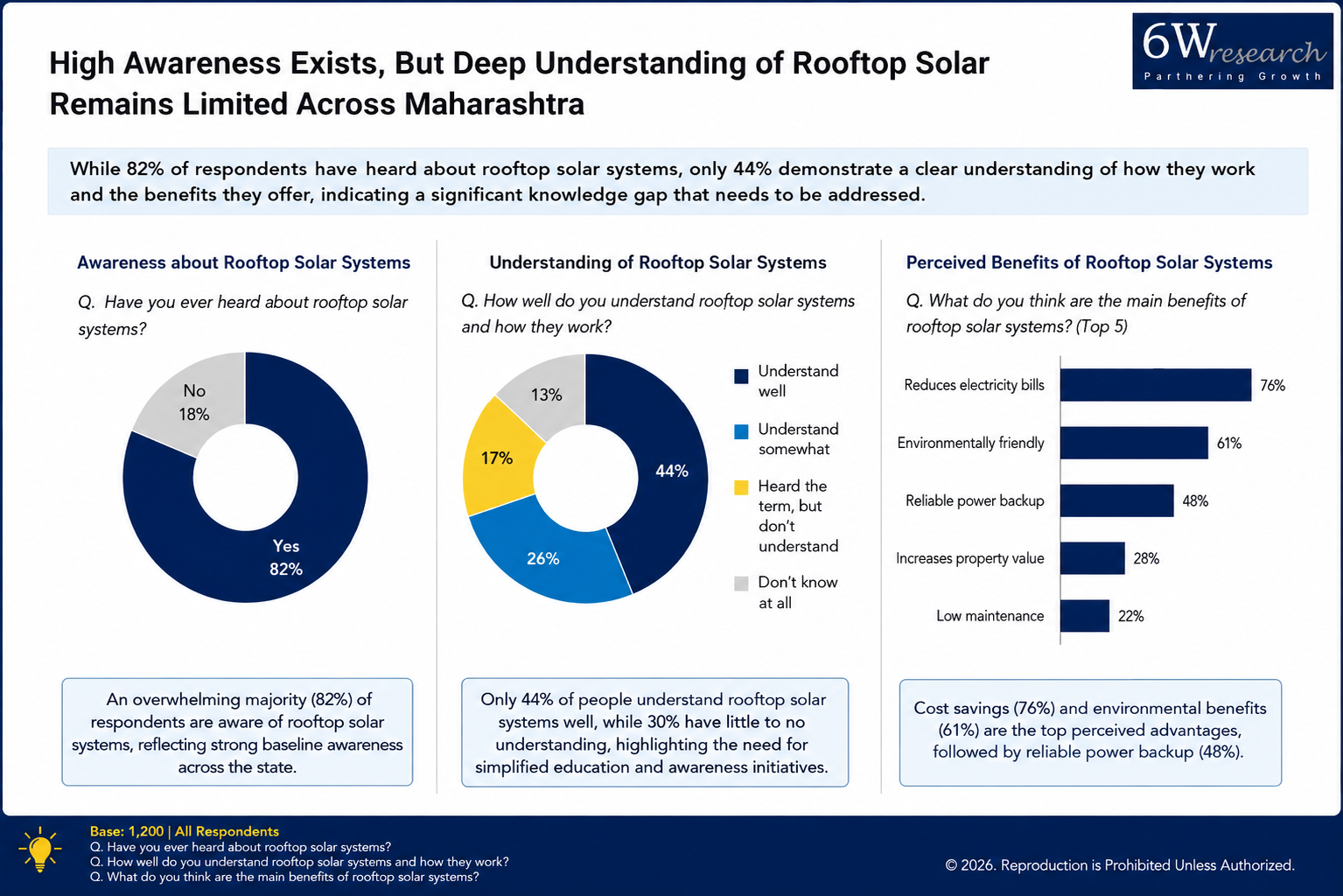
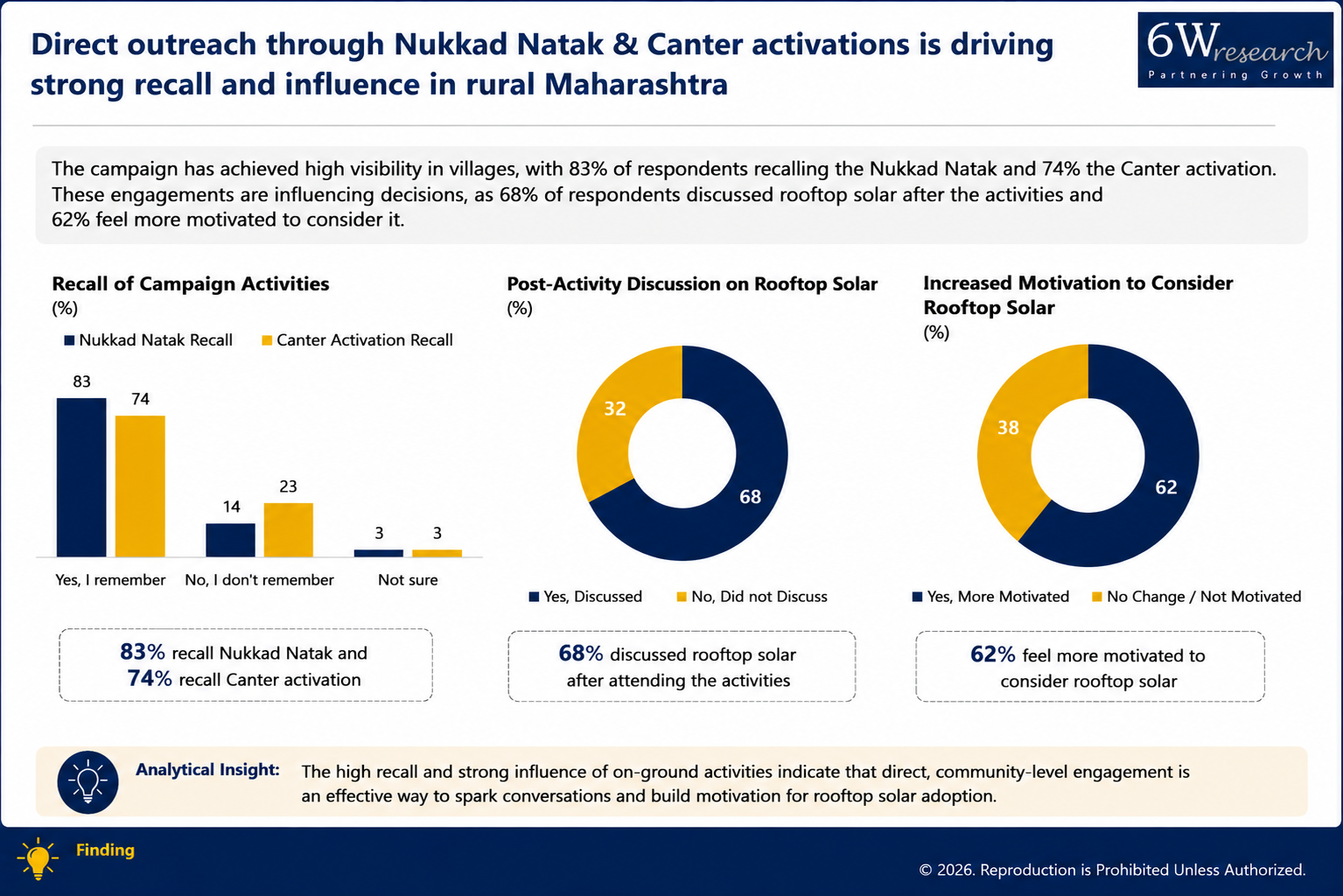
Local, on-the-ground activation is clearly doing a lot of the heavy lifting in moving rural solar communication from basic awareness toward real understanding. Awareness was already high across the board — over 80% in most regions, and as high as 95% in Khandesh — so the real challenge now isn't informing people, it's helping them feel confident enough to actually adopt. The Nukkad Natak and Canter activations worked particularly well here, with 74–98% of attendees saying their understanding improved after attending. Reach did vary by region, from 47% in Khandesh to 71% in Marathwada, and messages around government schemes and rooftop solar info stuck the most. One thing that was really striking: 93-99% of respondents said that a recommendation from their Sarpanch mattered in deciding on rooftop solar — which says a lot about how much trust and local leadership shape these decisions. So, local activation is more than simply spreading information – when it comes through channels that people already trust, it actually creates the confidence to move from interest to action.
Even with increased awareness and advocacy, adoption does not necessarily follow. Financing related challenges are still among the biggest barriers (affecting 25-45% of respondents, depending on region) and lack of awareness or information is still affecting 23-38%. High installation costs, confusion around the subsidy process, and unclear eligibility or timelines all add friction. Interestingly, most people knew about the headline subsidy amount but not much about the actual application process — a clear gap between interest and follow-through. Bridging that gap has to involve education and financial facilitation to join local activation efforts. Regional differences matter here too – East Vidarbha market is heavily in favour of bank-loan support (49% preference), whereas more aware markets such as Khandesh need conversion messaging, demos and referrals, not more awareness. To summarise, the fastest adoption happens when community trust, practical education and financing support all come together.
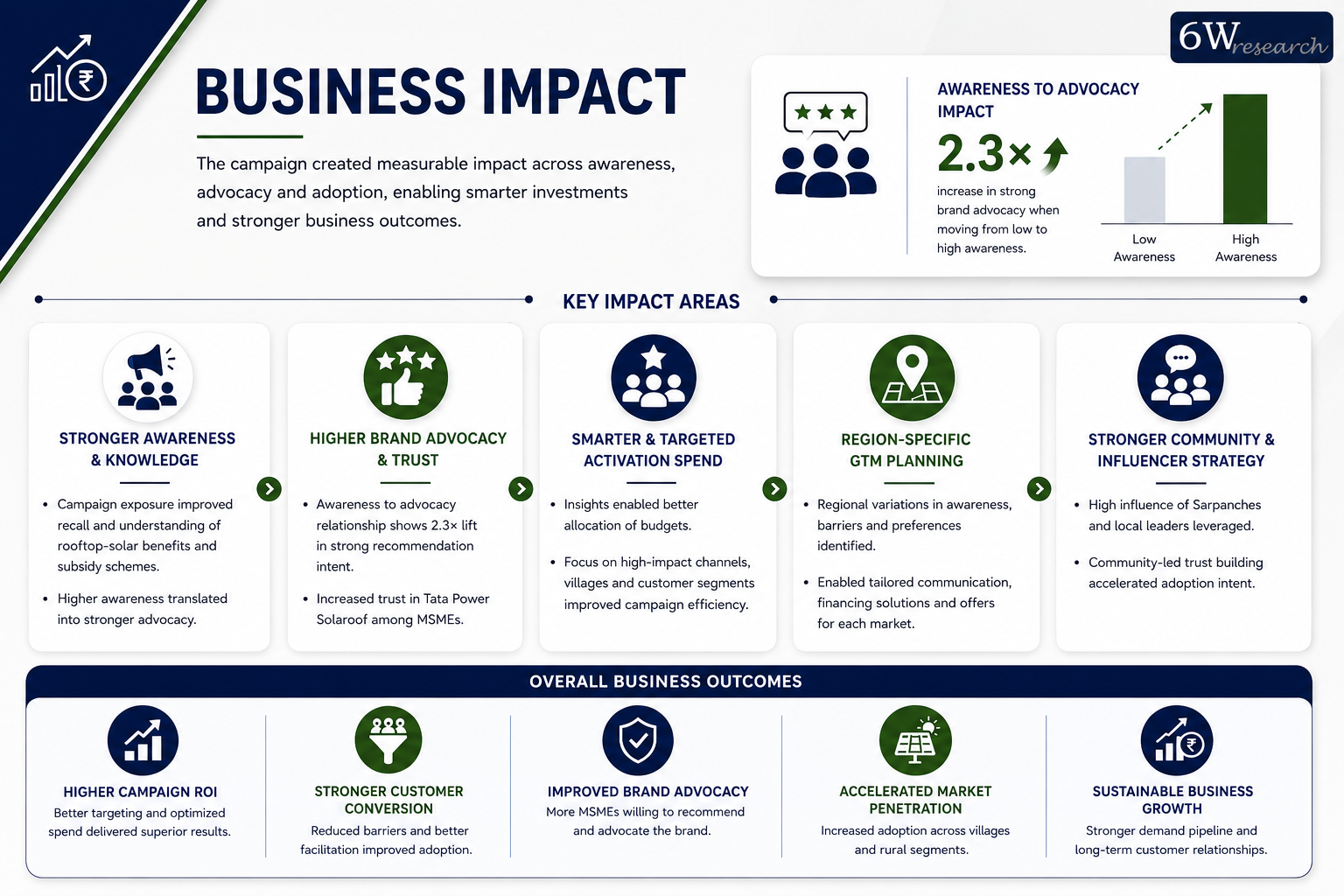
Business Impact
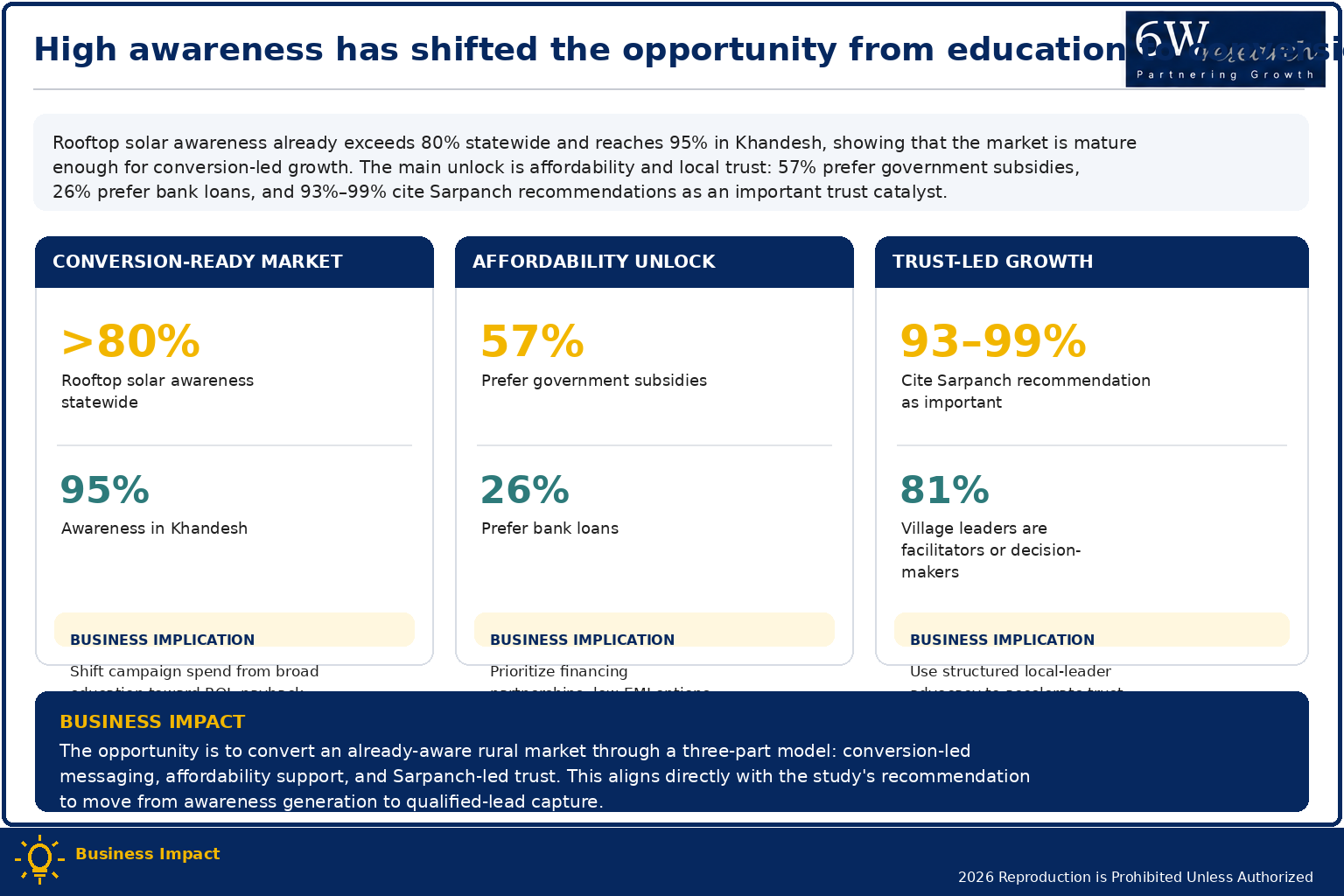
Brand advocacy is 2.3× higher among high-awareness customers compared to low-awareness ones — a clear, measurable link between exposure, awareness, and advocacy. That's translated into more targeted activation spend, sharper community-influencer approaches, and region-specific GTM planning — which in turn is driving better campaign ROI, stronger conversion, more advocacy, and faster rooftop-solar penetration in fragmented rural markets.


