How Will Digital Technologies and COVID-19 Accelerate Thailand's Telehealth Market Growth?
Thailand Telehealth Market
Objective
The objective was to trace how Thailand's telehealth market has evolved and where it's going through 2027 — market size, growth drivers, technology trends, and the competitive field. We looked at this across key segments like tele-hospitals, mHealth, and tele-homes, and broke things down further by hardware, software, and services. The core business questions centered on market potential, how fast technology is actually being adopted, and where regional gaps exist — all with an eye toward helping healthcare providers, tech companies, investors, and policymakers make informed calls on market entry, product development, and investment timing. The findings are meant to help stakeholders position themselves well, make smart use of AI and IoT, and tap into the opportunities opening up across Thailand's digital healthcare space.
Business Challenge
Thailand telehealth market went through a series of challanges as COVID accelerated digital adoption practically overnight, and that collided with an aging population dealing with more chronic disease than before, plus uneven telehealth uptake across different demographic groups. A low doctor-to-patient ratio and healthcare access that varies significantly by region only added to the complexity. Older populations in particular have been slower to embrace digital health tools, and regulatory hurdles haven't made market entry any easier. Competition has been fierce too, with both established healthcare players and newer startups fighting for the same market share, and integrating technologies like IoT, AI and big data analytics adds another layer of operational difficulty. All of this points to a real need for solid market insight — to guide where investment goes, how products get positioned, and how policy gets shaped so that growth here is both sustainable and reasonably equitable.
How We Did It
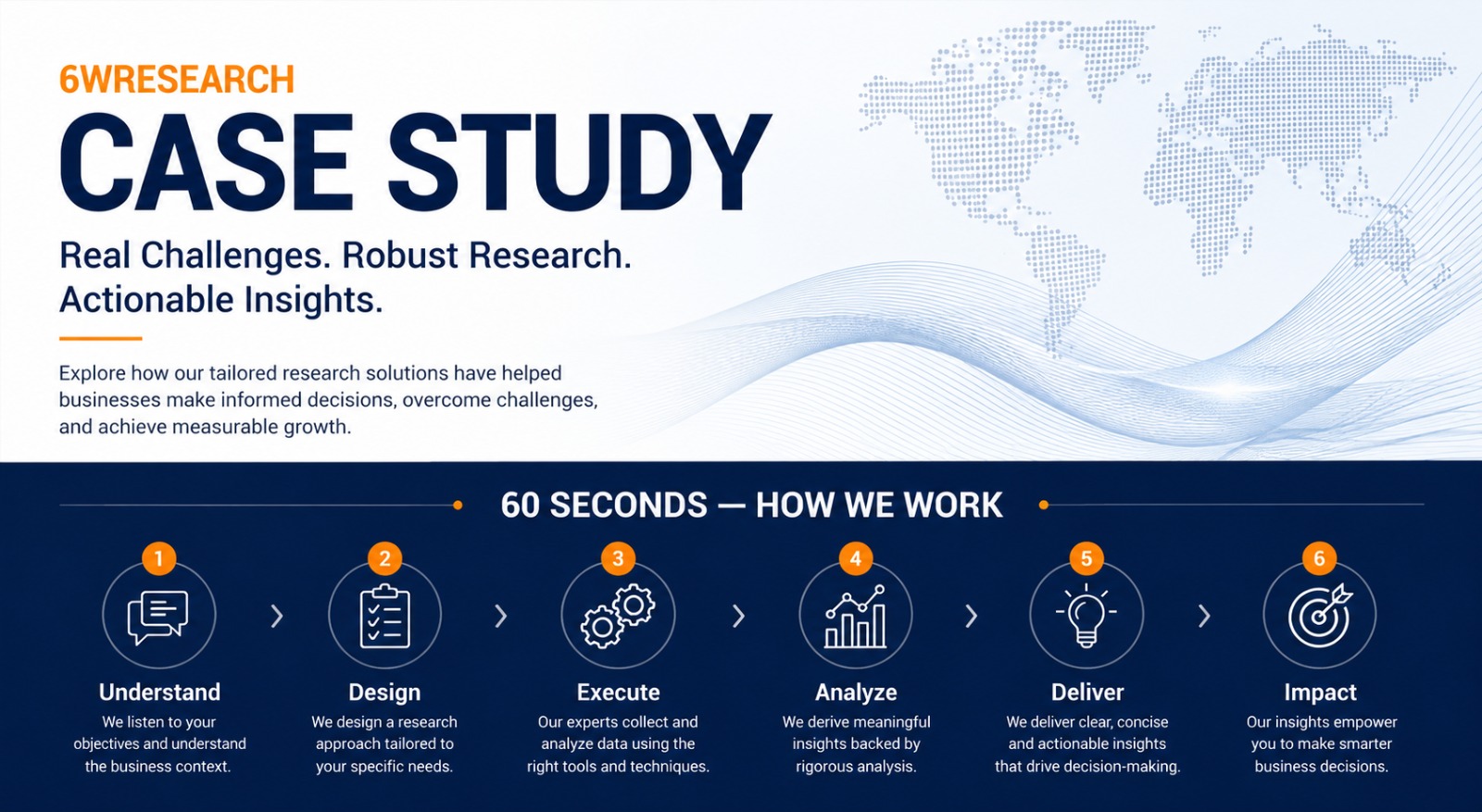
For this one, we did desk research, and expert interviews on the 6WForum, to validate what the market data was telling us. On the quantitative front, 6WSurveyIQ helped conduct the structured surveys across healthcare providers, tech companies and government agencies. Underneath, respondent-level data was handled in SQL, with Python driving the statistical modeling and forecasting. Market sizing followed a top-down/bottom-up split, regression and trend analysis fed the projections, and Power BI plus Tableau dashboards gave real-time visibility into the KPIs — tying together the tech trends and market drivers shaping Thailand's telehealth space.
Key Findings
- The Thai telehealth market is projected to grow at a CAGR of approximately 10.1% between 2021 and 2027, driven by increasing internet penetration, government initiatives, and COVID-19-induced demand.
- In 2020, tele hospitals accounted for the largest revenue share, with mHealth and tele homes rapidly gaining traction due to convenience and rising smartphone adoption.
- Software solutions, especially integrated platforms utilizing AI and cloud computing, are expected to dominate the product segment, with revenues surpassing hardware in the forecast period.
- Teleradiology services led the service segment in 2020, supported by the aging population and chronic disease prevalence, with further growth anticipated in telepsychiatry and teledermatology.
- Key players include Doctor Raksa, Cisco, Philips, Honeywell, and NTT Data, with market leadership attributed to broad service offerings, technological innovation, and strategic partnerships.
Findings
The core takeaway here is that Thailand's telehealth market has moved into a genuine growth stage, with revenue projected to expand at a compound annual rate of over 10% through 2027. The COVID-19 pandemic pushed the sector a long way — it sped up the adoption of digital health across the board, and made the case for remote healthcare solutions in a way that it’s hard to walk back from. Government programs have also played a role. Initiatives like Thailand 4.0 and a host of rural telemedicine efforts have created fertile ground for technology adoption and market expansion. Tele-hospitals and software solutions account for the largest share in terms of market composition, indicating a trend toward more comprehensive digital health ecosystems rather than one-off services. The main factors driving this momentum are the increase of internet penetration, the growth of smartphone adoption and advances in IoT and AI. The competitive field itself is a mix of local startups and established global tech providers, and strategic alliances alongside genuine technological innovation seem to be what separates the leaders from the rest. Taken together, the industry appears to be moving away from simple teleconsultations toward integrated, AI-enabled health platforms — a shift that should bring better patient outcomes and more efficient operations along with it.
A major insight from the analysis concerns the demographic and behavioral hurdles standing in the way of wider telehealth adoption, particularly among older patients. Even with the market growing overall, a lot of seniors — who make up a substantial share of the patient base — remain hesitant. Many simply prefer in-person consultations, largely out of familiarity and trust, and limited comfort with technology only reinforces that preference. Getting past this will take real, targeted effort: awareness campaigns, simpler interfaces, and more personalized support built specifically for this group. At the same time, rising rates of chronic disease and a growing elderly population both point toward genuine need for specialized virtual care and remote monitoring tools — the demand is there even if the comfort level isn't always there yet. Technologies like AI-driven diagnostics and IoT-enabled devices should help close that gap by improving both service quality and patient engagement. Regulatory frameworks and data security will need careful handling too, since trust is central to getting any of this adopted. In the end, how far this market goes depends on providers' ability to design around demographic resistance, put new technology to practical use, and stay aligned with government efforts to widen healthcare access.
Business Impact
Thailand's telehealth market is expanding rapidly and this research gives stakeholders a solid base to plan around. A projected CAGR north of 10% signals real opportunity, especially for software-driven solutions and more specialized services such as teleradiology and telepsychiatry. Companies would do well to put money behind integrated, AI-enabled platforms, given the rising need for remote diagnostics and ongoing chronic disease management. The segmentation data also makes a strong case for growing tele-hospital networks and building out mobile health applications further — both look set to be key battlegrounds for market share. On the innovation side, advanced analytics, IoT, and cloud computing keep coming up as the technologies that actually move the needle on service delivery and operational efficiency, not just partnership headlines. Policymakers have their own piece of this too: supportive regulatory frameworks and digital literacy programs, particularly aimed at older populations, will matter a great deal if penetration is going to reach its full potential. Put simply, the market's trajectory points toward more comprehensive, patient-centric digital healthcare — the kind that improves outcomes, brings costs down, and widens access across both urban and rural Thailand.


