How Will Government Initiatives and Subsidies Drive Adoption of Solar Water Pumps in Indian Agriculture?
India Solar Water Pumping System Market
Objective
This study set out to track how India's solar water pumping market has grown — and where it's headed — from 2020 through 2026, breaking things down by power rating, design type, drive type, application, and region. Revenue and volume both got quantified, and just as important, we dug into why adoption is happening where it is, and what's holding it back elsewhere. The work was built with OEMs, system integrators, government bodies, and renewable energy investors in mind, particularly those focused on agriculture and municipal water use. Ultimately, the goal was to give stakeholders something they could act on — for product development, market entry, pricing, and even policy conversations — as the country's subsidy landscape and renewable infrastructure continue to shift.
Business Challenge
There are a few factors holding back adoption in this market. Chief among them are high upfront capital costs, but also limited awareness among end-users, and after-sales service networks that just aren't robust enough yet. Farmers and institutional buyers remain wary of the up-front investment, even with subsidies on offer, and the absence of reliable maintenance support only adds to that hesitation. The market itself is fragmented, with a lot of domestic and international players competing for share, and conventional diesel and electric pumps remain a real substitution risk since they're already familiar and established. Regulatory inconsistency doesn't help either — subsidy implementation varies a fair bit from region to region, which complicates any kind of national expansion strategy. Taken together, these dynamics point to a clear need for sharper strategic thinking around product design, service delivery, and how to actually work within these regional policy differences to get growth moving.
How We Did It
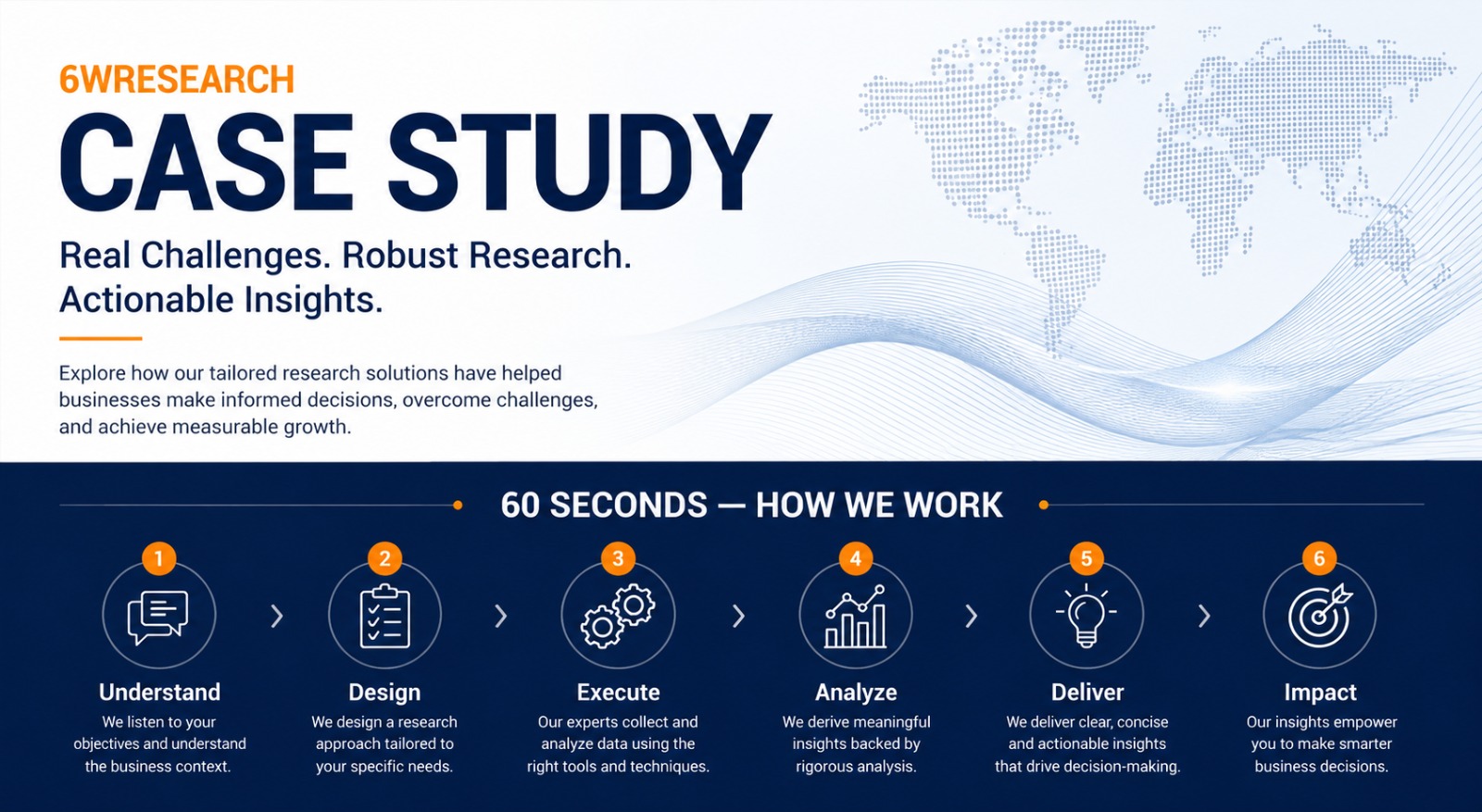
For this study we paired in-depth desk research with primary inputs gathered through expert conversations on 6Wforum, which gave us solid qualitative grounding. Respondents were selected using a mix of stratified and quota sampling to capture views from different stakeholder groups across regions. On the quantitative side, structured surveys run through 6WSurveyIQ let us work at the respondent level while looking at market size, preferences, and price sensitivity. Python handled the heavy lifting on data cleaning, segmentation, and forecasting, with SQL managing the larger datasets behind the scenes. For sizing and trend projections we relied on regression and time-series models, and the results were pulled together into Power BI dashboards so the regional and segment-level patterns were easy to interpret. We also drew on 6Wresearch's trade and export intelligence tools to factor in international competitiveness and supply-chain considerations.
Key Findings
- The India solar water pumping system market is projected to grow at a CAGR of 11.7% during 2020-2026, driven primarily by government subsidies and increasing awareness of renewable energy benefits.
- In 2019, the market revenue was predominantly contributed by the 3.1-10 HP segment, which is expected to maintain its dominance due to affordability and subsidy support.
- Submersible pumps hold the largest market share in both revenue and volume, owing to their suitability for deeper water sources and increasing groundwater depletion.
- AC drive type pumps dominate the market, favored for their cost-effectiveness and established after-sales networks, though DC pumps are gaining traction in low HP segments for their efficiency.
- The Western region leads in market share, supported by proactive state policies and high installation rates, with significant growth anticipated in southern states like Andhra Pradesh.
- High capital costs and lack of awareness remain key barriers, despite subsidies, requiring targeted marketing and service network expansion.
- Technological advancements, including remote monitoring and product leasing, are emerging trends to improve operational efficiency and market penetration.
Findings
India's solar water pumping system market is on a solid upward path, with a forecast CAGR of 11.7% between 2020 and 2026. A lot of this comes down to government push — the KUSUM scheme, which targets installation of 1.75 million standalone solar pumps, is doing a lot of the heavy lifting, alongside steadily falling pump prices thanks to better technology and more local manufacturing. In terms of revenue, the 3.1–10 HP segment holds the lion's share, and it accounted for a significant chunk of 2019 sales; that dominance looks set to continue given favorable subsidy policies and the simple fact that smaller-capacity pumps are more affordable for most farmers. Geographically, the western and southern regions are ahead of the pack on installations, helped by proactive state-level policy and generally higher awareness. That said, it's not all smooth sailing — high upfront costs, limited farmer awareness, and weak after-sales service infrastructure remain real obstacles. Getting past these will take a combination of targeted awareness campaigns, stronger service networks, and continued investment in local manufacturing capability. Bringing in 6Wresearch's platforms, including trade intelligence and expert input through 6Wforum, made it possible to build a genuinely nuanced picture of regional disparities, supply chain dynamics, and where players sit competitively — giving stakeholders a solid strategic framework to work from.
One thing that comes through clearly in this research is that solar water pumping adoption in India is really being pulled forward by farmers' need for irrigation that's both affordable and sustainable. Groundwater dependence keeps growing and water tables keep dropping, and that combination has pushed up demand for submersible pumps compatible with deeper wells — these now make up most of the market by both volume and revenue. Solar is increasingly winning out over electric and diesel alternatives, mainly because running costs are lower and subsidies help bring the price down further, though the capital outlay upfront still puts a lot of smallholder farmers off — especially those working less than five acres. There's a visible shift happening toward leasing models and remote-monitoring technology, both of which ease the upfront cost burden and make the systems more reliable to operate. Subsidy rollout and infrastructure quality still vary a lot by state, though, and that shapes adoption rates directly — Rajasthan, Maharashtra, and Andhra Pradesh are out ahead, largely because of aggressive policy support and stronger awareness efforts. Where this goes next depends a good deal on making financing more accessible, building out after-sales service, and pushing indigenous manufacturing further to bring costs down. The regional and technical segmentation available through 6Wresearch's analytical ecosystem gives stakeholders a much clearer basis for tailoring offerings, tightening up supply chains, and building marketing that actually speaks to where farmer needs and policy are both headed.
Business Impact
All of this points to some real strategic openings for players looking to tap into India's growing solar water pumping space. With the market expected to hit INR 1,869.8 crore in revenue by 2020 and grow at roughly 11.7% CAGR, there's clearly money to be made here — especially in the 3.1-10 HP segment, which looks set to lead sales. Manufacturers would do well to focus on cost-efficient, locally built submersible pumps that last longer and come with remote monitoring, since that directly addresses the demand growth and maintenance headaches farmers face. After-sales service also needs serious investment, particularly in rural and underserved pockets — that's really what keeps customers from drifting back to conventional pumps. Regionally, states like Rajasthan, Maharashtra, and Andhra Pradesh stand out as high-growth markets that need their own tailored subsidy and awareness pushes. Leasing models and continued product innovation, backed by insights from 6Wresearch's trade and export platforms, could go a long way in bringing down the upfront cost barrier for smallholder farmers. Lining up product development with government subsidy schemes will also help smooth market entry. Put together, this gives stakeholders a solid basis for refining their portfolios, pricing smarter, and putting money where the growth actually is — which should translate into better adoption rates and stronger long-term positioning.


