How Will Indonesia's Rising Smartphone and 5G Demand Shape Telecom Equipment Growth?
Indonesia Telecom Equipment Market
Objective
This research tracked how Indonesia's telecom equipment market is evolving between 2022 and 2028, breaking things down by offering, infrastructure type, and end-user application. The study aimed to identify what's driving growth and what's holding it back, particularly given the pace of digital transformation, rising smartphone penetration, and the rollout of 5G. The study aimed to answer the practical questions clients actually ask: how big is this market, where is it headed, who's winning share, and how does that differ by region. The audience was telecom operators, equipment manufacturers, government bodies, and investors — people who need this kind of insight to make real decisions on market entry, expansion, or where to put capital. The goal was to give them enough to work with on product portfolios, pricing, and operational planning as Indonesia's digital economy keeps expanding.
Business Challenge
Indonesia's telecom equipment market is shaped by heavy import reliance, a spread-out geography, and real infrastructure gaps outside the main urban centers. Internet and smartphone adoption keep climbing, which is good for demand, but COVID-era supply chain disruption made hardware harder to get and more expensive — and some of that pressure hasn't fully eased. Competition is intense among global players like Huawei, Ericsson, and Nokia, and buyer power is high, while import regulation adds a real barrier to entry. The government's 5G push and digital-inclusion agenda create genuine upside, but the market still has to work around low broadband access outside urban Java and the need for equipment that's both scalable and affordable. All of this adds up to a market where good intelligence — on regulation, technology, and deployment — really matters for anyone trying to plan an investment or product launch.
How We Did It
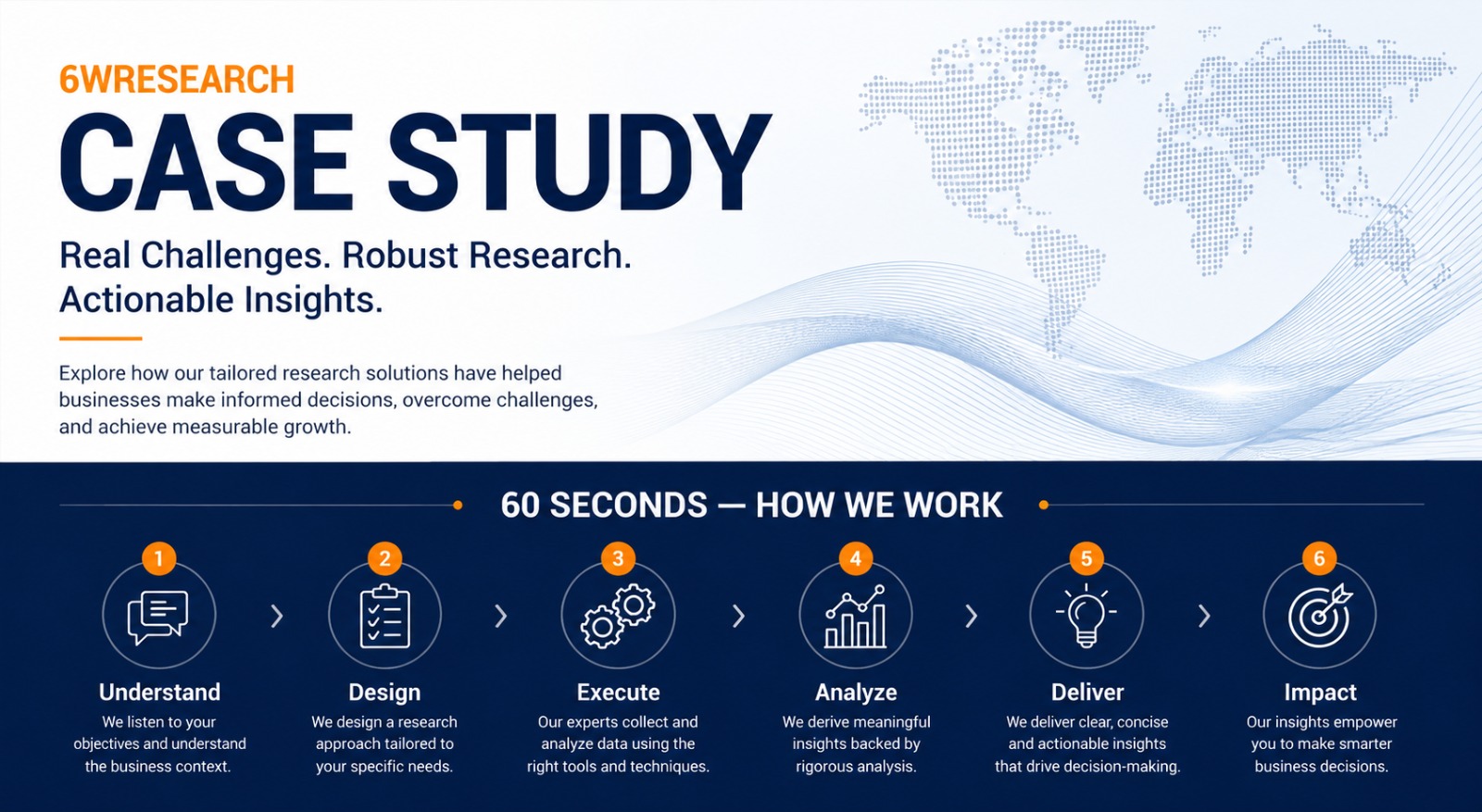
We combined primary and secondary research, drawing on 6Wresearch's in-house data, expert interviews via 6WForum, and desk research to build out the market picture. Structured interviews with telecom operators, government officials, and industry experts helped validate our assumptions and add qualitative depth. On the quantitative side, we ran structured surveys through 6WSurveyIQ to capture market size, product demand, and regional penetration data. Python handled statistical modeling, regression, and demand forecasting; SQL managed the underlying data and respondent-level analysis; and Power BI dashboards gave the client an interactive way to track things in real time. Together, this gave us a fairly complete read on market dynamics, competitive positioning, and where growth is likely to come from — enough to support genuinely data-driven strategy on the client side.
Key Findings
- Indonesia's telecom equipment market is projected to grow at a 4.5% CAGR from 2022 to 2028, powered by smartphone adoption and government digital infrastructure spending.
- Revenue splits mainly between product offerings and wireless infrastructure, with wireless expected to pull ahead as 5G rolls out and urban smartphone use keeps rising.
- Telecommunications is the largest end-user segment by revenue, helped by government efforts to extend connectivity into both remote villages and urban centers.
- Huawei held the top market position in 2021 on the back of its broad product range and cost advantage, with Ericsson and Nokia both expanding their regional footprint.
- Import dependency is significant — telecom hardware imports hit roughly $3 billion in 2021 — underscoring the need for supply chain resilience and local manufacturing support.
- Broadband access outside Java remains a real gap, though ongoing government projects are working to close it, which should support future growth.
Findings
The market held up better than expected through the pandemic, growing steadily from 2018 to 2021 with a projected 4.5% CAGR out to 2028. Most of that momentum is coming from 5G rollout, which started in select cities and is expected to reach nationwide coverage by 2024. Product offerings — base stations, data centers, antennas — dominate the revenue mix, reflecting demand for higher-capacity, higher-speed infrastructure. Government investment in fiber backbone and rural connectivity is doing a lot of the heavy lifting here. Import dependency remains a genuine issue, with around $3 billion in hardware imports in 2021 alone, which makes the case for building out local manufacturing fairly obvious. Huawei is still at the competitive forefront, driven by scale and cost efficiencies, as other global players steadily increase their presence. The market is generally maturing and starting to move toward software and integrated solutions, a natural evolution given where Indonesia’s telecom operators and government want to take the digital economy.
Indonesia's young, increasingly urban population is driving a lot of this demand — internet users grew 16% between 2020 and 2021, crossing 200 million, with rural areas actually growing faster thanks to targeted government programs. 5G rollout is a major catalyst here and will keep pushing demand for wireless equipment as coverage expands. That said, infrastructure gaps — limited broadband on remote islands, weak rural coverage outside Java — remain a real constraint on growth. Government investment in rural broadband and new commercial space should open up meaningful opportunity for wireless infrastructure providers. More broadly, the market is moving away from pure hardware toward integrated, software-driven solutions that make networks easier to manage and secure. As Indonesia works toward becoming a bigger digital economy, demand for scalable, cost-effective telecom solutions is only going to intensify — which means stakeholders need to be thinking now about network modernization and local manufacturing capacity.
Business Impact
For telecom operators, manufacturers, and investors, this points pretty clearly toward expanding wireless infrastructure — 5G in particular — to capture the growth in smartphone and internet use. The strength of product and software segments suggests real opportunity in portfolio diversification, especially around high-capacity base stations, data centers, and security offerings. Heavy import dependence makes a strong case for local manufacturing incentives and supply chain investment, both of which would help with cost and speed to market. The broadband gap outside Java is really an opportunity in disguise — underserved rural and remote regions, backed by government programs, represent a natural expansion target. With Huawei leading and Ericsson and Nokia both pushing in, differentiated products and smart partnerships will matter more than ever. Taken together, the market's growth trajectory supports more investment in infrastructure, digital services, and local manufacturing — which should lower costs, speed up operations, and help move Indonesia further along its digital transformation path.


