How Can Customer Insights Transform Commercial Vehicle Experiences?
India Customer Behavioral Analysis of Dost Xpress
Objective
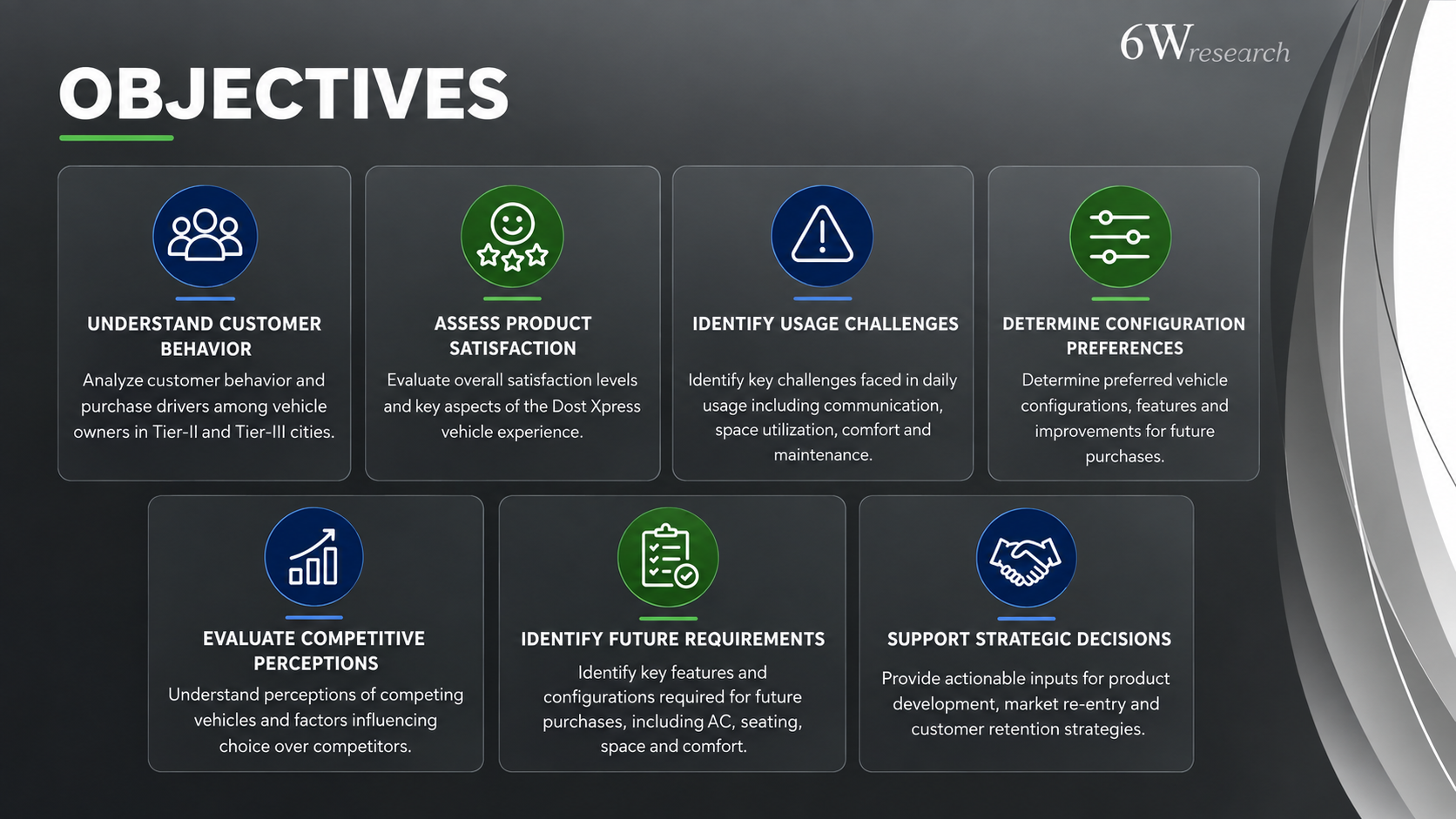
The objective was to comprehend the competitive perceptions, configuration preferences, usage challenges, customer behavior, and product satisfaction of users in Tier-II and Tier-III cities. Additionally, the study aimed to ascertaining the features and configurations which are important for future purchases and offer inputs for market re-entry, product development, and customer retention.
Business Challenge
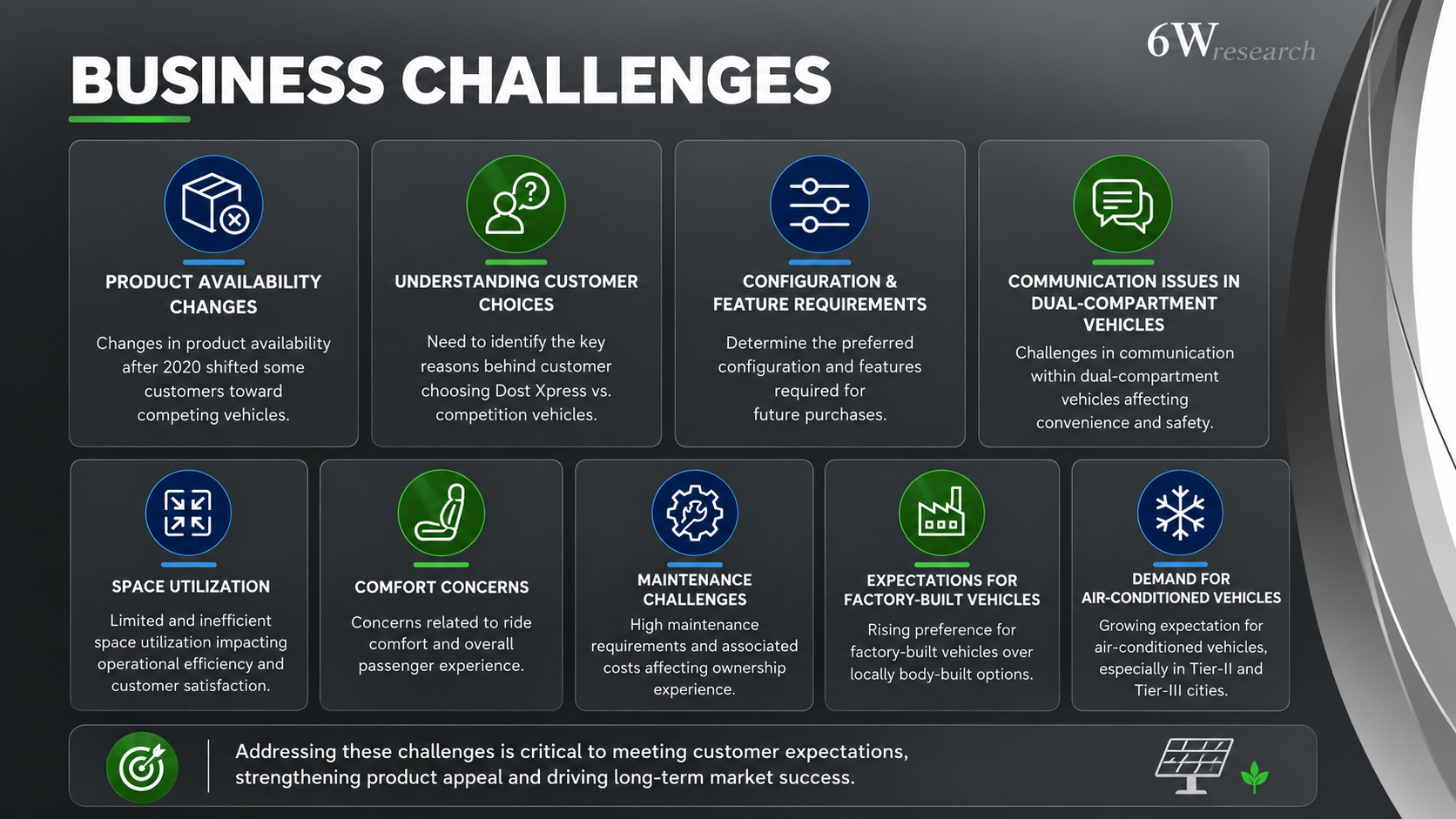
Product availability changes had moved some customers toward competitors. The motive of the study is to uncover the reasons behind customer choices and figure out the configuration and features needed for future purchases. Other challenges are communication problems in two-compartment vehicles, space utilization, comfort, maintenance, and changing expectations about factory-built and air-conditioned vehicles.
How We Did It
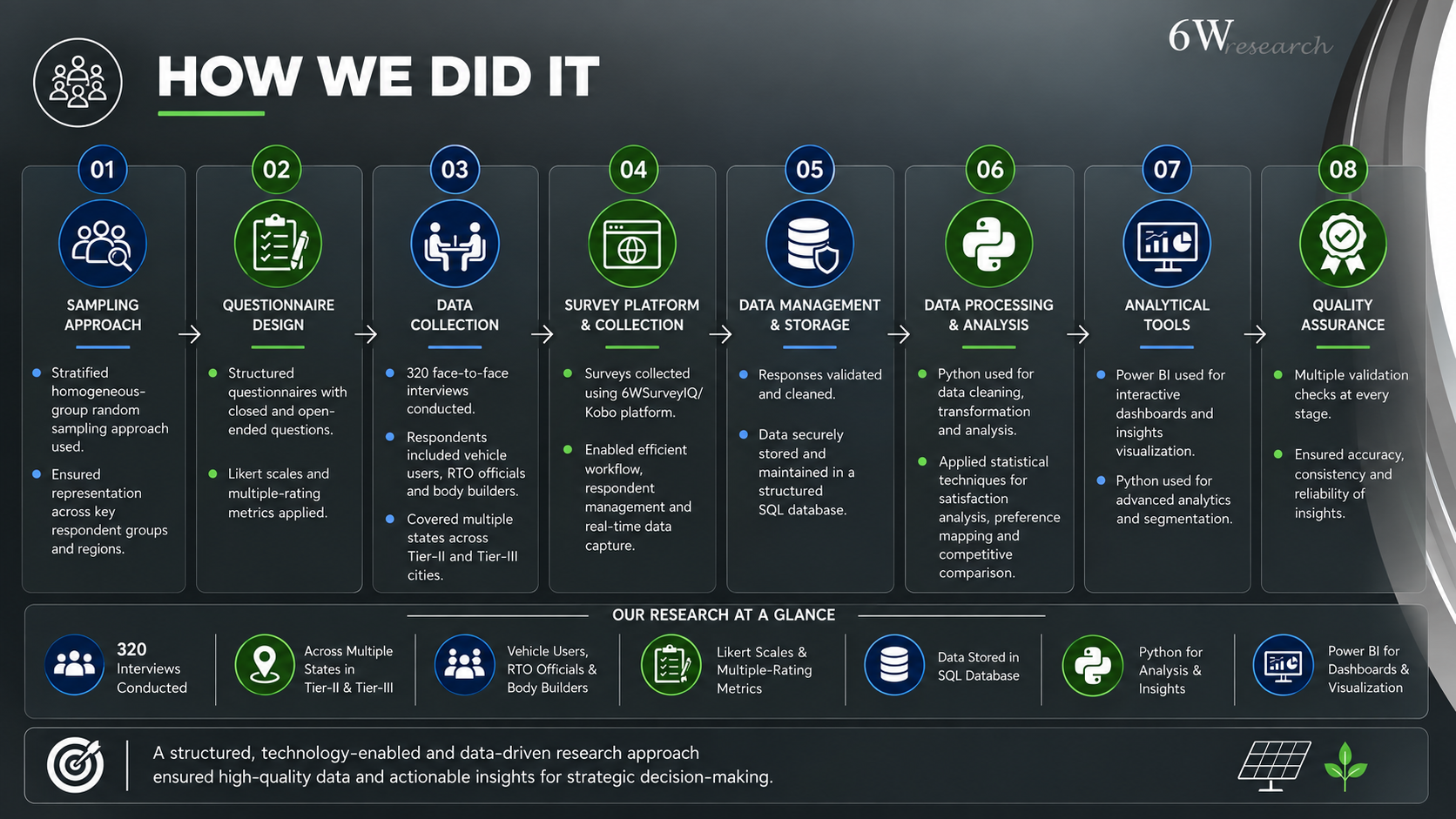
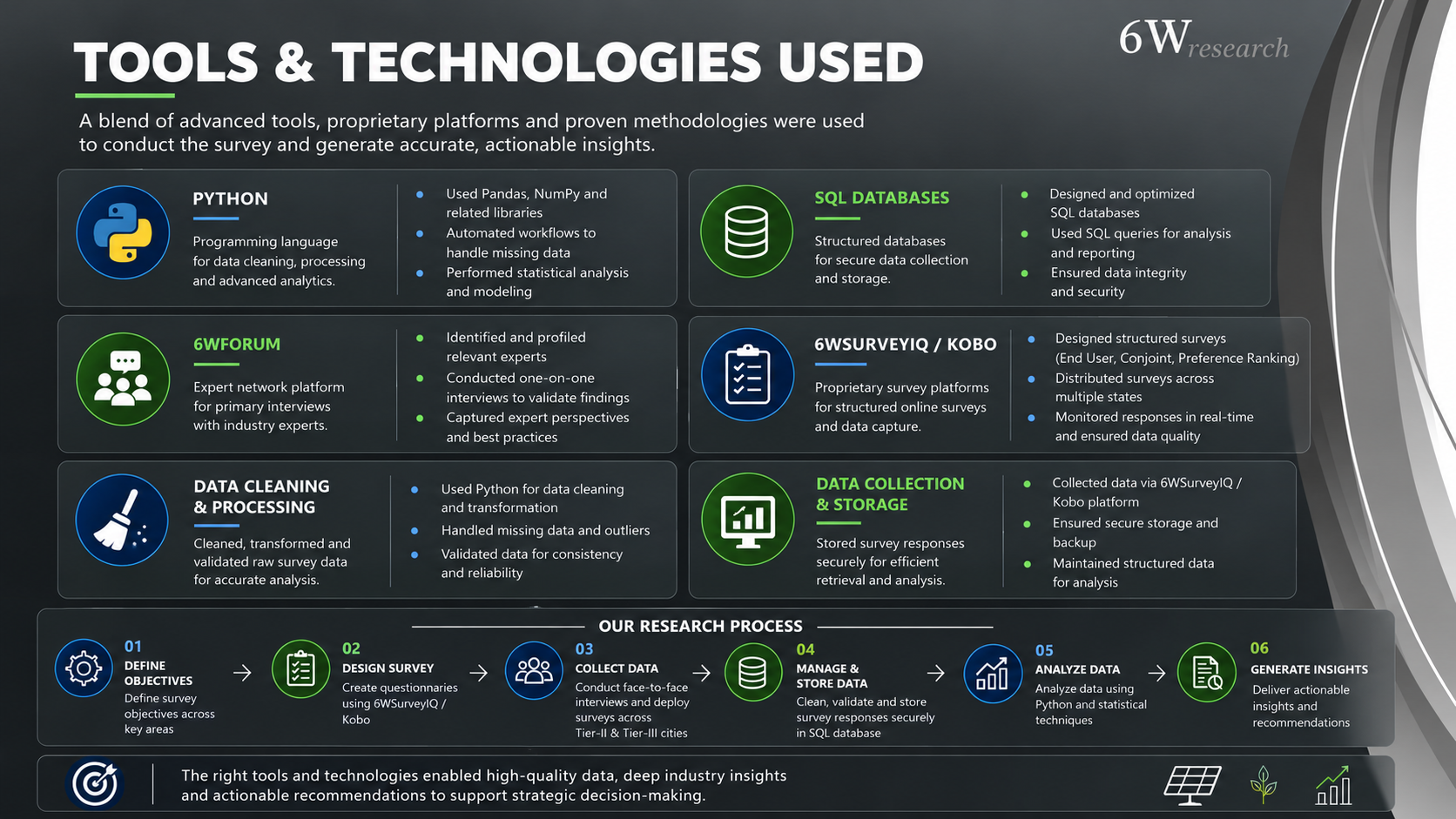
We conducted 320 face-to-face interviews across nine states, covering 200 existing vehicle users, 100 users of competing vehicles, 10 RTO officials and 10 body builders. Using a stratified homogeneous-group random sampling approach, we drew respondents from Haryana, Punjab, Uttar Pradesh, Rajasthan, Madhya Pradesh, Bihar, Jharkhand, Odisha and Chhattisgarh. The focus was small passenger-carrying vehicles used for school buses, staff transport and route/feeder services, with vehicle owners identified through a mix of in-house and external databases. The survey used structured Likert scales and multi-rating metrics to systematically capture purchase drivers, ownership experience, vehicle attributes, satisfaction, pain points and future preferences. We also brought in regulatory stakeholders and body builders to get a fuller picture of registration requirements, school-bus regulations, vehicle configurations and body-building practices. Data was stored and processed systematically, with Power BI for visualization and Python-based tools for deeper analysis. The analytical framework covered customer segmentation, satisfaction and behavioral analysis, key buying factors, preference mapping and comparisons across competing configurations and brands. We also used SHAP-based analysis to understand which decision factors actually mattered most to customers. Findings were then synthesized into practical insights on vehicle configuration, seating, saloon height, comfort features and areas needing improvement.
Key Findings
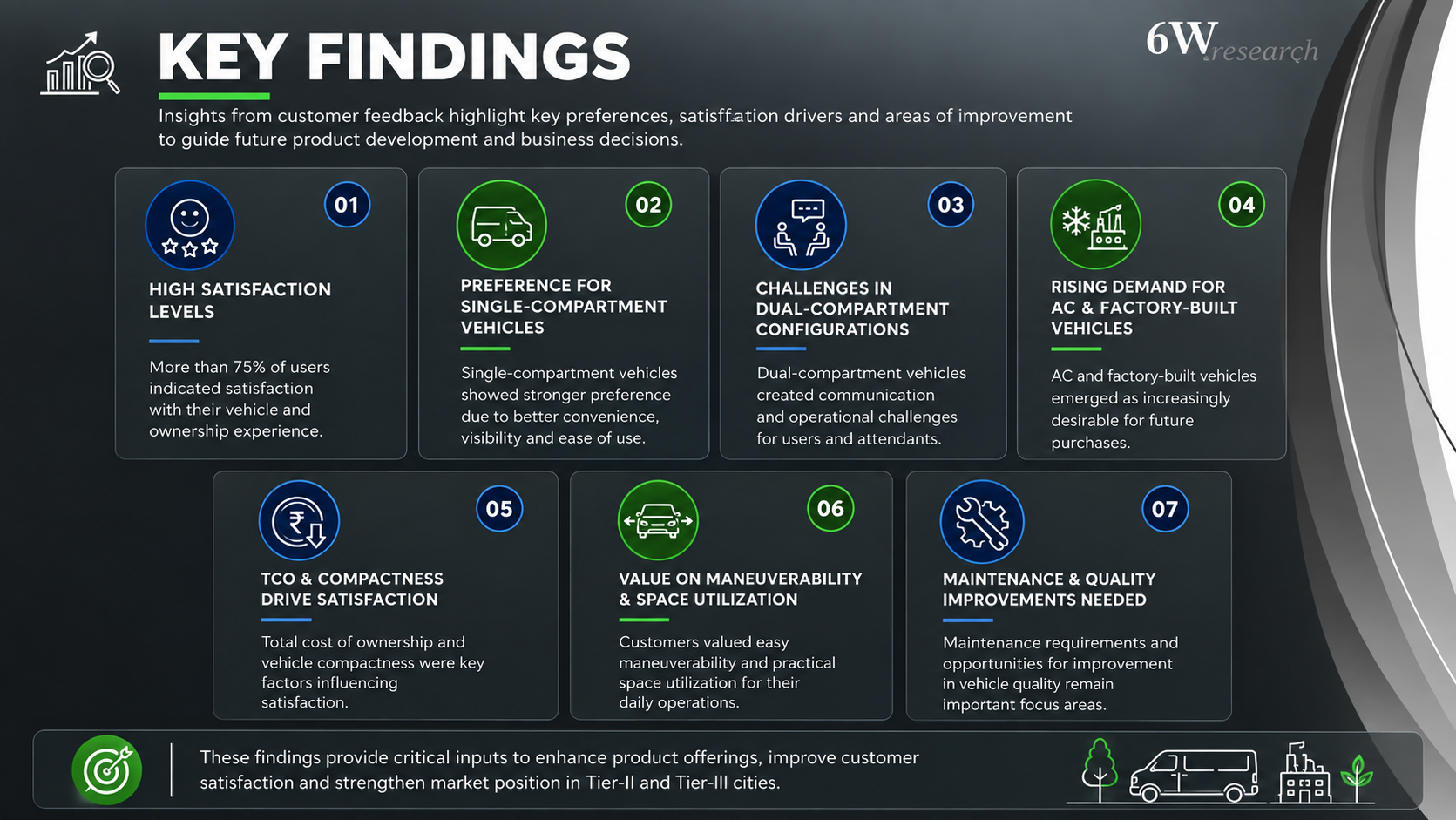
- More than 75% of users indicated satisfaction.
- Single-compartment vehicles showed stronger preference.
- Dual-compartment configurations created communication and operational challenges.
- AC and factory-built vehicles emerged as increasingly desirable.
- Total cost of ownership and compactness were important satisfaction drivers.
- Customers valued maneuverability and practical space utilization.
- Maintenance and vehicle-quality improvements remained important opportunities.
Findings
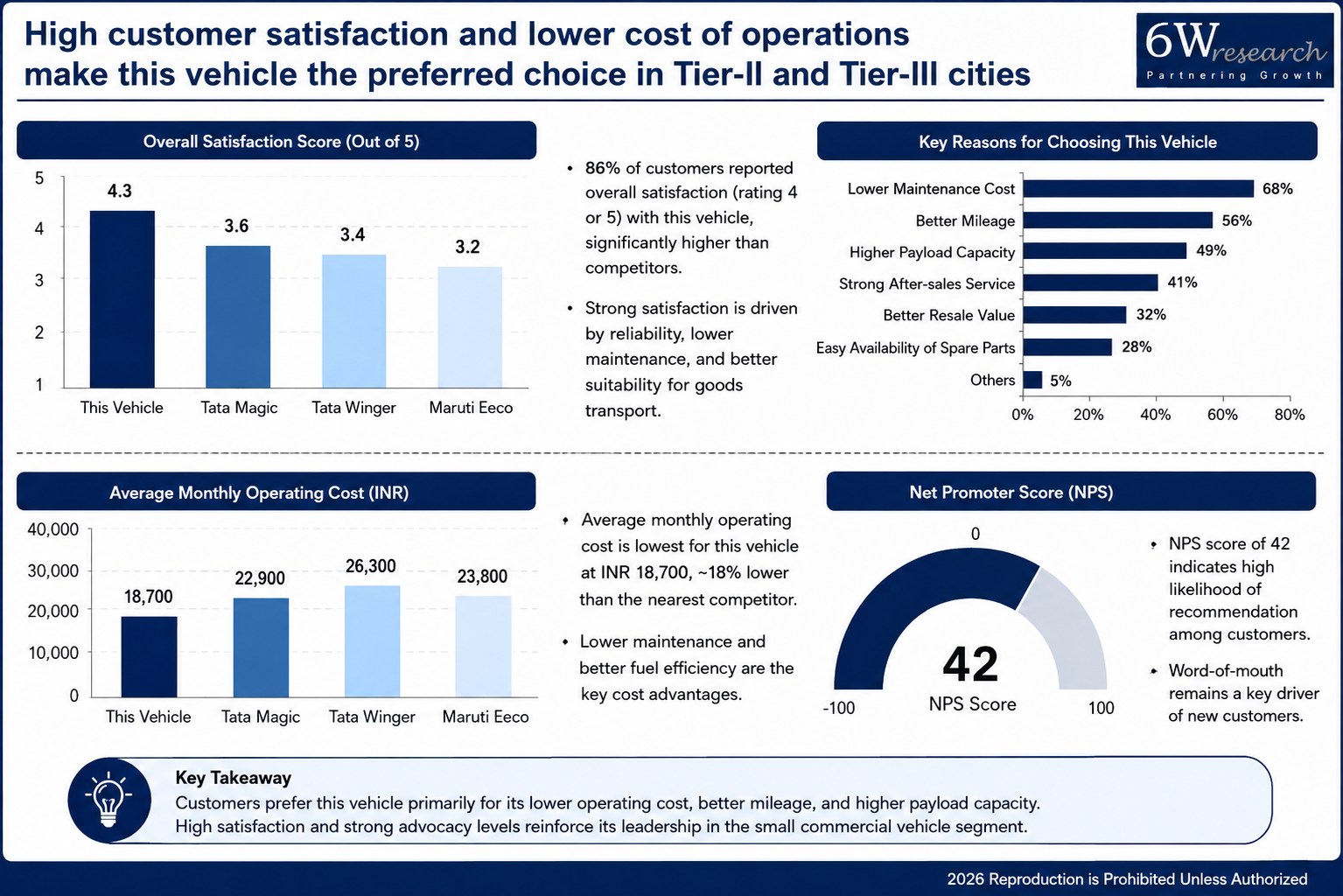
For school transport, especially in Tier-II and Tier-III towns, what mattered most was the compact size, easy manoeuvrability, lower running costs and general fit for the job. Total cost of ownership, mileage, price, seating and how well it suited the application all factored into the decision. The compact size mattered a lot practically — it let vehicles navigate narrow lanes and made doorstep pickup and drop-off actually feasible. Customers also liked the sturdy build and how well the space was used. But expectations went beyond just affordability — feedback pointed to a need for better seating capacity, more cabin room, improved paint and body quality, better tyres, pickup, mileage and easier access to service and spares. Still, over 75% of current users said they were satisfied overall, which suggests the core product is on the right track — it just needs continued refinement to stay ahead.
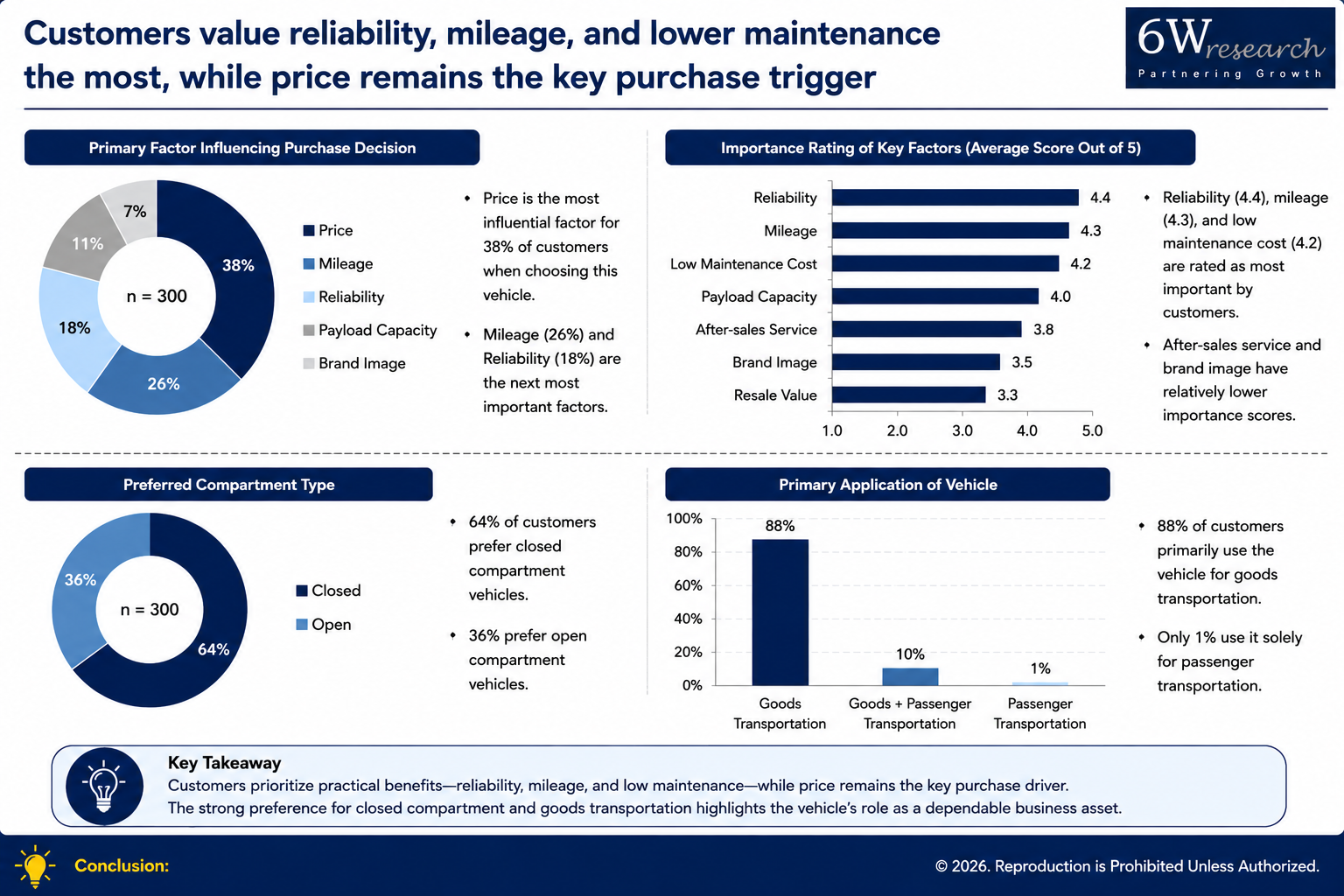
One of the bigger findings: customers increasingly want simpler, more practical seating configurations. About 65% of fully-built vehicle users said dual compartments created real headaches — mainly around communicating with rear passengers, restricted visibility, and needing an attendant. Single-compartment layouts, by contrast, were valued for better use of space, easier monitoring of passengers, and clearer visibility for the driver. This preference showed up even among cab-chassis users — 66% had already converted to single-compartment setups, and 52% of current dual-compartment users said they'd go single-compartment next time. At the same time, expectations are shifting toward factory-built vehicles with more comfort — 66% expect AC to become standard, rising to 75% among non-company buyers. Preferred saloon height clustered around 5.5–6 feet for adequate headroom. Bottom line: future products should lean into compact, efficient, factory-built designs with better seating and visibility, and AC as an option — rather than relying on locally modified dual-compartment builds.
Business Impact
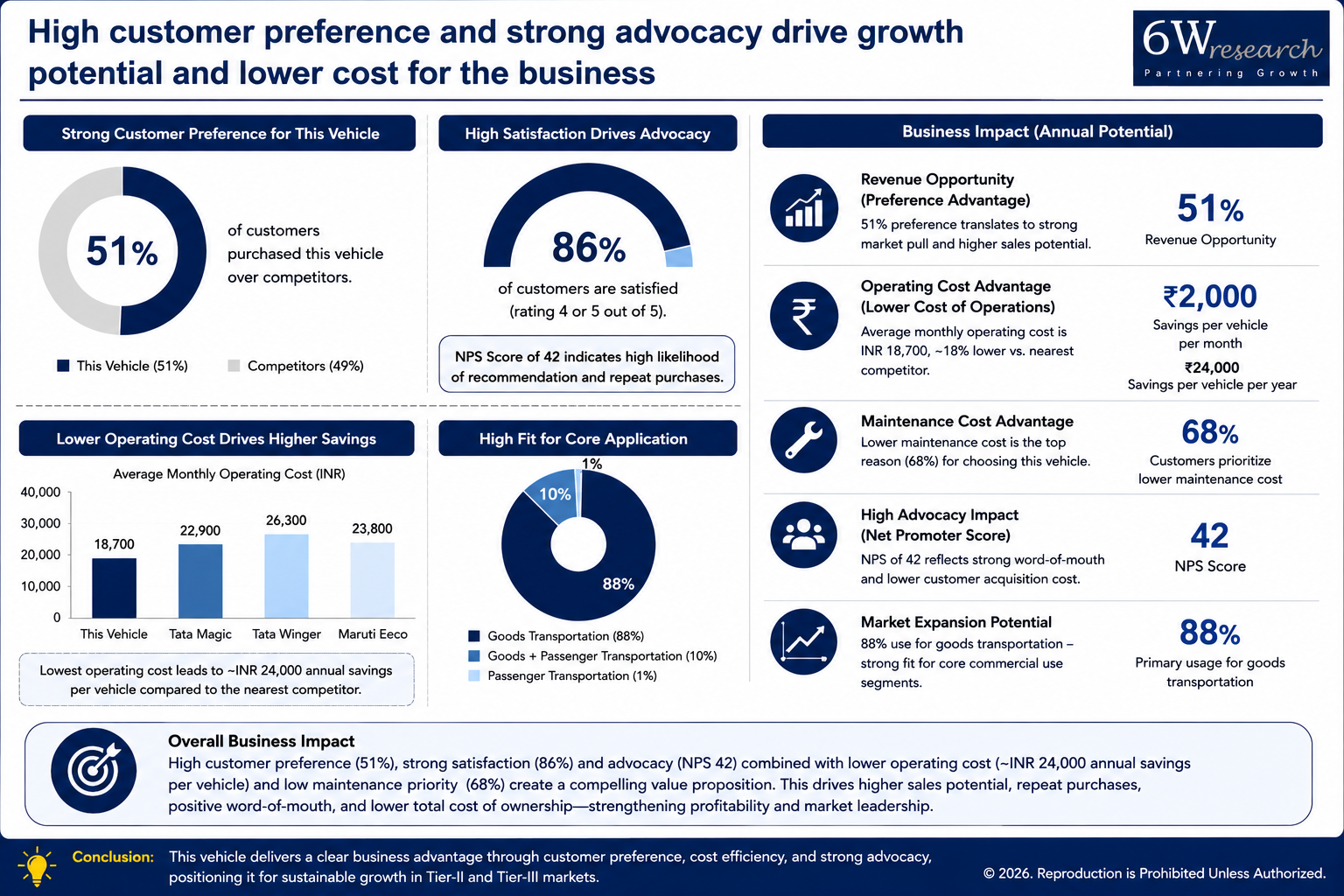
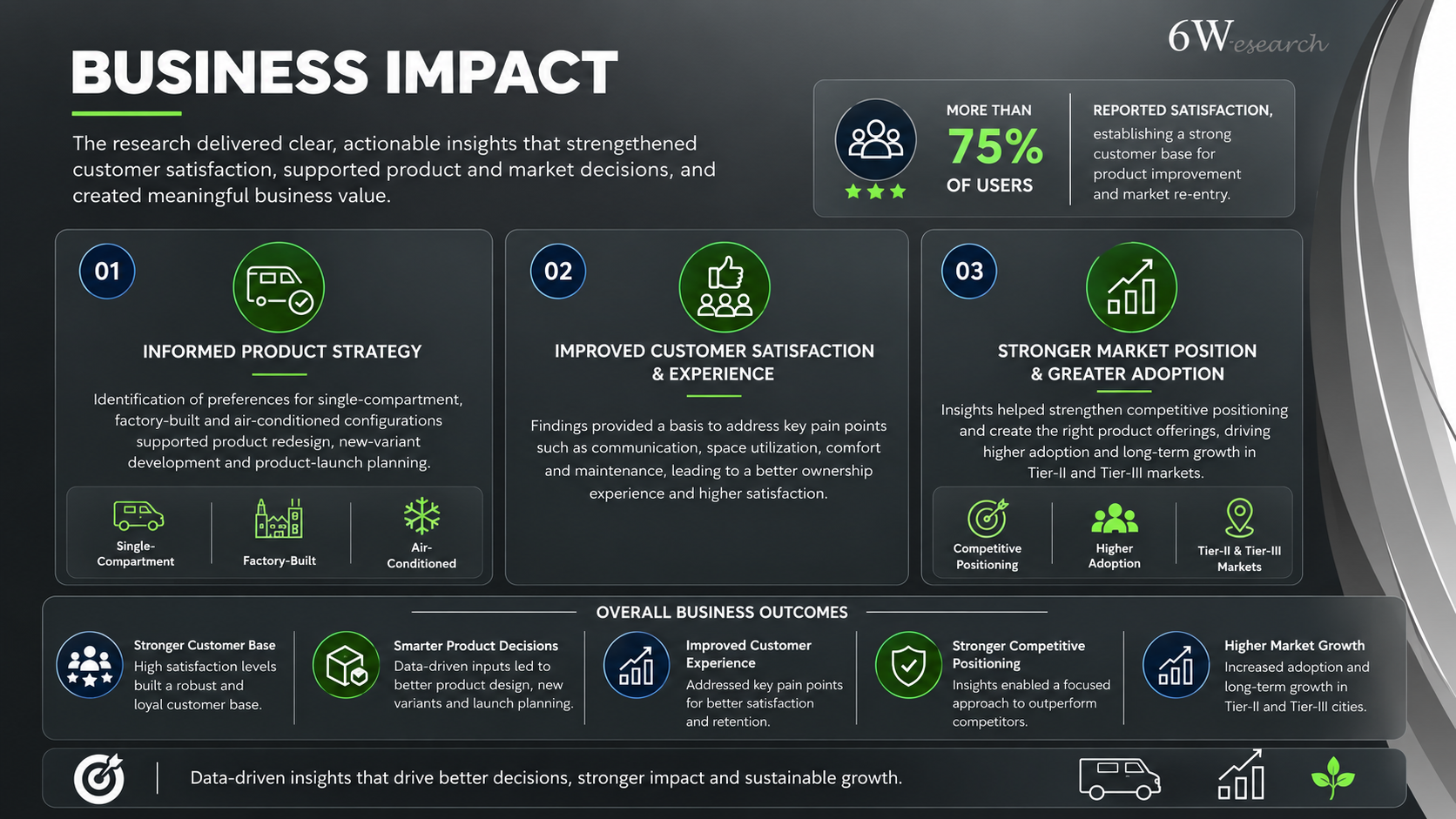
Customer satisfaction sits above 75%, which points to a strong base to build on as the product gets refined and re-launched. Customers leaning toward single-compartment, factory-built, air-conditioned configurations is now shaping redesigns, new variants, and launch planning. Going forward, this should keep pushing satisfaction up, strengthen where we sit competitively, and support the push into Tier-II and Tier-III markets.


