What Will Shape the Next Wave of Electric 3-Wheeler Growth?
India 3 Wheeler Electric Vehicle Market – Key Insights
Objective
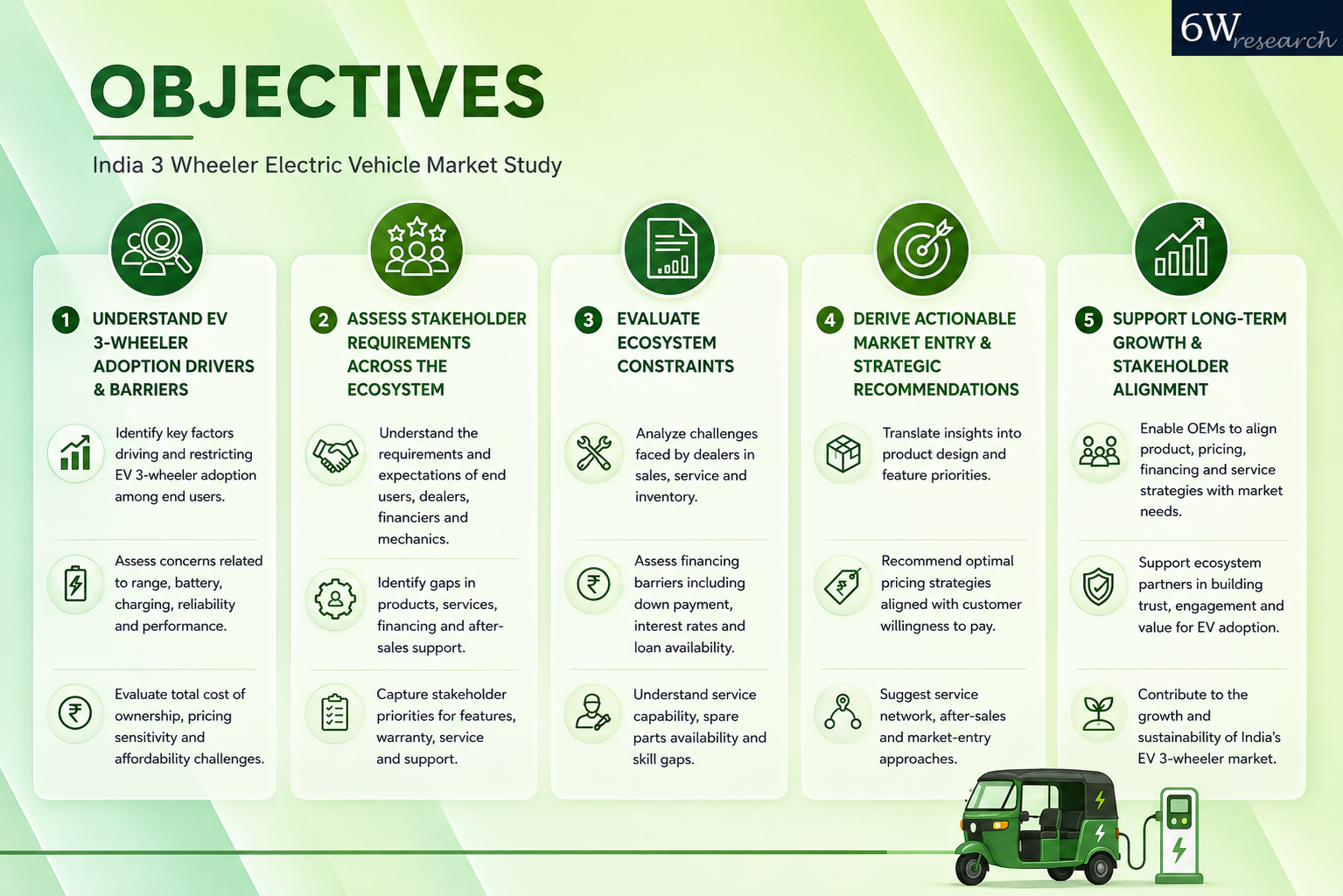
The objective was to identify the barriers to adoption of EVs in the 3-wheeler segment and requirements of different stakeholders across end users, dealers, financiers, and mechanics and translate these insights into product, pricing, service, financing, and market-entry recommendations. The research examined both customer requirements and ecosystem constraints affecting EV adoption.
Business Challenge
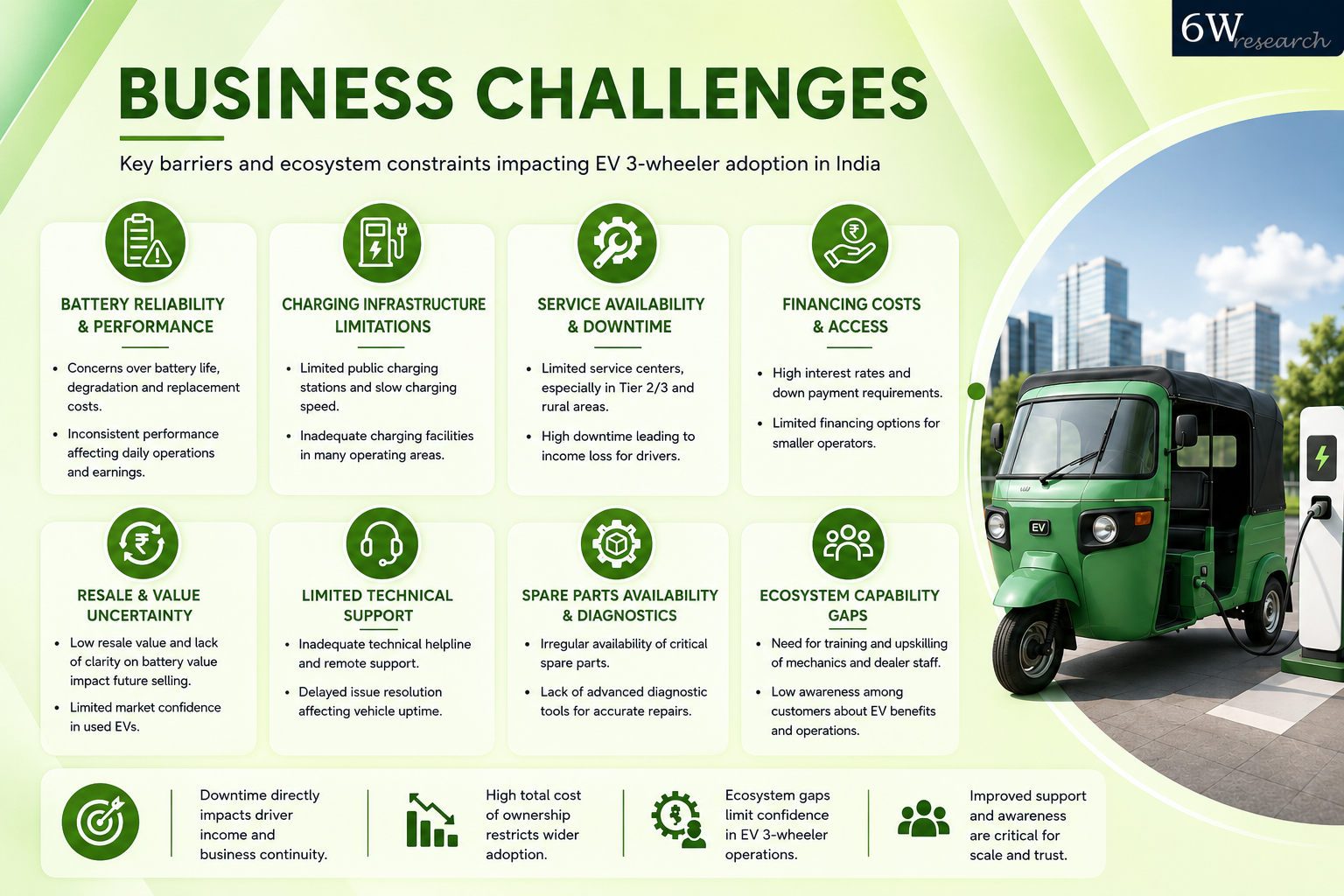
The adoption of EVs was limited by battery reliability, charging infrastructure, service availability, financing costs, resale values, and limited technical support across the ecosystem. Dealers and mechanics faced diagnostic, spare-parts, and technical-support challenges, at the same time, drivers faced direct income implications from downtime.
How We Did It
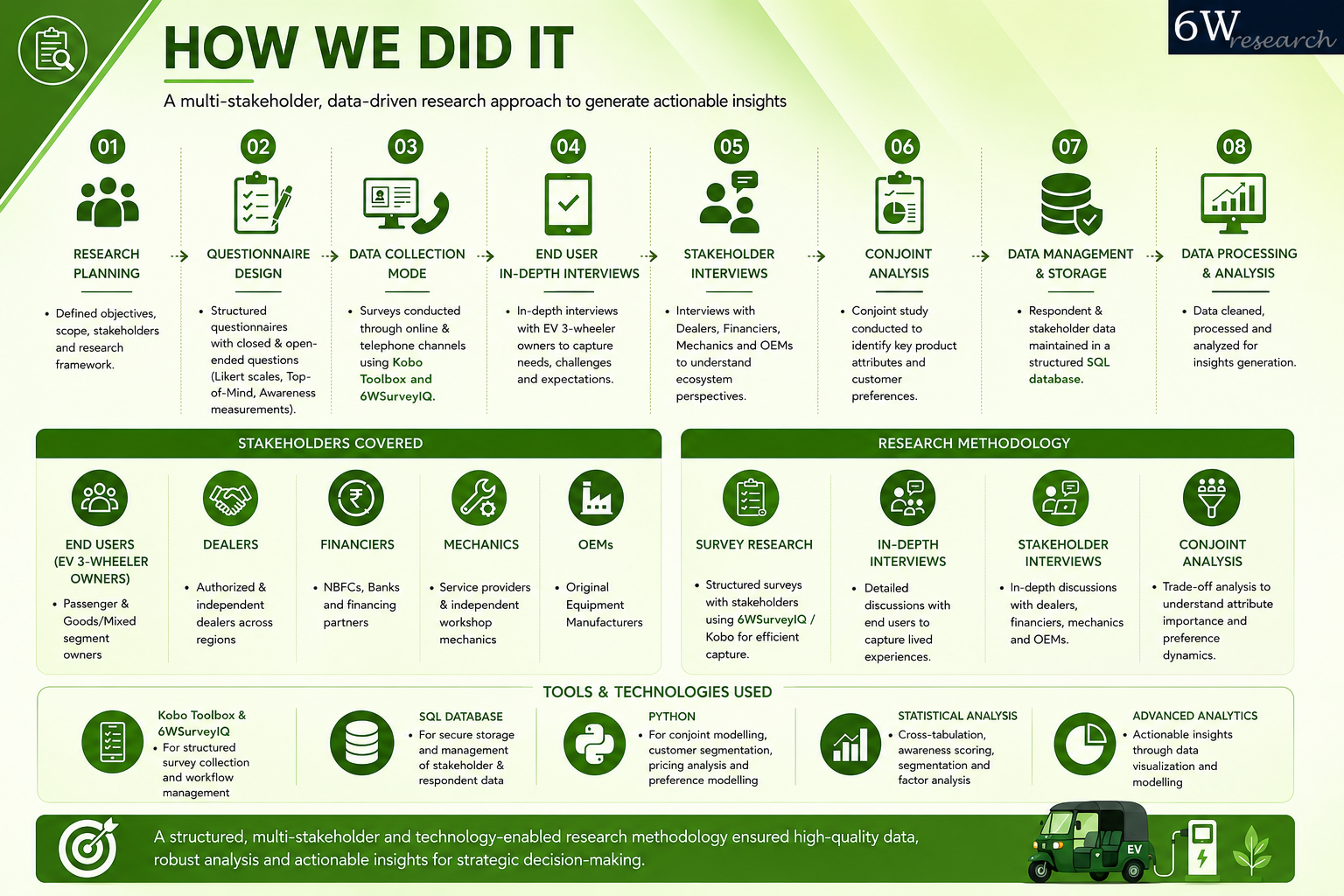
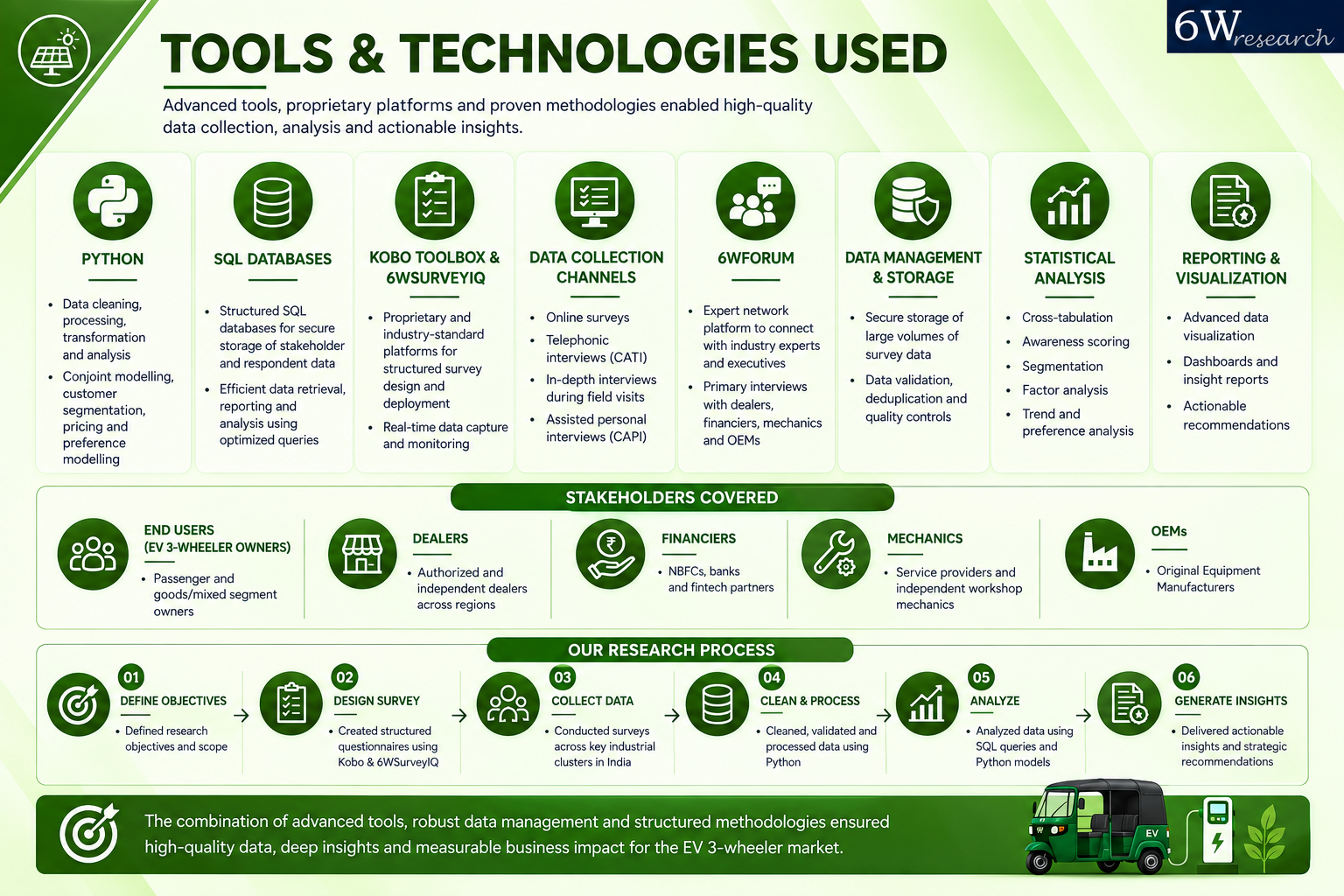
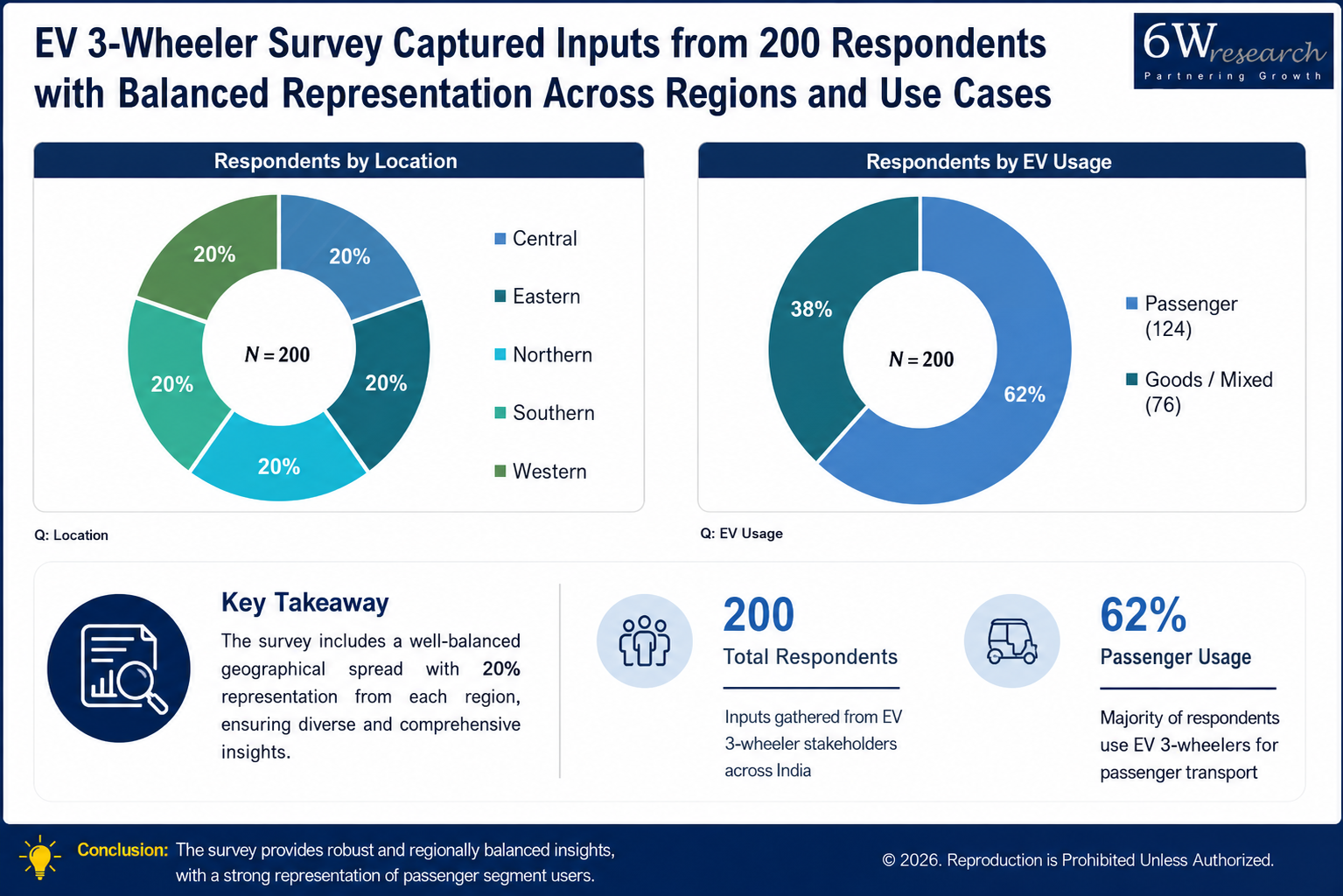
This was a multi-stakeholder research program built to understand adoption drivers, operational challenges, customer needs and barriers across the L5 electric and ICE 3-wheeler space. We covered end users, drivers/fleet operators, dealers, financiers, mechanics and OEM stakeholders, so we could look at the full customer journey — from usage and purchase through financing, servicing and long-term ownership. The study had strong regional coverage across North, South, East, West and Central India, with 200 EV end users surveyed across passenger and goods/mixed-use applications, alongside structured interviews with dealers, financiers and mechanics. The end-user piece captured real daily driving distance, operating hours, ownership challenges, charging access, battery performance, service experience, affordability, financing and what people actually wanted improved. Qualitative stakeholder interviews got into the operational realities — warranty and service issues, spare-part availability, technical diagnosis, financing barriers, resale concerns and market activation. We used a structured survey to quantify all of this and compare across stakeholder groups, cutting by demographics, region and usage pattern to spot where needs and priorities differed. Conjoint Analysis quantified how much customers actually valued different attributes — pricing, charging time, battery capacity, warranty and service-network strength — rather than relying purely on what people said they wanted. 6WSurveyIQ/Kobo handled survey capture, SQL managed the stakeholder and respondent databases, and Python powered the conjoint estimation, segmentation, pricing analysis and preference modelling. The end results combined hard quantitative evidence with qualitative stakeholder perspective to give a full, holistic view of market barriers and opportunities.
Key Findings
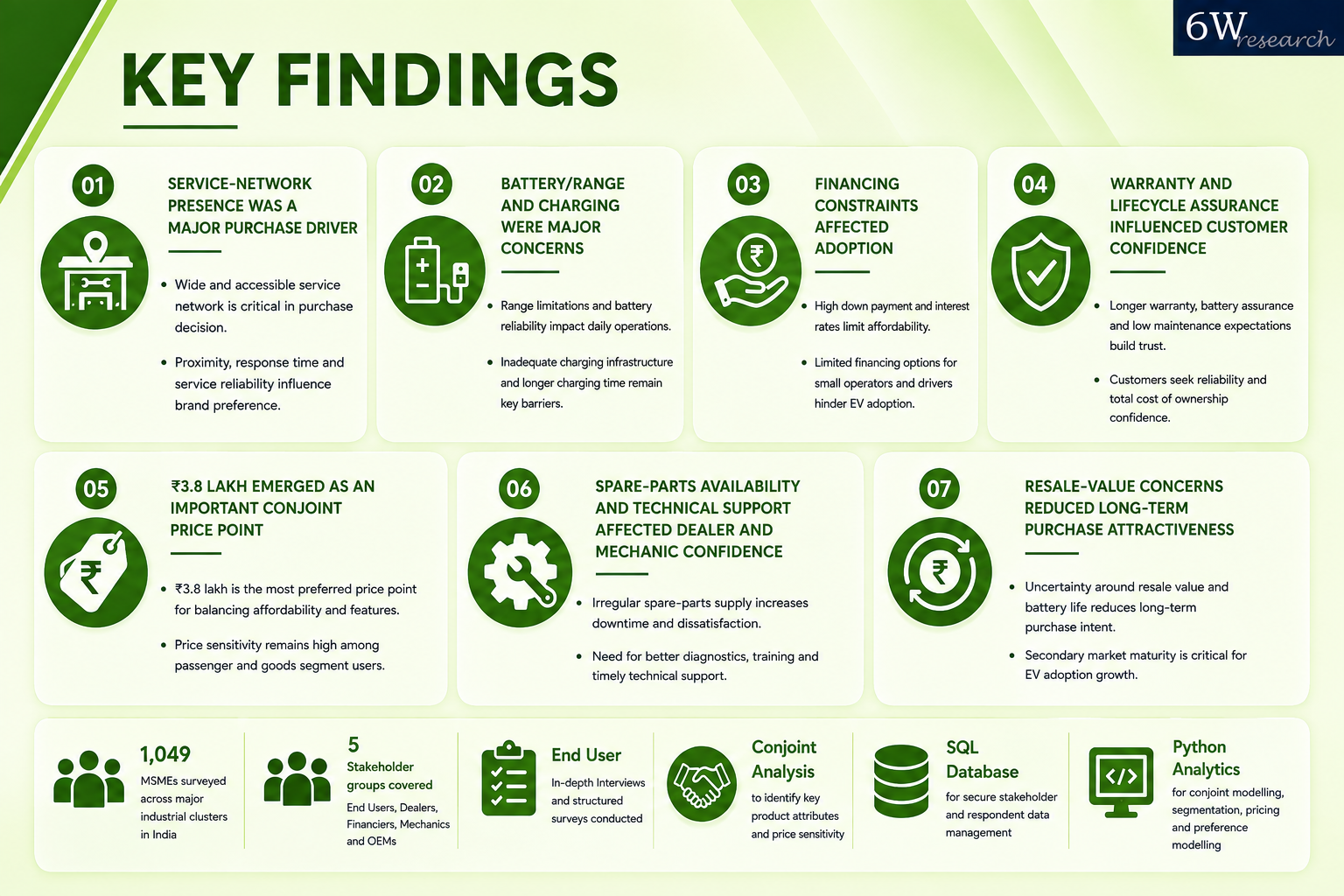
- Service-network presence was a major purchase driver.
- Battery/range and charging were major concerns.
- Financing constraints affected adoption.
- Warranty and lifecycle assurance influenced customer confidence.
- ₹3.8 lakh emerged as an important conjoint price point.
- Spare-parts availability and technical support affected dealer and mechanic confidence.
- Resale-value concerns reduced long-term purchase attractiveness.
Findings
EV adoption isn't really about the car alone — it's shaped by the whole experience around it: battery, charging, service, financing, warranty, resale, all of it together. The biggest pain points users flagged were limited charging infrastructure, service gaps, mechanical issues and battery concerns. On top of that, battery degradation, long charging times and the occasional charging fault chip away at day-to-day confidence. This matters even more given how many users are putting serious mileage on these vehicles daily — often 70–100 km or more — so predictable range and faster charging aren't nice-to-haves, they're essential. Financing and resale play into this too — high down payments, steep interest rates and uncertain resale value all add to the perceived risk of owning one, and financiers themselves point to battery degradation and resale uncertainty as reasons to be cautious about lending. So, improving EV adoption really means addressing the entire ownership journey, not just tweaking the vehicle specs.
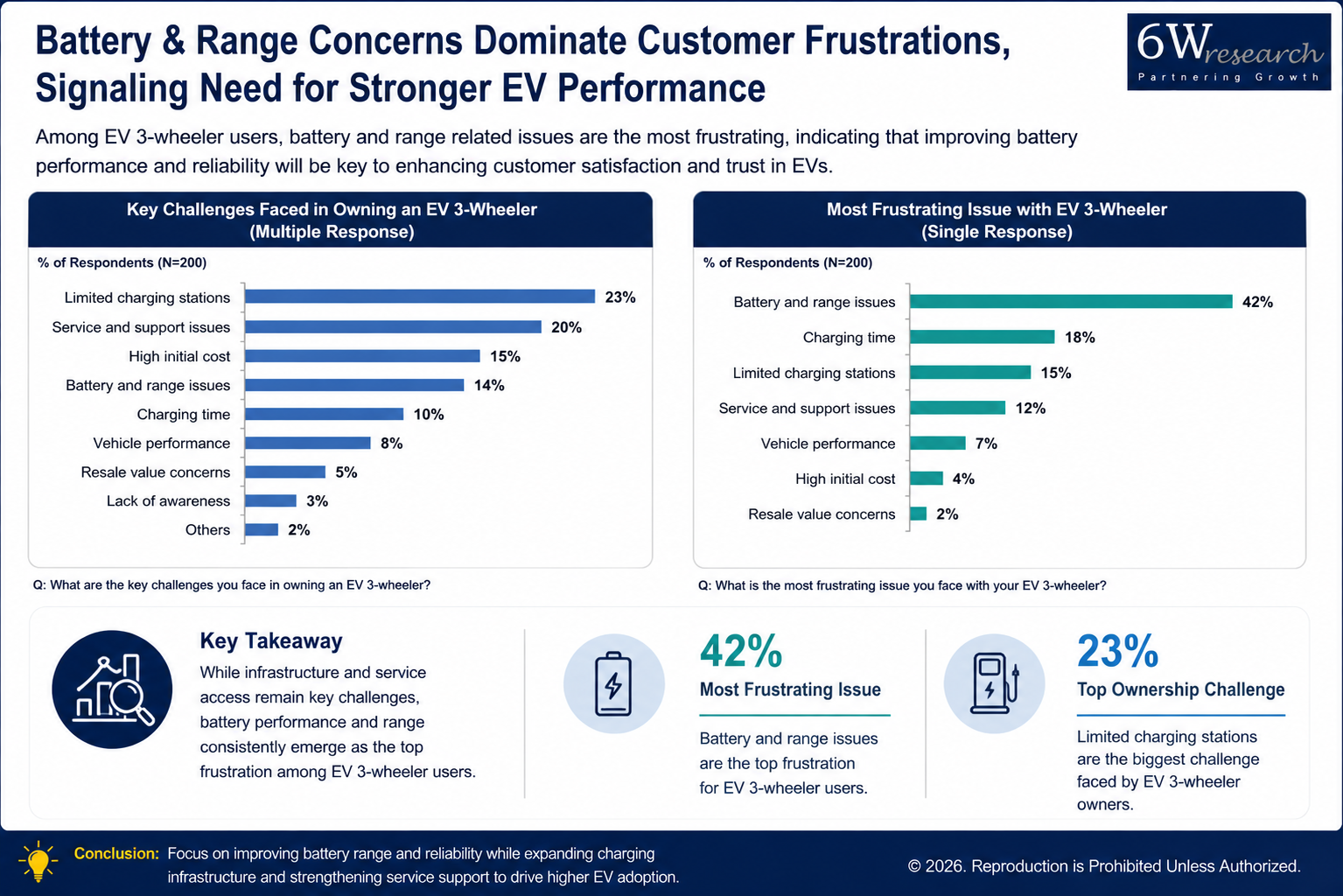
Service availability and the response time are critical here as the vehicle downtime directly impacts the daily income. Consumers are accustomed to long waits at limited-service centres, a lack of spare parts, mechanics who are not fully trained, and slow repair processes. Battery, charger, controller and wiring problems usually require advanced diagnosis, which adds even more to repair times, especially where service networks are sparse. The mechanics themselves mentioned the lack of diagnostic tools, repair manuals and standardisation procedures as real constraints. Delays in getting spare parts and battery/charger failures on the dealer side add pressure and hurt customer satisfaction, which in turn hurts repeat business and referrals. We need a stronger service ecosystem – better coverage, faster resolution, reliable parts availability and better trained technicians. Support for mobile service, repairs within the same day and guaranteed parts access would go a long way towards establishing confidence and reducing downtime. Add in stronger battery warranties, predictable charging performance, easier financing and residual-value assurance and EVs become a much more viable commercial option for operators.
Business Impact
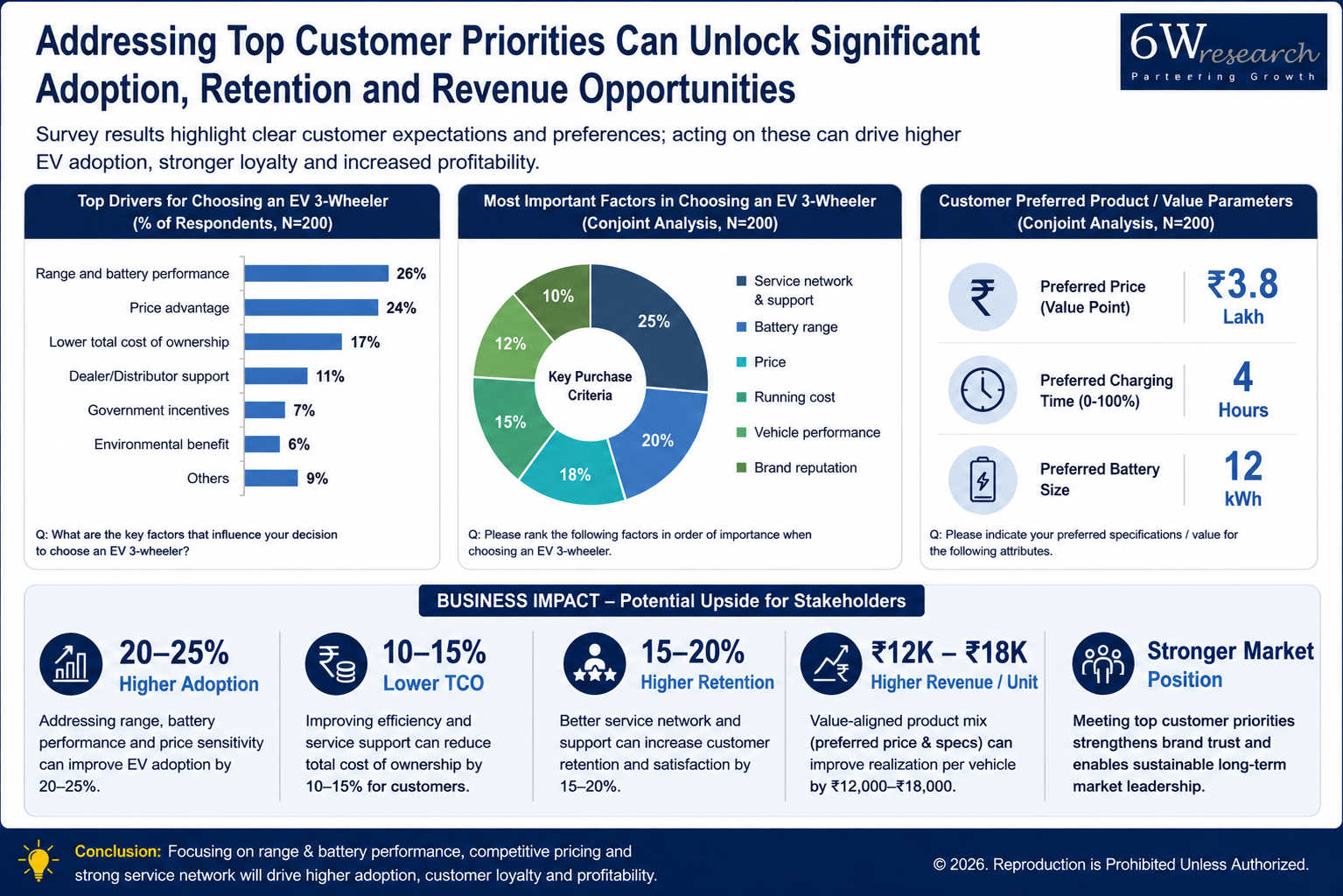
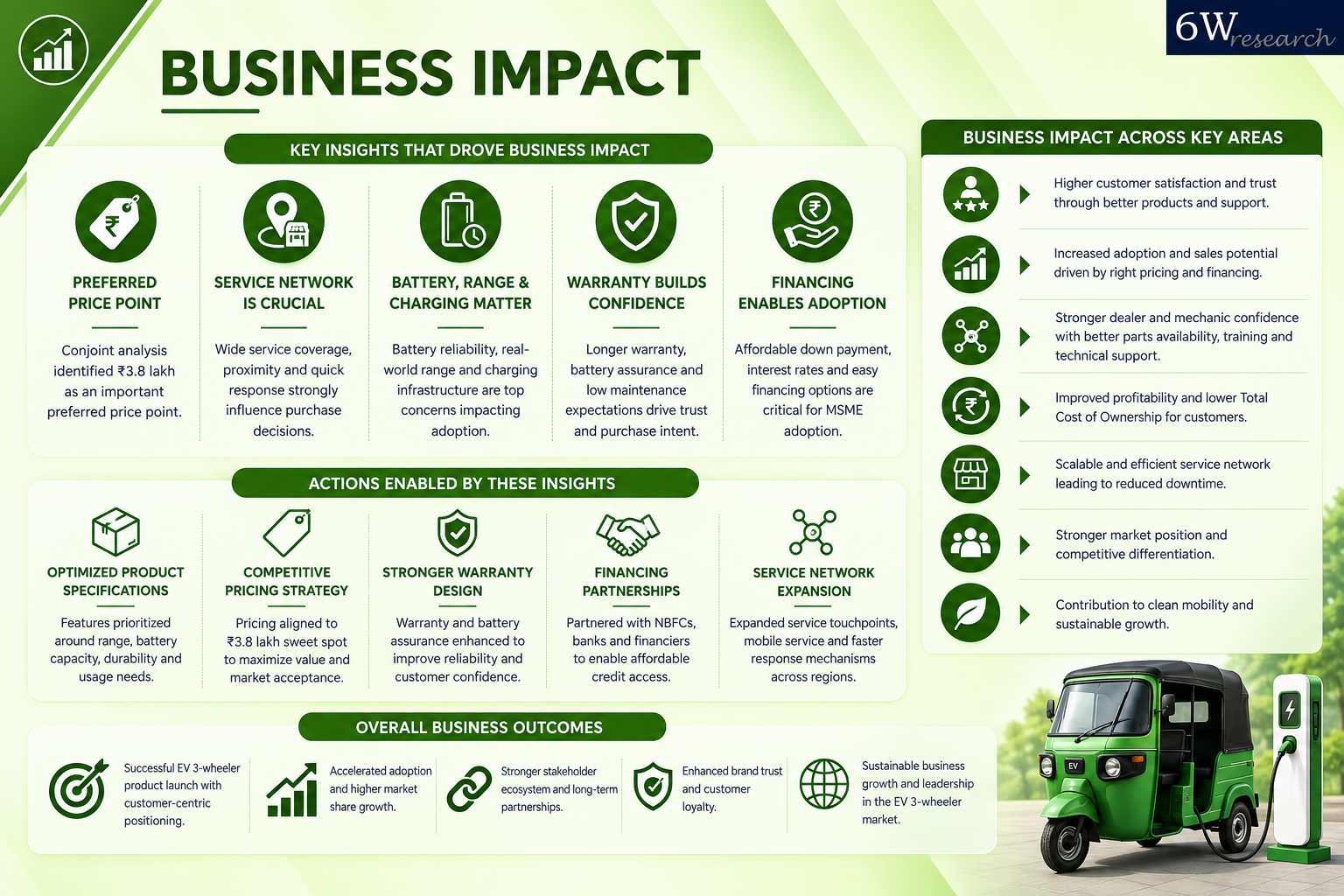
Conjoint analysis pointed to Rs. 3.8 lakh as the price customers actually prefer, with service coverage, battery range, and warranty as the deciding factors. This shaped pricing, product specs, warranty terms, financing partnerships, and the service network build-out to a major extent. Localized service, mobile service options, faster response times, and stronger battery assurance came out as the recommendations — all feeding into EV launch planning, adoption, and market share growth.


