
Who Are the Buyers Shaping the Future of SCV & LCV Markets?
India SCV and LCV Market – Consumer Preference and Behavioral Analysis
Objective
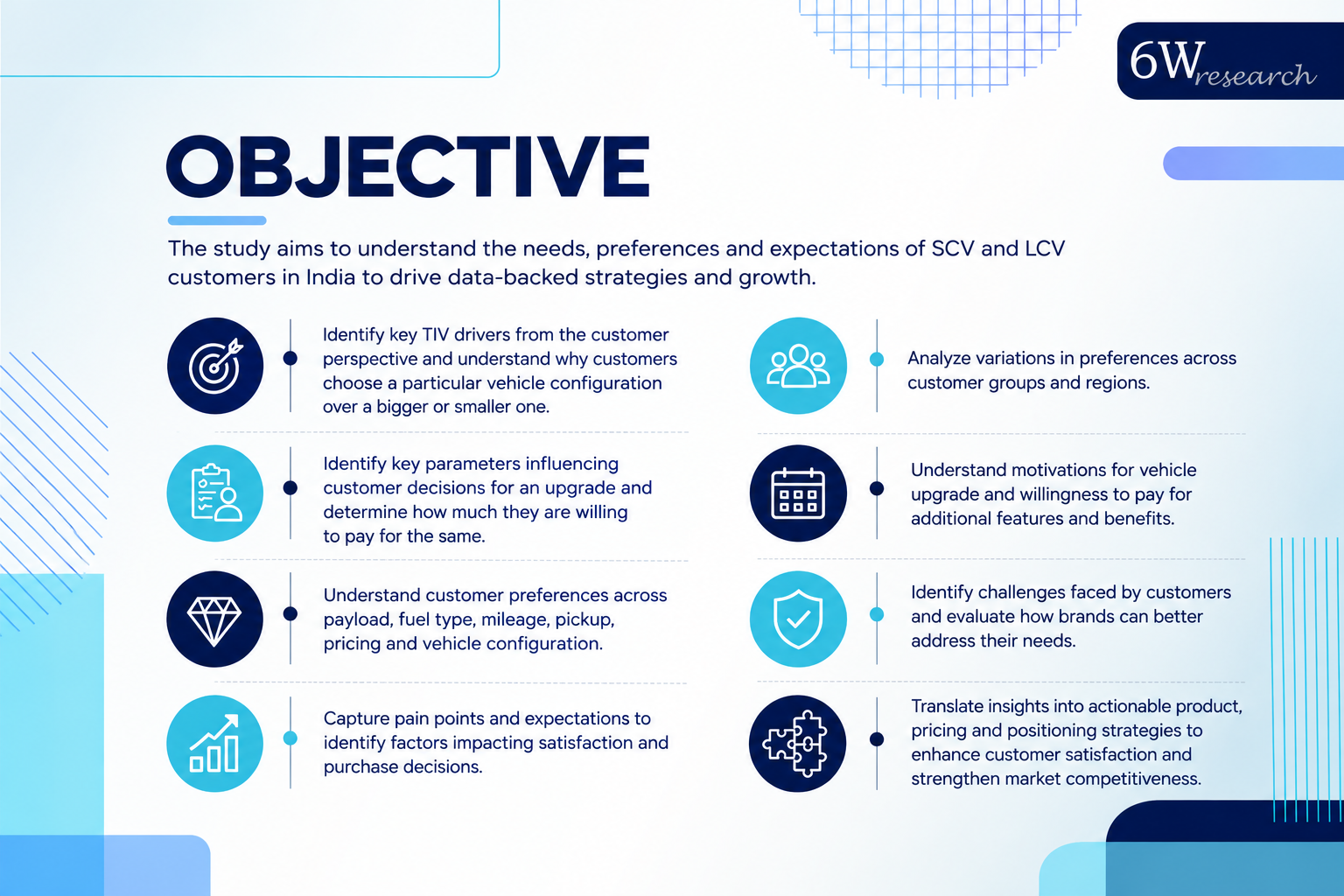
The objective was to develop an understanding of consumer preferences and buying behavior in the SCV and LCV market in India. The areas of interest included payload required, fuel type, mileage, pickup, pricing, vehicle configuration, upgrade motivations, and willingness to pay. The proposed research also looked into how such requirements differed across customer groups and regions and made it possible to come up with suitable strategies regarding product, price and positioning.
Business Challenge
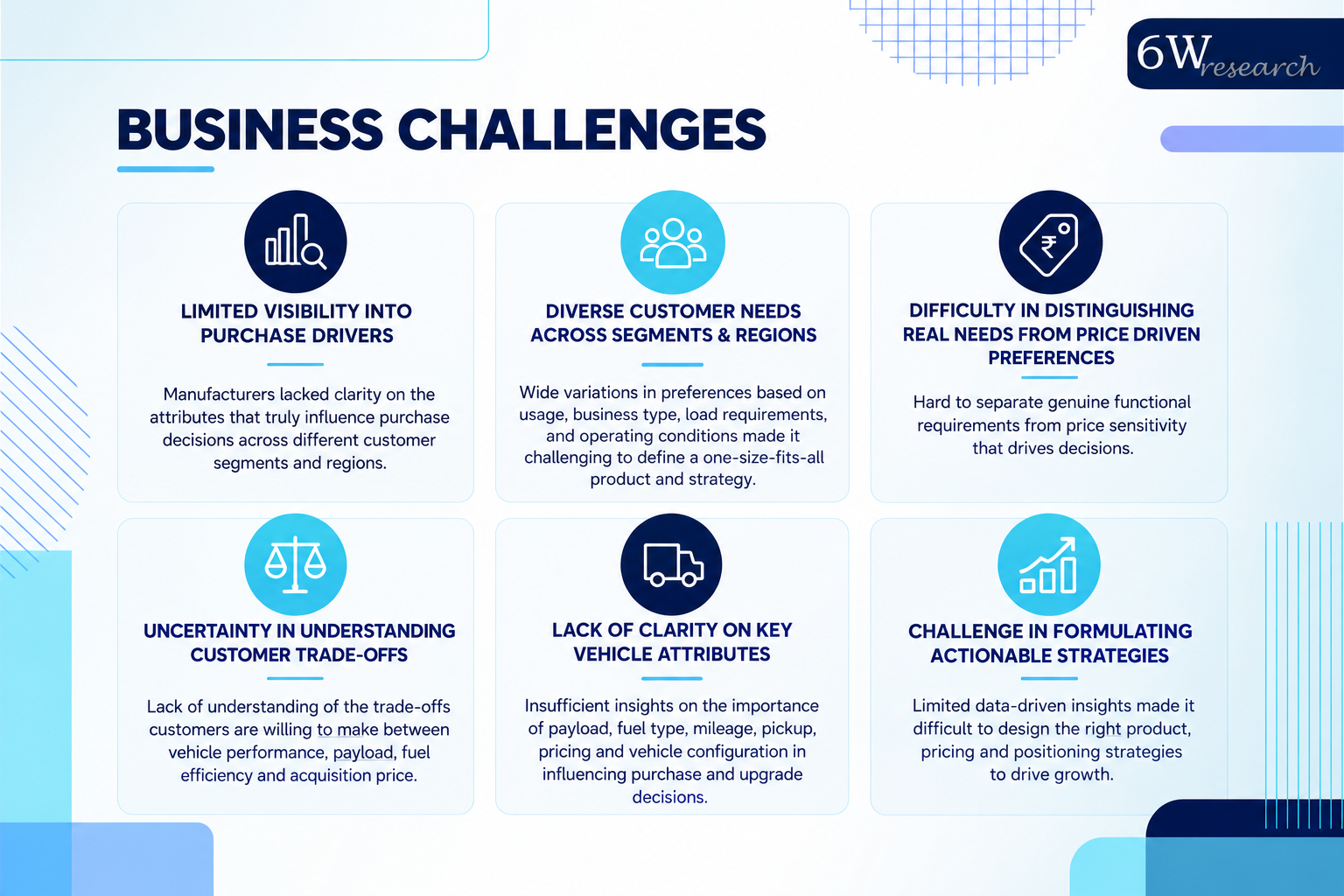
Manufacturers faced limited visibility into the attributes that actually drive purchase decisions across different customer segments and regions. The concern is to distinguish genuine functional requirements from price-driven preferences and understand the trade-offs that customers were willing to make between vehicle performance, payload, fuel efficiency, and acquisition price.
How We Did It
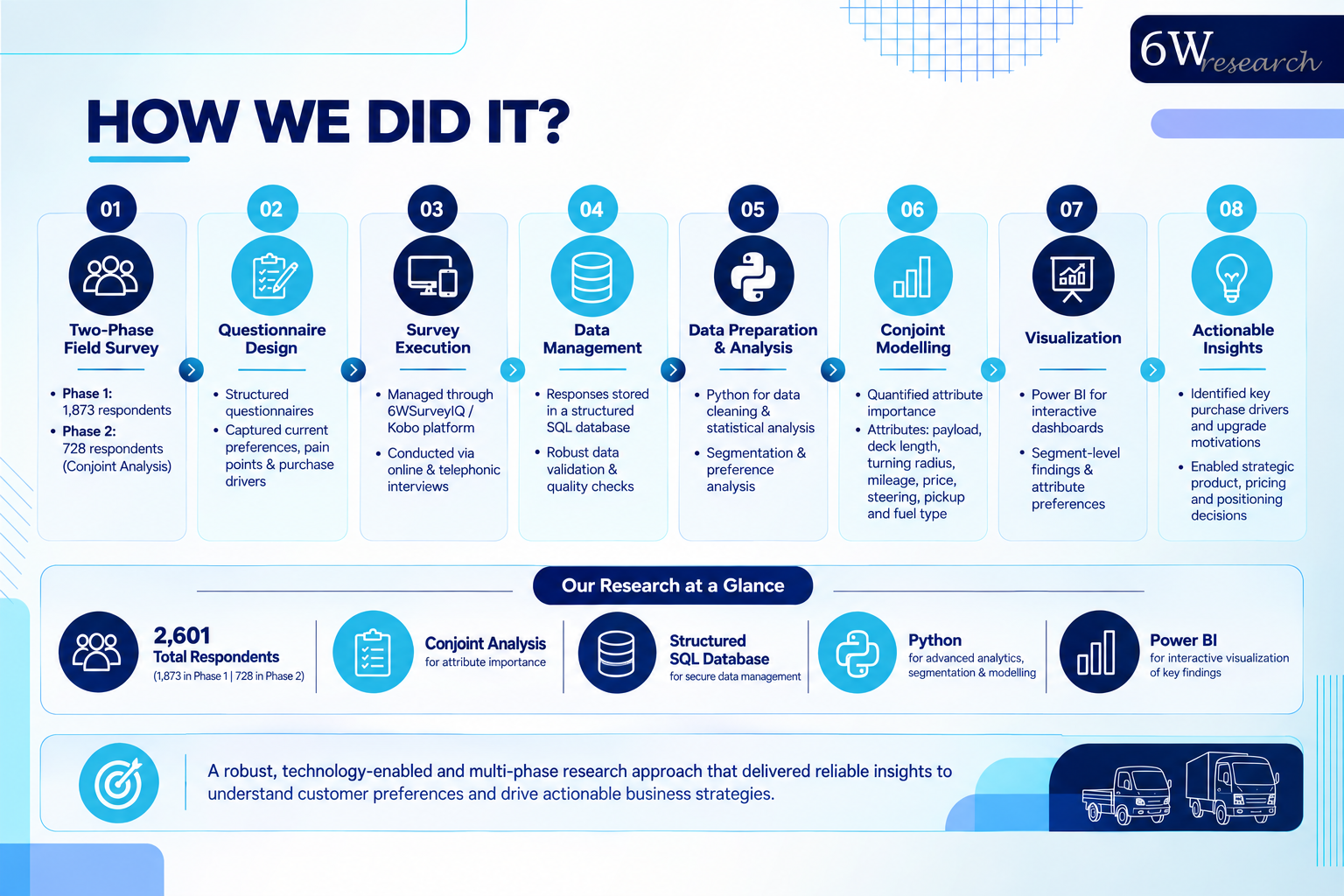
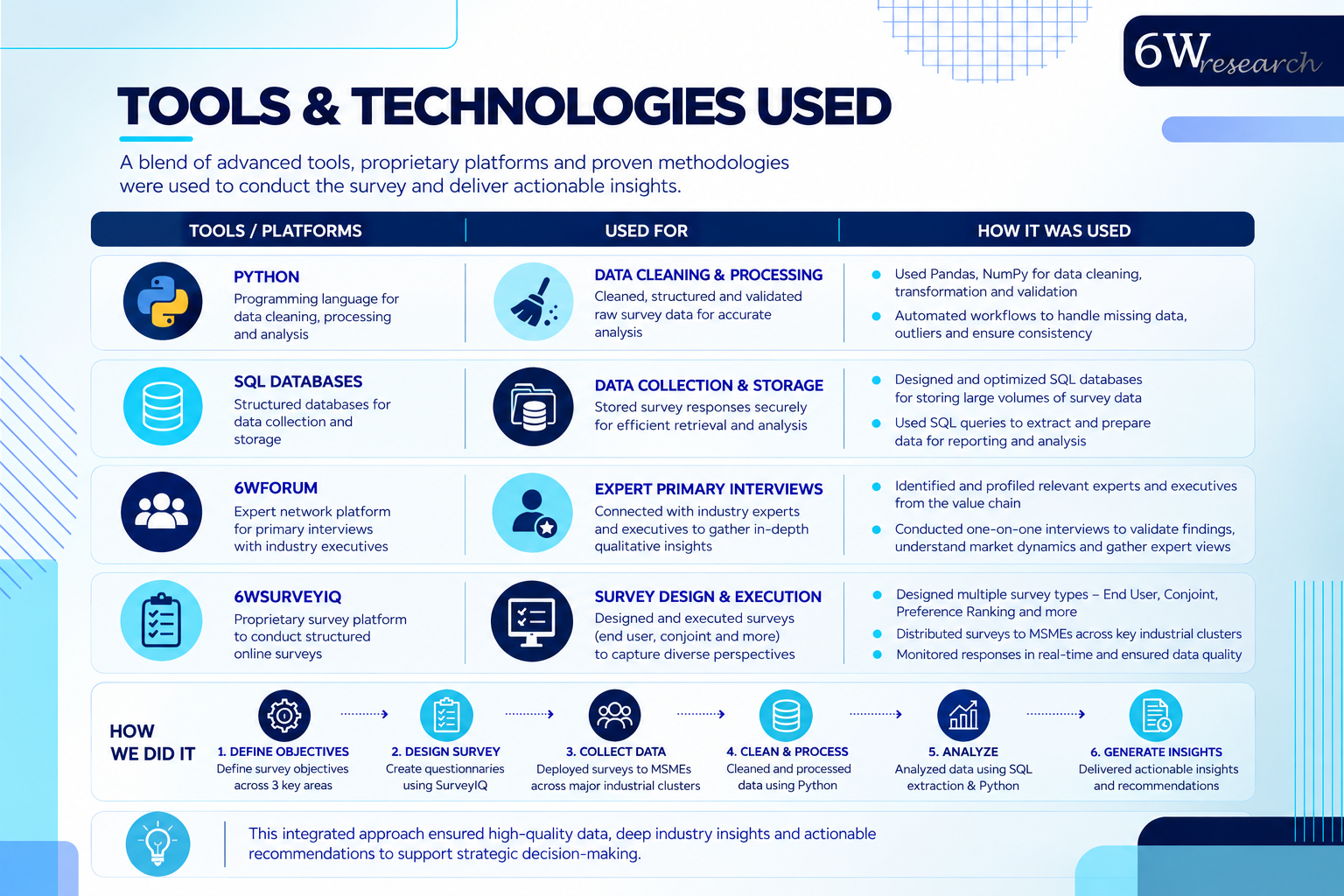
This research ran in two phases to understand customer behavior, preferences and what actually drives purchase decisions across the India SCV and LCV market. Phase 1 covered 1,873 respondents across 13 states — a mix of first-time buyers, replacement buyers and upgrade customers — looking across key models and configurations to understand current preferences, pain points, payload needs, deck-length choices, fuel preferences, mileage expectations, pickup and maintenance considerations, plus what they're planning to buy next. Phase 2 covered 728 existing customers and focused specifically on next-brand preference and future vehicle configuration — this is where we brought in Conjoint Analysis to quantify how much customers actually value different attributes: passing payload, fuel options, mileage, pickup, price, deck length, turning radius and maneuverability. The conjoint exercise let us see how people trade off different configurations against each other and figure out which combinations best matched what they actually wanted. We also broke things down by payload segment, fuel type, deck length, price point and performance parameter to compare across customer groups. Survey data was managed through 6WSurveyIQ/Kobo and stored in a structured SQL database, with Python handling data prep, statistical analysis, conjoint modelling and segmentation. Power BI turned all of that into clear visualizations we could actually use to review attribute importance and purchase drivers systematically. Overall, this combined primary research with quantitative modelling to build a detailed, evidence-backed picture of what drives SCV and LCV purchase decisions.
Key Findings
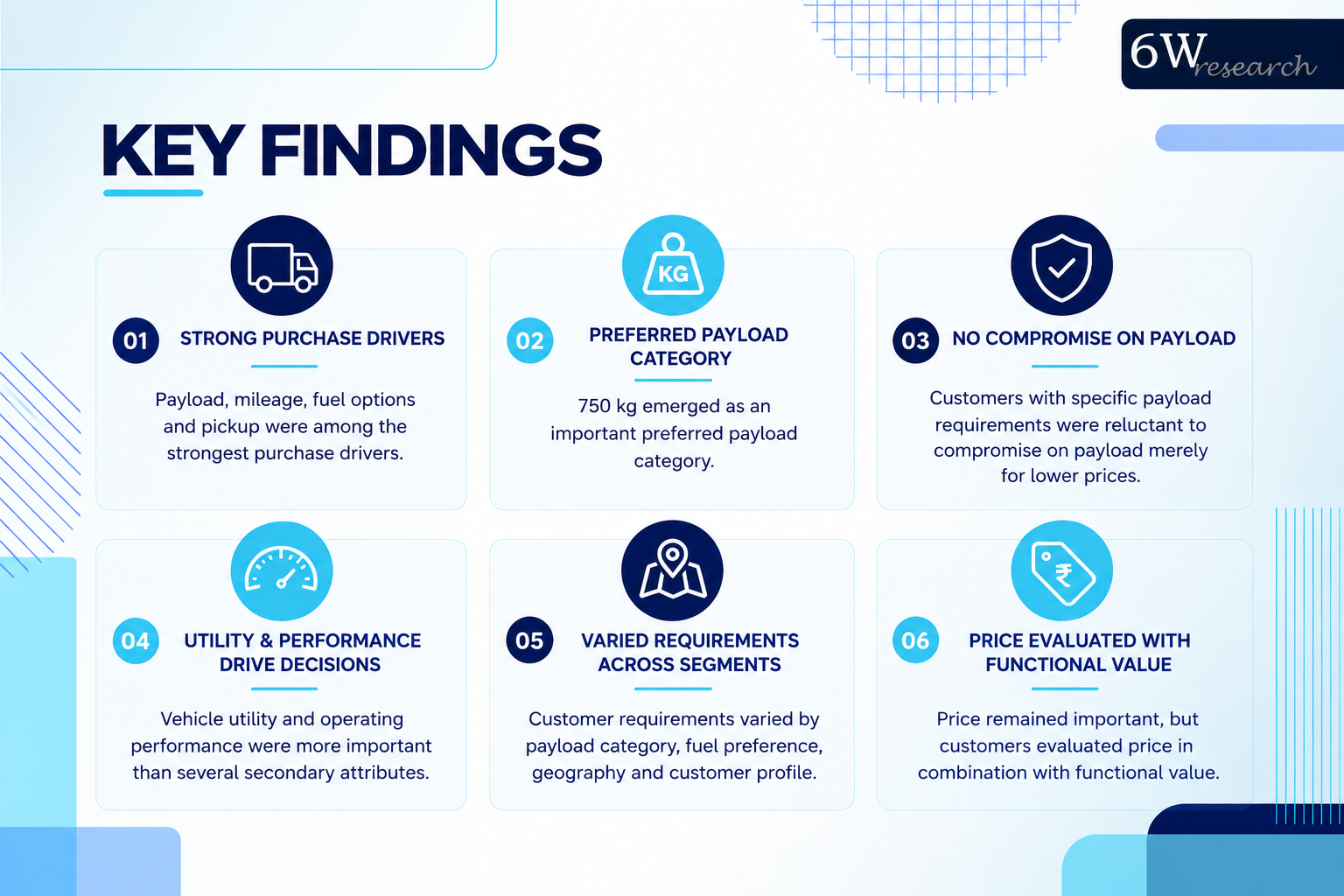
- Payload, mileage, fuel options and pickup were among the strongest purchase drivers.
- 750 kg emerged as an important preferred payload category.
- Customers with specific payload requirements were reluctant to compromise on payload merely for lower prices.
- Vehicle utility and operating performance were more important than several secondary attributes.
- Customer requirements varied by payload category, fuel preference, geography and customer profile.
- Price remained important, but customers evaluated price in combination with functional value.
Findings
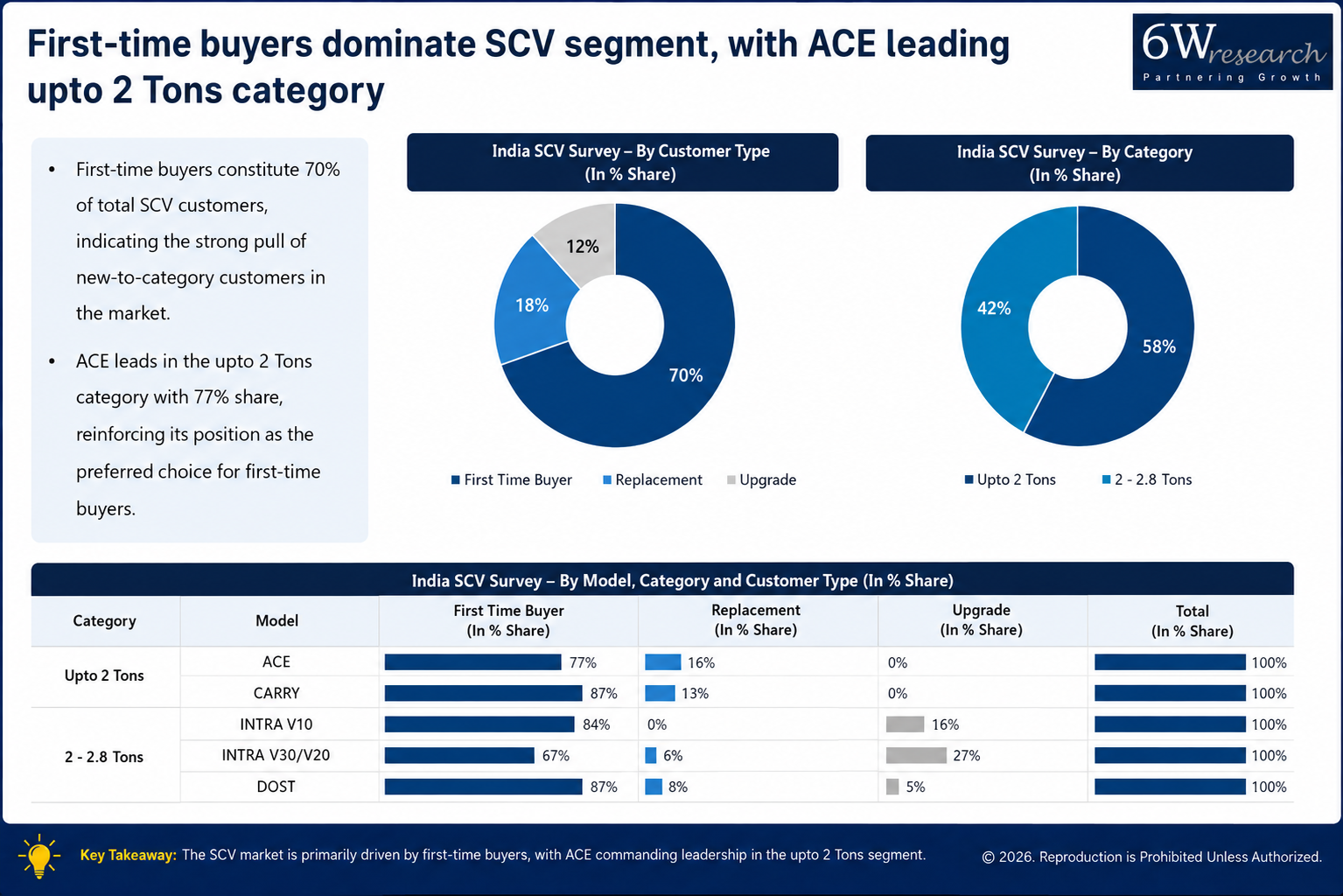
The research made it clear that what the vehicle can actually do matters more than what it costs. Running a conjoint analysis to see how customers trade off price against features, payload came out on top by a wide margin at 36%, followed by fuel options (17%), mileage (15%) and pickup (9%). Price barely registered — just 7% — which says a lot: people are choosing vehicles based on whether they'll get the job done, not just chasing the lowest number. Specific preferences also came through clearly — 22 km/l mileage, 70 hp/160 Nm pickup, and an 8.7-foot deck length all stood out, underlining how much performance, efficiency and load capacity shape what customers actually value.
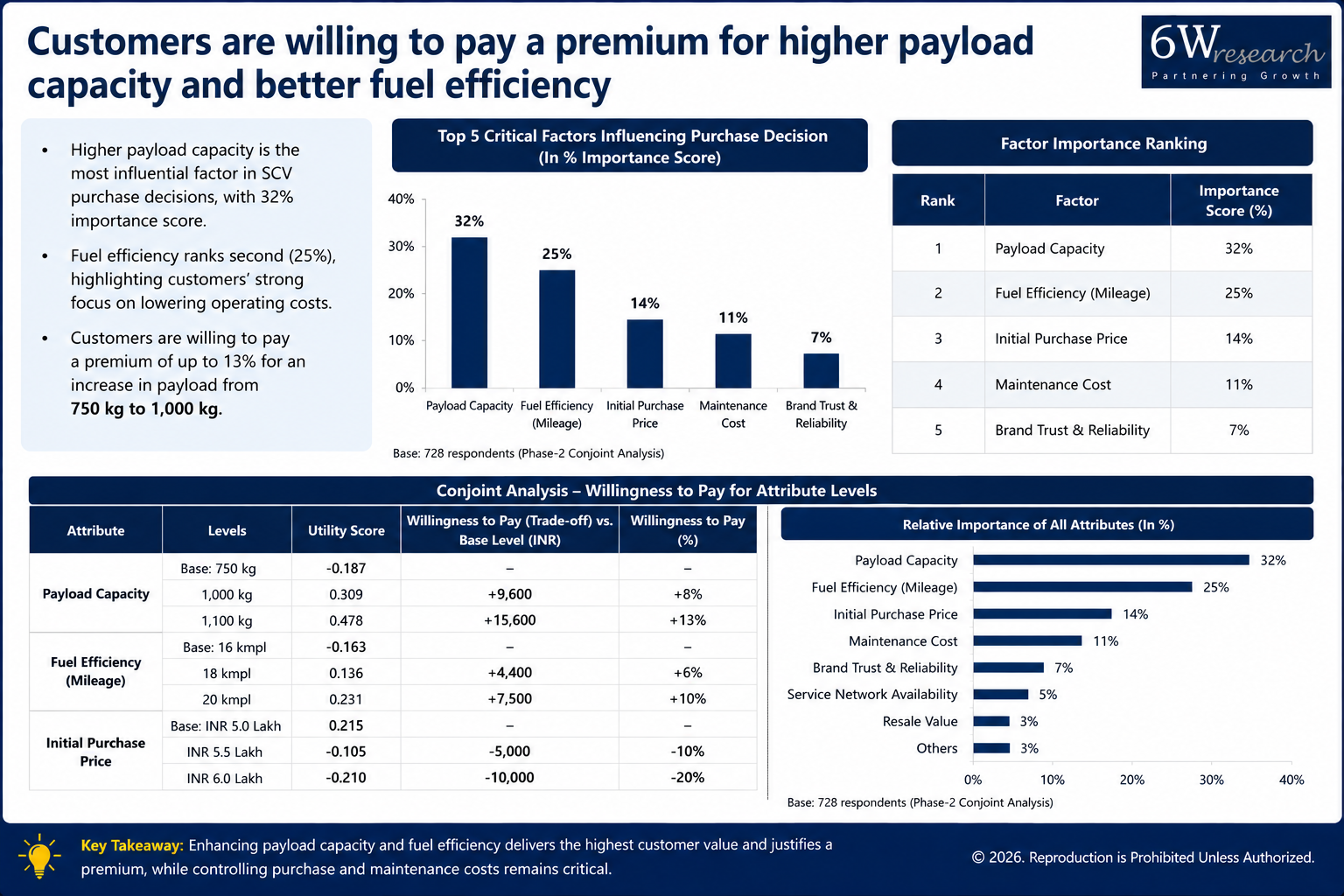
The willingness to pay was close behind functional upgrades that mattered to buyers. Payload preferences are mainly between 750 kg (43 per cent) and 1,000 kg (38 per cent). Customers were also not averse to paying more – some 41% said they would pay ₹40,000-₹60,000 extra for meaningfully better utility Consistently complained about low mileage, cramped loading space, cabin comfort, pickup and service. Simply put, when you segment your customers by their usage needs, payload requirements and performance expectations you learn far more than you ever could by demographics.
Business Impact
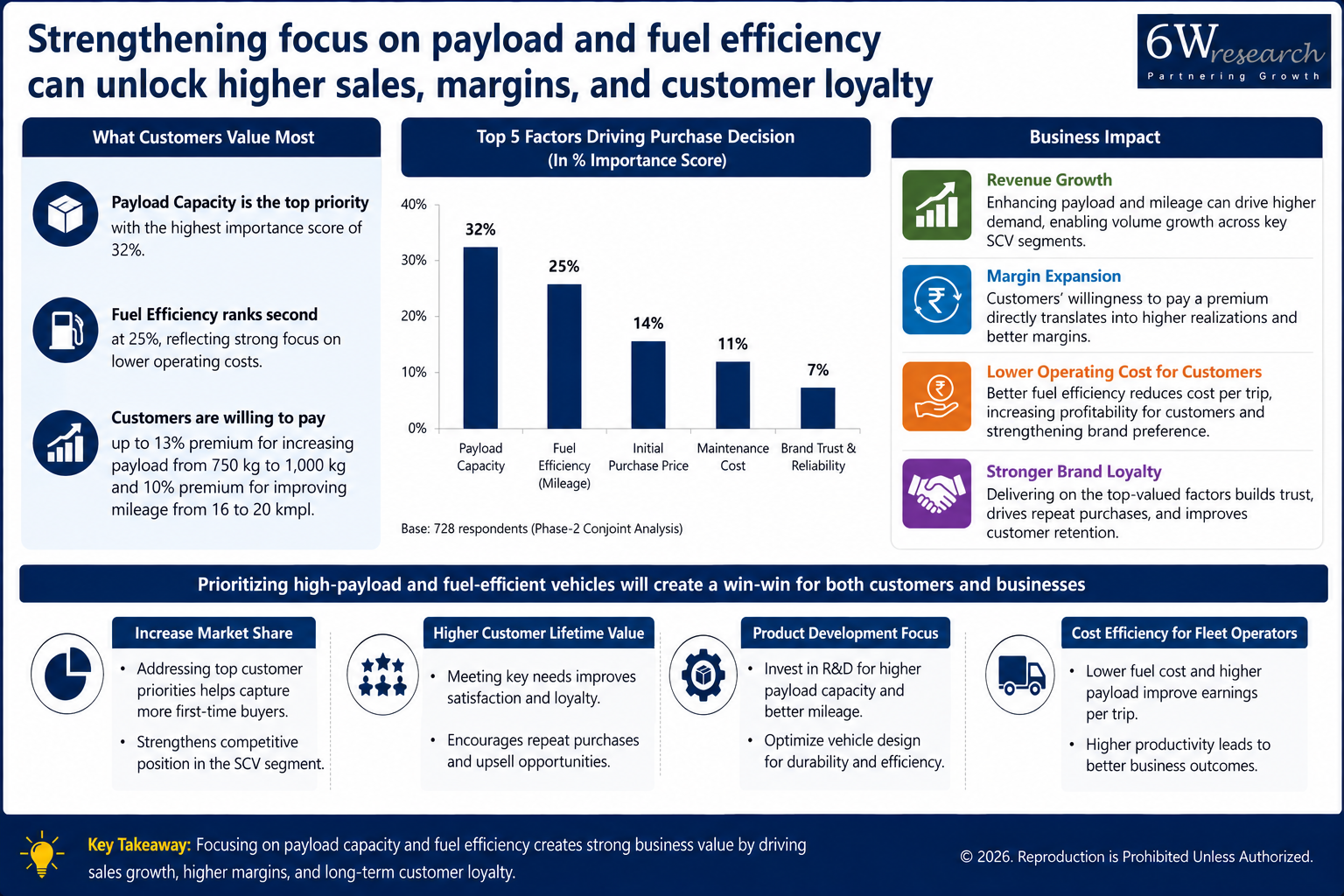
Conjoint analysis gave us a real way to weigh which car attributes actually matter to customers, and where they're willing to trade off. That's made pricing and product configuration decisions a lot more grounded. One thing that stood out: a 750 kg payload option came through as the clear customer favorite, which now feeds directly into product development. Beyond that, conjoint work has been useful across the board — pricing, feature prioritization, product configuration, and launching new variants.


