How Will India's Growing Office Sector and Startup Ecosystem Drive Demand for Modern Office Pods?
India Modern Office Market
Objective
This study set out to map how India's modern office market is developing between 2023 and 2029, breaking the market down by type, region, and city to give a clear read on where growth is headed. We wanted to understand what's pulling demand forward and what's holding it back, including how COVID-19 reshaped the sector, so that both new entrants and established players could plan with more confidence. A core part of the brief was sizing the market properly, putting real numbers against revenue and volume forecasts, while also digging into what customers actually want and how the competitive field is shifting. We also looked closely at pricing behaviour and how products reach buyers, since both feed directly into go-to-market decisions. The people this research was built for include office space developers, workspace providers, furniture manufacturers, and corporates hunting for flexible, forward-looking workspace solutions. In the end, the goal was straightforward: give stakeholders a city-by-city, region-by-region view of where the opportunity sits and what's driving adoption, so they can invest and operate with better information in what is still a fast-moving part of India's commercial real estate story.
Business Challenge
India's modern office sector is still finding its footing in several respects: penetration remains low, MSMEs in particular have limited awareness of what's on offer, and workplace expectations keep shifting as technology and post-pandemic habits evolve. Supply is fragmented, competition varies sharply by region, and cost-conscious buyers, startups and co-working operators especially, keep pressure on pricing. On top of that, the fast rise of flexible workspaces, remote work, and newer formats like office pods has left many traditional providers scrambling to keep up. Companies operating here have to work around regulatory friction, uneven demand across regions, and the constant need to tailor products to very different client needs. The real challenge is to identify where the opportunity is strongest, with cities such as Bengaluru, Delhi NCR and Hyderabad emerging as the top cities, while also overcoming the low awareness and high upfront costs that prevent smaller businesses from adopting such solutions. International brands entering the space means another level of competition, and digital channels have moved from optional to essential to finding and converting customers.
How We Did It
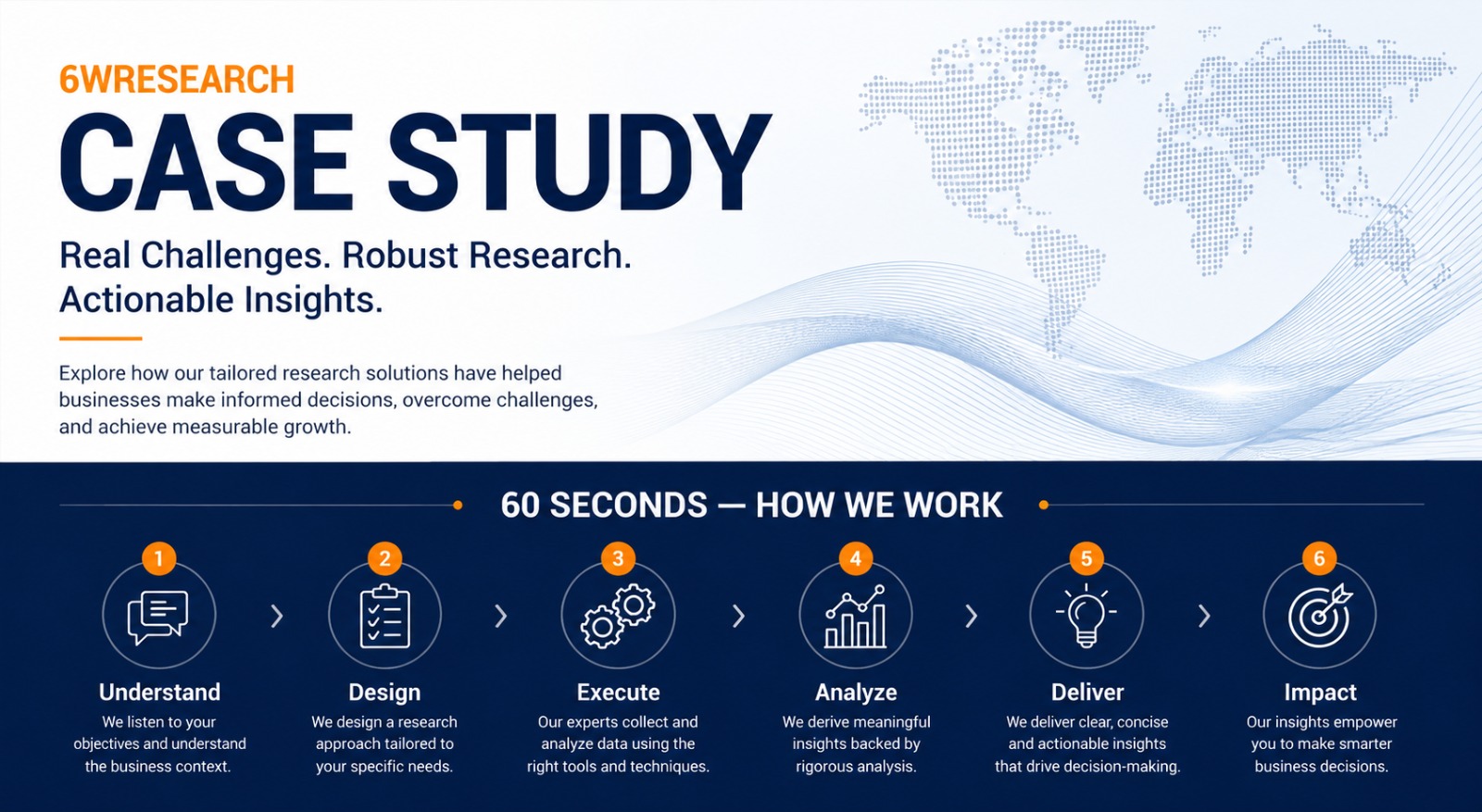
We built this study on a blend of primary and secondary research, using 6Wresearch's own tools throughout: 6WSurveyIQ ran the structured surveys and managed respondent data, while 6WForum gave us direct access to industry experts for interviews that helped validate what the numbers were telling us. Sampling was done on a stratified, quota basis so that cities like Bengaluru, Mumbai, and Delhi NCR were properly represented rather than skewing the picture. On the analytics side, Python handled data cleaning, segmentation, and predictive modelling, letting us dig into trends, preferences, and price sensitivity in real depth. Large respondent datasets were managed through SQL, and Power BI and Tableau turned the output into dashboards clients could actually use to track KPIs in real time. We also ran a Porter's Five Forces assessment to gauge how intense the competition really is, and used conjoint analysis to work out which product attributes corporate buyers care about most. Forecasting combined regression and time-series modelling, grounded in macroeconomic indicators and relevant government programmes. Altogether, this gave us a research and analytics setup built to produce insight clients could actually act on.
Key Findings
- India's modern office market is still early in its growth curve, sitting at roughly 17.80% penetration in the top cities, pushed forward by rising interest in flexible, tech-enabled workspaces.
- Bengaluru, Mumbai, and Delhi NCR are the three cities driving the market, with Bengaluru out front thanks to its startup scene and IT industry, together representing a total addressable market of more than 78,000 office pods.
- Demand for office pods took off after COVID-19, particularly in Tier 1 cities, and the market is on track for a CAGR of around 14.6% between 2023 and 2029.
- Average selling prices are easing gradually as competition heats up and manufacturers become more efficient.
- Remote work and coworking spaces pose some competitive threat, but demand for private, soundproof, customisable pods hasn't slowed.
- Global brands such as Framery, Herman Miller, and Haworth continue to hold a large share of revenue, thanks to features like smart tech and sustainable materials.
- Direct procurement remains the preferred sales channel, though dealer networks are playing a bigger role, especially outside the major metros.
- IT/ITES and healthcare are the biggest demand drivers, with startups and co-working operators also contributing meaningfully to growth.
Findings
India's modern office market sits at an early growth stage, with penetration in major cities holding around 17.80%. Bengaluru leads by a clear margin, a position it owes to its dense startup ecosystem and concentration of IT firms. What's pushing the market forward is a growing appetite for flexible, tech-integrated workspaces, office pods being the clearest example, which have caught on since the pandemic precisely because they offer privacy, sound insulation, and customisation that open-plan offices can't match. We're forecasting a CAGR near 14.6% through 2029, backed by continued infrastructure investment, programmes like Startup India, and growing FDI into services. The competitive field mixes international and domestic players, both leaning on smart features, sustainable materials, and manufacturing tailored to local needs. Regionally, the south, Bengaluru above all, will keep leading, with Delhi NCR, Hyderabad, and Mumbai offering strong secondary opportunities. Supply remains fragmented and direct sales dominate for now, though dealer networks are gaining ground outside the big cities. Prices are trending down as competition and operational efficiency improve, which should make office pods more attainable for a wider set of buyers.
When we looked at how customers actually behave, a clear preference emerged for private, acoustically treated, customisable pods, particularly among large corporates and tech companies chasing better privacy and productivity for their teams. Employee surveys back this up: acoustic privacy, reliable connectivity, and how the pod looks were named as the top reasons for adoption, and 80% of respondents said privacy was essential for getting focused work done. Multinationals tend to pay more for customisation and safety features, while startups and co-working operators are more focused on keeping costs down. Our conjoint analysis showed that sound insulation (in the 28-40 dB range), space offered by a pod, and the overall design of a pod have a tangible influence on purchase decisions. Low awareness and the perception of high upfront costs, despite the significant long-term gains in productivity and space, are the biggest barriers for MSMEs. The buying process is moving to the Internet, with more direct-from-manufacturer purchases and online marketplaces. Growth in Tier 1 cities alongside the expansion of flexible workspace providers points to a broader shift toward integrated, tech-enabled office environments. Moving forward, growth will likely be driven by targeted product innovation, region-specific marketing and tighter collaboration with architects and real estate developers to bring smaller businesses into the fold.
Business Impact
These findings give stakeholders a solid basis for decisions on market entry, product design, and go-to-market strategy. Real growth prospects are bright with a CAGR of 14.6% (projected) Bengaluru, Delhi NCR and Hyderabad are expected to have an addressable market of office pods of more than 78,000 units by 2029. As prices fall and the demand for smart, customizable solutions increases, manufacturers should standardize their core offering but still provide flexibility to tailor products for different clients. The strong tendency toward direct sales channels argues for investing more in digital marketing, search engine optimization and partnering with architects and developers to get better leads. Data specific to the city and region allows companies to target the highest growth markets, optimize supply chains and develop products that fit local needs. The focus on privacy, connectivity and design should be the driver for product innovation and customization for corporate buyers. Given how early-stage and under-penetrated this market still is, there's a real opening for new entrants to build a strong position, particularly by using digital channels and forming the right partnerships. Altogether, this research supports smarter decisions on segmentation, pricing, and regional expansion, with the aim of driving revenue growth, sharpening competitive position, and speeding up adoption of newer workspace formats across India.


