How Will Rising Internet and Media Consumption Drive India's PTZ Camera Market Growth?
India Professional PTZ Camera Market
Objective
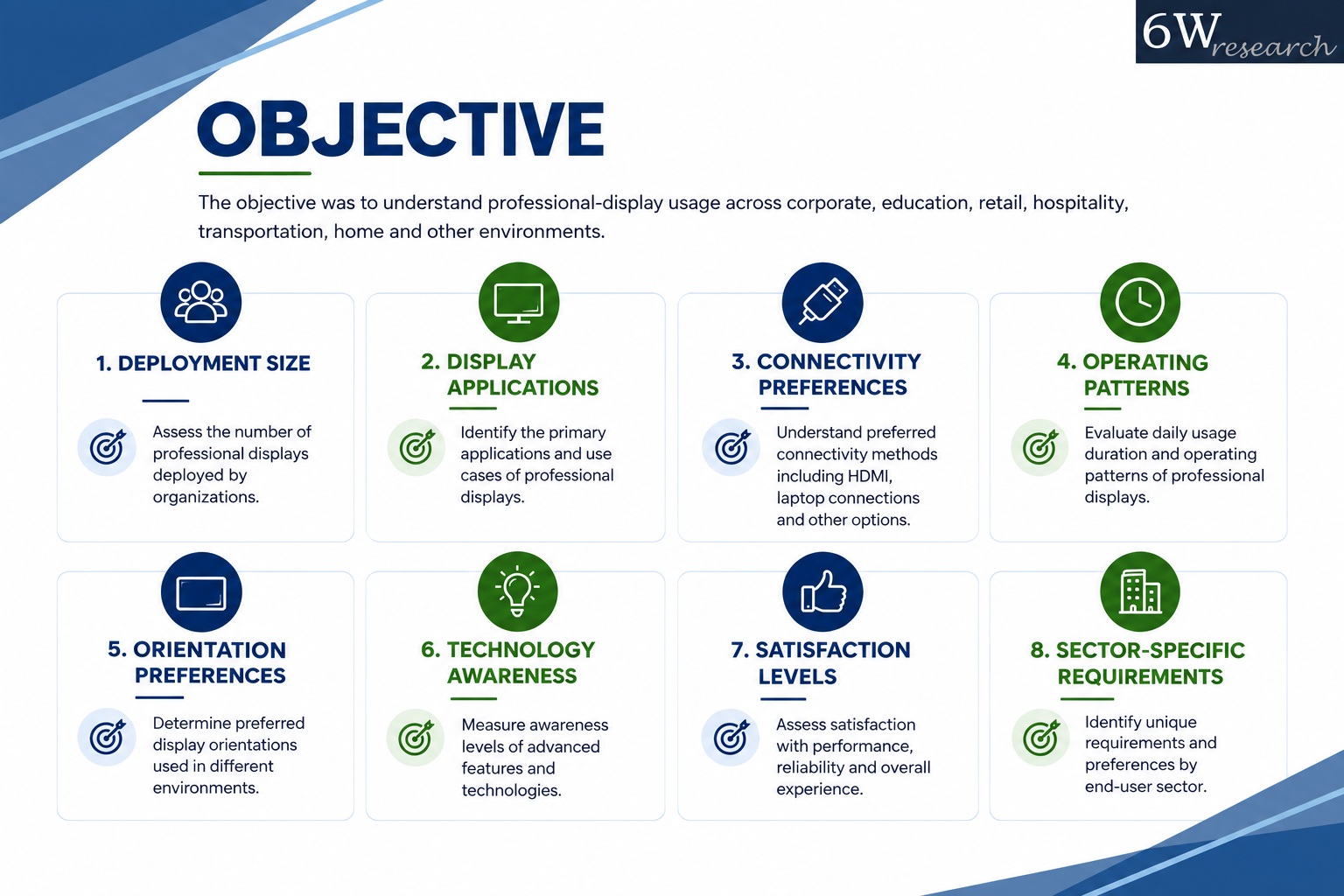
This research analyzed the growth potential, market dynamics, and key vertical opportunities within India's professional PTZ camera market from 2019 through 2025. We quantified market volume, identified emerging segments by resolution and application, and assessed both the import landscape and competitive field. The objective was to provide OEMs, investors and players in the industry with strategic insight in an effort to help guide market entry, product development and investment decisions. Much of the work was centred on understanding the impact of digital transformation, rising internet penetration and increased media consumption on the demand for high resolution broadcasting and streaming solutions. Drawing on 6Wresearch's reports and proprietary databases, the study combined hard quantitative forecasts with qualitative insight to help clients capture opportunity in what's still a relatively young but fast-moving market.
Business Challenge
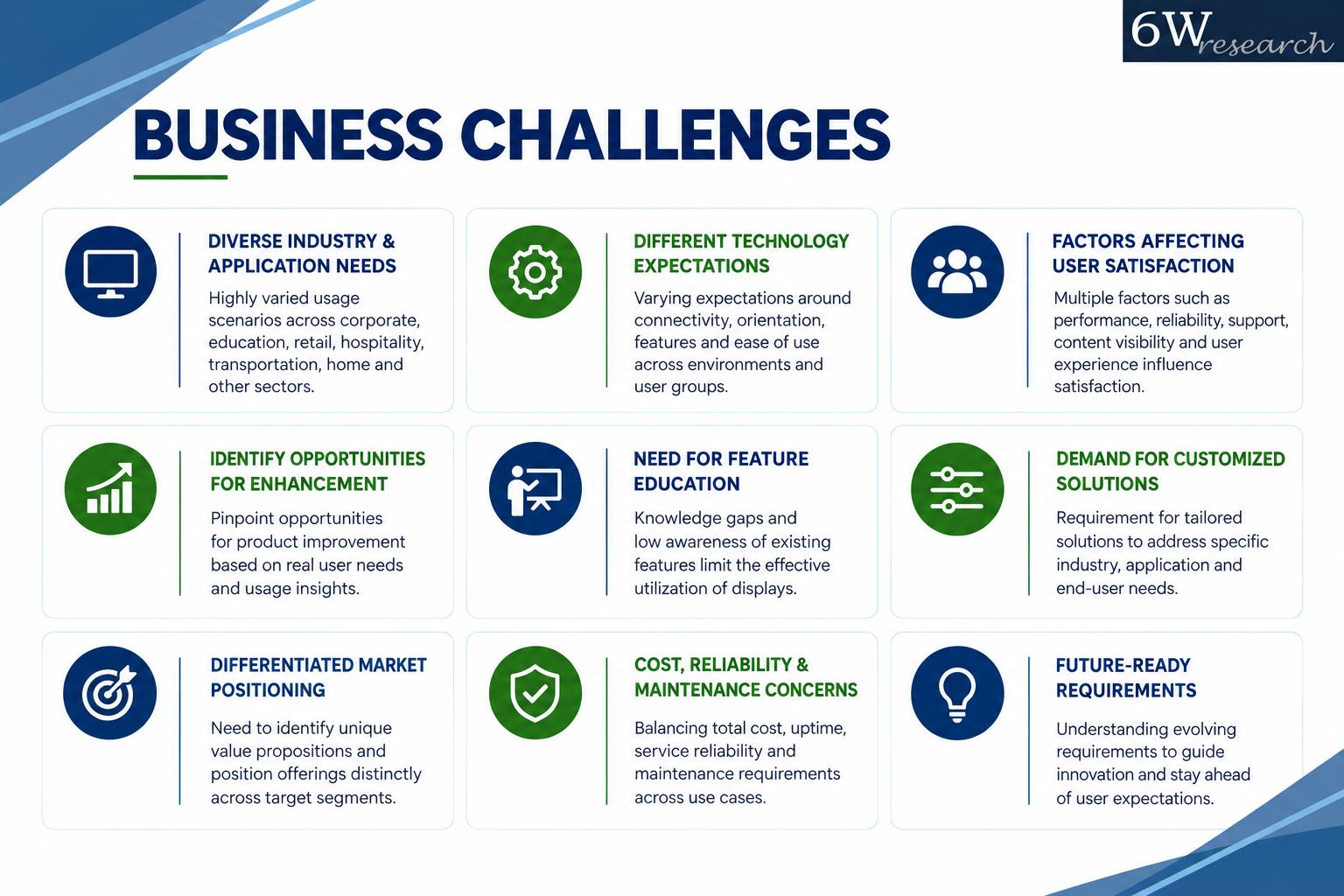
Growth in India's professional PTZ camera market is being slowed by a few interconnected issues — limited awareness of what these products actually do, high costs relative to what buyers expect to pay, and infrastructural limitations like low broadband speeds that make high-quality video transmission genuinely difficult. The market is fragmented too — a few dominant players hold significant share, but the overall competitive intensity, based on Herfindahl-Hirschman index readings, is still low enough that there's real room for new entrants. Operationally, a lot of the work involves simply educating buyers that these cameras aren't just for surveillance — they're relevant for broadcasting and live streaming too — while also dealing with a market that's fairly price-sensitive. The pandemic did accelerate digital adoption and created a real demand surge from media, education, and corporate conferencing, but without wider awareness and without costs coming down, mass adoption is still going to be a stretch. It's a market that needs careful positioning and genuinely targeted product innovation to move forward.
How We Did It
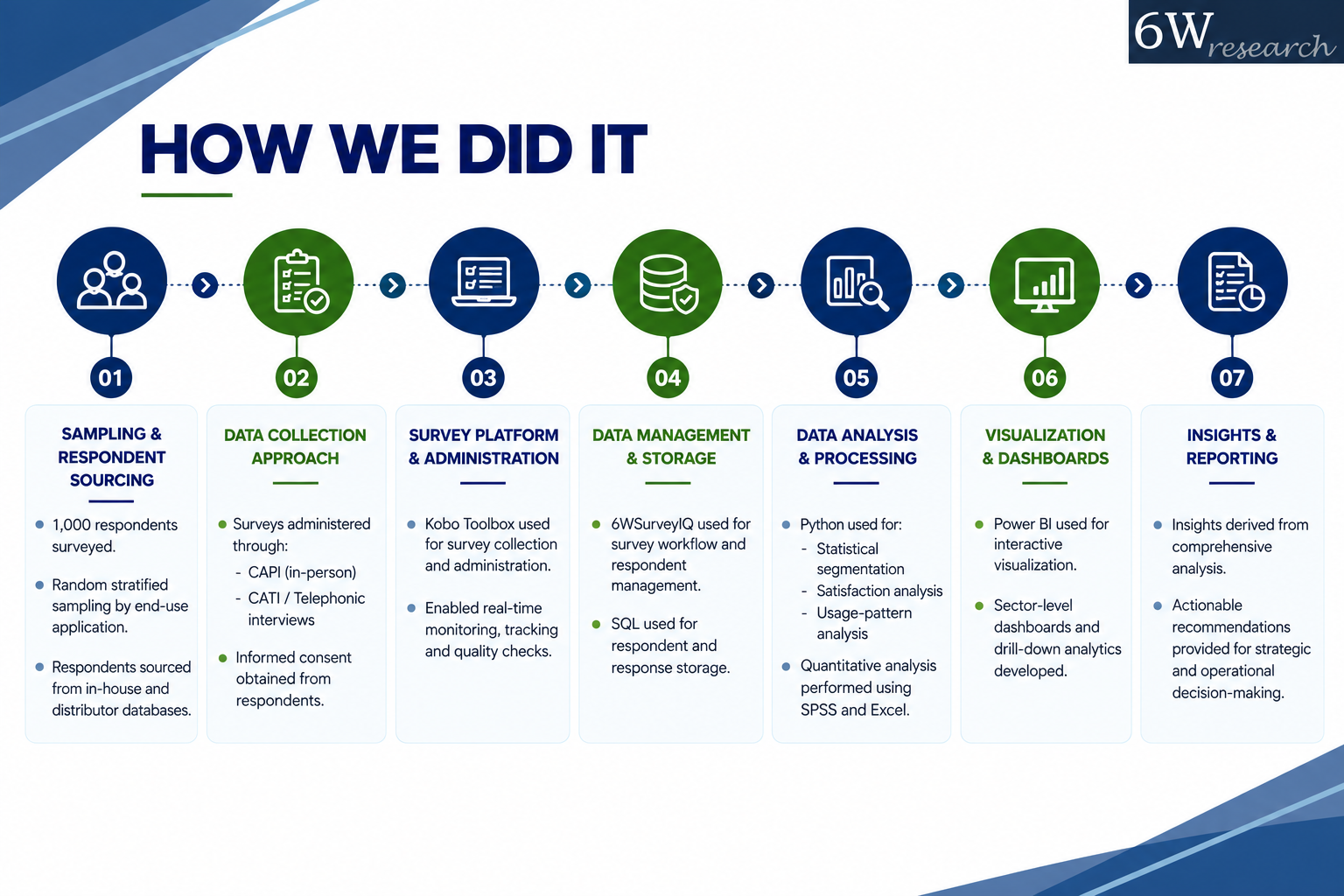
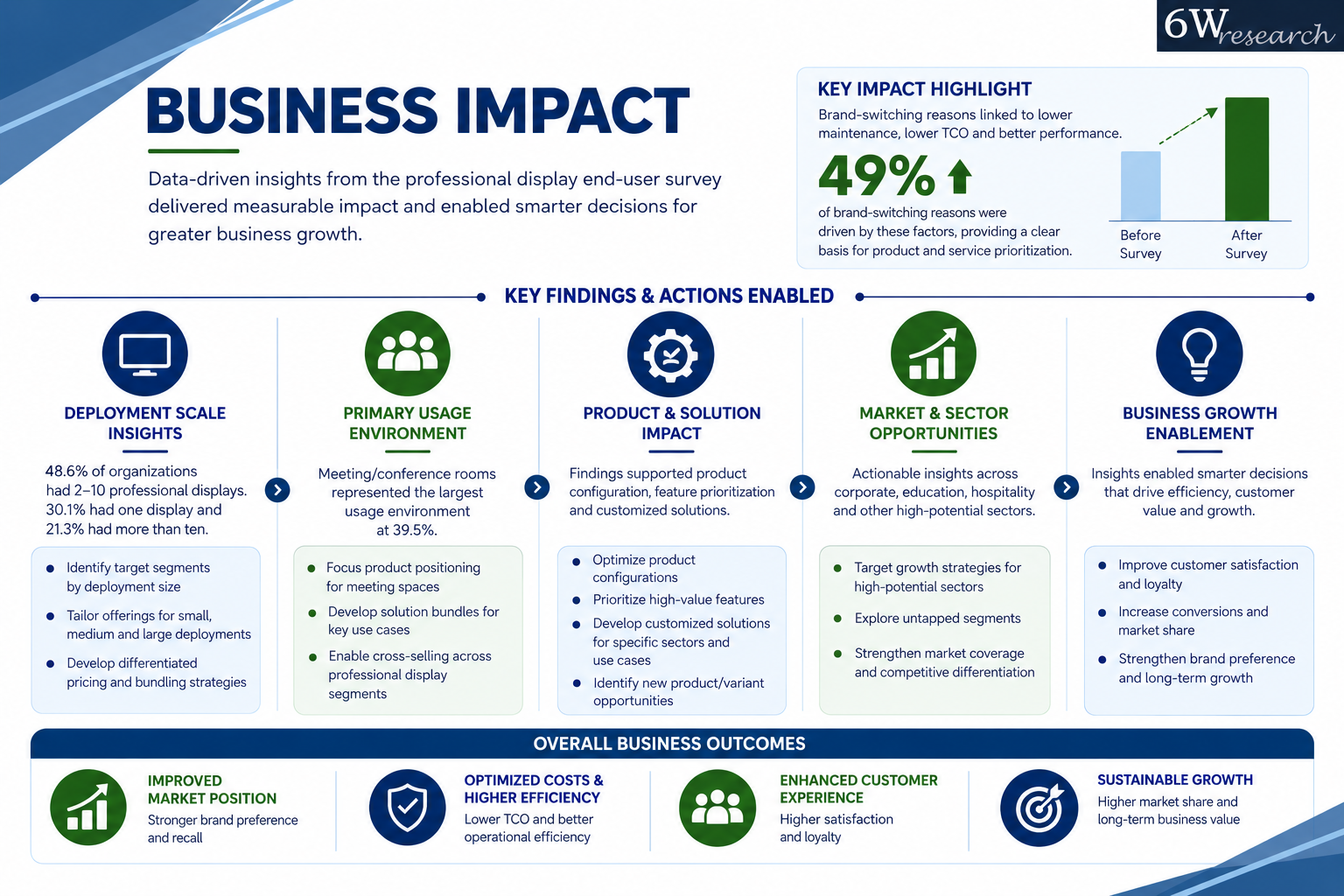
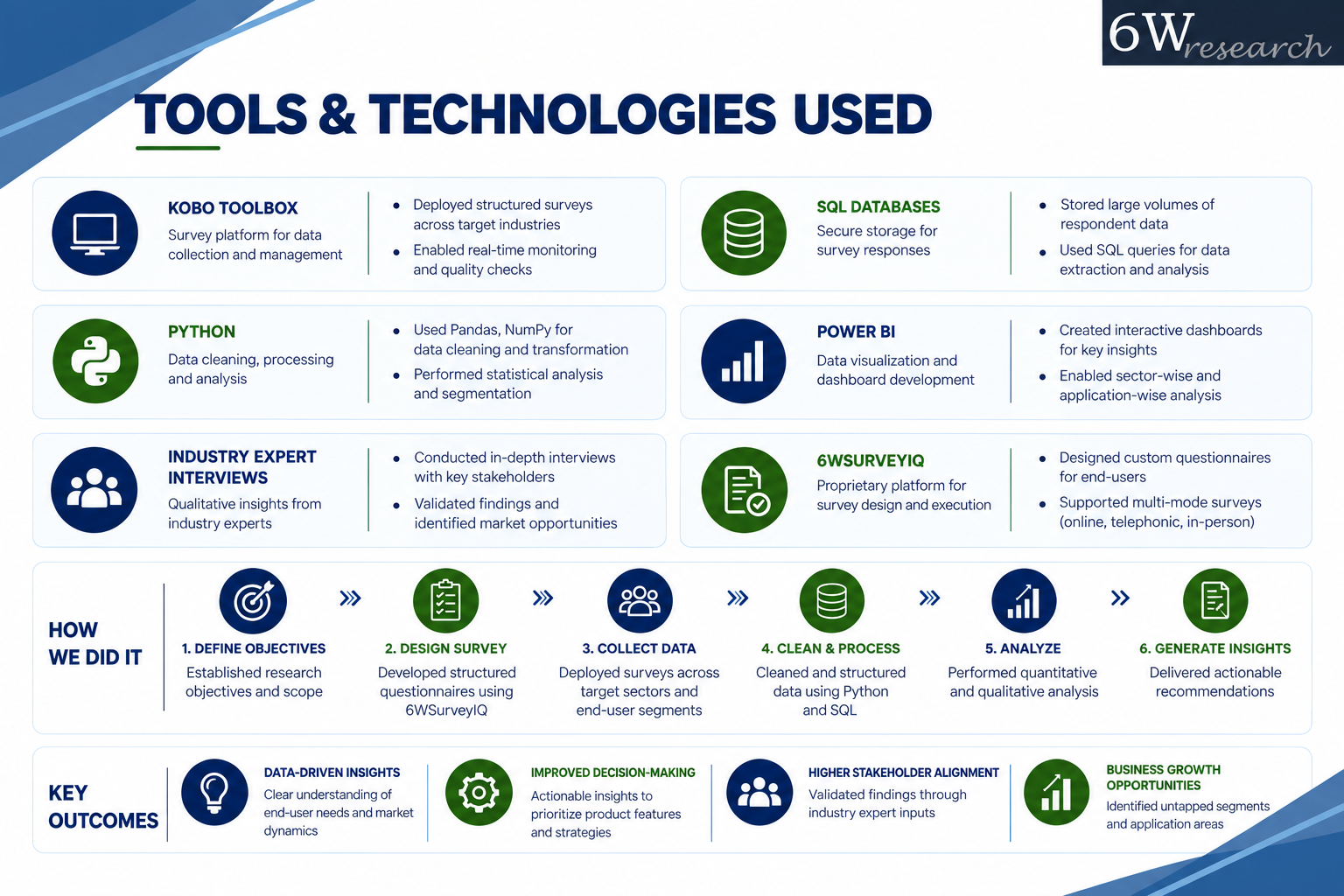
We started by scoping the client's exact requirements, then used 6Wresearch's in-house database and desk research to build the foundation for the Indian PTZ camera study. Primary interviews with industry executives, distributors, and technology consultants — run through 6WForum — helped validate and refine our early assumptions. Market sizing combined top-down and bottom-up methods with historical trend analysis, and Python supported the regression and time-series forecasting. SQL managed the respondent-level data, Power BI dashboards supported real-time scenario planning. Data validation and quality checks ran throughout to keep the final numbers reliable.
Key Findings
- The Indian professional PTZ camera market is projected to grow at a CAGR of 30.7% from 2020 to 2025, driven by expanding media consumption and digital content creation.
- In 2020, full HD cameras dominated the market with a significant share, while 4K ultra-HD models are expected to gain traction owing to technological advancements and increasing internet speeds.
- The broadcasting sector accounted for the largest application share, with a rising trend in live event coverage, sports, and religious broadcasts, supported by increased viewership and demand for high-quality visuals.
- Market dominance by Lumens, with a 43.5% share, indicates a relatively concentrated landscape, though the Herfindahl-Hirschman Index suggests moderate competition, leaving room for new entrants.
- Import analysis reveals Taiwan and China as primary sources, with major buyers including local system integrators and media companies.
- The surge in internet users, projected to reach over 900 million by 2025, coupled with booming online content and e-learning platforms, presents substantial vertical opportunities for high-resolution PTZ cameras.
- Challenges such as high costs, low product awareness, and infrastructural limitations remain, but strategic focus on broadcasting and digital content sectors can mitigate these barriers.
Findings
India's professional PTZ camera industry is still early in its growth stage, but the trajectory is genuinely compelling — a forecasted CAGR of 30.7% through 2025. This is driven by internet penetration, which crossed 622 million users in 2020 and is expected to top 900 million by 2025, and has created demand across media, education and corporate use cases. COVID-19 sped things up even more, especially in terms of the demand for video conferencing and online content creation, both of which drove demand for high-quality broadcasting equipment that can be operated remotely. Full HD models still dominate the market today, but fast technological progress and infrastructure improvements should speed up the adoption of 4K ultra-HD PTZ cameras in the coming years. Lumens is the current leader, the competition is moderate, but there is a lot of room for new players, especially those that can offer innovative and affordable alternatives. Main buyers are local system integrators and media companies and biggest import market is Taiwan and China. Altogether, growth here is underpinned by expanding digital content, rising viewership, and increasing investment in media infrastructure.
Consumer behavior and application trends both point to media and entertainment as the real engine behind demand for professional PTZ cameras right now. Weekly TV viewing minutes rose 9% in 2020, which underlines just how important high-quality broadcast content has become — urban markets grew 4% and rural markets grew even faster, at 9%. The IPL is a good example of this trend in action: viewership minutes hit 400 billion, up 23% year-over-year, which shows just how much room there is for high-end camera deployment in sports broadcasting. News viewership share climbed too, from 8.9% in 2019 to 10.4% in 2020, driven by demand for real-time, high-quality visuals during breaking coverage. Meanwhile, online content creators keep multiplying — YouTube channels crossing 1 million subscribers are becoming common — and online education has grown at a 53.9% CAGR, both signs of a fast-expanding digital ecosystem that needs serious streaming and broadcasting hardware to keep up. The growing number of companies, public and private alike, adds further momentum to demand for professional video conferencing and live streaming setups. Still, high costs, low awareness, and infrastructure limitations — slow broadband in particular — could cap growth unless addressed through better marketing and continued technological improvement. Overall, as consumer preference keeps tilting toward digital, live, and high-definition content, professional PTZ cameras look set to become a genuinely core part of India's media infrastructure.
Business Impact
The findings here are highly relevant for OEMs and investors looking to make hay in India’s growing digital content and broadcasting segments. As the market expands and internet penetration increases, investment in 4K ultra-HD PTZ cameras will pay dividends, especially in media, education and corporate conferencing. Broadcasting applications already held the largest share in 2020, signaling a strong opportunity for high-end camera solutions designed for live events, sports and news production. The competitive landscape is only moderately concentrated (Lumens holds about 43.5% share) so there is room for new entrants to compete on technology and cost, rather than trying to out-scale the incumbent. As internet users and online content consumption continue to grow, there is a strong case to be made for building affordable, high quality streaming equipment for digital creators and content platforms. The increasing number of companies entering the space, and the expansion of online education also adds weight to the case for the targeted product positioning and channel strategy. However, high costs and infrastructural limitations still remain real barriers, and addressing these through smart marketing and technological improvement will be key to actual market penetration. Taken as a whole, this gives stakeholders a fairly complete roadmap for prioritizing high-growth applications and directing investment where it's likely to do the most good in India's evolving PTZ camera industry.


