How Will Digital and E-commerce Growth Shape India's Advertising Market by 2029?
India Advertising Market
Objective
This study tracked the shifting shape of India's advertising market from 2023 to 2029 — how big it's getting, what's driving growth, and how it breaks down by media type. We wanted to pin down the real opportunities and challenges facing the industry: digital transformation, changing consumer behavior, and the technology reshaping how ads actually reach people. The research was built for advertisers, media agencies, and investors who need a solid read on market dynamics, where the competitive landscape is headed, and what trends are worth betting on. It covers the major advertising spenders, traditional media outlets, and the newer digital platforms all competing for attention across India, with the goal of supporting decisions around market entry, portfolio choices, and where to put investment dollars first — so clients can move on real opportunity while staying ahead of the risk that comes with a market changing this fast.
Business Challenge
India's advertising industry is dealing with a lot at once — a genuinely fragmented market with over 35,000 agencies competing, rapid digital transformation, and consumer habits shifting fast as internet and smartphone access keeps expanding. COVID hit ad spend hard early on, driven by economic uncertainty, but it also pushed digital adoption forward faster than it might have moved otherwise. Rising ad-blocker use, stiff competition, and constantly evolving media consumption habits all add real friction. On top of that, broader economic pressures — unemployment, income inequality — cap how much consumers actually spend, which in turn limits how effective advertising can be. Stakeholders need a genuinely clear read on all of this to build strategies that can actually hold up through the volatility.
How We Did It
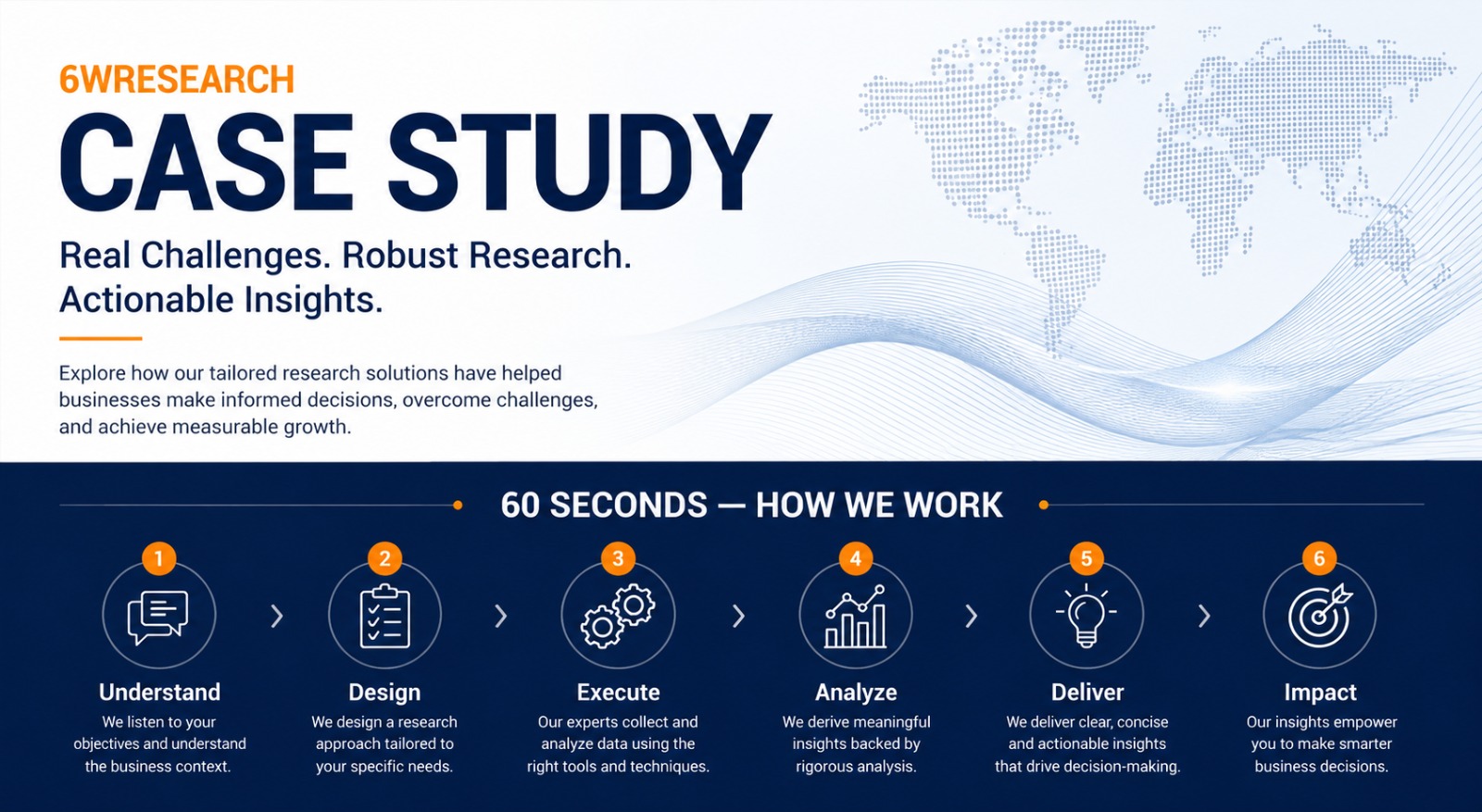
The research combined primary and secondary data collection, using 6WSurveyIQ for structured surveys and respondent tracking, plus 6Wresearch's own database for sizing the market and spotting trends. Expert interviews through 6WForum gave us a qualitative check against what the data was showing, making sure the findings reflected what people in the industry were actually seeing, not just what the numbers implied. Python handled data cleaning, segmentation, and forecasting; SQL managed the larger respondent datasets. Forecasts came out of regression and time-series modeling, built on assumptions grounded in both primary feedback and secondary sourcing. Power BI and Tableau dashboards turned the output into something interactive — real-time KPI tracking and scenario testing rather than a fixed snapshot. Altogether, the approach was built to give a genuinely evidence-based read on where the opportunity and the risk actually sit.
Key Findings
- The Indian advertising market is estimated to grow at a CAGR of 12.7% during the forecast period of 2023-2029, owing to the digital adoption and economic growth.
- Digital advertising is to be driven by the internet and mobile segments, and will grow faster than traditional media by 2026.
- The market grew by 21% in 2022 with a strong recovery post-pandemic with digital channels contributing to the majority of the increase.
- Smartphone penetration and data consumption have skyrocketed creating huge opportunities for mobile and social media advertising.
- E-commerce growth has directly spurred demand for targeted digital campaigns as online retail GMV has grown rapidly.
- Another significant challenge limiting digital reach and effectiveness is the use of ad-blockers.
- Retail, especially food and grocery, continues to be the biggest driver of advertising with more than 50% of the total ad spends.
- Major FMCG, e-commerce and technology companies are the top advertisers with their advertising budgets increasing in Tier-2 and Tier-3 cities. The competitive landscape is fragmented with more than 35,000 agencies but leading players such as Ogilvy and Madison are making strong inroads.
Findings
India’s advertising market is truly on a strong growth path, tracking a 12.7% CAGR through 2029. Digital transformation is doing a lot of the heavy lifting here and has been accelerated even further since the pandemic changed the way people consume media. That rebound was well demonstrated in 2022 with ad spend up 21%, fueled by pent up demand and a much more digitally engaged consumer base. The rollout of 5G, along with cheaper smartphones and faster internet, has expanded the digital audience considerably and that has made mobile and social media the primary engines of growth now. That’s only been compounded by the rapid expansion of e-commerce, helped by UPI and better logistics, especially for targeted digital campaigns. Rising ad-blocker use and broader economic pressures like unemployment and income disparity are real headwinds, but they haven't slowed the overall trajectory much. With over 35,000 agencies in the mix, the market stays genuinely fragmented, which actually creates room for new players as well as established ones to find their footing — and the retail sector, food and grocery especially, remains the anchor driving most of the spend.
Consumer behavior in India keeps shifting further toward digital, driven by cheaper smartphones, more affordable data, and a growing middle class with more to spend. Online shopping's growth alone has made digital advertising close to essential for most marketing plans now. Video and social content have become central to how brands communicate, with YouTube, Facebook, and Instagram carrying most of that weight. Ad-blocker use is still a real limiting factor though — it genuinely cuts into campaign reach and dampens ROI for digital advertisers. Add in uneven income distribution and rising unemployment, particularly outside the biggest cities, and you get real constraints on consumer spending even in markets that together account for more than half of retail and advertising activity. In response, advertisers are leaning harder into hyper-targeted, data-driven campaigns, and regional or vernacular content is becoming a bigger priority for reaching audiences that generic national campaigns tend to miss. As the market matures further, new ad formats, influencer partnerships, and integrated campaigns are likely to matter more for brands trying to keep growth and engagement moving in the same direction.
Business Impact
This research gives clients a clearer basis for where to put ad spend, which channels to prioritize, and how to shape campaigns around what consumers actually respond to — all of which should improve ROI. The projected growth flags real opportunity for market entry and expansion, particularly in Tier-2 and Tier-3 cities where growth is fastest. The focus on digital transformation makes a strong case for investing in programmatic advertising, data analytics and influencer marketing as real competitive advantages, not just nice-to-haves. Understanding drag from ad-blockers and income disparity opens up space for more innovative, personalized, regional content strategies that can actually move engagement and conversion. Knowing who the top advertisers are and how the competitive landscape is shaped, helps steer where to allocate funds, partnerships and where to differentiate. Overall, the market course and changing consumer habits support a long-term plan based on digital innovation, regional expansion and sector-specific campaigns – the kind of approach that should stand the test of time as the market continues to evolve.


