Algeria Phenol Market Size Growth Rate
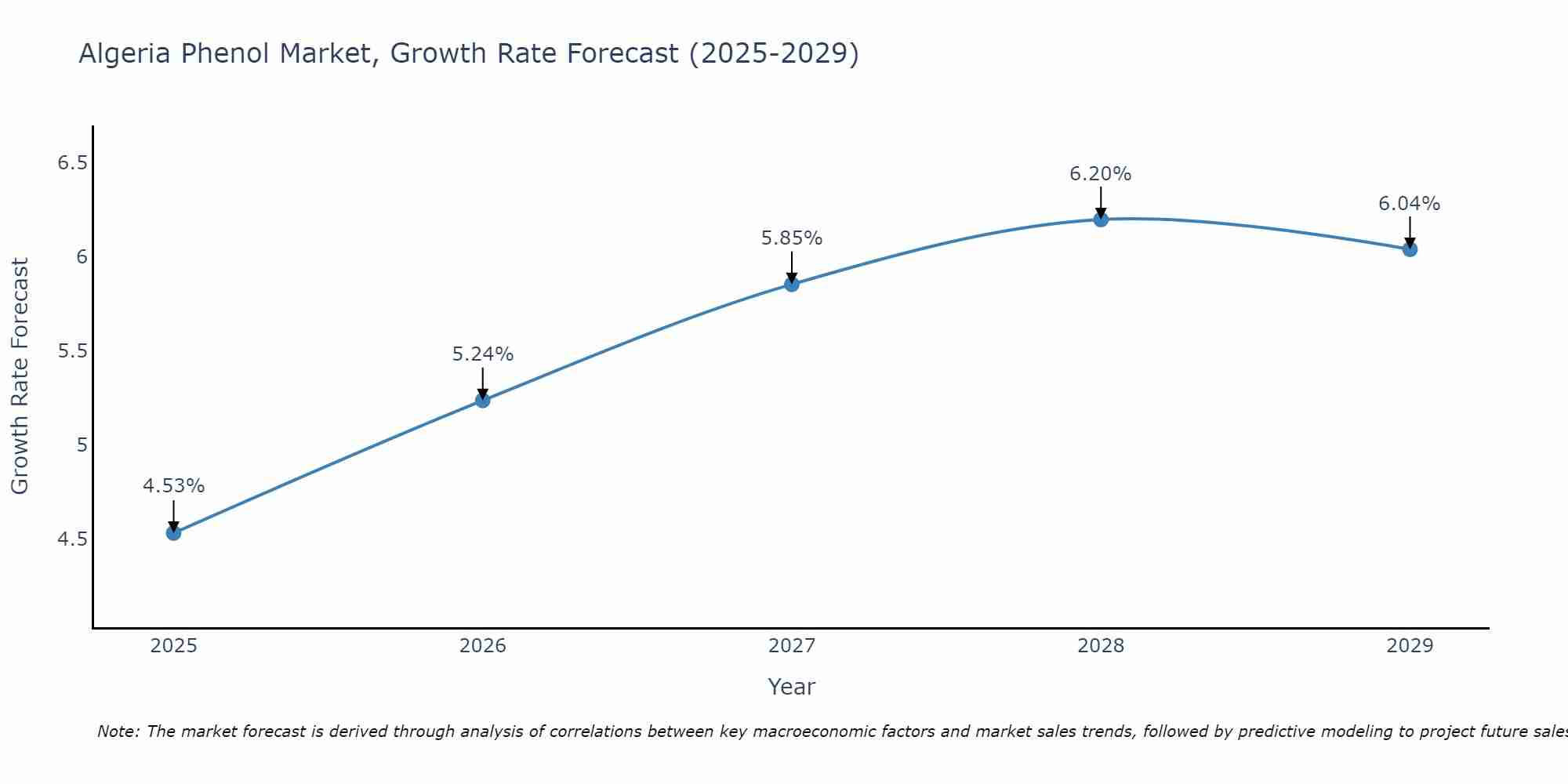
The Algeria Phenol Market is projected to witness mixed growth rate patterns during 2025 to 2029. Starting at 4.53% in 2025, the market peaks at 6.20% in 2028, and settles at 6.04% by 2029.
Algeria Phenol Market Overview
The Algeria phenol market is experiencing steady growth driven by the increasing demand for phenol in various industries such as plastics, pharmaceuticals, and agriculture. Phenol is a key ingredient in the production of bisphenol A (BPA), which is extensively used in the manufacturing of polycarbonate plastics and epoxy resins. The growing construction and automotive sectors in Algeria are further fueling the demand for phenol-based products. However, challenges such as volatile raw material prices and stringent environmental regulations may hinder market growth. Key players in the Algeria phenol market include domestic manufacturers as well as international companies looking to capitalize on the country`s expanding industrial sector. Overall, the outlook for the Algeria phenol market remains positive with opportunities for further expansion and innovation in the coming years.
Algeria Phenol Market Trends
The Algeria Phenol Market is currently witnessing a steady growth driven by increasing demand from various industries such as automotive, construction, and electronics. The market is experiencing a shift towards the production of high-quality phenol derivatives, including bisphenol A (BPA) and phenolic resins, due to their wide-ranging applications. Environmental regulations and sustainability concerns are also influencing market trends, leading to a growing emphasis on eco-friendly production methods and the development of bio-based phenol alternatives. Additionally, the market is witnessing a rise in strategic partnerships and collaborations among key players to enhance their product portfolios and expand their market presence. Overall, the Algeria Phenol Market is expected to continue on a growth trajectory supported by evolving industry demands and technological advancements.
Algeria Phenol Market Challenges
In the Algeria Phenol market, some challenges faced include fluctuating raw material prices, dependency on imports for phenol production, lack of domestic production facilities, and potential market saturation due to limited demand. Fluctuating global crude oil prices directly impact the cost of raw materials used in phenol production, leading to uncertainties in pricing and profitability. Algeria relies heavily on imports to meet its phenol demand, resulting in vulnerability to international market dynamics and supply chain disruptions. The absence of local production facilities further exacerbates this dependency on imports. Additionally, with limited industrial applications for phenol within the country, there is a risk of market saturation if demand does not grow in line with production capacity expansion efforts. These challenges underscore the need for strategic planning and market diversification initiatives in the Algeria Phenol market.
Algeria Phenol Market Investment Opportunities
In the Algeria Phenol Market, there are several promising investment opportunities due to the increasing demand for phenol in various industries such as plastics, pharmaceuticals, and automotive. With the country`s growing industrial sector and favorable government policies attracting foreign investment, investing in phenol production facilities or partnering with local manufacturers could be lucrative. Additionally, there is potential for research and development in eco-friendly and sustainable production methods to meet the rising global demand for environmentally friendly products. Overall, investing in the Algeria Phenol Market presents opportunities for growth and profitability driven by market demand and supportive economic conditions.
Algeria Phenol Market Government Policy
Government policies related to the Algeria Phenol Market include regulations on import and export, production quotas, and environmental standards. The Algerian government has implemented import restrictions on phenol to protect the domestic market and support local producers. Additionally, production quotas are set to ensure stability in supply and demand dynamics. Environmental standards are also enforced to regulate the impact of phenol production on the environment and public health. Overall, the government aims to promote a competitive and sustainable phenol market in Algeria through a combination of trade regulations and environmental policies.
Algeria Phenol Market Future Outlook
The Algeria Phenol Market is expected to experience moderate growth in the coming years due to factors such as increasing demand from various end-use industries including automotive, electronics, and construction. The market is likely to be driven by the country`s economic development and industrialization efforts, leading to a rise in manufacturing activities. However, challenges such as fluctuating raw material prices and environmental regulations may hinder market growth. To stay competitive, market players are expected to focus on innovation, product development, and strategic partnerships. Overall, the Algeria Phenol Market is anticipated to expand steadily, with opportunities for growth in niche applications and sustainable practices gaining importance in the market landscape.
Key Highlights of the Report:
- Algeria Phenol Market Outlook
- Market Size of Algeria Phenol Market, 2021
- Forecast of Algeria Phenol Market, 2031
- Historical Data and Forecast of Algeria Phenol Revenues & Volume for the Period 2021 - 2031
- Algeria Phenol Market Trend Evolution
- Algeria Phenol Market Drivers and Challenges
- Algeria Phenol Price Trends
- Algeria Phenol Porter's Five Forces
- Algeria Phenol Industry Life Cycle
- Historical Data and Forecast of Algeria Phenol Market Revenues & Volume By End-users for the Period 2021 - 2031
- Historical Data and Forecast of Algeria Phenol Market Revenues & Volume By Bisphenol A for the Period 2021 - 2031
- Historical Data and Forecast of Algeria Phenol Market Revenues & Volume By Phenolic Resins for the Period 2021 - 2031
- Historical Data and Forecast of Algeria Phenol Market Revenues & Volume By Caprolactam for the Period 2021 - 2031
- Historical Data and Forecast of Algeria Phenol Market Revenues & Volume By Alkyl Phenyls for the Period 2021 - 2031
- Historical Data and Forecast of Algeria Phenol Market Revenues & Volume By Others for the Period 2021 - 2031
- Algeria Phenol Import Export Trade Statistics
- Market Opportunity Assessment By End-users
- Algeria Phenol Top Companies Market Share
- Algeria Phenol Competitive Benchmarking By Technical and Operational Parameters
- Algeria Phenol Company Profiles
- Algeria Phenol Key Strategic Recommendations






































