Algeria Sulphur Market Size, Share & Growth Rate
The Algeria Sulphur Market was estimated at USD 490 Million in 2025 and is projected to reach USD 680 Million by 2032, growing at a CAGR of 4.8% from 2026 to 2032. This robust growth trajectory is fueled primarily by the increasing demand for sulphur in the agriculture sector, particularly for fertilizers. Additionally, the expanding chemical and oil refining industries in Algeria are further driving consumption, creating a dynamic landscape for market participants.
Algeria Sulphur Market Year-wise Growth Rate and Key Drivers
This graph highlights how the Algeria Sulphur Market has steadily grown over the years, supported by major growth factors.
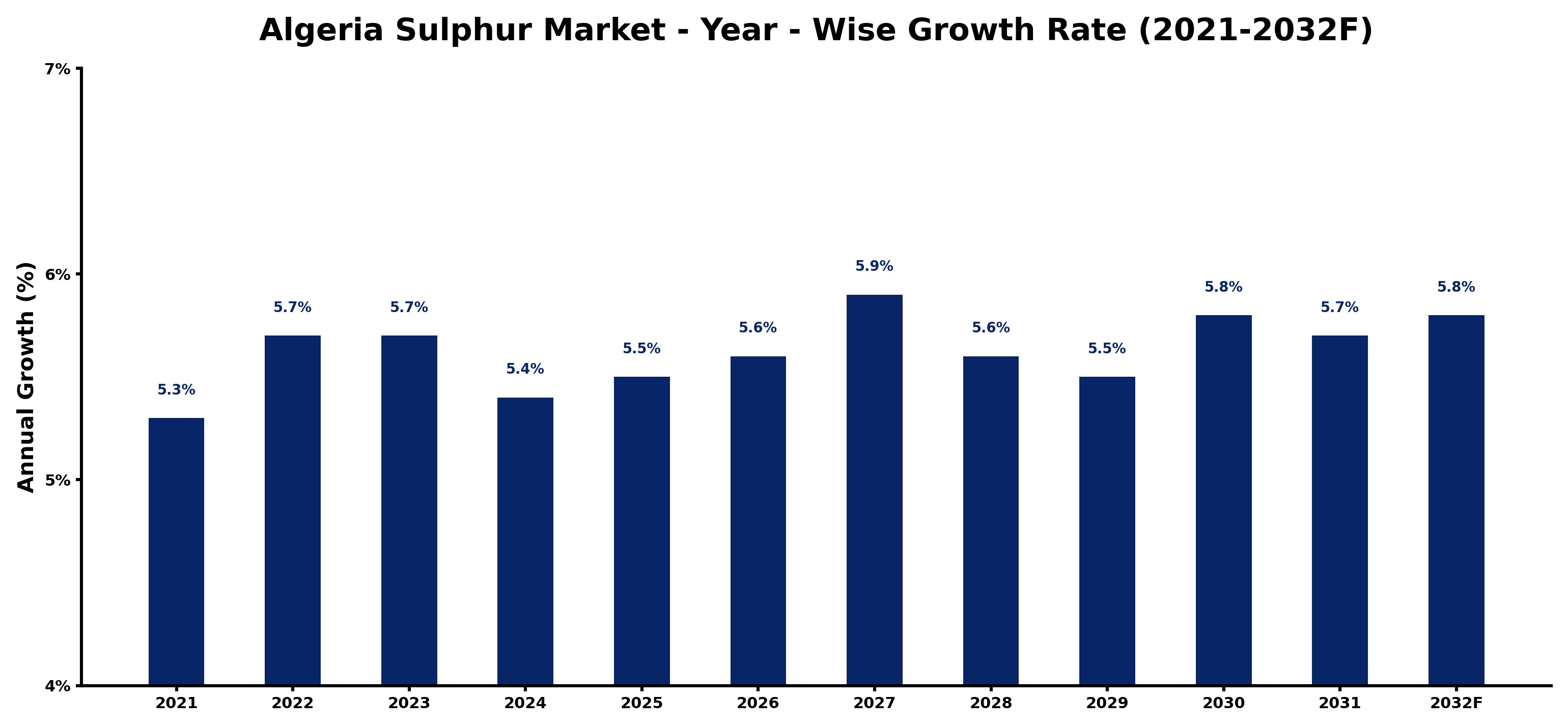
The table below presents the year‑wise growth rates along with the key drivers influencing the market
| Year | Growth Rate | Major Drivers |
| 2021 | 5.3% | Increased industrial applications emerged |
| 2022 | 5.7% | Agricultural sector demand strengthened |
| 2023 | 5.7% | Construction projects drove consumption |
| 2024 | 5.4% | Energy sector growth propelled usage |
| 2025 | 5.5% | Chemical manufacturing expanded significantly |
| 2026 | 5.6% | Environmental regulations enhanced adoption |
| 2027 | 5.9% | Fertilizer production increased output |
| 2028 | 5.6% | Export opportunities expanded market reach |
| 2029 | 5.5% | Technological advancements improved efficiency |
| 2030 | 5.8% | Infrastructure investments boosted demand |
| 2031 | 5.7% | Sustainable practices gained traction |
| 2032 | 5.8% | Market diversification enhanced resilience |
Note - Market size estimations and growth projections presented in this report are based on 6Wresearch’s advanced forecasting approach, validated with industry datasets as of June 2026.
Algeria Sulphur Market Synopsis
Algeria holds considerable sulphur reserves, primarily extracted during oil and gas processing, establishing the country as a key player in the global sulphur market. The agricultural sector, accounting for a significant portion of demand, utilizes sulphur to enhance soil fertility and crop yields, underpinning the market's growth prospects.
Moreover, the chemicals industry plays an essential role, with sulphur being a critical component in the production of sulfuric acid and various chemical compounds. As industrial activities ramp up, the demand for sulphur continues to escalate, presenting numerous opportunities for both domestic and international stakeholders.
Algeria Sulphur Market Key Takeaways
- Significant sulphur reserves in Algeria ensure a stable supply for various industries.
- The agriculture sector remains the largest consumer of sulphur in the region.
- Government policies are geared towards promoting production and export of sulphur.
- Steady growth in demand from the chemicals and oil refining sectors supports market expansion.
- Investment opportunities exist in sulphur mining and the development of value-added products.
Evaluation of Restraints in Algeria Sulphur Market
The Algeria Sulphur Market faces some notable restraints that could hinder its growth. Fluctuations in global sulphur prices can pose challenges for local producers, potentially affecting profitability. Additionally, logistical issues surrounding the transportation of sulphur to end-users may create inefficiencies and delay supply. Regulatory compliance and environmental concerns also play a significant role in shaping operational strategies, as companies must navigate complex regulations while meeting quality standards to remain competitive.
Algeria Sulphur Market Trends
Current trends indicate an increasing integration of technological advancements in sulphur extraction and processing. Enhanced methods not only improve efficiency but also address environmental concerns associated with sulphur production. Furthermore, the rising focus on sustainable agricultural practices drives the demand for sulphur-based fertilizers, aligning with global trends toward eco-friendly farming solutions.
Algeria Sulphur Market Opportunities
The Algeria Sulphur Market presents a wealth of investment opportunities for both local and international players. Potential areas for growth include the establishment of advanced sulphur processing facilities and collaborations with Algerian companies to expand production capabilities. Additionally, developing high-value sulphur derivatives, such as specialty fertilizers and chemical compounds, could significantly enhance profitability and cater to a growing market.
Government Initiatives in the Algeria Sulphur Market
The Algerian government plays a pivotal role in fostering the growth of the sulphur market through various supportive policies. These include incentives for sulphur production and export, as well as regulatory measures to ensure environmental sustainability. The government's commitment to industrial development and enhancing the investment climate further positions Algeria as a competitive player in the global sulphur market.
Future Insights of the Algeria Sulphur Market
Looking ahead to 2026-2032, the Algeria Sulphur Market is expected to experience robust growth driven by the expanding agricultural, chemical, and oil refining sectors. The anticipated increase in industrial activities and foreign investments will likely bolster production capacity. However, stakeholders must remain vigilant regarding global price volatility and environmental regulations, which may influence market dynamics as the industry evolves.
Algeria Sulphur Market Latest Developments (May 2025 - June 2026)
In recent months, the Algeria Sulphur Market has seen a heightened focus on improving production efficiency and sustainability practices. Initiatives aimed at modernizing extraction techniques and processing methods are gaining momentum, reflecting a commitment to environmentally responsible operations. As local firms engage in strategic partnerships to enhance their capabilities, the overall landscape is shifting towards innovation and resilience.
Algeria Sulphur Market - Key Attractiveness of the Report
- 10 Years of Market Numbers
- Historical Data Starting from 2022 to 2025
- Base Year: 2025
- Forecast Data until 2032
- Key Performance Indicators Impacting the Market
- Major Upcoming Developments and Projects
Key Highlights of the Report:
- Algeria Sulphur Market Outlook
- Market Size of Algeria Sulphur Market, 2025
- Forecast of Algeria Sulphur Market, 2032
- Historical Data and Forecast of Algeria Sulphur Revenues & Volume for the Period 2022-2032F
- Algeria Sulphur Market Trend Evolution
- Algeria Sulphur Market Drivers and Challenges
- Algeria Sulphur Price Trends
- Algeria Sulphur Porter's Five Forces
- Algeria Sulphur Industry Life Cycle
- Historical Data and Forecast of Algeria Sulphur Market Revenues & Volume By Product Type for the Period 2022-2032F
- Historical Data and Forecast of Algeria Sulphur Market Revenues & Volume By Natural Gas for the Period 2022-2032F
- Historical Data and Forecast of Algeria Sulphur Market Revenues & Volume By Crude Oil for the Period 2022-2032F
- Historical Data and Forecast of Algeria Sulphur Market Revenues & Volume By Others for the Period 2022-2032F
- Historical Data and Forecast of Algeria Sulphur Market Revenues & Volume By End Users for the Period 2022-2032F
- Historical Data and Forecast of Algeria Sulphur Market Revenues & Volume By Sulfuric Acid (Fertilizers) for the Period 2022-2032F
- Historical Data and Forecast of Algeria Sulphur Market Revenues & Volume By Sulfuric Acid (Metal Manufacturing) for the Period 2022-2032F
- Historical Data and Forecast of Algeria Sulphur Market Revenues & Volume By Chemical Processing for the Period 2022-2032F
- Algeria Sulphur Import Export Trade Statistics
- Market Opportunity Assessment By Product Type
- Market Opportunity Assessment By End Users
- Algeria Sulphur Top Companies Market Share
- Algeria Sulphur Competitive Benchmarking By Technical and Operational Parameters
- Algeria Sulphur Company Profiles
- Algeria Sulphur Key Strategic Recommendations






































