Angola Footwear Market Growth Rate Analysis (2025 - 2031)
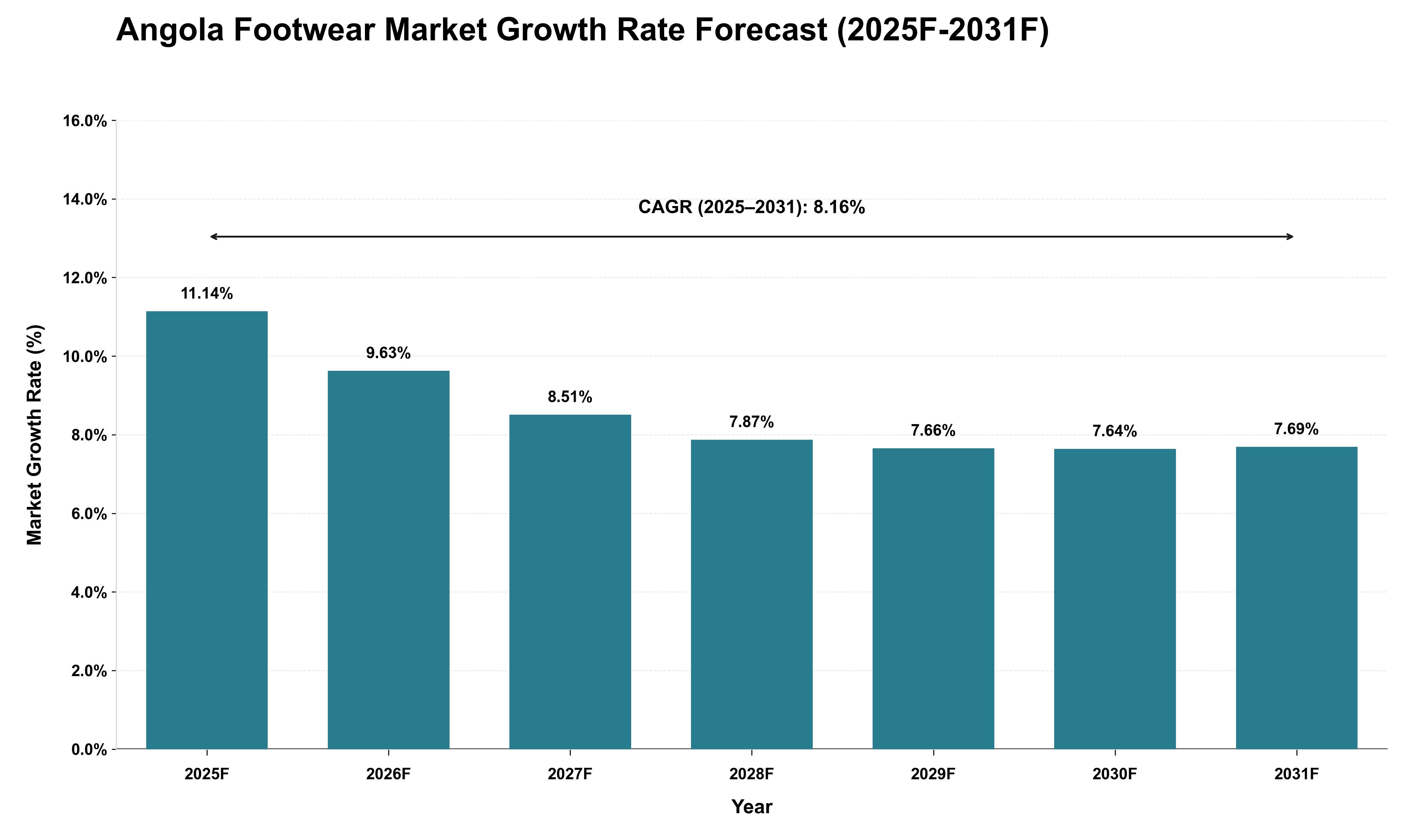
The Angola footwear market is poised for robust growth, with an anticipated CAGR of 8.16% from 2025 to 2031, reflecting a dynamic competitive landscape driven by evolving consumer preferences and increasing disposable incomes. The initial surge in growth at 11.14% in 2025 suggests a strong rebound effect as local production capabilities are expected to expand, reducing import dependencies that have historically characterized the sector. As domestic manufacturers enhance their operational efficiencies and product offerings, the subsequent years will witness a gradual deceleration in growth rates, stabilizing around 7.6% by 2030. This trend indicates a potential alignment with global cyclical patterns where demand for footwear typically experiences fluctuations based on economic conditions and fashion trends. Overall, the market will likely benefit from strategic investments in technology and supply chain optimization, positioning it favorably within the regional context of consumer goods.
Key Highlights of the Report:
- Angola Footwear Market Outlook
- Market Size of Angola Footwear Market, 2024
- Forecast of Angola Footwear Market, 2031
- Historical Data and Forecast of Angola Footwear Revenues & Volume for the Period 2021-2031
- Angola Footwear Market Trend Evolution
- Angola Footwear Market Drivers and Challenges
- Angola Footwear Price Trends
- Angola Footwear Porter`s Five Forces
- Angola Footwear Industry Life Cycle
- Historical Data and Forecast of Angola Footwear Market Revenues & Volume By Type for the Period 2021-2031
- Historical Data and Forecast of Angola Footwear Market Revenues & Volume By Athletic for the Period 2021-2031
- Historical Data and Forecast of Angola Footwear Market Revenues & Volume By Non-Athletic for the Period 2021-2031
- Historical Data and Forecast of Angola Footwear Market Revenues & Volume By Material for the Period 2021-2031
- Historical Data and Forecast of Angola Footwear Market Revenues & Volume By Lather for the Period 2021-2031
- Historical Data and Forecast of Angola Footwear Market Revenues & Volume By Rubber for the Period 2021-2031
- Historical Data and Forecast of Angola Footwear Market Revenues & Volume By Plastic for the Period 2021-2031
- Historical Data and Forecast of Angola Footwear Market Revenues & Volume By End-users for the Period 2021-2031
- Historical Data and Forecast of Angola Footwear Market Revenues & Volume By Male for the Period 2021-2031
- Historical Data and Forecast of Angola Footwear Market Revenues & Volume By Female for the Period 2021-2031
- Historical Data and Forecast of Angola Footwear Market Revenues & Volume By Kids for the Period 2021-2031
- Historical Data and Forecast of Angola Footwear Market Revenues & Volume By Distribution Channel for the Period 2021-2031
- Historical Data and Forecast of Angola Footwear Market Revenues & Volume By Online Stores for the Period 2021-2031
- Historical Data and Forecast of Angola Footwear Market Revenues & Volume By Supermarkets and Hypermarkets for the Period 2021-2031
- Historical Data and Forecast of Angola Footwear Market Revenues & Volume By Independent Retail Stores for the Period 2021-2031
- Historical Data and Forecast of Angola Footwear Market Revenues & Volume By Others for the Period 2021-2031
- Angola Footwear Import Export Trade Statistics
- Market Opportunity Assessment By Type
- Market Opportunity Assessment By Material
- Market Opportunity Assessment By End-users
- Market Opportunity Assessment By Distribution Channel
- Angola Footwear Top Companies Market Share
- Angola Footwear Competitive Benchmarking By Technical and Operational Parameters
- Angola Footwear Company Profiles
- Angola Footwear Key Strategic Recommendations






































