Angola Galvanized Steel Market Growth Rate Analysis (2025 - 2031)
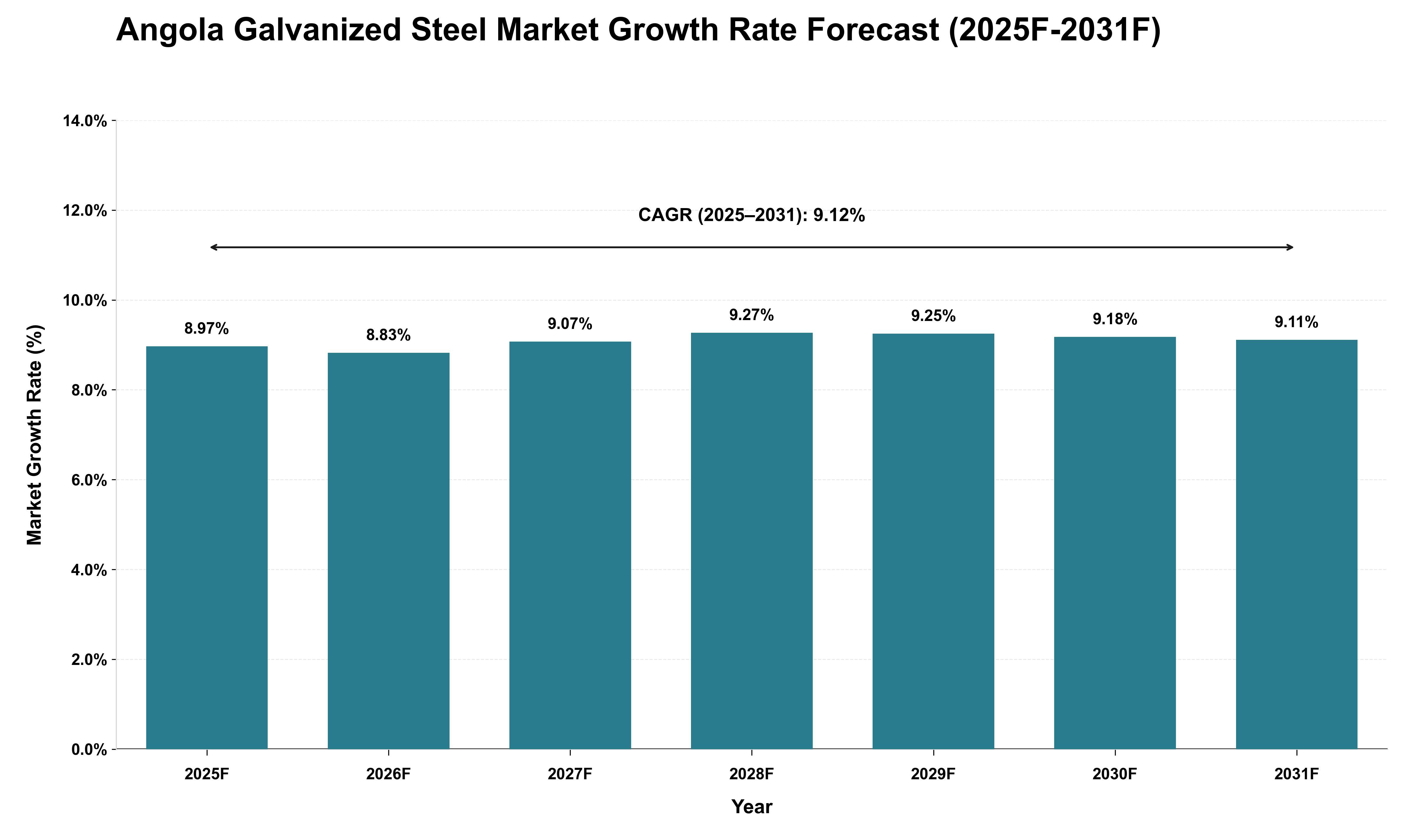
The Angola galvanized steel market is poised for robust growth driven by technological advancements and product substitution trends from 2025 onward. With a projected CAGR of 9.12%, the annual growth rates will reflect a consistent upward trajectory, peaking at 9.27% in 2028 before stabilizing around 9.11% by 2031. This growth will be underpinned by increasing demand for galvanized steel in construction and infrastructure projects, as well as a shift towards more sustainable materials that enhance durability and reduce maintenance costs. Import dependencies are expected to influence pricing dynamics, as local production capabilities may struggle to keep pace with rising consumption needs, thereby creating opportunities for foreign suppliers. Additionally, cyclical trends in global steel prices will likely impact the market, with fluctuations prompting shifts in procurement strategies among manufacturers and builders seeking cost-effective solutions without compromising quality.
Key Highlights of the Report:
- Angola Galvanized Steel Market Outlook
- Market Size of Angola Galvanized Steel Market, 2024
- Forecast of Angola Galvanized Steel Market, 2031
- Historical Data and Forecast of Angola Galvanized Steel Revenues & Volume for the Period 2021-2031
- Angola Galvanized Steel Market Trend Evolution
- Angola Galvanized Steel Market Drivers and Challenges
- Angola Galvanized Steel Price Trends
- Angola Galvanized Steel Porter`s Five Forces
- Angola Galvanized Steel Industry Life Cycle
- Historical Data and Forecast of Angola Galvanized Steel Market Revenues & Volume By Product Type for the Period 2021-2031
- Historical Data and Forecast of Angola Galvanized Steel Market Revenues & Volume By Galvanized Steel Coils for the Period 2021-2031
- Historical Data and Forecast of Angola Galvanized Steel Market Revenues & Volume By Galvanized Steel Strips for the Period 2021-2031
- Historical Data and Forecast of Angola Galvanized Steel Market Revenues & Volume By Others for the Period 2021-2031
- Historical Data and Forecast of Angola Galvanized Steel Market Revenues & Volume By Application for the Period 2021-2031
- Historical Data and Forecast of Angola Galvanized Steel Market Revenues & Volume By Construction for the Period 2021-2031
- Historical Data and Forecast of Angola Galvanized Steel Market Revenues & Volume By Automobile for the Period 2021-2031
- Historical Data and Forecast of Angola Galvanized Steel Market Revenues & Volume By Home Appliances for the Period 2021-2031
- Historical Data and Forecast of Angola Galvanized Steel Market Revenues & Volume By Others for the Period 2021-2031
- Angola Galvanized Steel Import Export Trade Statistics
- Market Opportunity Assessment By Product Type
- Market Opportunity Assessment By Application
- Angola Galvanized Steel Top Companies Market Share
- Angola Galvanized Steel Competitive Benchmarking By Technical and Operational Parameters
- Angola Galvanized Steel Company Profiles
- Angola Galvanized Steel Key Strategic Recommendations






































