Angola Medium Density Fiberboard Market Growth Rate Analysis (2025 - 2031)
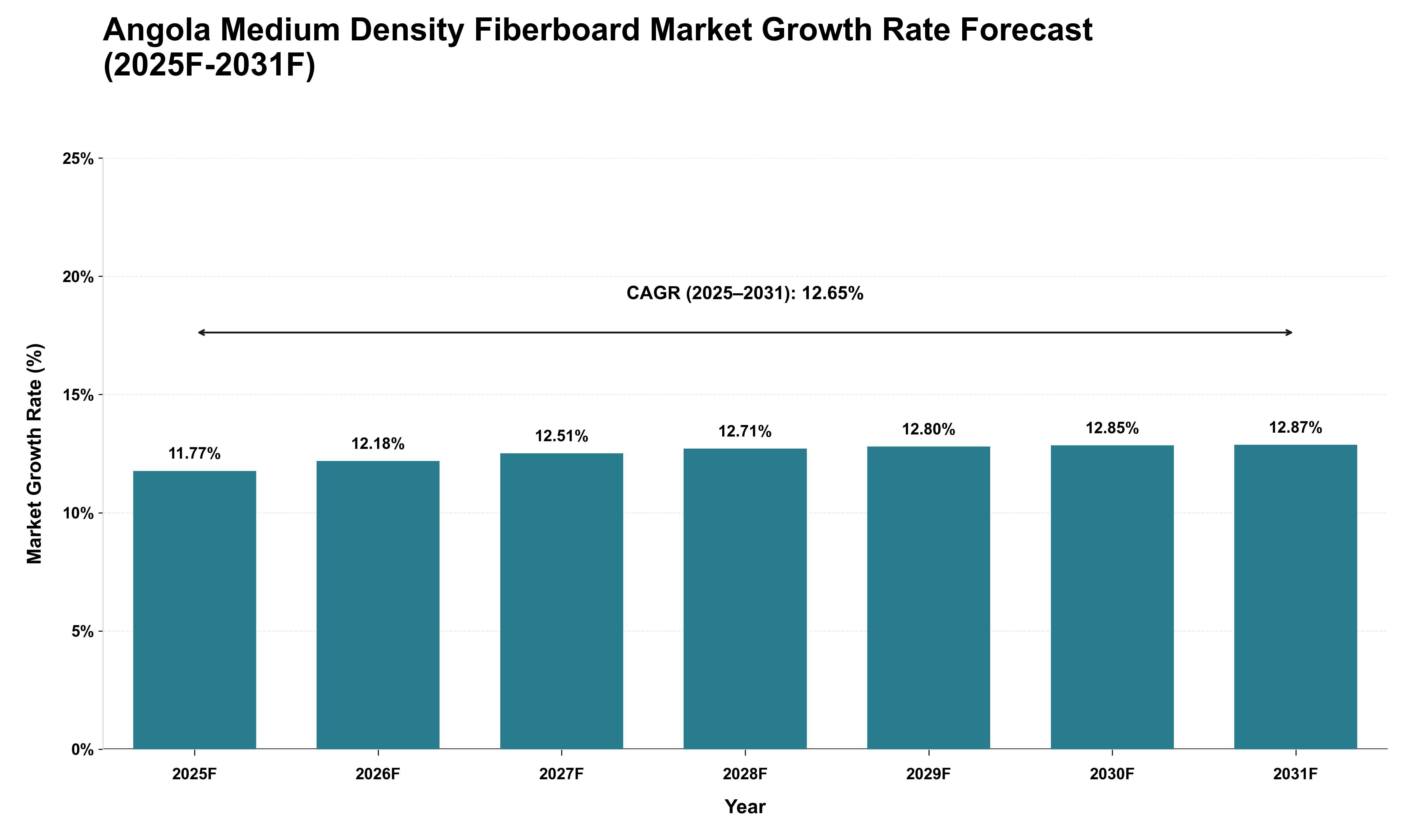
The Angola Medium Density Fiberboard market is projected to experience a robust compound annual growth rate of 12.65% from 2025 to 2031, reflecting a strong demand trajectory driven by macroeconomic factors such as urbanization and construction sector expansion. The annual growth rates indicate a consistent upward trend, with increases peaking at 12.87% in 2031, suggesting that the market will benefit from rising disposable incomes and an expanding middle class, which will likely enhance consumer spending on housing and furniture. Additionally, Angola's reliance on imports for raw materials may create opportunities for local production initiatives, potentially reducing import dependencies over time. As global economic conditions fluctuate, cyclical trends in construction and manufacturing will play a critical role in shaping the market dynamics, with anticipated investments in infrastructure further bolstering demand for medium density fiberboard throughout the forecast period.
Key Highlights of the Report:
- Angola Medium Density Fiberboard Market Outlook
- Market Size of Angola Medium Density Fiberboard Market, 2024
- Forecast of Angola Medium Density Fiberboard Market, 2031
- Historical Data and Forecast of Angola Medium Density Fiberboard Revenues & Volume for the Period 2021-2031
- Angola Medium Density Fiberboard Market Trend Evolution
- Angola Medium Density Fiberboard Market Drivers and Challenges
- Angola Medium Density Fiberboard Price Trends
- Angola Medium Density Fiberboard Porter`s Five Forces
- Angola Medium Density Fiberboard Industry Life Cycle
- Historical Data and Forecast of Angola Medium Density Fiberboard Market Revenues & Volume By Type for the Period 2021-2031
- Historical Data and Forecast of Angola Medium Density Fiberboard Market Revenues & Volume By Standard for the Period 2021-2031
- Historical Data and Forecast of Angola Medium Density Fiberboard Market Revenues & Volume By Moisture Resistant for the Period 2021-2031
- Historical Data and Forecast of Angola Medium Density Fiberboard Market Revenues & Volume By Fire-Rated for the Period 2021-2031
- Historical Data and Forecast of Angola Medium Density Fiberboard Market Revenues & Volume By Application for the Period 2021-2031
- Historical Data and Forecast of Angola Medium Density Fiberboard Market Revenues & Volume By Furniture for the Period 2021-2031
- Historical Data and Forecast of Angola Medium Density Fiberboard Market Revenues & Volume By Construction & Flooring for the Period 2021-2031
- Historical Data and Forecast of Angola Medium Density Fiberboard Market Revenues & Volume By Interior Designing for the Period 2021-2031
- Historical Data and Forecast of Angola Medium Density Fiberboard Market Revenues & Volume By Packaging Systems for the Period 2021-2031
- Historical Data and Forecast of Angola Medium Density Fiberboard Market Revenues & Volume By Others for the Period 2021-2031
- Angola Medium Density Fiberboard Import Export Trade Statistics
- Market Opportunity Assessment By Type
- Market Opportunity Assessment By Application
- Angola Medium Density Fiberboard Top Companies Market Share
- Angola Medium Density Fiberboard Competitive Benchmarking By Technical and Operational Parameters
- Angola Medium Density Fiberboard Company Profiles
- Angola Medium Density Fiberboard Key Strategic Recommendations






































