Argentina Binoculars Market Size Growth Rate
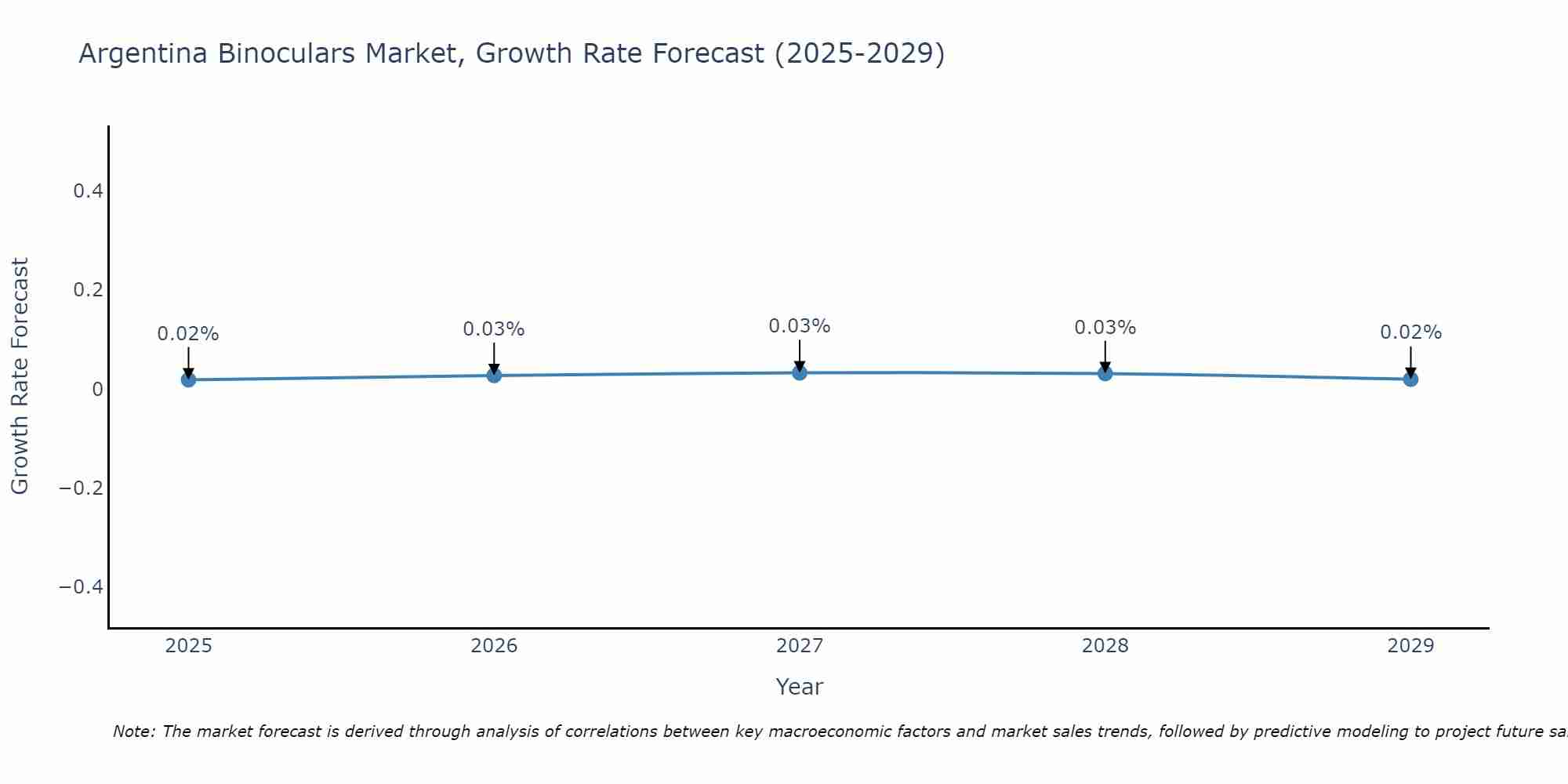
The Argentina Binoculars Market is projected to witness mixed growth rate patterns during 2025 to 2029. The growth rate begins at 0.02% in 2025, climbs to a high of 0.03% in 2027, and moderates to 0.02% by 2029.
Argentina Binoculars Market Overview
The Argentina binoculars market is experiencing steady growth driven by a combination of factors such as increasing interest in outdoor activities like bird watching, hunting, and tourism. The market is also benefiting from the rising popularity of sports events and concerts, which further fuels the demand for high-quality binoculars. Key players in the market are focusing on technological advancements, such as the integration of digital capabilities and image stabilization features, to cater to the evolving preferences of consumers. Additionally, the growing e-commerce sector in Argentina has made it easier for consumers to access a wide range of binocular products, contributing to market expansion. Overall, the Argentina binoculars market is poised for continued growth as consumers seek innovative and reliable optical solutions for various recreational and professional purposes.
Argentina Binoculars Market Trends
The Argentina Binoculars Market is experiencing growth driven by a combination of factors. One major trend is the increasing popularity of outdoor activities such as birdwatching, hunting, and sports events, driving the demand for high-quality binoculars. Another key trend is the rising interest in nature tourism, with more people exploring Argentina`s diverse landscapes and wildlife, creating a need for reliable binoculars. Additionally, technological advancements such as enhanced optics, image stabilization, and lightweight materials are shaping consumer preferences towards more advanced and user-friendly binoculars. E-commerce platforms are also playing a significant role in the market growth by offering a wide range of products and easy accessibility to consumers. Overall, the Argentina Binoculars Market is poised for continued expansion fueled by these trends.
Argentina Binoculars Market Challenges
In the Argentina Binoculars Market, challenges include economic instability affecting consumer spending, high import tariffs impacting pricing, and competition from cheaper alternatives such as digital cameras and smartphones with advanced zoom capabilities. Additionally, fluctuations in currency exchange rates can make it difficult for both consumers and businesses to plan and budget effectively. The market also faces the challenge of limited product innovation and differentiation, leading to a commoditization of binoculars. To succeed in this market, companies need to focus on offering unique features, targeting specific niche segments, and investing in marketing efforts to educate consumers about the benefits of using binoculars for various activities such as birdwatching, outdoor sports, and wildlife observation.
Argentina Binoculars Market Investment Opportunities
The Argentina Binoculars Market presents several investment opportunities for potential investors. With a growing interest in outdoor activities such as birdwatching, hunting, and sports events, there is a rising demand for high-quality binoculars in the country. Investing in the distribution and retail of premium binocular brands could be lucrative, especially targeting the affluent consumer segment. Additionally, there is potential for technological advancements in binoculars with features like image stabilization and smartphone connectivity to gain traction in the market. Collaborating with local manufacturers or establishing partnerships with established retailers can provide entry points for investors looking to capitalize on the expanding market for binoculars in Argentina.
Argentina Binoculars Market Government Policy
The Argentina Binoculars Market is subject to government policies that regulate import tariffs, trade agreements, and consumer protection laws. The government imposes import tariffs on binoculars to protect local manufacturers and promote domestic production. Additionally, trade agreements with other countries can impact the import and export of binoculars, influencing market dynamics. Consumer protection laws in Argentina ensure that binoculars meet quality and safety standards, providing assurance to buyers. Overall, government policies play a significant role in shaping the Argentina Binoculars Market by influencing pricing, competition, and consumer trust.
Argentina Binoculars Market Future Outlook
The Argentina binoculars market is expected to experience moderate growth in the coming years, driven by increasing interest in outdoor activities such as bird watching, hunting, and sports events. Technological advancements, such as improved lens coatings and image stabilization features, are likely to attract consumers looking for high-quality and reliable products. Additionally, the rise in tourism and adventure travel in Argentina could further boost demand for binoculars among both locals and tourists. However, economic challenges and fluctuations in the exchange rate may pose some risks to market growth. Overall, with a growing interest in outdoor pursuits and advancements in product features, the Argentina binoculars market is projected to expand steadily in the near future.
Key Highlights of the Report:
- Argentina Binoculars Market Outlook
- Market Size of Argentina Binoculars Market, 2025
- Forecast of Argentina Binoculars Market, 2032
- Historical Data and Forecast of Argentina Binoculars Revenues & Volume for the Period 2022 - 2032F
- Argentina Binoculars Market Trend Evolution
- Argentina Binoculars Market Drivers and Challenges
- Argentina Binoculars Price Trends
- Argentina Binoculars Porter's Five Forces
- Argentina Binoculars Industry Life Cycle
- Historical Data and Forecast of Argentina Binoculars Market Revenues & Volume By Product Types for the Period 2022 - 2032F
- Historical Data and Forecast of Argentina Binoculars Market Revenues & Volume By Roof Prism Binoculars for the Period 2022 - 2032F
- Historical Data and Forecast of Argentina Binoculars Market Revenues & Volume By Porro Prism Binoculars for the Period 2022 - 2032F
- Historical Data and Forecast of Argentina Binoculars Market Revenues & Volume By Others for the Period 2022 - 2032F
- Historical Data and Forecast of Argentina Binoculars Market Revenues & Volume By Applications for the Period 2022 - 2032F
- Historical Data and Forecast of Argentina Binoculars Market Revenues & Volume By Hunting & shooting Series for the Period 2022 - 2032F
- Historical Data and Forecast of Argentina Binoculars Market Revenues & Volume By Outdoor Series for the Period 2022 - 2032F
- Historical Data and Forecast of Argentina Binoculars Market Revenues & Volume By Marine Series for the Period 2022 - 2032F
- Historical Data and Forecast of Argentina Binoculars Market Revenues & Volume By Tactical and Military Series for the Period 2022 - 2032F
- Historical Data and Forecast of Argentina Binoculars Market Revenues & Volume By Others for the Period 2022 - 2032F
- Argentina Binoculars Import Export Trade Statistics
- Market Opportunity Assessment By Product Types
- Market Opportunity Assessment By Applications
- Argentina Binoculars Top Companies Market Share
- Argentina Binoculars Competitive Benchmarking By Technical and Operational Parameters
- Argentina Binoculars Company Profiles
- Argentina Binoculars Key Strategic Recommendations






































