Argentina Chlorine Market: Import Trend Analysis
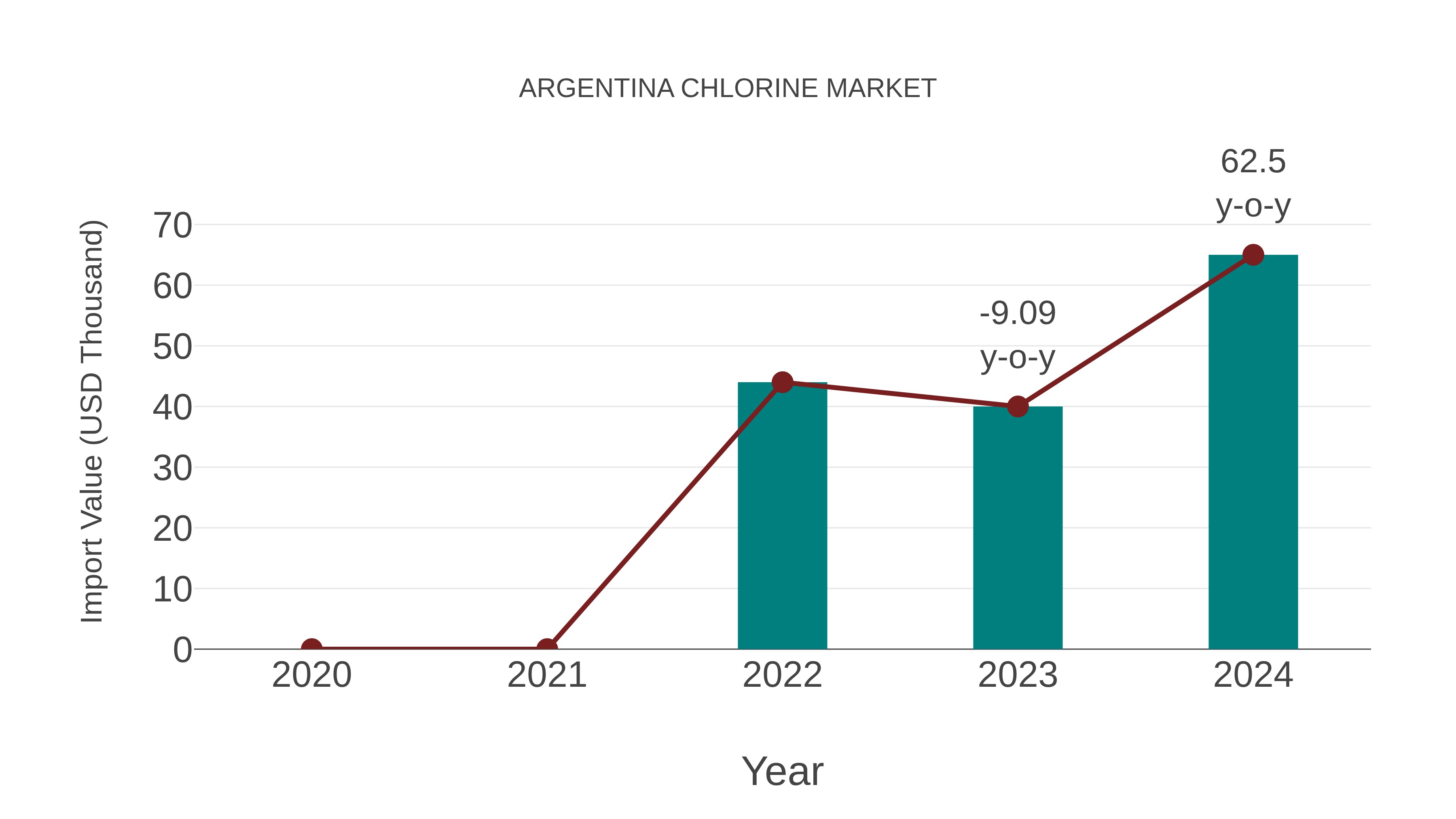
In the Argentina chlorine market, import trends surged notably from 2023 to 2024, with a growth rate of 62.5%. The compound annual growth rate (CAGR) for imports from 2020 to 2024 stood at 21.54%. This significant uptick in imports can be attributed to a substantial demand shift within the market, indicating a potential shift in industry dynamics or increased reliance on international sources for chlorine supply.
Argentina Chlorine Market Synopsis
The Argentina chlorine market is characterized by steady demand from industries such as water treatment, sanitation, and chemical manufacturing. Chlorine is a versatile chemical widely used for disinfection, bleaching, and as a key ingredient in the production of various compounds. The market is influenced by factors such as population growth, urbanization, and increasing awareness regarding water quality and sanitation. Regulatory measures aimed at ensuring safe water supply and wastewater treatment further drive the demand for chlorine in Argentina.
Drivers of the market
In Argentina, the Chlorine market is experiencing robust growth due to several factors. The rising demand for chlor-alkali products such as sodium hydroxide and chlorine gas in industries like paper and pulp, textile, and pharmaceuticals is a key driver. Moreover, the increasing focus on water treatment and sanitation is fueling the demand for chlorine for disinfection purposes. Additionally, the growth of the construction sector in Argentina is contributing to the demand for PVC, a major end-use product of chlorine, thereby driving the Chlorine market further.
Challenges of the market
In the Argentina Chlorine Market, several challenges hinder the seamless growth of the industry. One notable challenge is the dependency on external factors such as the availability and cost of raw materials. Chlorine production relies heavily on the availability and affordability of feedstocks such as salt and electricity, making the industry susceptible to price fluctuations in these inputs.
Government Policy of the market
The Argentina chlorine market has experienced consistent growth, primarily driven by its widespread applications across industries such as water treatment, pulp and paper, and chemical manufacturing. Government initiatives promoting clean water supply and stringent regulations regarding wastewater treatment have significantly boosted the demand for chlorine in the country. Moreover, the rising awareness regarding hygiene and sanitation has further augmented the consumption of chlorine in disinfection processes.
Key Highlights of the Report:
- Argentina Chlorine Market Outlook
- Market Size of Argentina Chlorine Market, 2025
- Forecast of Argentina Chlorine Market, 2032
- Historical Data and Forecast of Argentina Chlorine Revenues & Volume for the Period 2022-2032F
- Argentina Chlorine Market Trend Evolution
- Argentina Chlorine Market Drivers and Challenges
- Argentina Chlorine Price Trends
- Argentina Chlorine Porter's Five Forces
- Argentina Chlorine Industry Life Cycle
- Historical Data and Forecast of Argentina Chlorine Market Revenues & Volume By Application for the Period 2022-2032F
- Historical Data and Forecast of Argentina Chlorine Market Revenues & Volume By EDC/PVC for the Period 2022-2032F
- Historical Data and Forecast of Argentina Chlorine Market Revenues & Volume By Isocyanates and Oxygenates for the Period 2022-2032F
- Historical Data and Forecast of Argentina Chlorine Market Revenues & Volume By Chloromethanes for the Period 2022-2032F
- Historical Data and Forecast of Argentina Chlorine Market Revenues & Volume By Solvents and Epichlorohydrin for the Period 2022-2032F
- Historical Data and Forecast of Argentina Chlorine Market Revenues & Volume By Inorganic Chemicals for the Period 2022-2032F
- Historical Data and Forecast of Argentina Chlorine Market Revenues & Volume By Other Applications for the Period 2022-2032F
- Historical Data and Forecast of Argentina Chlorine Market Revenues & Volume By End-user Industry for the Period 2022-2032F
- Historical Data and Forecast of Argentina Chlorine Market Revenues & Volume By Water Treatment for the Period 2022-2032F
- Historical Data and Forecast of Argentina Chlorine Market Revenues & Volume By Pharmaceutical for the Period 2022-2032F
- Historical Data and Forecast of Argentina Chlorine Market Revenues & Volume By Chemicals for the Period 2022-2032F
- Historical Data and Forecast of Argentina Chlorine Market Revenues & Volume By Paper and Pulp for the Period 2022-2032F
- Historical Data and Forecast of Argentina Chlorine Market Revenues & Volume By Plastic for the Period 2022-2032F
- Historical Data and Forecast of Argentina Chlorine Market Revenues & Volume By Pesticides for the Period 2022-2032F
- Historical Data and Forecast of Argentina Chlorine Market Revenues & Volume By Other End-user Industries for the Period 2022-2032F
- Argentina Chlorine Import Export Trade Statistics
- Market Opportunity Assessment By Application
- Market Opportunity Assessment By End-user Industry
- Argentina Chlorine Top Companies Market Share
- Argentina Chlorine Competitive Benchmarking By Technical and Operational Parameters
- Argentina Chlorine Company Profiles
- Argentina Chlorine Key Strategic Recommendations






































