Argentina Double Glazing Glass Market Size, Share & Growth Rate
The Argentina Double Glazing Glass Market was estimated at USD 237 Million in 2025 and is projected to reach USD 333 Million by 2032, growing at a CAGR of 5.0% from 2026 to 2032. This growth trajectory is primarily fueled by the increasing demand for energy-efficient solutions as the nation grapples with economic challenges and seeks to optimize energy use in construction. Furthermore, a rising awareness among consumers regarding the advantages of double glazing, including enhanced thermal insulation and noise reduction, is promoting its adoption across residential and commercial sectors.
Argentina Double Glazing Glass Market Year-wise Growth Rate and Key Drivers
This graph highlights how the Argentina Double Glazing Glass Market has steadily grown over the years, supported by major growth factors.
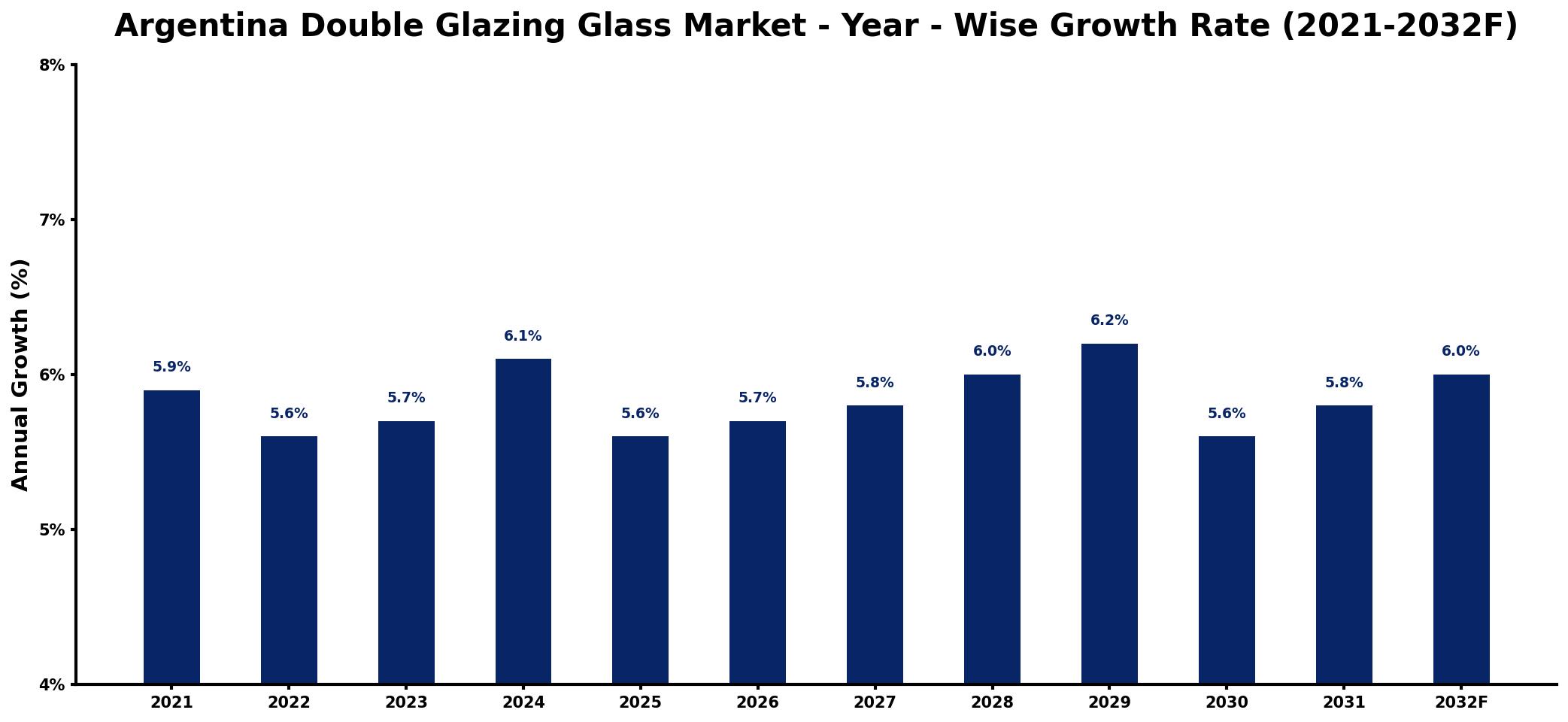
The table below presents the year‑wise growth rates along with the key drivers influencing the market
| Year | Growth Rate | Major Drivers |
| 2021 | 5.9% | Rising construction industry activity |
| 2022 | 5.6% | Increased energy efficiency awareness |
| 2023 | 5.7% | Growing residential renovation projects |
| 2024 | 6.1% | Expansion of green building practices |
| 2025 | 5.6% | Higher urban population density |
| 2026 | 5.7% | Advancements in insulation technologies |
| 2027 | 5.8% | Surge in commercial developments |
| 2028 | 6.0% | Investment in sustainable architecture |
| 2029 | 6.2% | Demand for noise reduction solutions |
| 2030 | 5.6% | Focus on climate resilience measures |
| 2031 | 5.8% | Government incentives for energy savings |
| 2032 | 6.0% | Innovations in building materials technology |
Note: Market size estimations and growth projections presented in this report are based on 6Wresearch's proprietary forecasting methodology, utilizing the latest available industry data, government publications, and primary research inputs.
Argentina Double Glazing Glass Market Synopsis
The strongest force currently shaping the Argentina Double Glazing Glass Market is the escalating focus on sustainability and energy efficiency. This trend reflects not only consumer preferences but also aligns with government initiatives promoting green building practices, driving up demand for double glazing solutions.
Moreover, technological advancements in glazing technologies, such as the development of smart glass, are capturing the attention of the market. This innovation allows for dynamic control over thermal and light transmission, presenting a significant opportunity for enhanced product offerings that meet the evolving needs of consumers.
Argentina Double Glazing Glass Market Key Takeaways
- Steady growth is projected due to rising awareness of energy-efficient construction solutions.
- The market is being shaped by consumer demand for improved thermal insulation and noise reduction.
- Innovations in smart glass technologies are emerging as a significant trend.
- Government policies are actively promoting energy-efficient building materials.
- Investment opportunities are abundant due to increasing urbanization and construction activities.
Evaluation of Restraints in Argentina Double Glazing Glass Market
Several factors hinder the growth of the Argentina Double Glazing Glass Market. Economic instability and fluctuating currency rates have made it challenging for manufacturers to maintain competitive pricing. Additionally, high import taxes on raw materials further strain the production costs, thereby impacting profitability. The construction industry has also experienced downturns that, coupled with inadequate infrastructure, pose significant logistical hurdles in distributing double glazing products effectively across the country. Addressing these issues will require strategic innovation and efficiency improvements from companies to navigate this complex landscape.
Argentina Double Glazing Glass Market Trends
A key trend in the Argentina Double Glazing Glass Market is the shift towards enhanced energy efficiency and sustainability in building materials. As environmental awareness grows, consumers are increasingly interested in products that offer substantial energy savings. Moreover, customization and aesthetic enhancements have gained traction, catering to a diverse range of consumer preferences in both residential and commercial projects. Such shifts indicate a broader understanding of the importance of not only functionality but also design in modern construction.
Argentina Double Glazing Glass Market Opportunities
The Argentina Double Glazing Glass Market presents promising investment opportunities, particularly in areas focusing on manufacturing and installation services. As urbanization accelerates and the demand for energy-efficient buildings rises, there is significant potential for companies to develop and supply innovative glazing solutions. Furthermore, customization and advanced technology applications in glazing are key areas where businesses can differentiate themselves and appeal to emerging consumer needs.
Government Initiatives in the Argentina Double Glazing Glass Market
Government policies supporting the Argentina Double Glazing Glass Market are centered on fostering energy efficiency within the construction sector. Regulations have been introduced to mandate higher performance standards for building materials, including double glazing glass. Additionally, financial incentives such as tax credits and subsidies are being offered to stimulate the installation of energy-efficient windows. These initiatives aim to cultivate a more sustainable construction environment while simultaneously bolstering local manufacturing capabilities in the glazing industry.
Future Insights of the Argentina Double Glazing Glass Market
Looking ahead to 2026-2032, the Argentina Double Glazing Glass Market is anticipated to expand as the construction sector increasingly prioritizes energy efficiency and environmental sustainability. Consumer education on the benefits of double glazing is expected to rise, further propelling market demand. While economic uncertainties and raw material price fluctuations pose challenges, the overall outlook remains positive. The market is likely to evolve with innovative products and advanced technologies that respond to the growing need for effective energy solutions in both residential and commercial applications.
Argentina Double Glazing Glass Market Latest Developments (2025 - 2026)
The Argentina Double Glazing Glass Market is currently witnessing a significant shift towards innovative technologies, particularly with the rise of smart glass solutions that cater to the demands for energy efficiency and user control. Additionally, manufacturers are increasingly focusing on sustainable practices, implementing more eco-friendly production methods to align with regulatory guidelines. Awareness campaigns initiated by government agencies are also fostering a more informed consumer base, driving the adoption of energy-efficient building materials across various sectors.
Argentina Double Glazing Glass Market - Key Attractiveness of the Report
- 10 Years of Market Numbers
- Historical Data Starting from 2022 to 2025
- Base Year: 2025
- Forecast Data until 2032
- Key Performance Indicators Impacting the Market
- Major Upcoming Developments and Projects
Key Highlights of the Report:
- Argentina Double Glazing Glass Market Outlook
- Market Size of Argentina Double Glazing Glass Market, 2025
- Forecast of Argentina Double Glazing Glass Market, 2032
- Historical Data and Forecast of Argentina Double Glazing Glass Revenues & Volume for the Period 2022-2032F
- Argentina Double Glazing Glass Market Trend Evolution
- Argentina Double Glazing Glass Market Drivers and Challenges
- Argentina Double Glazing Glass Price Trends
- Argentina Double Glazing Glass Porter's Five Forces
- Argentina Double Glazing Glass Industry Life Cycle
- Historical Data and Forecast of Argentina Double Glazing Glass Market Revenues & Volume By Material for the Period 2022-2032F
- Historical Data and Forecast of Argentina Double Glazing Glass Market Revenues & Volume By Glass for the Period 2022-2032F
- Historical Data and Forecast of Argentina Double Glazing Glass Market Revenues & Volume By Frame and Spacer for the Period 2022-2032F
- Historical Data and Forecast of Argentina Double Glazing Glass Market Revenues & Volume By Sealant for the Period 2022-2032F
- Historical Data and Forecast of Argentina Double Glazing Glass Market Revenues & Volume By Others for the Period 2022-2032F
- Historical Data and Forecast of Argentina Double Glazing Glass Market Revenues & Volume By Thickness for the Period 2022-2032F
- Historical Data and Forecast of Argentina Double Glazing Glass Market Revenues & Volume By Less than 10mm for the Period 2022-2032F
- Historical Data and Forecast of Argentina Double Glazing Glass Market Revenues & Volume By 10mm to 12mm for the Period 2022-2032F
- Historical Data and Forecast of Argentina Double Glazing Glass Market Revenues & Volume By More than 12mm for the Period 2022-2032F
- Historical Data and Forecast of Argentina Double Glazing Glass Market Revenues & Volume By Application for the Period 2022-2032F
- Historical Data and Forecast of Argentina Double Glazing Glass Market Revenues & Volume By Window and Door for the Period 2022-2032F
- Historical Data and Forecast of Argentina Double Glazing Glass Market Revenues & Volume By Faade for the Period 2022-2032F
- Historical Data and Forecast of Argentina Double Glazing Glass Market Revenues & Volume By Applications for the Period 2022-2032F
- Argentina Double Glazing Glass Import Export Trade Statistics
- Market Opportunity Assessment By Material
- Market Opportunity Assessment By Thickness
- Market Opportunity Assessment By Application
- Argentina Double Glazing Glass Top Companies Market Share
- Argentina Double Glazing Glass Competitive Benchmarking By Technical and Operational Parameters
- Argentina Double Glazing Glass Company Profiles
- Argentina Double Glazing Glass Key Strategic Recommendations






































