Argentina Luxury Leather Goods Market: Import Trend Analysis
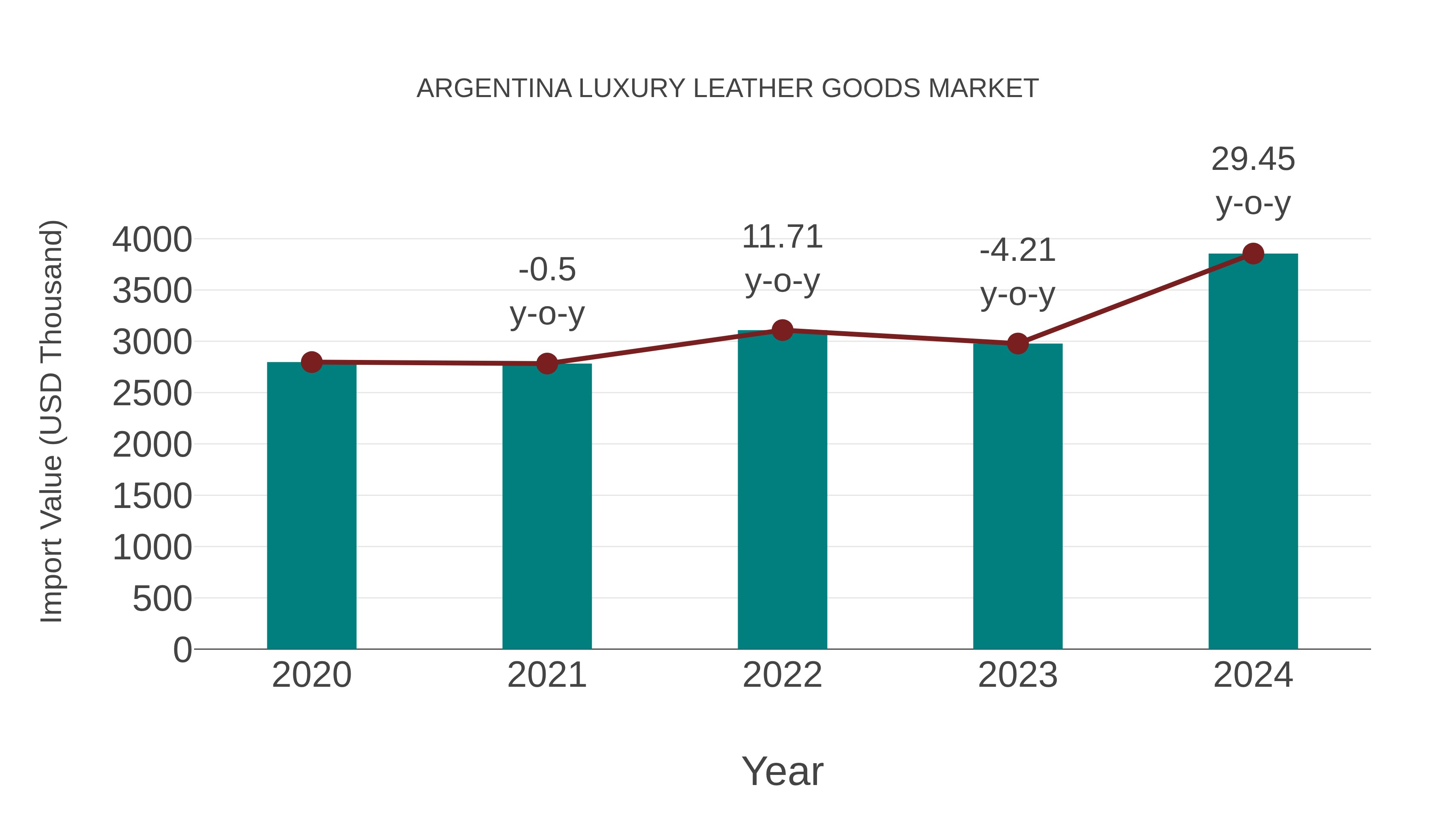
The Argentina luxury leather goods market witnessed a steady increase in imports from 2020 to 2024, with a Compound Annual Growth Rate (CAGR) of 8.35%. In 2023-2024, the year-on-year growth rate spiked to 29.45%, indicating a significant surge in imports during that period.
Argentina Luxury Leather Goods Market Synopsis
The Argentina luxury leather goods market is characterized by a rich heritage of high-quality craftsmanship, with a strong emphasis on traditional techniques and materials. The market offers a range of premium leather products including handbags, wallets, shoes, and accessories that cater to both domestic and international consumers. Key players in the market include renowned luxury brands as well as local artisans and designers who focus on creating unique, bespoke pieces. The market is driven by a growing demand for luxury goods among affluent consumers and tourists, with a preference for premium quality and exclusivity. While the market faces challenges such as economic fluctuations and competition from international brands, there is a continued emphasis on sustainability and ethical production practices, reflecting the evolving preferences of consumers towards responsible luxury.
Argentina Luxury Leather Goods Market Trends
The Argentina Luxury Leather Goods Market is experiencing growth driven by a rising disposable income, evolving fashion trends, and a growing appreciation for high-quality goods. Consumers are increasingly seeking unique and handcrafted leather products, creating opportunities for luxury brands to differentiate themselves through craftsmanship and design. Key trends include the demand for sustainable and ethically sourced materials, personalized customization options, and the integration of technology such as RFID tags for authenticity verification. E-commerce platforms are also playing a significant role in expanding market reach and engaging with a wider audience. Collaborations with local artisans and designers, as well as strategic marketing campaigns targeting younger demographics, are essential for luxury leather goods brands to capitalize on the current market trends and opportunities in Argentina.
Argentina Luxury Leather Goods Market Challenges
In the Argentina Luxury Leather Goods Market, several challenges are faced, including economic instability, fluctuating exchange rates, and high import tariffs on raw materials. The country`s economic volatility can impact consumer spending power and confidence, leading to fluctuations in demand for luxury goods. Additionally, the fluctuating exchange rates can affect the cost of imported luxury leather goods, making them more expensive for consumers. High import tariffs on raw materials used in leather goods production can also increase manufacturing costs, potentially impacting the final price of luxury products. Furthermore, competition from international luxury brands and counterfeit products pose challenges for local luxury leather goods businesses in terms of market share and brand reputation. These challenges require market players to adapt their strategies, innovate, and maintain high-quality standards to remain competitive in the Argentina Luxury Leather Goods Market.
Argentina Luxury Leather Goods Market Investment Opportunities
The Argentina Luxury Leather Goods Market is primarily driven by a combination of factors including the country`s reputation for high-quality leather production, a growing consumer preference for luxury and premium products, increasing disposable income levels among the affluent population, and a rising trend of fashion consciousness. Additionally, the presence of renowned luxury brands and designers in the market, coupled with a strong demand for unique and handcrafted leather goods, further contribute to the market`s growth. The influence of social media and celebrity endorsements also play a significant role in shaping consumer preferences and driving the demand for luxury leather goods in Argentina. Overall, a blend of tradition, craftsmanship, evolving consumer tastes, and economic factors collectively propel the growth of the luxury leather goods market in Argentina.
Argentina Luxury Leather Goods Market Government Polices
In Argentina, government policies related to the luxury leather goods market primarily focus on promoting the industry`s growth and sustainability while also protecting local craftsmanship and heritage. The government has implemented measures to support local leather producers through export incentives, tax breaks, and subsidies to ensure competitiveness in the global market. Additionally, there are regulations in place to safeguard the quality and authenticity of Argentine leather products, including certification programs and standards for materials sourcing and production processes. Overall, government policies aim to position Argentina as a leading player in the luxury leather goods market by fostering innovation, supporting small-scale producers, and upholding the country`s reputation for high-quality leather craftsmanship.
Argentina Luxury Leather Goods Market Future Outlook
The future outlook for the Argentina Luxury Leather Goods Market appears promising, fueled by growing consumer interest in high-quality, stylish leather products. With a strong tradition of leather craftsmanship in Argentina, the market is expected to further expand as luxury brands capitalize on this heritage to attract both domestic and international customers. Additionally, the increasing disposable income levels and changing consumer preferences towards premium and sustainable goods are likely to drive the demand for luxury leather items in the country. As Argentina continues to position itself as a key player in the global luxury market, the outlook for the luxury leather goods sector remains positive, with opportunities for growth and innovation in design and marketing strategies.
Key Highlights of the Report:
- Argentina Luxury Leather Goods Market Outlook
- Market Size of Argentina Luxury Leather Goods Market, 2025
- Forecast of Argentina Luxury Leather Goods Market, 2032
- Historical Data and Forecast of Argentina Luxury Leather Goods Revenues & Volume for the Period 2022 - 2032F
- Argentina Luxury Leather Goods Market Trend Evolution
- Argentina Luxury Leather Goods Market Drivers and Challenges
- Argentina Luxury Leather Goods Price Trends
- Argentina Luxury Leather Goods Porter's Five Forces
- Argentina Luxury Leather Goods Industry Life Cycle
- Historical Data and Forecast of Argentina Luxury Leather Goods Market Revenues & Volume By Product for the Period 2022 - 2032F
- Historical Data and Forecast of Argentina Luxury Leather Goods Market Revenues & Volume By High- Grade for the Period 2022 - 2032F
- Historical Data and Forecast of Argentina Luxury Leather Goods Market Revenues & Volume By Low-Grade for the Period 2022 - 2032F
- Historical Data and Forecast of Argentina Luxury Leather Goods Market Revenues & Volume By Mid-Grade for the Period 2022 - 2032F
- Historical Data and Forecast of Argentina Luxury Leather Goods Market Revenues & Volume By Application for the Period 2022 - 2032F
- Historical Data and Forecast of Argentina Luxury Leather Goods Market Revenues & Volume By Men for the Period 2022 - 2032F
- Historical Data and Forecast of Argentina Luxury Leather Goods Market Revenues & Volume By Women for the Period 2022 - 2032F
- Historical Data and Forecast of Argentina Luxury Leather Goods Market Revenues & Volume By Distribution Channel for the Period 2022 - 2032F
- Historical Data and Forecast of Argentina Luxury Leather Goods Market Revenues & Volume By Offline Retail Stores for the Period 2022 - 2032F
- Historical Data and Forecast of Argentina Luxury Leather Goods Market Revenues & Volume By Online Retail Stores for the Period 2022 - 2032F
- Argentina Luxury Leather Goods Import Export Trade Statistics
- Market Opportunity Assessment By Product
- Market Opportunity Assessment By Application
- Market Opportunity Assessment By Distribution Channel
- Argentina Luxury Leather Goods Top Companies Market Share
- Argentina Luxury Leather Goods Competitive Benchmarking By Technical and Operational Parameters
- Argentina Luxury Leather Goods Company Profiles
- Argentina Luxury Leather Goods Key Strategic Recommendations






































