Argentina Physical Security Market Size & Growth Rate (2026-2032)
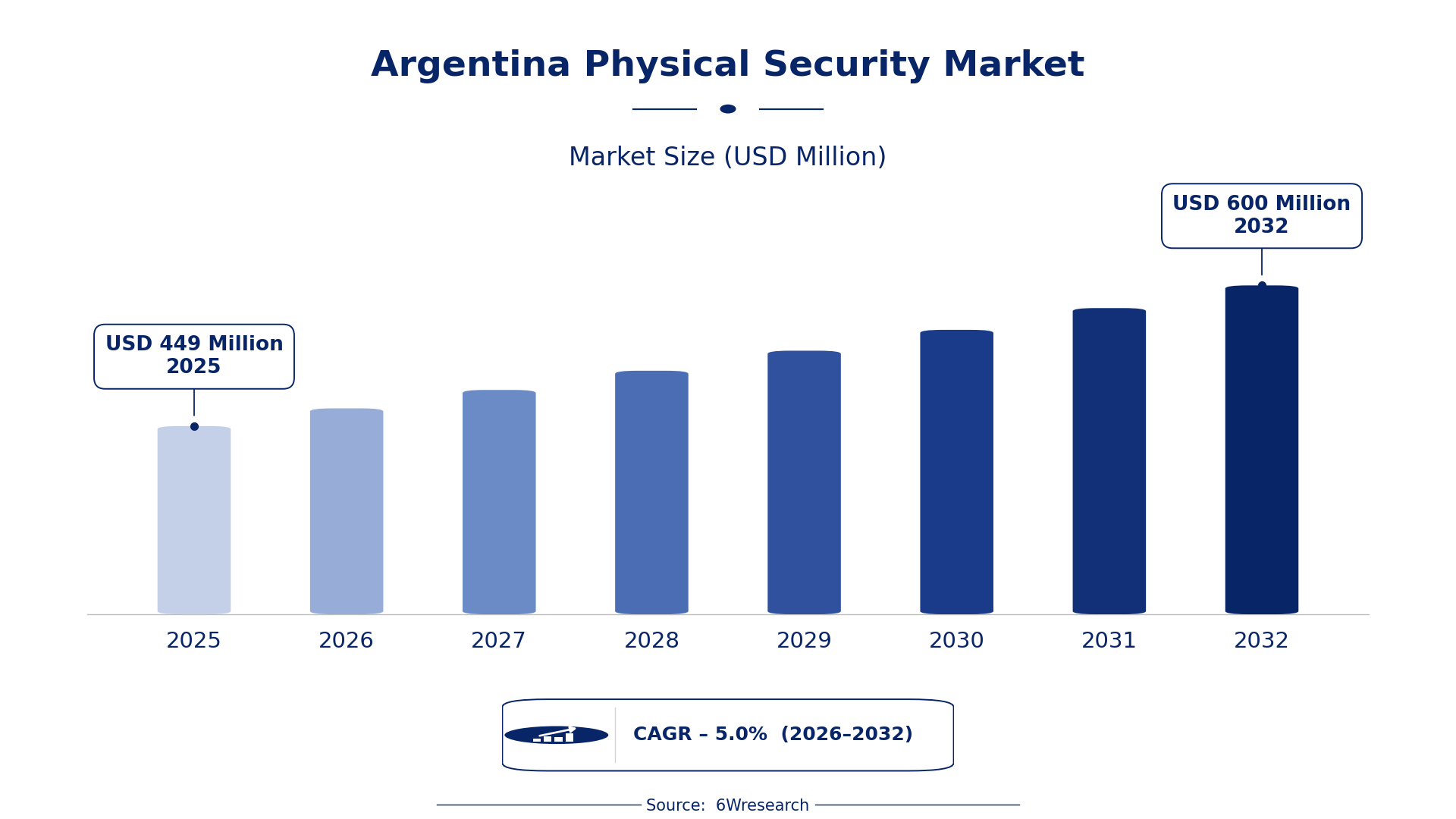
The Argentina Physical Security Market was estimated at USD 449 Million in 2025 and is projected to reach USD 600 Million by 2032, growing at a CAGR of 5.0% from 2026 to 2032.
Argentina Physical Security Market Synopsis
Security in Argentina has become an urgent priority across all sectors. The rising crime rates have compelled businesses and households to invest more heavily in comprehensive security measures, including surveillance and access control systems.
The market is witnessing significant technological advancements, particularly in video surveillance and intrusion detection systems. As awareness of the importance of security grows, consumers demand more integrated solutions, enhancing both safety and asset protection.
Argentina Physical Security Market Year-wise Growth Rate and Key Drivers
This graph illustrates the annual growth rates of the Argentina Physical Security Market from 2021 to 2032, highlighting a steady upward trajectory and projected expansion over the forecast period.
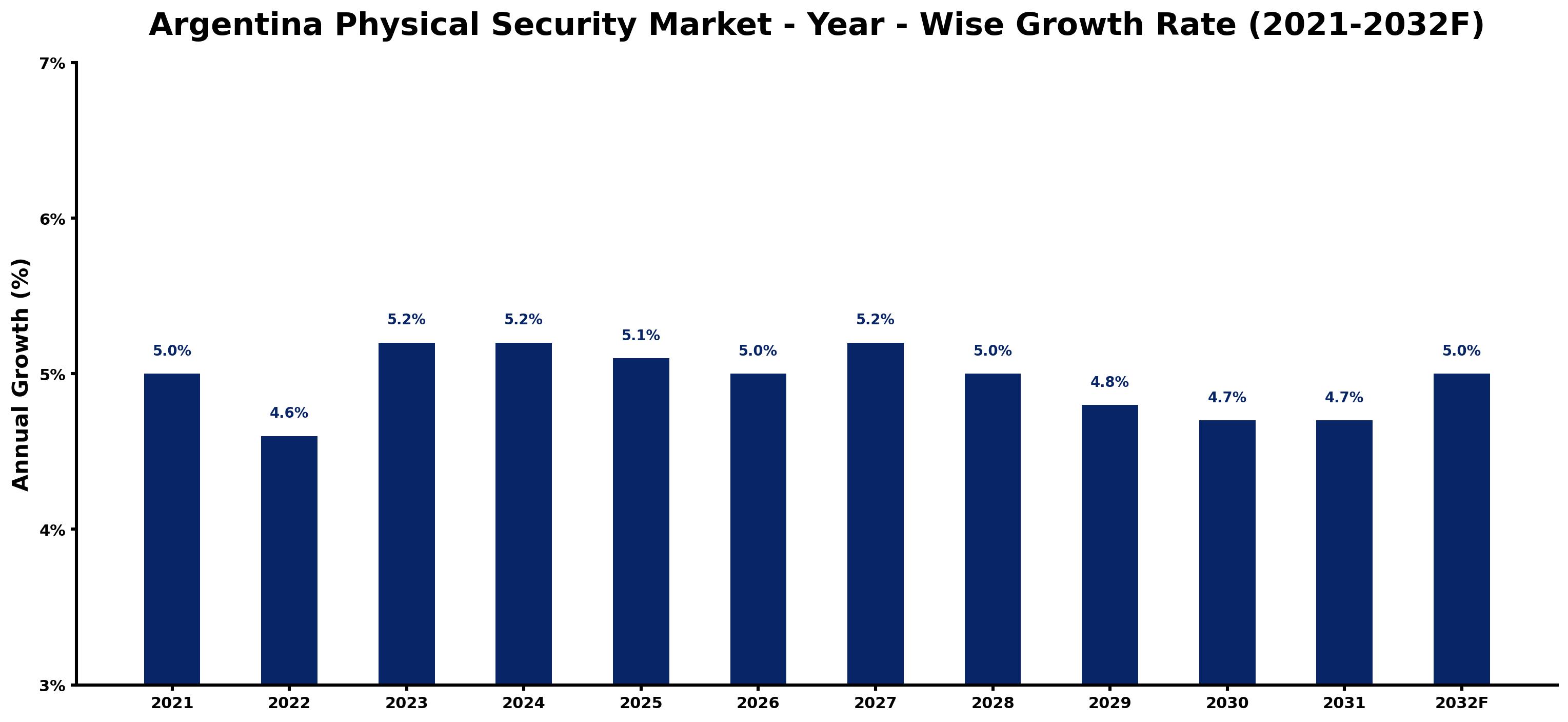
The table below presents the year‑wise growth rates along with the key drivers influencing the market
| Year | Growth Rate | Major Drivers |
| 2021 | 5.0% | Rising crime rates prompting enhanced security measures. |
| 2022 | 4.6% | Government initiative to improve urban public safety. |
| 2023 | 5.2% | Increased tourism boosting demand for hotel security systems. |
| 2024 | 5.2% | Regulatory changes mandating security system compliance. |
| 2025 | 5.1% | Local events driving investments in crowd management solutions. |
| 2026 | 5.0% | Telecom upgrades facilitating smart security implementations. |
| 2027 | 5.2% | Corporate sector prioritizing employee safety in workplaces. |
| 2028 | 5.0% | Expanding logistics sector enhancing supply chain security. |
| 2029 | 4.8% | Emergence of e-commerce increasing warehouse security needs. |
| 2030 | 4.7% | Growing remote workforce driving home security installations. |
| 2031 | 4.7% | Community initiatives promoting neighborhood watch programs. |
| 2032 | 5.0% | Rising awareness of personal safety driving security purchases. |
Note: Market size estimations and growth projections presented in this report are based on 6Wresearch's proprietary forecasting methodology, utilizing the latest available industry data, government publications, and primary research inputs.
Argentina Physical Security Market Key Takeaways
Below are some of the specific key takeaways from the market, including:
- The market is driven by increasing security concerns across commercial, residential, and governmental sectors.
- Adoption of advanced technologies, including AI and cloud-based solutions, is on the rise.
- Government initiatives focusing on public safety significantly influence market dynamics.
- Demand for integrated security solutions offering real-time monitoring is expanding.
- Investment opportunities are plentiful, particularly in surveillance and access control technologies.
Evaluation of Restraints in Argentina Physical Security Market
The Argentina Physical Security Market faces several restraints that can hinder its growth. Economic instability has made companies cautious about investments in security measures, while high crime rates create pressure for immediate solutions. on top of that, the lack of standardization in the security industry poses challenges for maintaining service quality. Political and social unrest can also interfere with the effective implementation of security measures, complicating the landscape for service providers.
Argentina Physical Security Market Trends
A clear trend is emerging towards the integration of advanced technologies in security systems. The shift from traditional surveillance to smart video analytics and biometric recognition systems is notable, enhancing the overall effectiveness of security measures. Additionally, the uptake of cloud-based security solutions allows for greater flexibility and real-time access to security feeds. Regulatory compliance is also prompting businesses to invest in cybersecurity alongside physical security.
Argentina Physical Security Market Opportunities
There are considerable opportunities in the Argentina Physical Security Market, largely driven by heightened awareness of security threats. Areas ripe for investment include advanced video surveillance systems and comprehensive access control technologies. With the public sector emphasizing safety, new projects in surveillance infrastructure create avenues for growth. Security services such as monitoring and installation also present lucrative options for businesses looking to capitalize on market needs.
Government Initiatives in the Argentina Physical Security Market
Government policies are increasingly focused on bolstering security measures across Argentina. Regulatory frameworks have been established to enhance public safety and foster collaboration between the public and private sectors. These policies aim to improve infrastructure and response capabilities, ensuring a safer environment for all citizens.
- A recently completed initiative established regulations for the installation and maintenance of surveillance systems to enhance public safety standards.
- Currently, the government is implementing a national program to upgrade digital infrastructure, which supports the integration of advanced security technologies.
- A planned initiative aims to expand public-private partnerships focused on developing integrated security solutions by 2028.
- Ongoing efforts to legislate improved cybersecurity measures are aimed at protecting critical infrastructure from emerging threats.
- The introduction of a national safety awareness campaign emphasizes the importance of personal and business security measures across all demographics.
Future Insights of the Argentina Physical Security Market
Looking ahead to 2026-2032, the Argentina Physical Security Market is likely to continue its upward trajectory. The persistent rise in crime rates and the necessity for businesses and homeowners to safeguard their assets will drive demand for advanced security solutions. Innovations in technology will further enhance the effectiveness of surveillance and intrusion detection systems, while government initiatives will play a crucial role in shaping the market's future direction.
Argentina Physical Security Market Latest Developments
Recent activities in the Argentina Physical Security Market reveal a strong focus on integrating advanced technologies and improving service delivery. Companies are increasingly innovating to meet the diverse needs of consumers in both the public and private sectors.
- A leading technology vendor launched a new line of AI-powered video surveillance systems in early 2025, enhancing threat detection capabilities.
- In mid-2025, a major provider introduced an upgraded cloud-based security platform that allows clients to manage their security systems remotely.
- A partnership between local authorities and private firms to develop community-based security programs began in Q3 2025 and remains ongoing.
- An expansion project planned for early 2026 aims to deploy biometric access control systems in public transportation facilities across major cities.
- A pilot program focusing on smart city initiatives is set to begin in late 2025, integrating security measures with urban infrastructure improvements.
Argentina Physical Security Market - Key Attractiveness of the Report
- 10 Years of Market Numbers
- Historical Data Starting from 2022 to 2025
- Base Year: 2025
- Forecast Data until 2032
- Key Performance Indicators Impacting the Market
- Major Upcoming Developments and Projects
Key Highlights of the Report:
- Argentina Physical Security Market Outlook
- Market Size of Argentina Physical Security Market, 2025
- Forecast of Argentina Physical Security Market, 2032
- Historical Data and Forecast of Argentina Physical Security Revenues & Volume for the Period 2022-2032F
- Argentina Physical Security Market Trend Evolution
- Argentina Physical Security Market Drivers and Challenges
- Argentina Physical Security Price Trends
- Argentina Physical Security Porter's Five Forces
- Argentina Physical Security Industry Life Cycle
- Historical Data and Forecast of Argentina Physical Security Market Revenues & Volume By Component for the Period 2022-2032F
- Historical Data and Forecast of Argentina Physical Security Market Revenues & Volume By Systems (PACS, PSIM, PIAM, Video Surveillance, Fire and Life Safety) for the Period 2022-2032F
- Historical Data and Forecast of Argentina Physical Security Market Revenues & Volume By Services for the Period 2022-2032F
- Historical Data and Forecast of Argentina Physical Security Market Revenues & Volume By Vertical for the Period 2022-2032F
- Historical Data and Forecast of Argentina Physical Security Market Revenues & Volume By BFSI for the Period 2022-2032F
- Historical Data and Forecast of Argentina Physical Security Market Revenues & Volume By Government for the Period 2022-2032F
- Historical Data and Forecast of Argentina Physical Security Market Revenues & Volume By Retail for the Period 2022-2032F
- Historical Data and Forecast of Argentina Physical Security Market Revenues & Volume By Transportation for the Period 2022-2032F
- Historical Data and Forecast of Argentina Physical Security Market Revenues & Volume By Residential for the Period 2022-2032F
- Historical Data and Forecast of Argentina Physical Security Market Revenues & Volume By Telecom and IT for the Period 2022-2032F
- Historical Data and Forecast of Argentina Physical Security Market Revenues & Volume By Other Verticals (Healthcare, Manufacturing, Energy and Utilities, and Education). for the Period 2022-2032F
- Historical Data and Forecast of Argentina Physical Security Market Revenues & Volume By Organization Size for the Period 2022-2032F
- Historical Data and Forecast of Argentina Physical Security Market Revenues & Volume By SMEs for the Period 2022-2032F
- Historical Data and Forecast of Argentina Physical Security Market Revenues & Volume By Large Enterprises for the Period 2022-2032F
- Argentina Physical Security Import Export Trade Statistics
- Market Opportunity Assessment By Component
- Market Opportunity Assessment By Vertical
- Market Opportunity Assessment By Organization Size
- Argentina Physical Security Top Companies Market Share
- Argentina Physical Security Competitive Benchmarking By Technical and Operational Parameters
- Argentina Physical Security Company Profiles
- Argentina Physical Security Key Strategic Recommendations






































