Argentina Propane Market: Import Trend Analysis
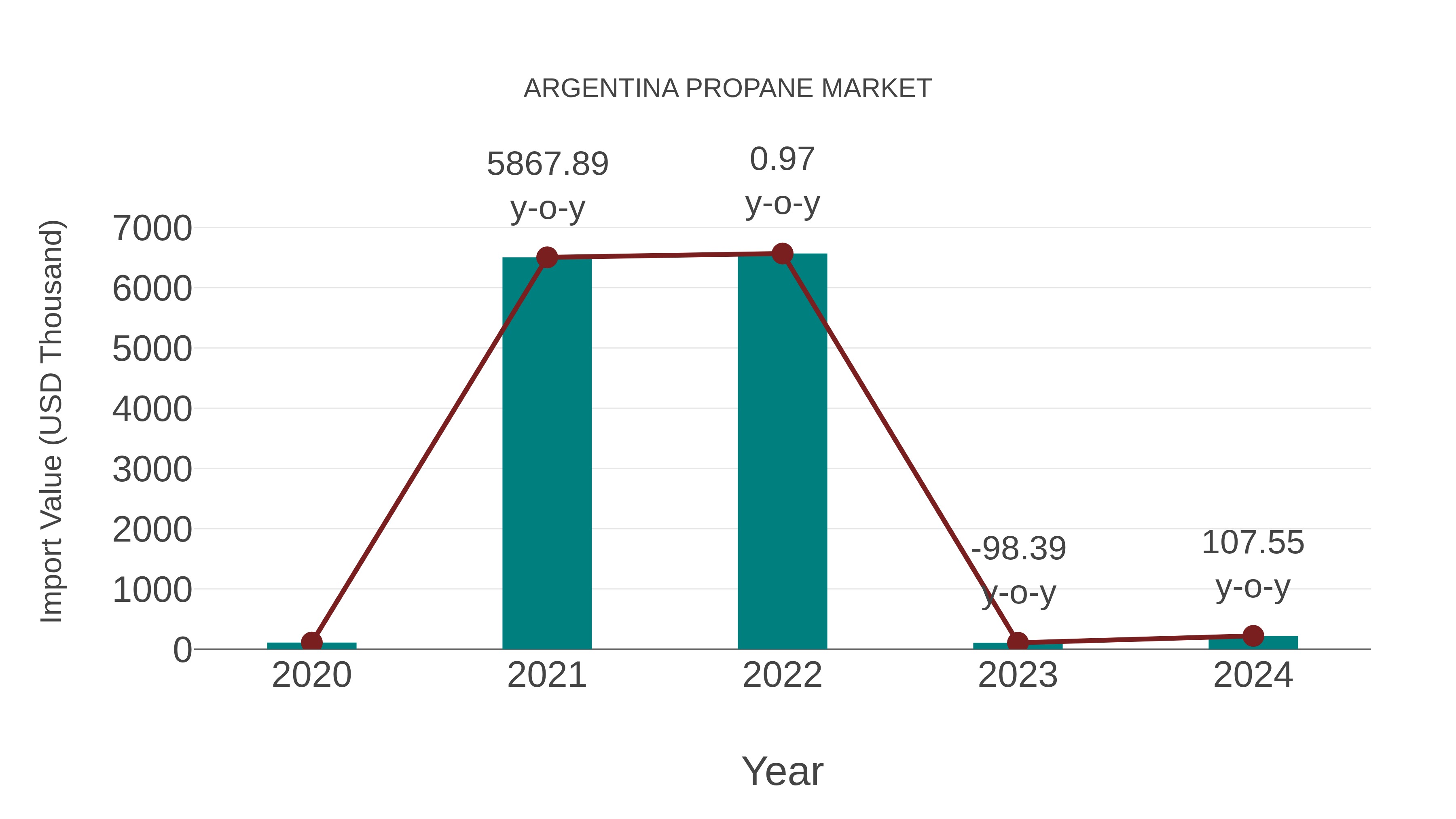
Argentina`s import trend in the propane market showed significant growth from 2023 to 2024, with a growth rate of 107.55%. The compound annual growth rate (CAGR) for the period 2020-2024 stood at 19.19%. This surge in imports can be attributed to a notable shift in demand dynamics or favorable trade policies during the period.
Argentina Propane Market Synopsis
Argentina propane market is experiencing growth as the country`s energy sector diversifies and consumers seek cleaner and more efficient alternatives to traditional fuels. Propane, also known as liquefied petroleum gas (LPG), is used for heating, cooking, transportation, and industrial applications. With increasing environmental awareness and government incentives promoting the use of clean fuels, there is a growing demand for propane in Argentina. Key players in the market are expanding their distribution networks and offering innovative propane solutions to meet the evolving needs of residential, commercial, and industrial customers.
Drivers of the market
The Argentina propane market witnesses growth propelled by factors such as increasing demand for clean and efficient energy sources, expansion of the residential and commercial sectors, and rising adoption of propane for heating and cooking applications. Propane, a versatile fuel with lower carbon emissions compared to traditional fuels, is used for various applications such as space heating, water heating, and power generation. The growing emphasis on environmental sustainability and energy efficiency drives the adoption of propane as an alternative fuel, stimulating market expansion. Moreover, the development of infrastructure for propane distribution and storage further fosters market growth, catering to the evolving energy needs of consumers and businesses.
Challenges of the market
The Argentina propane market faces several challenges. One significant issue is the dependence on imported propane supplies, which exposes end-users to supply chain risks and currency fluctuations. Additionally, ensuring reliable and affordable propane supply during peak demand seasons, such as winter heating months, requires effective logistics and storage infrastructure. Moreover, regulatory constraints and safety standards for propane handling and distribution pose challenges for market participants in terms of compliance and operational risk management.
Government Policy of the market
Government policies may regulate the production, distribution, and usage of propane gas in Argentina, including safety standards, storage requirements, and pricing regulations. Policies may aim to ensure the availability, affordability, and reliability of propane supplies while mitigating risks to public safety and environmental health.
Key Highlights of the Report:
- Argentina Propane Market Outlook
- Market Size of Argentina Propane Market, 2024
- Forecast of Argentina Propane Market, 2031
- Historical Data and Forecast of Argentina Propane Revenues & Volume for the Period 2018 - 2031
- Argentina Propane Market Trend Evolution
- Argentina Propane Market Drivers and Challenges
- Argentina Propane Price Trends
- Argentina Propane Porter's Five Forces
- Argentina Propane Industry Life Cycle
- Historical Data and Forecast of Argentina Propane Market Revenues & Volume By Applications for the Period 2018 - 2031
- Historical Data and Forecast of Argentina Propane Market Revenues & Volume By Industrial for the Period 2018 - 2031
- Historical Data and Forecast of Argentina Propane Market Revenues & Volume By Commercial for the Period 2018 - 2031
- Historical Data and Forecast of Argentina Propane Market Revenues & Volume By Residential for the Period 2018 - 2031
- Historical Data and Forecast of Argentina Propane Market Revenues & Volume By Transportation for the Period 2018 - 2031
- Historical Data and Forecast of Argentina Propane Market Revenues & Volume By Agriculture for the Period 2018 - 2031
- Historical Data and Forecast of Argentina Propane Market Revenues & Volume By Chemicals and Refineries for the Period 2018 - 2031
- Argentina Propane Import Export Trade Statistics
- Market Opportunity Assessment By Applications
- Argentina Propane Top Companies Market Share
- Argentina Propane Competitive Benchmarking By Technical and Operational Parameters
- Argentina Propane Company Profiles
- Argentina Propane Key Strategic Recommendations






































