Argentina Rice Seed Market: Import Trend Analysis
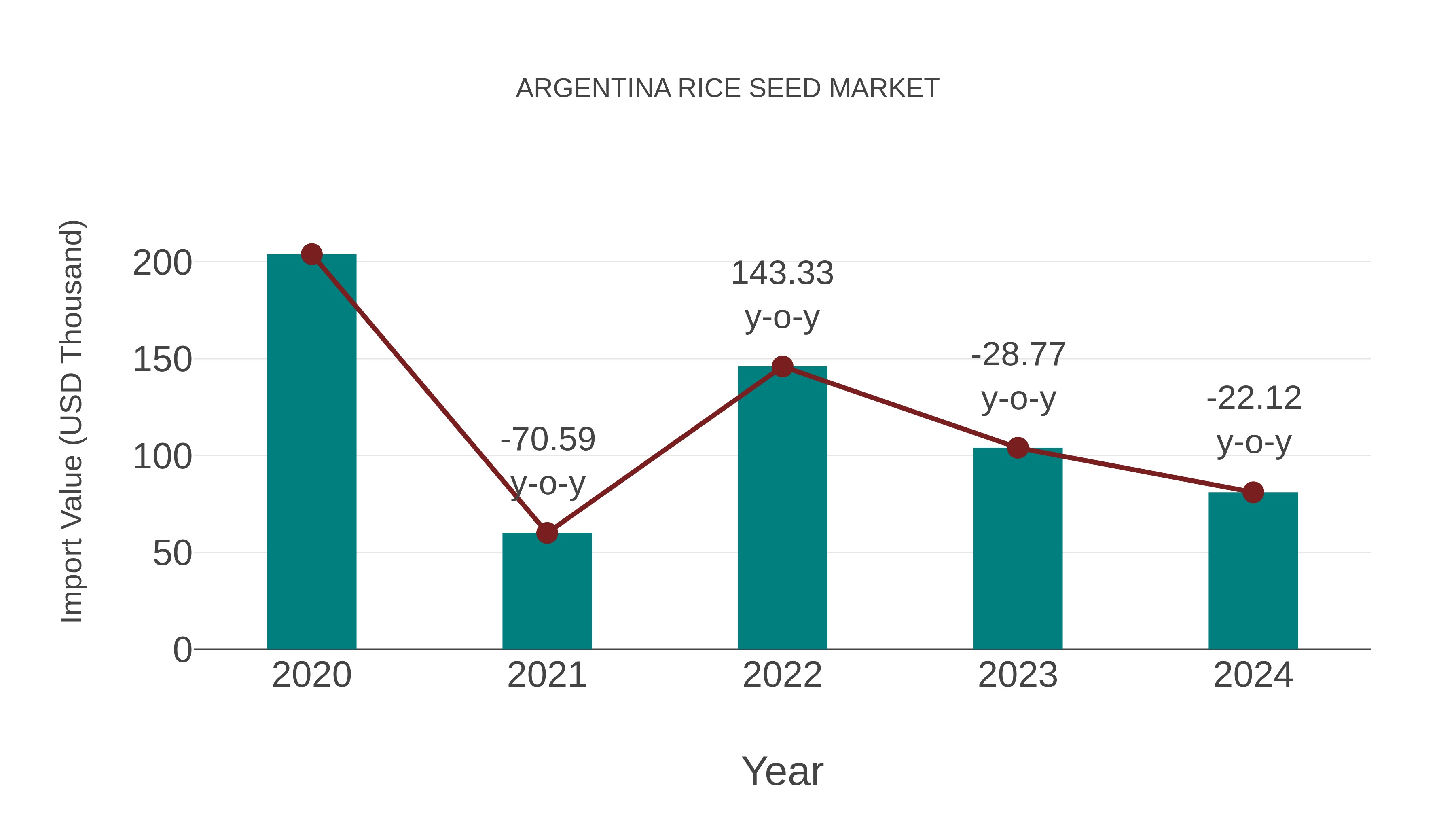
In the Argentina rice seed market, the import trend experienced a decline from 2023 to 2024, with a growth rate of -20.95%. The compound annual growth rate (CAGR) for the period 2020-2024 stood at -21.36%. This significant decrease in imports could be attributed to shifts in demand dynamics or changes in trade policies impacting market stability.
Argentina Rice Seed Market Synopsis
The Argentina Rice Seed Market is a significant segment within the country`s agriculture industry. With a strong focus on rice production in the region, the market is characterized by a variety of seed types including hybrid and conventional seeds. Key players in the market offer a wide range of rice seed varieties tailored to suit different agro-climatic conditions and farmer requirements. The market is driven by factors such as increasing demand for high-yielding rice varieties, technological advancements in seed breeding, and government support for the agriculture sector. Additionally, factors like changing consumer preferences towards healthier food options and sustainable farming practices are shaping the market landscape. Overall, the Argentina Rice Seed Market is poised for growth with opportunities for innovation and development in seed technology.
Argentina Rice Seed Market Trends
The Argentina Rice Seed Market is currently experiencing a growing demand for high-yielding varieties that are resilient to environmental challenges such as drought and diseases. Farmers are increasingly looking for rice seeds that offer better productivity and quality to meet the evolving consumer preferences. Opportunities lie in the development of genetically modified (GM) rice seeds that can enhance yield and quality, as well as in the promotion of sustainable farming practices. Additionally, there is a rising interest in organic and specialty rice varieties, presenting a niche market for premium seeds. Collaborations between seed companies and research institutions to innovate and introduce new technologies in rice seed breeding are key to capitalizing on these trends and opportunities in the Argentina Rice Seed Market.
Argentina Rice Seed Market Challenges
The Argentina Rice Seed Market faces several challenges including increasing competition from foreign seed companies, limited access to advanced biotechnology for seed development, and fluctuating government policies affecting the agriculture sector. Additionally, the prevalence of pests and diseases in rice fields poses a threat to seed quality and productivity. Farmers in Argentina also struggle with access to credit and financing options for purchasing high-quality rice seeds. Climate change and unpredictable weather patterns further exacerbate the challenges faced by the rice seed market in Argentina, impacting crop yields and overall production. To address these challenges, stakeholders in the industry need to invest in research and development, promote sustainable farming practices, and collaborate with government agencies to create a more supportive environment for the rice seed market.
Argentina Rice Seed Market Investment Opportunities
The Argentina Rice Seed Market is primarily driven by factors such as increasing demand for high-yielding rice varieties, technological advancements in seed production, and government initiatives to promote agricultural productivity. Farmers are increasingly adopting hybrid and genetically modified rice seeds to achieve higher yields and better resistance to pests and diseases. Additionally, the rising awareness among farmers about the benefits of using certified rice seeds for improved crop quality and quantity is fueling market growth. Furthermore, the focus on precision agriculture practices and the availability of innovative seed technologies are also contributing to the expansion of the Argentina Rice Seed Market. Overall, these drivers are expected to continue shaping the market dynamics and drive further growth in the coming years.
Argentina Rice Seed Market Government Polices
In Argentina, the government has implemented policies aimed at promoting the development and growth of the rice seed market. These policies include providing subsidies and financial support to rice farmers to encourage the adoption of high-quality rice seeds, promoting research and development in the field of rice seed technology, and implementing regulations to ensure the quality and safety of rice seeds being sold in the market. Additionally, the government has also focused on promoting sustainable agricultural practices among rice farmers to enhance productivity and reduce environmental impact. Overall, the government`s policies in Argentina are geared towards fostering innovation, improving productivity, and ensuring the sustainability of the rice seed market in the country.
Argentina Rice Seed Market Future Outlook
The future outlook for the Argentina Rice Seed Market appears promising, with steady growth projected in the coming years. Factors contributing to this positive trend include increasing demand for high-quality rice varieties, adoption of advanced agricultural practices, and technological innovations in seed breeding. Additionally, favorable government policies supporting the agricultural sector and the country`s position as a major rice producer in South America further bolster the market outlook. Collaborations between seed companies and research institutions to develop improved rice seed varieties tailored to local conditions are also expected to drive market expansion. Overall, the Argentina Rice Seed Market is poised for growth, with opportunities for market players to capitalize on the evolving landscape and meet the demands of the growing agricultural sector.
Key Highlights of the Report:
- Argentina Rice Seed Market Outlook
- Market Size of Argentina Rice Seed Market, 2025
- Forecast of Argentina Rice Seed Market, 2032
- Historical Data and Forecast of Argentina Rice Seed Revenues & Volume for the Period 2022 - 2032F
- Argentina Rice Seed Market Trend Evolution
- Argentina Rice Seed Market Drivers and Challenges
- Argentina Rice Seed Price Trends
- Argentina Rice Seed Porter's Five Forces
- Argentina Rice Seed Industry Life Cycle
- Historical Data and Forecast of Argentina Rice Seed Market Revenues & Volume By Breeding Technology for the Period 2022 - 2032F
- Historical Data and Forecast of Argentina Rice Seed Market Revenues & Volume By Hybrids for the Period 2022 - 2032F
- Historical Data and Forecast of Argentina Rice Seed Market Revenues & Volume By Non-Transgenic Hybrids for the Period 2022 - 2032F
- Historical Data and Forecast of Argentina Rice Seed Market Revenues & Volume By Transgenic Hybrids for the Period 2022 - 2032F
- Historical Data and Forecast of Argentina Rice Seed Market Revenues & Volume By Insect Resistant Hybrids for the Period 2022 - 2032F
- Historical Data and Forecast of Argentina Rice Seed Market Revenues & Volume By Other Traits for the Period 2022 - 2032F
- Argentina Rice Seed Import Export Trade Statistics
- Market Opportunity Assessment By Breeding Technology
- Argentina Rice Seed Top Companies Market Share
- Argentina Rice Seed Competitive Benchmarking By Technical and Operational Parameters
- Argentina Rice Seed Company Profiles
- Argentina Rice Seed Key Strategic Recommendations






































