Argentina Soy Protein Market Growth Rate Analysis (2025 - 2031)
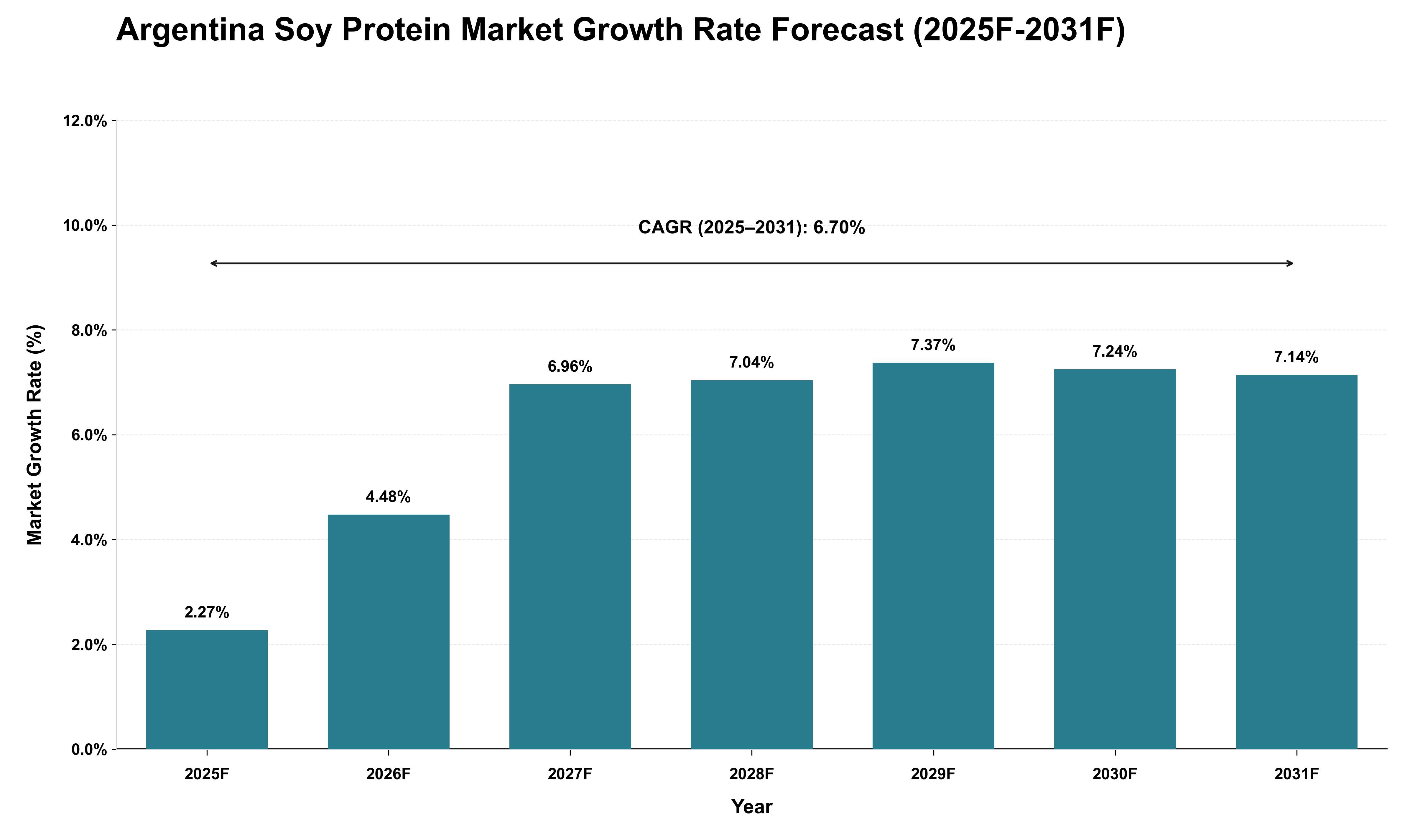
The Argentina soy protein market is poised for robust growth driven by increasing global demand for plant-based protein sources and a shift towards sustainable dietary practices. Between 2025 and 2031, the market will likely experience a compound annual growth rate (CAGR) of 6.70%, reflecting an upward trajectory in consumer preferences for healthier alternatives. The annual growth rates will escalate from 2.27% in 2025 to a peak of 7.37% in 2029, indicating a strengthening momentum as technological advancements enhance production efficiency and product quality. Additionally, Argentina's strategic position as a leading soy producer will mitigate import dependencies, allowing local producers to capitalize on both domestic and international markets. As cyclical trends favor increased health consciousness among consumers, the soy protein sector will benefit from innovations that cater to evolving dietary needs, further solidifying its role in the broader food industry landscape during this forecast period.
Key Highlights of the Report:
- Argentina Soy Protein Market Outlook
- Market Size of Argentina Soy Protein Market, 2025
- Forecast of Argentina Soy Protein Market, 2032
- Historical Data and Forecast of Argentina Soy Protein Revenues & Volume for the Period 2022-2032F
- Argentina Soy Protein Market Trend Evolution
- Argentina Soy Protein Market Drivers and Challenges
- Argentina Soy Protein Price Trends
- Argentina Soy Protein Porter's Five Forces
- Argentina Soy Protein Industry Life Cycle
- Historical Data and Forecast of Argentina Soy Protein Market Revenues & Volume By Type for the Period 2022-2032F
- Historical Data and Forecast of Argentina Soy Protein Market Revenues & Volume By Isolate for the Period 2022-2032F
- Historical Data and Forecast of Argentina Soy Protein Market Revenues & Volume By Concentrate for the Period 2022-2032F
- Historical Data and Forecast of Argentina Soy Protein Market Revenues & Volume By Textured for the Period 2022-2032F
- Historical Data and Forecast of Argentina Soy Protein Market Revenues & Volume By Protein Content for the Period 2022-2032F
- Historical Data and Forecast of Argentina Soy Protein Market Revenues & Volume By High Protein for the Period 2022-2032F
- Historical Data and Forecast of Argentina Soy Protein Market Revenues & Volume By Medium Protein for the Period 2022-2032F
- Historical Data and Forecast of Argentina Soy Protein Market Revenues & Volume By Low Protein for the Period 2022-2032F
- Historical Data and Forecast of Argentina Soy Protein Market Revenues & Volume By Application for the Period 2022-2032F
- Historical Data and Forecast of Argentina Soy Protein Market Revenues & Volume By Food & Beverage for the Period 2022-2032F
- Historical Data and Forecast of Argentina Soy Protein Market Revenues & Volume By Sports Nutrition for the Period 2022-2032F
- Historical Data and Forecast of Argentina Soy Protein Market Revenues & Volume By Nutritional Bars for the Period 2022-2032F
- Historical Data and Forecast of Argentina Soy Protein Market Revenues & Volume By Form for the Period 2022-2032F
- Historical Data and Forecast of Argentina Soy Protein Market Revenues & Volume By Powder for the Period 2022-2032F
- Historical Data and Forecast of Argentina Soy Protein Market Revenues & Volume By Liquid for the Period 2022-2032F
- Historical Data and Forecast of Argentina Soy Protein Market Revenues & Volume By Granules for the Period 2022-2032F
- Historical Data and Forecast of Argentina Soy Protein Market Revenues & Volume By Source for the Period 2022-2032F
- Historical Data and Forecast of Argentina Soy Protein Market Revenues & Volume By Soybeans for the Period 2022-2032F
- Historical Data and Forecast of Argentina Soy Protein Market Revenues & Volume By Non GMO for the Period 2022-2032F
- Historical Data and Forecast of Argentina Soy Protein Market Revenues & Volume By Organic for the Period 2022-2032F
- Argentina Soy Protein Import Export Trade Statistics
- Market Opportunity Assessment By Type
- Market Opportunity Assessment By Protein Content
- Market Opportunity Assessment By Application
- Market Opportunity Assessment By Form
- Market Opportunity Assessment By Source
- Argentina Soy Protein Top Companies Market Share
- Argentina Soy Protein Competitive Benchmarking By Technical and Operational Parameters
- Argentina Soy Protein Company Profiles
- Argentina Soy Protein Key Strategic Recommendations






































