Armenia Edible Oils Market Year-wise Growth Rate (2021-2031F)
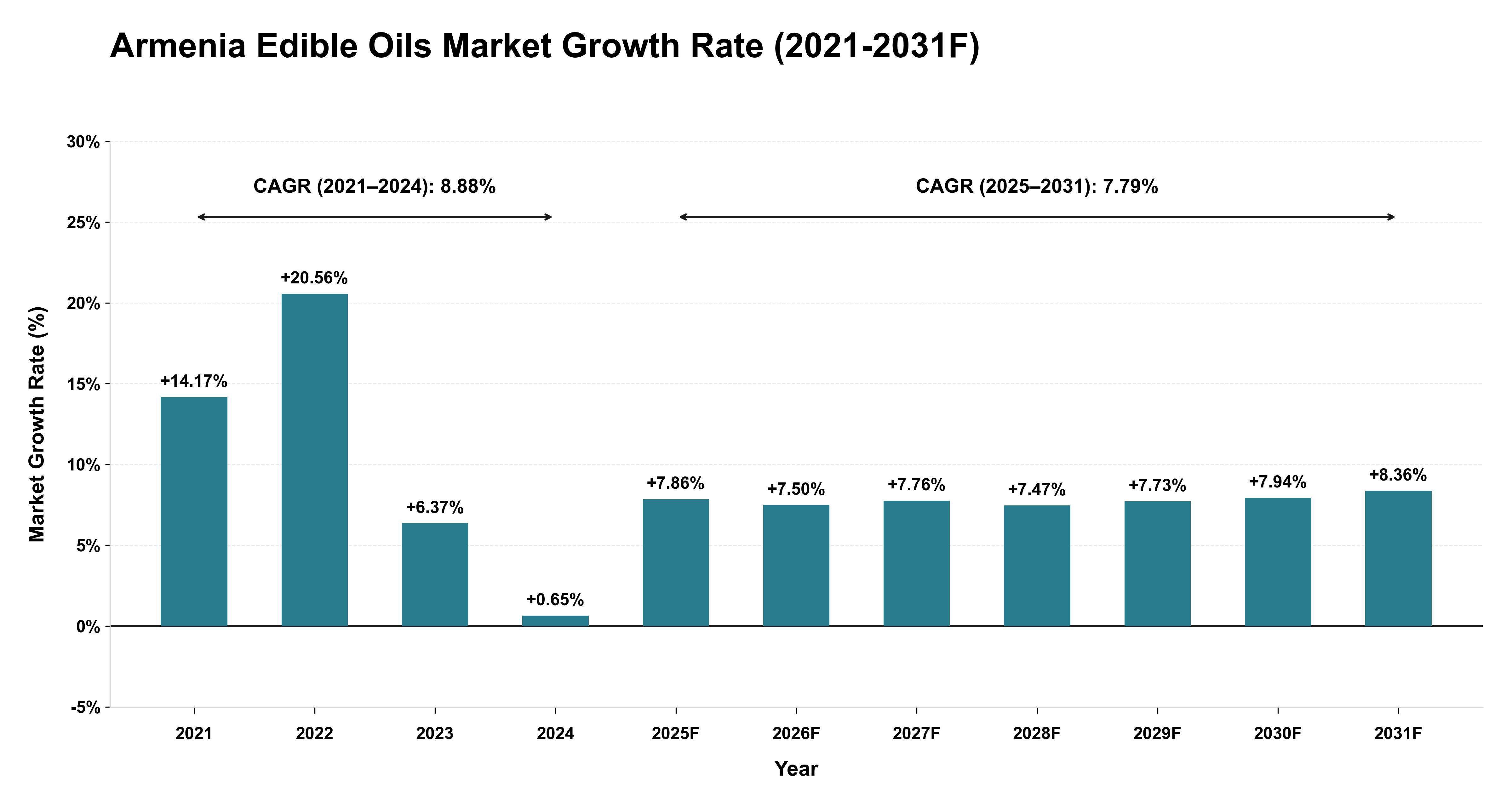
The Armenia Edible Oils Market witnessed robust growth from 2021 to 2024, with an impressive CAGR of 8.88%. This period was marked by a significant surge in demand driven by changing consumer preferences towards healthier cooking oils, technological advancements in oil extraction, and increasing awareness of the health benefits associated with different types of edible oils. However, starting in 2023, the market experienced a slight deceleration due to supply chain disruptions and price fluctuations impacting consumer purchasing power. Looking ahead to 2025-2031, despite a slightly lower forecasted CAGR of 7.79%, the market is expected to stabilize and regain momentum supported by innovations in oil processing technologies, expanding distribution networks, and growing culinary tourism trends that boost demand for specialty oils. The consistent growth trajectory during the forecast period indicates a resilient market adapting to evolving consumer needs and industry dynamics.
Key Highlights of the Report:
- Armenia Edible Oils Market Outlook
- Market Size of Armenia Edible Oils Market, 2024
- Forecast of Armenia Edible Oils Market, 2031
- Historical Data and Forecast of Armenia Edible Oils Revenues & Volume for the Period 2021-2031
- Armenia Edible Oils Market Trend Evolution
- Armenia Edible Oils Market Drivers and Challenges
- Armenia Edible Oils Price Trends
- Armenia Edible Oils Porter`s Five Forces
- Armenia Edible Oils Industry Life Cycle
- Historical Data and Forecast of Armenia Edible Oils Market Revenues & Volume By Type for the Period 2021-2031
- Historical Data and Forecast of Armenia Edible Oils Market Revenues & Volume By Palm Oil for the Period 2021-2031
- Historical Data and Forecast of Armenia Edible Oils Market Revenues & Volume By Soybean Oil for the Period 2021-2031
- Historical Data and Forecast of Armenia Edible Oils Market Revenues & Volume By Sunflower Oil for the Period 2021-2031
- Historical Data and Forecast of Armenia Edible Oils Market Revenues & Volume By Rapeseed Oil for the Period 2021-2031
- Historical Data and Forecast of Armenia Edible Oils Market Revenues & Volume By Olive Oil for the Period 2021-2031
- Historical Data and Forecast of Armenia Edible Oils Market Revenues & Volume By Packaging Type for the Period 2021-2031
- Historical Data and Forecast of Armenia Edible Oils Market Revenues & Volume By Pouches for the Period 2021-2031
- Historical Data and Forecast of Armenia Edible Oils Market Revenues & Volume By Jars for the Period 2021-2031
- Historical Data and Forecast of Armenia Edible Oils Market Revenues & Volume By Cans for the Period 2021-2031
- Historical Data and Forecast of Armenia Edible Oils Market Revenues & Volume By Bottles for the Period 2021-2031
- Historical Data and Forecast of Armenia Edible Oils Market Revenues & Volume By End Use for the Period 2021-2031
- Historical Data and Forecast of Armenia Edible Oils Market Revenues & Volume By Domestic for the Period 2021-2031
- Historical Data and Forecast of Armenia Edible Oils Market Revenues & Volume By Food Service for the Period 2021-2031
- Historical Data and Forecast of Armenia Edible Oils Market Revenues & Volume By Industrial for the Period 2021-2031
- Armenia Edible Oils Import Export Trade Statistics
- Market Opportunity Assessment By Type
- Market Opportunity Assessment By Packaging Type
- Market Opportunity Assessment By End Use
- Armenia Edible Oils Top Companies Market Share
- Armenia Edible Oils Competitive Benchmarking By Technical and Operational Parameters
- Armenia Edible Oils Company Profiles
- Armenia Edible Oils Key Strategic Recommendations






































