Australia Bathroom Linen Market: Import Trend Analysis
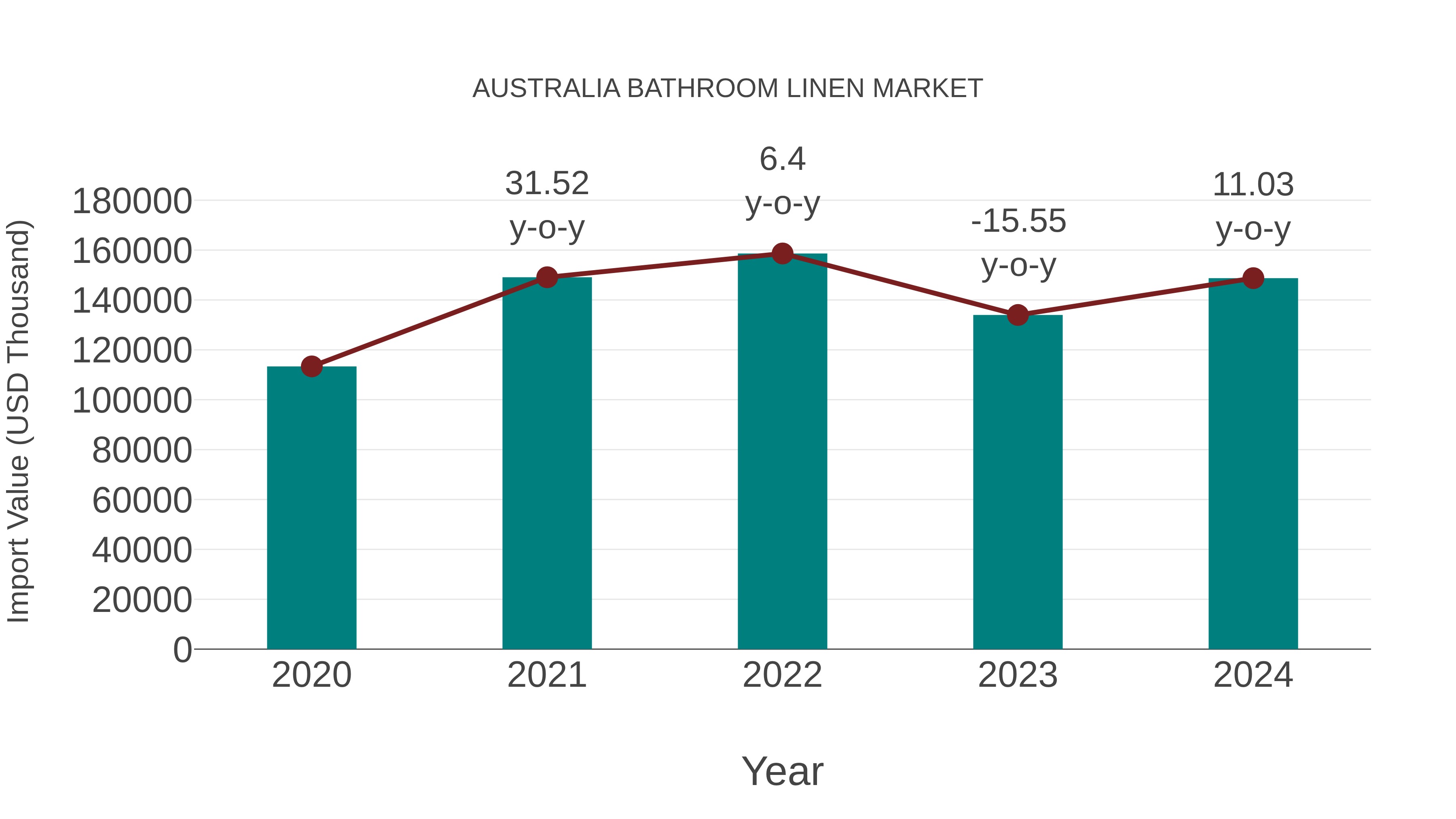
Australia`s import trend for the bathroom linen market showed a notable growth rate of 11.03% from 2023 to 2024, with a compound annual growth rate (CAGR) of 7.03% from 2020 to 2024. This increase in imports can be attributed to a surge in demand for high-quality bathroom linens, reflecting shifting consumer preferences towards premium products in the market.
Australia Bathroom Linen Market Overview
In Australia, the bathroom linen market is driven by demand for towels, bathrobes, shower curtains, and mats for personal hygiene and home decor. Bathroom linen products offer absorbency, softness, and durability, enhancing bathing experiences and bathroom aesthetics, driving demand among consumers and home textile brands.
Drivers of the market
The Australia bathroom linen market is experiencing growth driven by several key factors. One significant driver is the increasing focus on interior decor and home aesthetics among consumers. As bathrooms evolve into personal sanctuaries, there`s a growing demand for high-quality and stylish bathroom linen such as towels, bathrobes, and shower curtains. Moreover, the influence of hospitality trends, including luxury hotel experiences, is shaping consumer expectations, leading to a preference for premium and soft-touch bathroom linen. Additionally, the rise of online retail platforms has expanded access to a diverse range of bathroom linen products, further fueling market growth.
Challenges of the market
Ensuring product quality and meeting consumer expectations for comfort and aesthetics are challenges in the Australia bathroom linen market. Addressing environmental concerns through sustainable sourcing and production practices is crucial for the long-term viability of the linen industry.
Government Policy of the market
The bathroom linen market in Australia provides towels, bathrobes, shower curtains, and other textile products used in bathrooms. Government regulations ensure the safety, quality, and hygiene of bathroom linen products, including standards for materials, production processes, and labeling. Compliance with these regulations is crucial for market participants to maintain consumer trust and meet industry standards. Additionally, government initiatives promoting sustainable textile production and waste reduction may influence market dynamics in the Australia bathroom linen market, driving demand for organic and eco-friendly products.
Key Highlights of the Report:
- Australia Bathroom Linen Market Outlook
- Market Size of Australia Bathroom Linen Market, 2025
- Forecast of Australia Bathroom Linen Market, 2032
- Historical Data and Forecast of Australia Bathroom Linen Revenues & Volume for the Period 2022-2032F
- Australia Bathroom Linen Market Trend Evolution
- Australia Bathroom Linen Market Drivers and Challenges
- Australia Bathroom Linen Price Trends
- Australia Bathroom Linen Porter's Five Forces
- Australia Bathroom Linen Industry Life Cycle
- Historical Data and Forecast of Australia Bathroom Linen Market Revenues & Volume By Product for the Period 2022-2032F
- Historical Data and Forecast of Australia Bathroom Linen Market Revenues & Volume By Bath Towels for the Period 2022-2032F
- Historical Data and Forecast of Australia Bathroom Linen Market Revenues & Volume By Bathrobes for the Period 2022-2032F
- Historical Data and Forecast of Australia Bathroom Linen Market Revenues & Volume By Others for the Period 2022-2032F
- Australia Bathroom Linen Import Export Trade Statistics
- Market Opportunity Assessment By Product
- Australia Bathroom Linen Top Companies Market Share
- Australia Bathroom Linen Competitive Benchmarking By Technical and Operational Parameters
- Australia Bathroom Linen Company Profiles
- Australia Bathroom Linen Key Strategic Recommendations






































