Australia Canned Pineapple Market: Import Trend Analysis
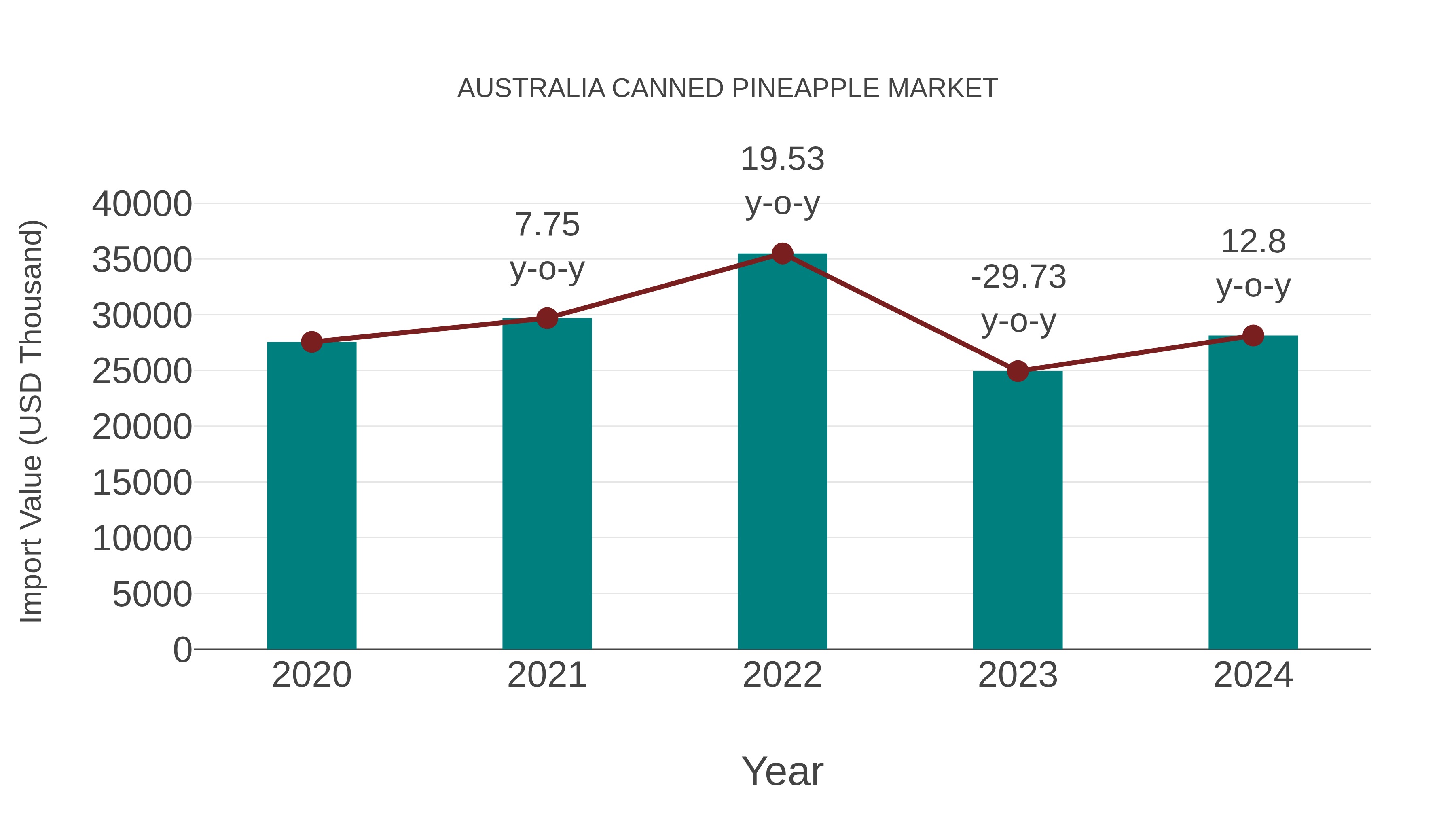
In the Australian canned pineapple market, the import trend exhibited a notable growth rate of 12.8% from 2023 to 2024, with a compound annual growth rate (CAGR) of 0.52% from 2020 to 2024. This upward trajectory in imports could be attributed to shifting consumer preferences towards convenient and preserved food options, indicating a sustained demand for canned pineapple products during this period.
Australia Canned Pineapple Market Overview
Canned pineapple offers a convenient and tropical option for consumers seeking fruit ingredients for desserts, salads, and snacking. In Australia, the canned pineapple market serves consumers, retailers, and foodservice providers, offering a variety of products such as pineapple rings, pineapple chunks, and pineapple pieces in syrup or juice.
Drivers of the market
Australia canned pineapple market experiences growth driven by the tropical fruit`s popularity in various food and beverage applications. Canned pineapple offers convenience, extended shelf life, and versatility in cooking, making it a favorite ingredient in desserts, salads, and savory dishes. Factors such as changing consumer preferences, demand for exotic flavors, and the availability of premium-quality products influence market dynamics. Moreover, marketing efforts highlighting the taste, texture, and nutritional benefits of canned pineapple further stimulate demand in the Australia market.
Challenges of the market
One challenge in the canned pineapple market is sourcing high-quality fruit that meets the standards for canning. Pineapples must be harvested at the right stage of ripeness to ensure sweetness and flavor. Additionally, processing pineapples into canned slices or chunks requires efficient machinery and labor, which can pose logistical challenges.
Government Policy of the market
Government policies in Australia canned pineapple market may include regulations related to fruit processing standards, food safety requirements, and labeling guidelines. Regulations may also address additives usage, packaging materials, and quality control measures.
Key Highlights of the Report:
- Australia Canned Pineapple Market Outlook
- Market Size of Australia Canned Pineapple Market, 2025
- Forecast of Australia Canned Pineapple Market, 2032
- Historical Data and Forecast of Australia Canned Pineapple Revenues & Volume for the Period 2022-2032F
- Australia Canned Pineapple Market Trend Evolution
- Australia Canned Pineapple Market Drivers and Challenges
- Australia Canned Pineapple Price Trends
- Australia Canned Pineapple Porter's Five Forces
- Australia Canned Pineapple Industry Life Cycle
- Historical Data and Forecast of Australia Canned Pineapple Market Revenues & Volume By Products for the Period 2022-2032F
- Historical Data and Forecast of Australia Canned Pineapple Market Revenues & Volume By Pineapple Slices for the Period 2022-2032F
- Historical Data and Forecast of Australia Canned Pineapple Market Revenues & Volume By Pineapple Chunks for the Period 2022-2032F
- Historical Data and Forecast of Australia Canned Pineapple Market Revenues & Volume By Applications for the Period 2022-2032F
- Historical Data and Forecast of Australia Canned Pineapple Market Revenues & Volume By Beverages & Drinks for the Period 2022-2032F
- Historical Data and Forecast of Australia Canned Pineapple Market Revenues & Volume By Bakery & Snacks for the Period 2022-2032F
- Historical Data and Forecast of Australia Canned Pineapple Market Revenues & Volume By Others for the Period 2022-2032F
- Australia Canned Pineapple Import Export Trade Statistics
- Market Opportunity Assessment By Products
- Market Opportunity Assessment By Applications
- Australia Canned Pineapple Top Companies Market Share
- Australia Canned Pineapple Competitive Benchmarking By Technical and Operational Parameters
- Australia Canned Pineapple Company Profiles
- Australia Canned Pineapple Key Strategic Recommendations






































