Australia Desiccated Coconut Market: Import Trend Analysis
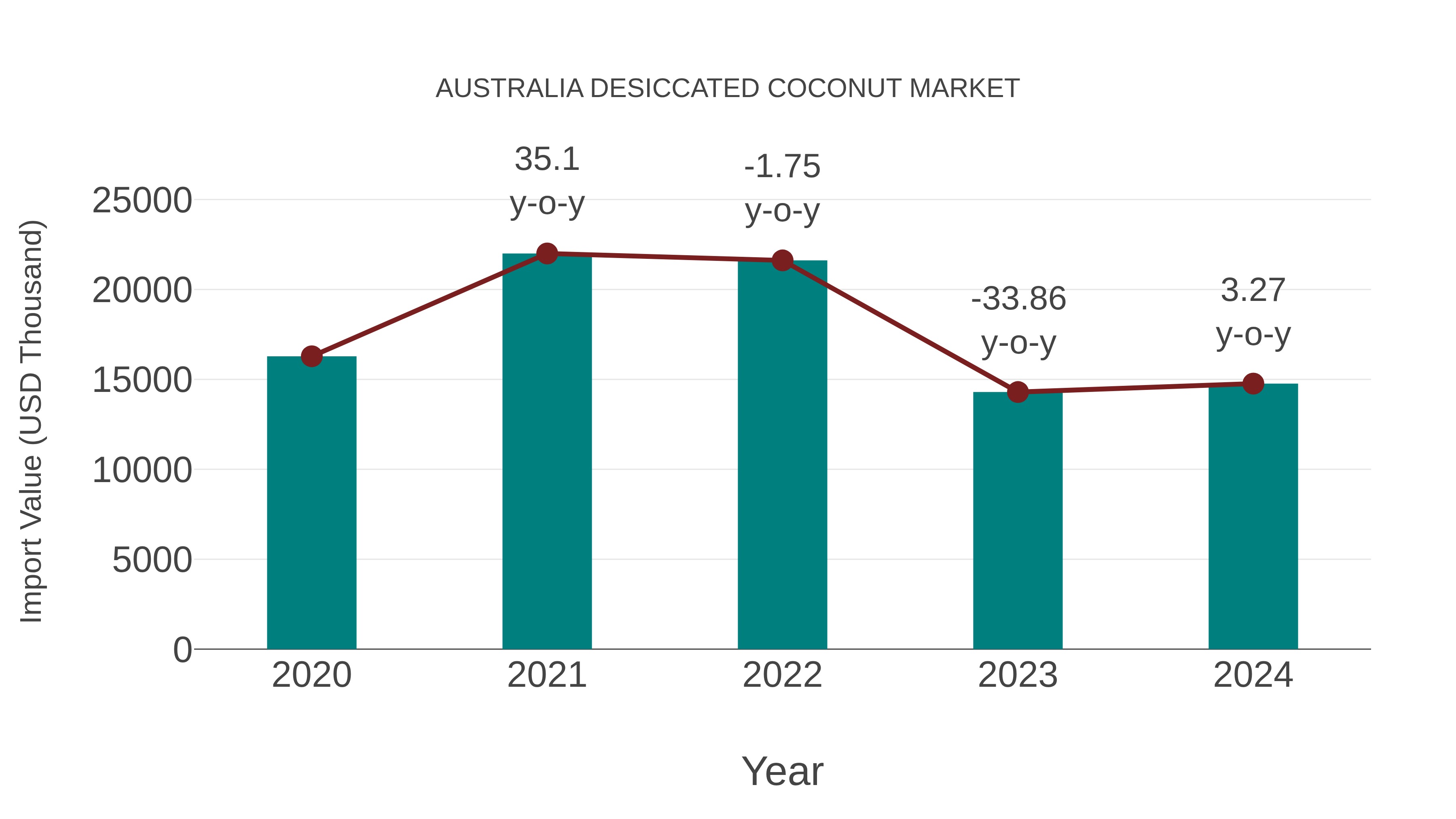
In the Australia desiccated coconut market, the import trend showed a growth rate of 3.27% from 2023 to 2024, contrasting with a compound annual growth rate (CAGR) of -2.42% for 2020-2024. This shift could be attributed to a changing consumer preference towards healthier food options, potentially driving increased demand for desiccated coconut imports.
Australia Desiccated Coconut Market Overview
In Australia, the Desiccated Coconut market is experiencing growth, fueled by the increasing demand for coconut-based ingredients in the food and beverage industry. Desiccated coconut, produced by drying and shredding coconut meat, is widely used in confectionery, bakery, dairy, and snack products for its flavor, texture, and nutritional properties. Factors such as changing consumer dietary preferences, the popularity of plant-based ingredients, and the demand for natural and organic food products are driving market growth. Market players are expanding their product portfolios and investing in sustainable sourcing and production practices to capitalize on the growing demand for desiccated coconut in the Australia market.
Drivers of the market
The Australia Desiccated Coconut market is primarily driven by the growing demand for coconut-based products in the food and beverage industry. Desiccated coconut, made from dried and grated coconut meat, is a versatile ingredient used in various culinary applications such as baking, confectionery, and savory dishes. The rising popularity of coconut-based snacks, desserts, and health foods contributes to market growth. Additionally, increasing consumer preferences for natural and organic ingredients drive the demand for premium-quality desiccated coconut products. Moreover, innovations in processing technologies and product formulations cater to evolving consumer tastes and dietary preferences in Australia. Furthermore, the export potential of Australia desiccated coconut to international markets supports market expansion.
Challenges of the market
In the Australia Desiccated Coconut market, one of the significant challenges is the vulnerability of coconut cultivation to environmental factors and pests. Coconut production is susceptible to climate change-induced weather patterns, including droughts, cyclones, and erratic rainfall, which can affect crop yields and quality. Moreover, pests and diseases such as coconut mites and lethal yellowing disease pose threats to coconut plantations, impacting supply chains for desiccated coconut products. Additionally, market volatility and fluctuations in coconut prices on the global market can pose challenges for local producers and exporters in Australia.
Government Policy of the market
Government policies related to food safety, agricultural production, and trade regulations impact the Australia Desiccated Coconut market. Regulatory agencies such as Food Standards Australia New Zealand (FSANZ) set standards for food labeling, product composition, and microbiological safety to ensure consumer protection and public health. Agricultural policies governing land use, water management, and pest control practices influence coconut cultivation and processing methods. Trade agreements and tariffs affect the importation and exportation of desiccated coconut products, shaping market competition and supply chain dynamics. Government initiatives promoting food security, sustainable agriculture, and economic development may also impact market trends and investment opportunities in the coconut industry.
Key Highlights of the Report:
- Australia Desiccated Coconut Market Outlook
- Market Size of Australia Desiccated Coconut Market, 2025
- Forecast of Australia Desiccated Coconut Market, 2032
- Historical Data and Forecast of Australia Desiccated Coconut Revenues & Volume for the Period 2022-2032F
- Australia Desiccated Coconut Market Trend Evolution
- Australia Desiccated Coconut Market Drivers and Challenges
- Australia Desiccated Coconut Price Trends
- Australia Desiccated Coconut Porter's Five Forces
- Australia Desiccated Coconut Industry Life Cycle
- Historical Data and Forecast of Australia Desiccated Coconut Market Revenues & Volume By Cut Type for the Period 2022-2032F
- Historical Data and Forecast of Australia Desiccated Coconut Market Revenues & Volume By Regular cut for the Period 2022-2032F
- Historical Data and Forecast of Australia Desiccated Coconut Market Revenues & Volume By Fancy cut for the Period 2022-2032F
- Historical Data and Forecast of Australia Desiccated Coconut Market Revenues & Volume By Fat Content for the Period 2022-2032F
- Historical Data and Forecast of Australia Desiccated Coconut Market Revenues & Volume By High fat content for the Period 2022-2032F
- Historical Data and Forecast of Australia Desiccated Coconut Market Revenues & Volume By Low fat content for the Period 2022-2032F
- Historical Data and Forecast of Australia Desiccated Coconut Market Revenues & Volume By Distribution Channel for the Period 2022-2032F
- Historical Data and Forecast of Australia Desiccated Coconut Market Revenues & Volume By Supermarket for the Period 2022-2032F
- Historical Data and Forecast of Australia Desiccated Coconut Market Revenues & Volume By Specialty stores for the Period 2022-2032F
- Historical Data and Forecast of Australia Desiccated Coconut Market Revenues & Volume By Online sales for the Period 2022-2032F
- Historical Data and Forecast of Australia Desiccated Coconut Market Revenues & Volume By Retail stores for the Period 2022-2032F
- Australia Desiccated Coconut Import Export Trade Statistics
- Market Opportunity Assessment By Cut Type
- Market Opportunity Assessment By Fat Content
- Market Opportunity Assessment By Distribution Channel
- Australia Desiccated Coconut Top Companies Market Share
- Australia Desiccated Coconut Competitive Benchmarking By Technical and Operational Parameters
- Australia Desiccated Coconut Company Profiles
- Australia Desiccated Coconut Key Strategic Recommendations






































