Australia Double Glazing Glass Market Size, Share & Growth Rate
The Australia Double Glazing Glass Market was estimated at USD 239 Million in 2025 and is projected to reach USD 281 Million by 2032, growing at a CAGR of 2.3% from 2026 to 2032. This anticipated growth is propelled by the increasing consumer demand for energy efficiency and superior insulation in both residential and commercial properties. Rising energy costs, coupled with government initiatives aimed at promoting sustainable building practices, further underscore the market's upward trajectory.
Australia Double Glazing Glass Market Year-wise Growth Rate and Key Drivers
This graph highlights how the Australia Double Glazing Glass Market has steadily grown over the years, supported by major growth factors.
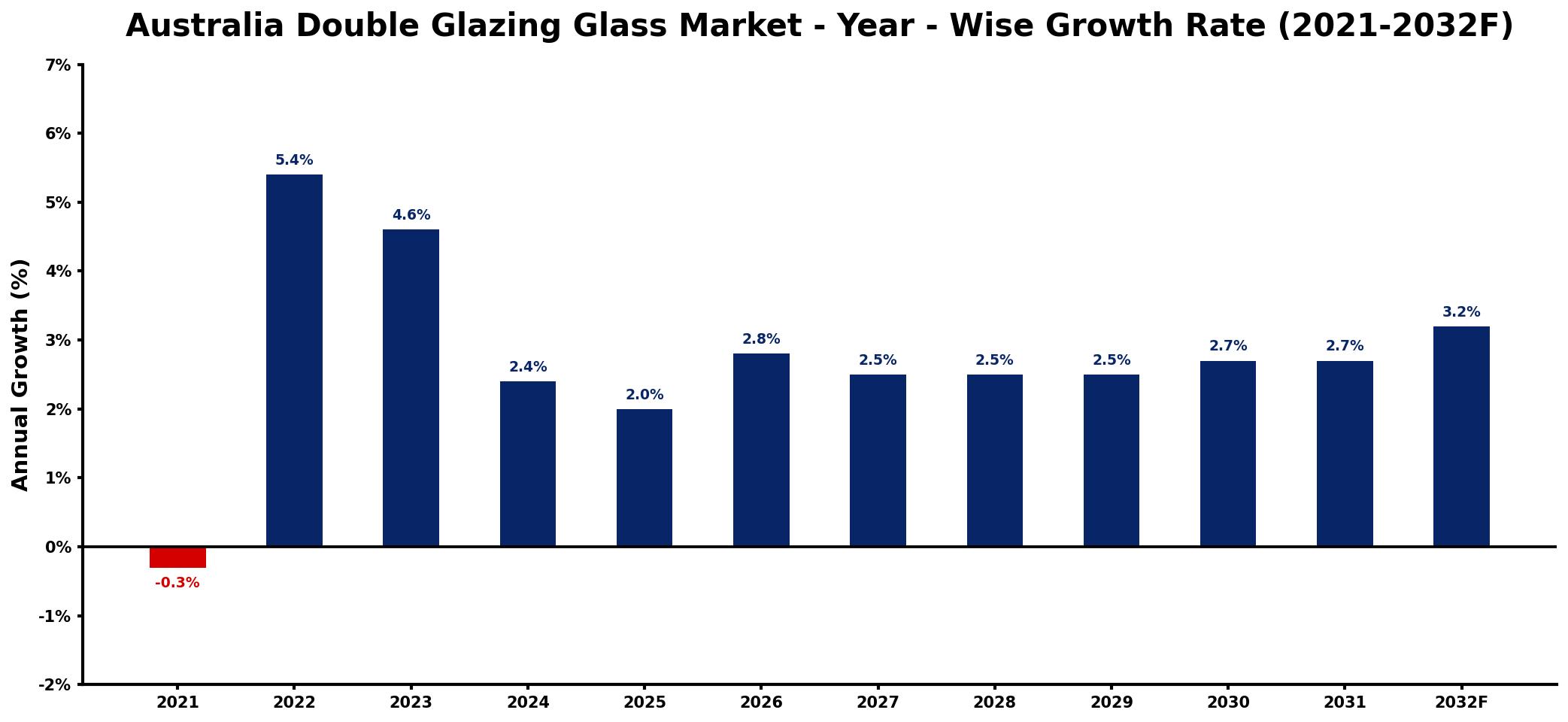
The table below presents the year‑wise growth rates along with the key drivers influencing the market
| Year | Growth Rate | Major Drivers |
| 2021 | -0.3% | decreased construction activity levels |
| 2022 | 5.4% | rise in energy efficiency awareness |
| 2023 | 4.6% | increased residential renovation projects |
| 2024 | 2.4% | growing demand for sustainable solutions |
| 2025 | 2.0% | expansion of green building initiatives |
| 2026 | 2.8% | higher investments in home improvements |
| 2027 | 2.5% | increased urbanization driving demand |
| 2028 | 2.5% | advancements in energy saving technologies |
| 2029 | 2.5% | growing interest in smart homes |
| 2030 | 2.7% | rising consumer awareness on insulation |
| 2031 | 2.7% | increased focus on noise reduction |
| 2032 | 3.2% | growing automotive sector requirements |
Note: Market size estimations and growth projections presented in this report are based on 6Wresearch's proprietary forecasting methodology, utilizing the latest available industry data, government publications, and primary research inputs.
Australia Double Glazing Glass Market Synopsis
In recent years, the Australian double glazing glass market has gained significant momentum. Homeowners and developers increasingly recognize the advantages of double glazing, such as enhanced thermal performance and noise reduction, especially in urban environments. This growing awareness is shaping purchasing decisions across various segments, from residential renovations to new commercial constructions.
Additionally, the Australian governments push for greener buildings has catalyzed investment in energy-efficient solutions like double glazing glass. This shift not only benefits the environment but also provides financial savings for consumers through reduced energy consumption and costs. Consequently, the market is becoming a focal point for both innovation and investment.
Australia Double Glazing Glass Market Key Takeaways
- The market is driven by rising energy costs and increased demand for energy-efficient solutions.
- Government incentives and regulations play a crucial role in promoting double glazing adoption.
- Consumer awareness of the benefits of insulation and soundproofing is growing steadily.
- Upfront costs remain a significant factor influencing purchase decisions among homeowners.
- The market is expected to witness ongoing innovation and product diversification in the coming years.
Evaluation of Restraints in Australia Double Glazing Glass Market
Despite its promising growth, the double glazing glass market in Australia faces several constraints that could impede its full potential. One notable challenge is the need for extensive consumer education regarding the long-term benefits of energy efficiency versus the initial investment costs. Many consumers remain hesitant due to perceived higher upfront expenses compared to traditional glazing solutions. Furthermore, there are aesthetic considerations, particularly in heritage and architectural contexts, where design flexibility is paramount. This duality between functional benefits and aesthetic preferences can limit market penetration, necessitating targeted marketing and educational initiatives to address these concerns effectively.
Australia Double Glazing Glass Market Trends
The market is currently witnessing several trends that are reshaping consumer preferences and product offerings. For instance, the integration of smart technology into double glazing solutions is gaining traction, enabling homeowners to monitor energy efficiency in real-time. Additionally, advancements in manufacturing processes are leading to lighter and more versatile double glazing options, enhancing their applicability in various architectural styles. Sustainability is also a significant theme; eco-friendly materials and production methods are increasingly becoming priorities for both consumers and manufacturers.
Australia Double Glazing Glass Market Opportunities
There are numerous growth opportunities within the Australia double glazing glass market. The demand for energy-efficient building solutions is steadily expanding in both urban and rural areas. Additionally, retrofitting existing buildings with double glazing is becoming a popular choice among homeowners looking to enhance energy performance without significant structural changes. Furthermore, the ongoing focus on sustainable construction methods offers avenues for innovation and collaboration between stakeholders, including builders, suppliers, and policymakers, to advance the markets growth.
Government Initiatives in the Australia Double Glazing Glass Market
The Australian government is actively promoting energy efficiency through various initiatives and regulatory frameworks that encourage the use of double glazing glass in building construction. These policies aim to reduce energy consumption for heating and cooling while supporting the broader goals of sustainability and environmental conservation. Incentives may include grants, rebates, and favorable regulations that make it more economically viable for builders and homeowners to incorporate double glazing solutions into their projects, thus bolstering demand in the market.
Future Insights of the Australia Double Glazing Glass Market
Looking ahead to 2026-2032, the Australia double glazing glass market is poised for continuous growth, driven by escalating energy costs and a persistent push for energy-efficient construction practices. The integration of advanced technologies such as automated shading and enhanced insulation materials is expected to further enhance the appeal of double glazing products. As government initiatives continue to evolve, the market is likely to witness increasing consumer acceptance and adoption of double glazing as a standard building practice, positioning it as a cornerstone of sustainable architectural development in Australia.
Australia Double Glazing Glass Market Latest Developments (2025 - 2026)
The Australian double glazing glass market is currently experiencing a wave of innovation, with manufacturers introducing new products aimed at enhancing energy efficiency and aesthetics. Recent developments indicate an increasing collaboration between construction companies and glazing manufacturers to streamline the integration of double glazing into new builds and renovations. Additionally, there is a notable rise in promotional campaigns to educate consumers on the long-term benefits of double glazing, aiming to break down the barriers of initial cost concerns and aesthetic preferences.
Australia Double Glazing Glass Market - Key Attractiveness of the Report
- 10 Years of Market Numbers
- Historical Data Starting from 2022 to 2025
- Base Year: 2025
- Forecast Data until 2032
- Key Performance Indicators Impacting the Market
- Major Upcoming Developments and Projects
Key Highlights of the Report:
- Australia Double Glazing Glass Market Outlook
- Market Size of Australia Double Glazing Glass Market, 2025
- Forecast of Australia Double Glazing Glass Market, 2032
- Historical Data and Forecast of Australia Double Glazing Glass Revenues & Volume for the Period 2022-2032F
- Australia Double Glazing Glass Market Trend Evolution
- Australia Double Glazing Glass Market Drivers and Challenges
- Australia Double Glazing Glass Price Trends
- Australia Double Glazing Glass Porter's Five Forces
- Australia Double Glazing Glass Industry Life Cycle
- Historical Data and Forecast of Australia Double Glazing Glass Market Revenues & Volume By Material for the Period 2022-2032F
- Historical Data and Forecast of Australia Double Glazing Glass Market Revenues & Volume By Glass for the Period 2022-2032F
- Historical Data and Forecast of Australia Double Glazing Glass Market Revenues & Volume By Frame and Spacer for the Period 2022-2032F
- Historical Data and Forecast of Australia Double Glazing Glass Market Revenues & Volume By Sealant for the Period 2022-2032F
- Historical Data and Forecast of Australia Double Glazing Glass Market Revenues & Volume By Others for the Period 2022-2032F
- Historical Data and Forecast of Australia Double Glazing Glass Market Revenues & Volume By Thickness for the Period 2022-2032F
- Historical Data and Forecast of Australia Double Glazing Glass Market Revenues & Volume By Less than 10mm for the Period 2022-2032F
- Historical Data and Forecast of Australia Double Glazing Glass Market Revenues & Volume By 10mm to 12mm for the Period 2022-2032F
- Historical Data and Forecast of Australia Double Glazing Glass Market Revenues & Volume By More than 12mm for the Period 2022-2032F
- Historical Data and Forecast of Australia Double Glazing Glass Market Revenues & Volume By Application for the Period 2022-2032F
- Historical Data and Forecast of Australia Double Glazing Glass Market Revenues & Volume By Window and Door for the Period 2022-2032F
- Historical Data and Forecast of Australia Double Glazing Glass Market Revenues & Volume By Faade for the Period 2022-2032F
- Historical Data and Forecast of Australia Double Glazing Glass Market Revenues & Volume By Applications for the Period 2022-2032F
- Australia Double Glazing Glass Import Export Trade Statistics
- Market Opportunity Assessment By Material
- Market Opportunity Assessment By Thickness
- Market Opportunity Assessment By Application
- Australia Double Glazing Glass Top Companies Market Share
- Australia Double Glazing Glass Competitive Benchmarking By Technical and Operational Parameters
- Australia Double Glazing Glass Company Profiles
- Australia Double Glazing Glass Key Strategic Recommendations






































