Australia Fencing Market: Import Trend Analysis
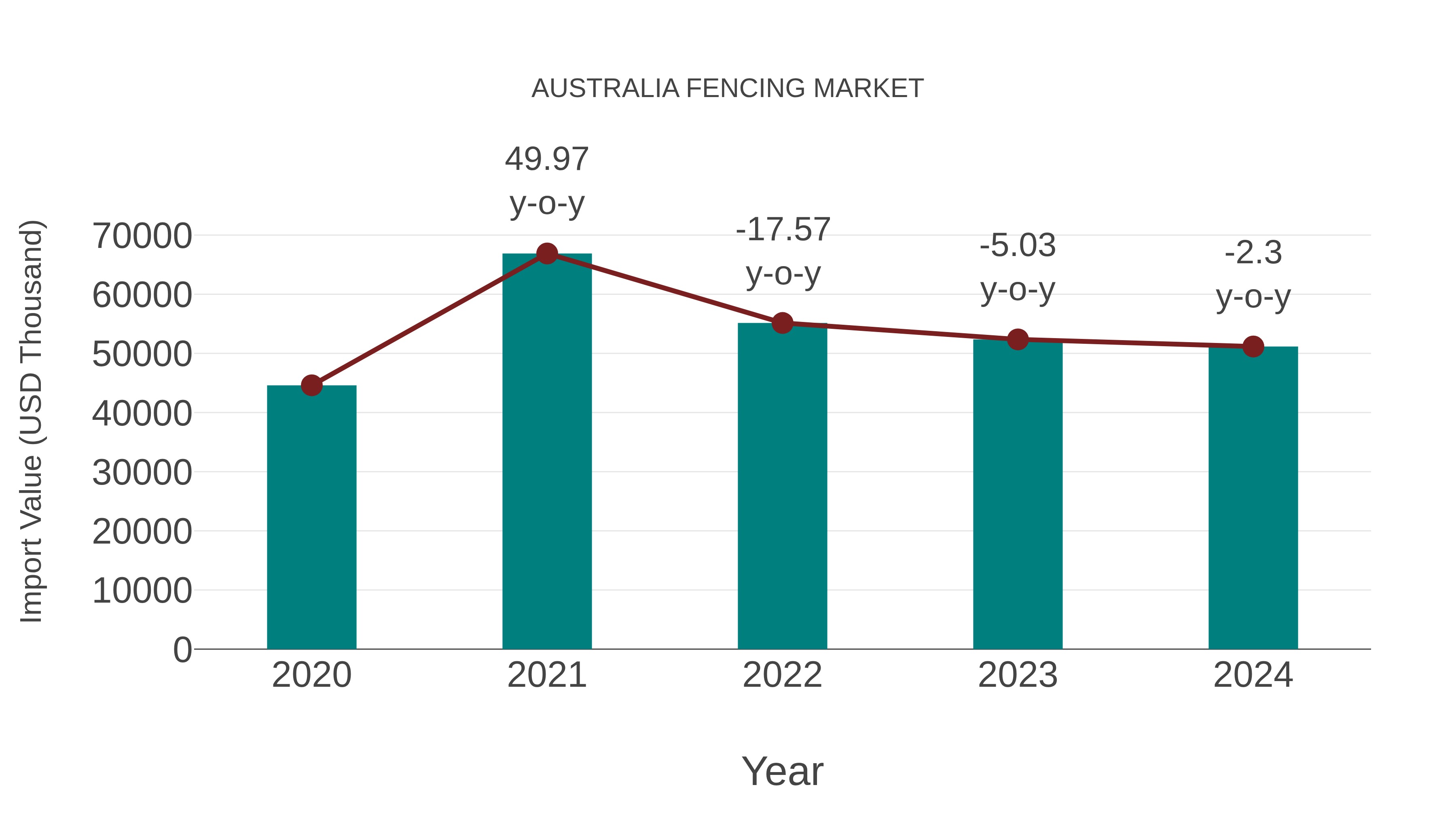
In 2024, Australia`s import trend for the fencing market experienced a -2.3% growth rate compared to the previous year. The compound annual growth rate (CAGR) for imports from 2020 to 2024 stood at 3.49%. This decline in growth could be attributed to a potential shift in demand dynamics or changes in trade policies impacting the market stability.
Topics Covered in Australia Fencing Market Report
Australia Fencing Market Report thoroughly covers the market by material, end users, distribution channel and region. Australia Fencing Market Outlook report provides an unbiased and detailed analysis of the ongoing Australia Fencing Market trends, opportunities/high growth areas, and market drivers. This would help stakeholders devise and align their market strategies according to the current and future market dynamics.
Australia Fencing Market Synopsis
Australia Fencing Market has seen significant growth from 2020 to 2023, largely driven by a surge in construction projects throughout the country. With approximately 5,500 ongoing infrastructure projects valued at $647 billion slated from 2021 to 2026, comprising about 57% of the nation's anticipated construction market during this period, the demand for fencing has been substantial. Moreover, the 2021 Australian Infrastructure Plan, a strategic government initiative aimed at bolstering economic resilience and governance sustainability until 2036, has served to amplify the demand for fencing across diverse sectors. The convergence of burgeoning construction activities and proactive policy measures positions the Australia Fencing Market on a trajectory of continued growth and innovation, with significant implications for the country's economic landscape.
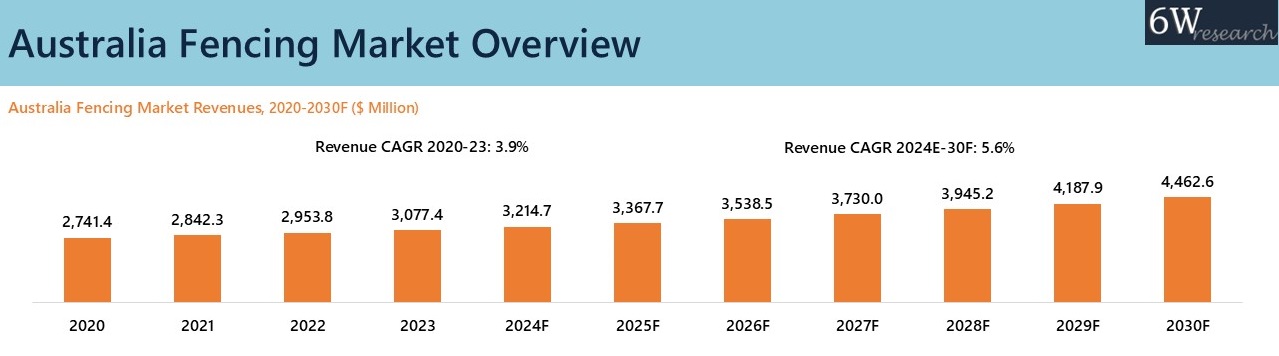
According to 6Wresearch, Australia Fencing Market size is projected to grow at a CAGR of 5.6% during 2024-2030F. The Australia Fencing Market is poised for significant expansion in the forthcoming years, buoyed by multiple factors driving demand across key sectors. One notable driver is the burgeoning investments in the residential sector as there are currently around 24,000 apartments in development, with Melbourne and Sydney contributing to half of these ongoing projects, serving as significant catalysts for market expansion. Further, Australia's Government initiatives, such as the 2021 Infrastructure Plan and the Housing Strategy 2017-2027, which allocates $136 million for Queensland, play a pivotal role in supporting Australia’s fencing market. In addition to the residential sector, rising market trends in both the housing and non-housing segments are poised to further boost the construction sector in Australia. Consequently, a significant portion of the demand for fencing is expected to originate from the upcoming commercial and residential projects in the country.
Market Segmentation by Material
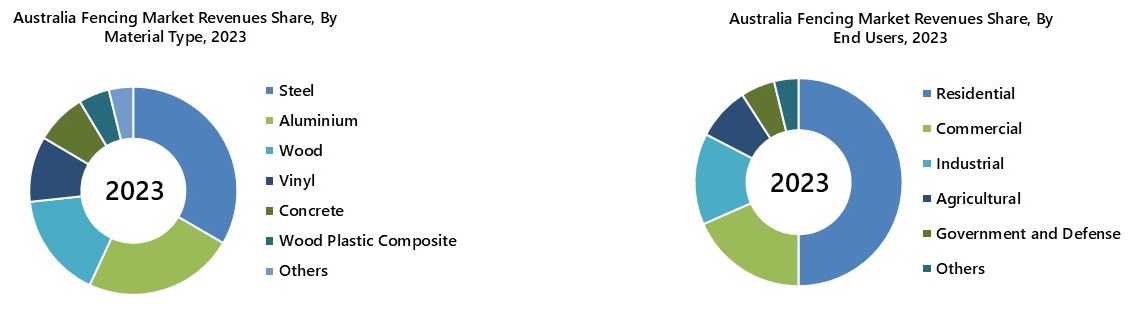
Steel is positioned to secure a significant market share in the industry in the coming years, with booming construction activities in Australia, particularly in infrastructure development projects totaling 5,500, which are expected to take place from 2021-22 to 2025-26 and directly boosting demand for fencing solutions that complement their architectural design and security regulations.
Market Segmentation by End Users
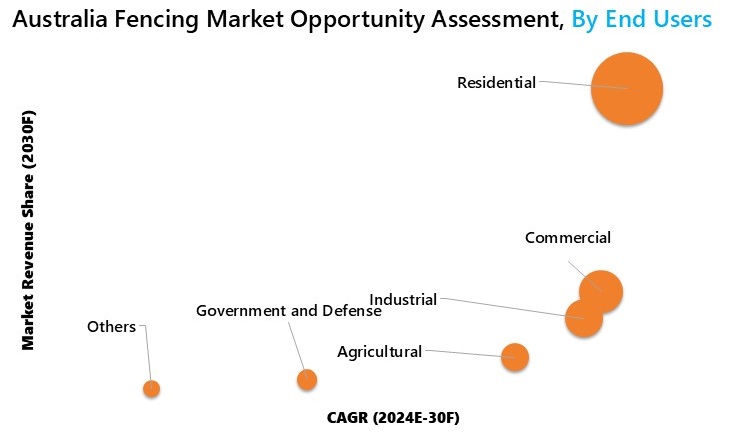
By End User, the residential sector dominates the Australia fencing market, as they often require fencing to delineate boundaries to prioritize privacy and security. This helps in lowering the potential for loss to assets. Further, the increased spending trend on outdoor living spaces also contributes to the growing market.
Market Segmentation by Distribution Channel
By distribution, retail sector dominates the Australia fencing market in present, due to its accessibility and consumer-driven demand. It caters directly to homeowners, DIY enthusiasts, and small contractors who frequently purchase fencing materials for various projects.
Market Segmentation by Region
New South Wales and Victoria regions of Australia are expected to continue dominating the fencing market. They have the highest population densities in Australia, particularly in metropolitan areas like Melbourne and Sydney. The thriving tourism and hospitality industries in these regions require aesthetic and secure fencing solutions for hotels, resorts, and tourist attractions, adding to market demand.
Key Highlights of the Report:
- 10 Years Market Numbers.
- Historical Data Starting from 2025 to 2025.
- Base Year: 2025
- Forecast Data until 2032.
- Key Performance Indicators Impacting the Market.
- Major Upcoming Developments and Projects.






































