Australia Garden Furniture Market Summary
The australia garden furniture market was estimated at USD 141 Million in 2025 and is projected to reach USD 166 Million by 2032, growing at a CAGR of 2.9% from 2026 to 2032.
Australia Garden Furniture Market Year-wise Growth Rate and Key Drivers
This graph highlights how the Australia Garden Furniture Market has steadily grown over the past five years, supported by major growth factors.
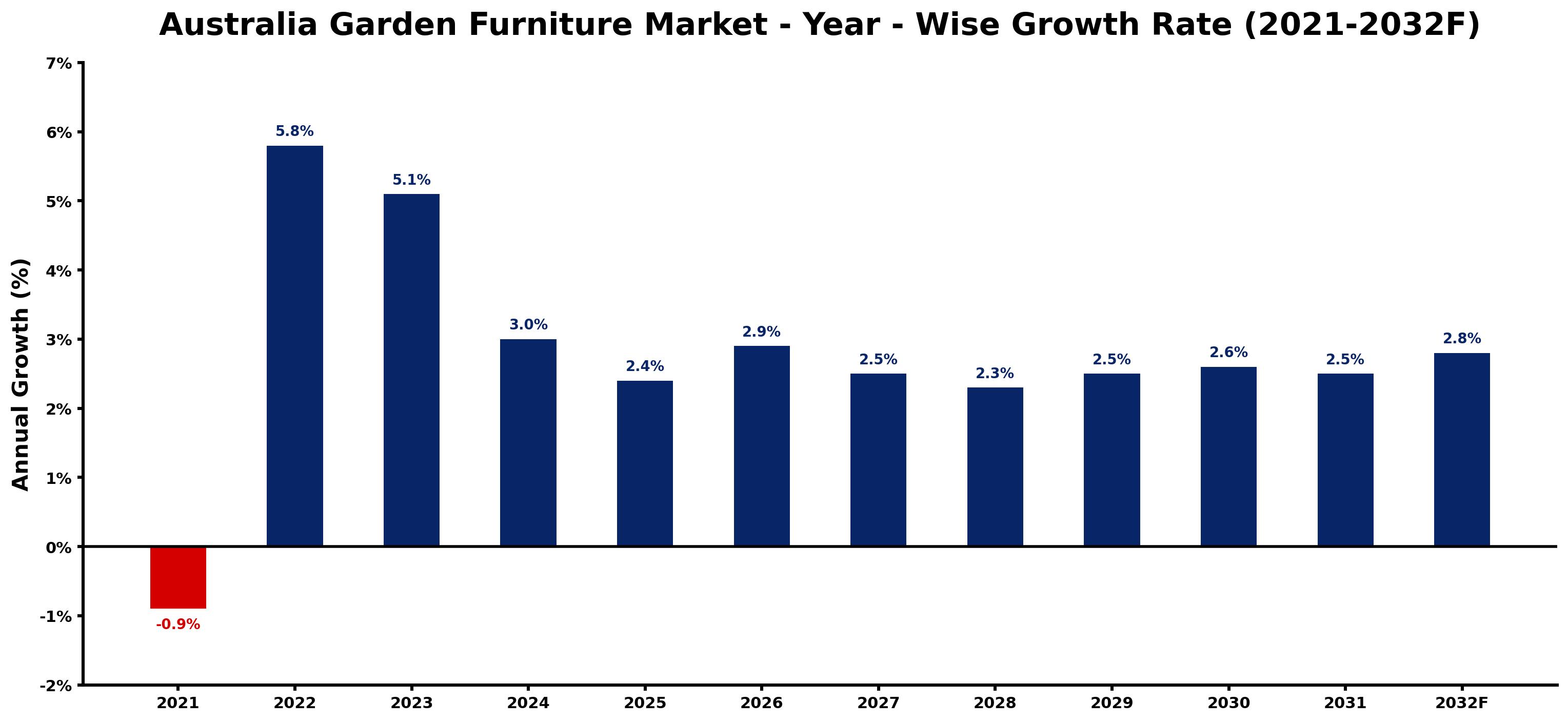
The table below presents the year wise growth rates along with the key drivers influencing the market
| Year | Growth Rate | Major Drivers |
| 2021 | -0.9% | Severe pandemicrelated supply chain disruptions led to decreased availability of garden furniture, hindering sales. |
| 2022 | 5.8% | Sustainable materials gain traction, reflecting environmental concerns among consumers and manufacturers. |
| 2023 | 5.1% | E-commerce platforms facilitate wider access to diverse garden furniture options nationwide. |
| 2024 | 3.0% | Innovative designs emerge, appealing to consumers seeking unique outdoor aesthetics. |
| 2025 | 2.4% | Urbanization trends lead to an uptick in compact and multifunctional garden furniture products. |
| 2026 | 2.9% | Increased disposable income allows consumers to invest more in high-quality outdoor furnishings. |
| 2027 | 2.5% | Regional climate variations drive demand for durable, weather-resistant garden solutions. |
| 2028 | 2.3% | Social media influences consumer preferences, showcasing trending outdoor lifestyle aesthetics. |
| 2029 | 2.5% | Growing interest in gardening fosters purchases of functional and stylish outdoor furniture. |
| 2030 | 2.6% | Health trends promote outdoor activities, enhancing the appeal of comfortable garden seating. |
| 2031 | 2.5% | Collaborations with designers and influencers create buzz around exclusive garden furniture lines. |
| 2032 | 2.8% | Technological integration in furniture design facilitates customization, adapting to consumer preferences. |
Note - Market size estimations and growth projections presented in this report are based on 6Wresearch's advanced forecasting approach, validated with industry datasets as of June 2026.
Australia Garden Furniture Market Synopsis
The Australia Garden Furniture Market is projected to reach 2.9% and witness significant growth during the forecast period (2026-2032). This market encompasses a wide range of outdoor furniture products designed to enhance outdoor living spaces including gardens, patios, and balconies. It includes items such as tables, chairs, loungers, umbrellas, and gazebos, constructed from various materials such as wood, metal, rattan, and plastic. A burgeoning trend toward outdoor entertaining and alfresco dining, alongside a rising interest in residential landscaping, is significantly propelling the demand for garden furniture across Australia.
Australia Garden Furniture Market Growth Drivers
Several key factors are driving the Australia Garden Furniture Market. The growing trend of outdoor entertaining has made garden furniture an essential element in residential and commercial settings.
- The rise in outdoor leisure activities is influencing consumer preferences for durable and stylish garden furniture, enhancing outdoor environments.
- An increasing focus on improving the functionality of outdoor spaces encourages homeowners to invest in well-designed, functional furniture that complements their outdoor living style.
- Weather-resistant and low-maintenance materials are becoming a priority for consumers, further driving the demand for innovative garden furniture solutions.
- Sustainability is a growing concern among consumers, which is motivating manufacturers to develop eco-friendly products from responsibly sourced materials.
- Residential landscaping projects, fueled by consumer interest in creating aesthetically pleasing outdoor environments, are contributing to the increased sales of garden furniture.
Australia Garden Furniture Market Challenges and Restraints
Despite its robust growth, the Australia Garden Furniture Market faces certain challenges that stakeholders must navigate. Weather durability is a significant concern, as furniture must withstand various environmental conditions.
- Quality assurance in materials is essential, as consumers seek long-lasting solutions that can cope with Australia's diverse climate.
- The market is increasingly facing competition from imported products, which may offer lower prices but potentially compromise on quality and sustainability.
- Sustainability concerns are on the rise, leading consumers to demand transparency and responsible sourcing in the materials used for garden furniture.
- Differentiation through unique design features is becoming crucial for manufacturers aiming to capture the attention of environmentally conscious consumers.
- Regulatory compliance regarding safety standards must be adhered to, which can pose additional challenges for product development and marketing.
Australia Garden Furniture Market Government Investment and Initiatives
The Australian government is increasingly focused on regulating the garden furniture sector to uphold safety, quality, and environmental sustainability. Regulatory bodies, including the Australia Competition and Consumer Commission (ACCC), play a pivotal role in establishing guidelines pertinent to the design and materials used in garden furniture.
- Policies are being implemented to ensure products meet safety standards, mitigating risks associated with furniture collapses or hazardous materials.
- The government promotes sustainable forestry practices through regulations on timber sourcing, which aligns with environmental goals.
- Incentives for manufacturers who utilize recycled materials or eco-friendly coatings are being introduced to promote a circular economy.
- Development plans are being rolled out to enhance infrastructure for outdoor living spaces, indirectly boosting the demand for garden furniture.
- Public spending on parks and recreational areas contributes to a favorable environment for garden furniture manufacturers, as these venues require durable outdoor furniture.
Australia Garden Furniture Market Latest Developments (May 2025 - June 2026)
Recent developments in the Australia Garden Furniture Market have underscored a shift towards innovation and consumer-centric designs. During this period, manufacturers have been refining product offerings to cater to changing consumer preferences for sustainability and aesthetics. A notable increase in collaborations between designers and manufacturers has resulted in unique, eco-friendly collections that align with market demands. Moreover, there has been an observable trend towards the integration of technology in outdoor furniture, enhancing functionality and user experience. Industry stakeholders are also focusing on adopting sustainable practices in manufacturing processes to adhere to growing environmental standards and consumer expectations.
Australia Garden Furniture Market - Key Attractiveness of the Report
- 10 Years of Market Numbers
- Historical Data Starting from 2022 to 2025
- Base Year: 2025
- Forecast Data until 2032
- Key Performance Indicators Impacting the Market
- Major Upcoming Developments and Projects
Key Highlights of the Report:
- Australia Garden Furniture Market Outlook
- Market Size of Australia Garden Furniture Market, 2025
- Forecast of Australia Garden Furniture Market, 2032
- Historical Data and Forecast of Australia Garden Furniture Revenues & Volume for the Period 2022-2032F
- Australia Garden Furniture Market Trend Evolution
- Australia Garden Furniture Market Drivers and Challenges
- Australia Garden Furniture Price Trends
- Australia Garden Furniture Porter's Five Forces
- Australia Garden Furniture Industry Life Cycle
- Historical Data and Forecast of Australia Garden Furniture Market Revenues & Volume By Type for the Period 2022-2032F
- Historical Data and Forecast of Australia Garden Furniture Market Revenues & Volume By Tables for the Period 2022-2032F
- Historical Data and Forecast of Australia Garden Furniture Market Revenues & Volume By Chairs for the Period 2022-2032F
- Historical Data and Forecast of Australia Garden Furniture Market Revenues & Volume By Dining Sets for the Period 2022-2032F
- Historical Data and Forecast of Australia Garden Furniture Market Revenues & Volume By Seating Sets for the Period 2022-2032F
- Historical Data and Forecast of Australia Garden Furniture Market Revenues & Volume By Others for the Period 2022-2032F
- Historical Data and Forecast of Australia Garden Furniture Market Revenues & Volume By Application for the Period 2022-2032F
- Historical Data and Forecast of Australia Garden Furniture Market Revenues & Volume By Brand Outlets for the Period 2022-2032F
- Historical Data and Forecast of Australia Garden Furniture Market Revenues & Volume By Franchised Furniture Store for the Period 2022-2032F
- Historical Data and Forecast of Australia Garden Furniture Market Revenues & Volume By E-Commerce for the Period 2022-2032F
- Historical Data and Forecast of Australia Garden Furniture Market Revenues & Volume By Others for the Period 2022-2032F
- Australia Garden Furniture Import Export Trade Statistics
- Market Opportunity Assessment By Type
- Market Opportunity Assessment By Application
- Australia Garden Furniture Top Companies Market Share
- Australia Garden Furniture Competitive Benchmarking By Technical and Operational Parameters
- Australia Garden Furniture Company Profiles
- Australia Garden Furniture Key Strategic Recommendations






































