Australia Hotel Furniture Market Summary
The australia hotel furniture market was estimated at USD 109 Million in 2025 and is projected to reach USD 127 Million by 2032, growing at a CAGR of 2.4% from 2026 to 2032.
Australia Hotel Furniture Market Year-wise Growth Rate and Key Drivers
This graph highlights how the Australia Hotel Furniture Market has steadily grown over the past five years, supported by major growth factors.
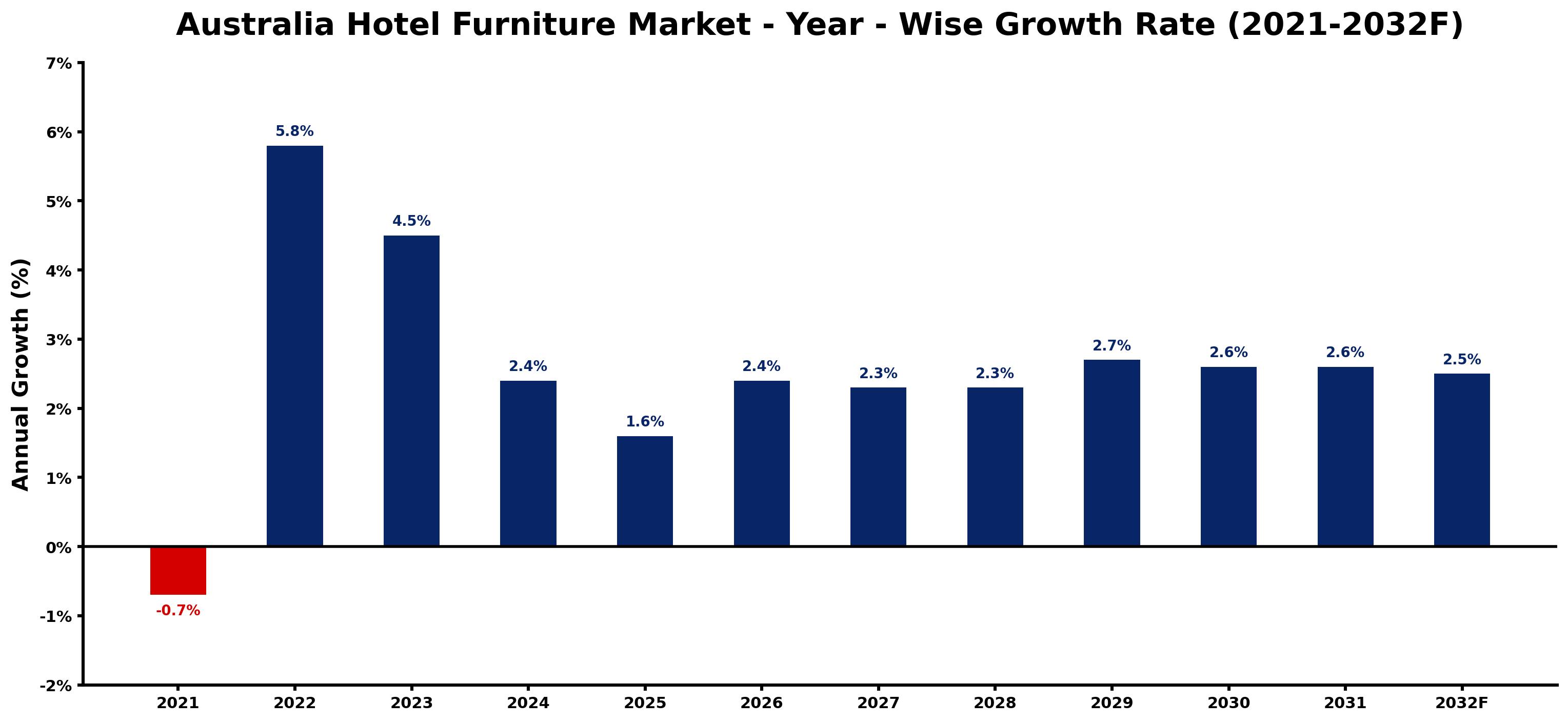
The table below presents the year wise growth rates along with the key drivers influencing the market
| Year | Growth Rate | Major Drivers |
| 2021 | -0.7% | Pandemicrelated restrictions drastically reduced travel demand, significantly impacting hotel occupancy and furniture investments. |
| 2022 | 5.8% | Sustainability initiatives prompted hotels to invest in eco-friendly furniture solutions. |
| 2023 | 4.5% | Rising domestic tourism bolstered demand for unique and locally sourced hotel furnishings. |
| 2024 | 2.4% | Urban redevelopment projects fueled an influx of boutique hotels needing innovative designs. |
| 2025 | 1.6% | Technological integration in hotel management required furniture that supports smart room features. |
| 2026 | 2.4% | A shift towards experiential travel encouraged hotels to enhance aesthetic appeal and comfort. |
| 2027 | 2.3% | Increased competition among hoteliers led to greater emphasis on differentiated guest experiences. |
| 2028 | 2.3% | Construction pipelines for luxury accommodations created significant opportunities for upscale furniture suppliers. |
| 2029 | 2.7% | Corporate partnerships in event hosting influenced the demand for multifunctional furniture arrangements. |
| 2030 | 2.6% | Rising appeal of wellness tourism drove investments in furniture promoting relaxation and health. |
| 2031 | 2.6% | Cultural events and festivals increased the need for adaptable furniture solutions in hotels. |
| 2032 | 2.5% | The focus on remote work necessitated the creation of business-friendly furniture configurations. |
Note - Market size estimations and growth projections presented in this report are based on 6Wresearch's advanced forecasting approach, validated with industry datasets as of June 2026.
Australia Hotel Furniture Market Synopsis
The Australia Hotel Furniture Market is projected to reach 2.4% and witness significant growth during the forecast period (2026-2032). This expansion is primarily fueled by the burgeoning hospitality sector, an increase in tourism, and ongoing hotel refurbishment initiatives. Hotel furniture includes an array of products from guest room furnishings to outdoor settings, all aimed at enhancing the overall guest experience. As trends evolve towards sustainability and bespoke designs, manufacturers are responding with customizable solutions tailored to the diverse needs of hotel operators.
Australia Hotel Furniture Market Growth Drivers
The growth of the Australia Hotel Furniture Market can be attributed to several key drivers. First, a continuous rise in tourism numbers leads to higher hotel occupancy rates, subsequently increasing demand for hotel furniture:
- Rising international and domestic travel is elevating the number of guests staying in Australian hotels.
- Increasing investment in the hospitality sector is prompting hotels to refurbish and upgrade their furniture offerings.
- Consumer preferences are shifting towards unique and comfortable accommodations, creating a demand for tailored furniture solutions.
- The emergence of boutique hotels and luxury resorts emphasizes the need for high-quality, distinctive furniture.
- Trends towards sustainable practices are motivating hoteliers to seek eco-friendly materials and design options, driving innovation within the market.
Australia Hotel Furniture Market Challenges and Restraints
Despite the positive growth trajectory, the Australia Hotel Furniture Market faces several challenges that can hinder its potential. These challenges include:
- Meeting diverse design aesthetics can create obstacles for manufacturers in maintaining brand standards while satisfying customer demands.
- Durability requirements for hotel furniture need to be addressed, particularly in high-traffic areas that experience significant wear.
- The competitive landscape is intensifying, with both local and international players vying for market share.
- Sustainability concerns are becoming increasingly important, necessitating transparency in sourcing materials to appeal to environmentally conscious consumers.
- Economic fluctuations may impact hotel investment budgets, affecting the overall demand for new furniture and renovations.
Australia Hotel Furniture Market Trends and Opportunities
The Australia Hotel Furniture Market is characterized by dynamic trends that present numerous opportunities for growth. Noteworthy trends include:
- Increased focus on smart furniture integration, offering enhanced guest experiences through technology.
- Growing interest in wellness-oriented hotel environments, requiring furniture that promotes relaxation and comfort.
- The rise of eco-conscious consumerism is driving demand for furniture made from sustainable materials, presenting opportunities for market differentiation.
- Emerging design trends often draw inspiration from regional aesthetics, enabling hotels to offer unique local experiences.
- Strategic partnerships between furniture manufacturers and hospitality groups may accelerate innovation and streamline product offerings.
Australia Hotel Furniture Market Government Investment and Initiatives
Government investment and policy initiatives play an essential role in shaping the Australia Hotel Furniture Market. The Australian government has introduced various measures aimed at supporting the hospitality and tourism sectors:
- Regulatory bodies, such as the Australia Competition and Consumer Commission (ACCC), enforce consumer protection laws that impact furniture quality and safety standards.
- Government-led initiatives promote sustainable practices within the hospitality sector, encouraging the use of eco-friendly materials in hotel furniture design.
- Public investment in tourism infrastructure may indirectly benefit the hotel furniture market by increasing the overall attractiveness of destinations.
- Development plans that focus on the refurbishment of existing hotels often include considerations for upgrading furniture, enhancing the market demand.
- Education campaigns initiated by the government aim to raise awareness about the importance of sustainability, influencing purchasing habits within the hospitality industry.
Australia Hotel Furniture Market Latest Developments (May 2025 - June 2026)
Recent developments in the Australia Hotel Furniture Market highlight a shift towards innovative and sustainable practices. The market is witnessing an increased emphasis on the integration of technology in furniture design, responding to the demand for smart hotel environments. In addition, there is a growing trend towards bespoke furniture solutions as hotels look to create unique identities and experiences that resonate with their guests. The focus on eco-friendly materials and processes has gained traction, driven by consumer preferences and regulatory pressures. Furthermore, significant refurbishment projects are underway across various hospitality segments, reflecting a broader commitment to enhancing guest experiences through upgraded furniture.
Australia Hotel Furniture Market - Key Attractiveness of the Report
- 10 Years of Market Numbers
- Historical Data Starting from 2022 to 2025
- Base Year: 2025
- Forecast Data until 2032
- Key Performance Indicators Impacting the Market
- Major Upcoming Developments and Projects
Key Highlights of the Report:
- Australia Hotel Furniture Market Outlook
- Market Size of Australia Hotel Furniture Market, 2025
- Forecast of Australia Hotel Furniture Market, 2032
- Historical Data and Forecast of Australia Hotel Furniture Revenues & Volume for the Period 2022-2032F
- Australia Hotel Furniture Market Trend Evolution
- Australia Hotel Furniture Market Drivers and Challenges
- Australia Hotel Furniture Price Trends
- Australia Hotel Furniture Porter's Five Forces
- Australia Hotel Furniture Industry Life Cycle
- Historical Data and Forecast of Australia Hotel Furniture Market Revenues & Volume By Product Types for the Period 2022-2032F
- Historical Data and Forecast of Australia Hotel Furniture Market Revenues & Volume By Table and Chairs for the Period 2022-2032F
- Historical Data and Forecast of Australia Hotel Furniture Market Revenues & Volume By Hotel Beds for the Period 2022-2032F
- Historical Data and Forecast of Australia Hotel Furniture Market Revenues & Volume By Hotel Casegoods for the Period 2022-2032F
- Historical Data and Forecast of Australia Hotel Furniture Market Revenues & Volume By Other for the Period 2022-2032F
- Historical Data and Forecast of Australia Hotel Furniture Market Revenues & Volume By Applications for the Period 2022-2032F
- Historical Data and Forecast of Australia Hotel Furniture Market Revenues & Volume By Business Hotel for the Period 2022-2032F
- Historical Data and Forecast of Australia Hotel Furniture Market Revenues & Volume By Luxury Hotel for the Period 2022-2032F
- Historical Data and Forecast of Australia Hotel Furniture Market Revenues & Volume By Boutique Hotel for the Period 2022-2032F
- Historical Data and Forecast of Australia Hotel Furniture Market Revenues & Volume By Other for the Period 2022-2032F
- Australia Hotel Furniture Import Export Trade Statistics
- Market Opportunity Assessment By Product Types
- Market Opportunity Assessment By Applications
- Australia Hotel Furniture Top Companies Market Share
- Australia Hotel Furniture Competitive Benchmarking By Technical and Operational Parameters
- Australia Hotel Furniture Company Profiles
- Australia Hotel Furniture Key Strategic Recommendations






































