Australia Manganese Iodide Market: Import Trend Analysis
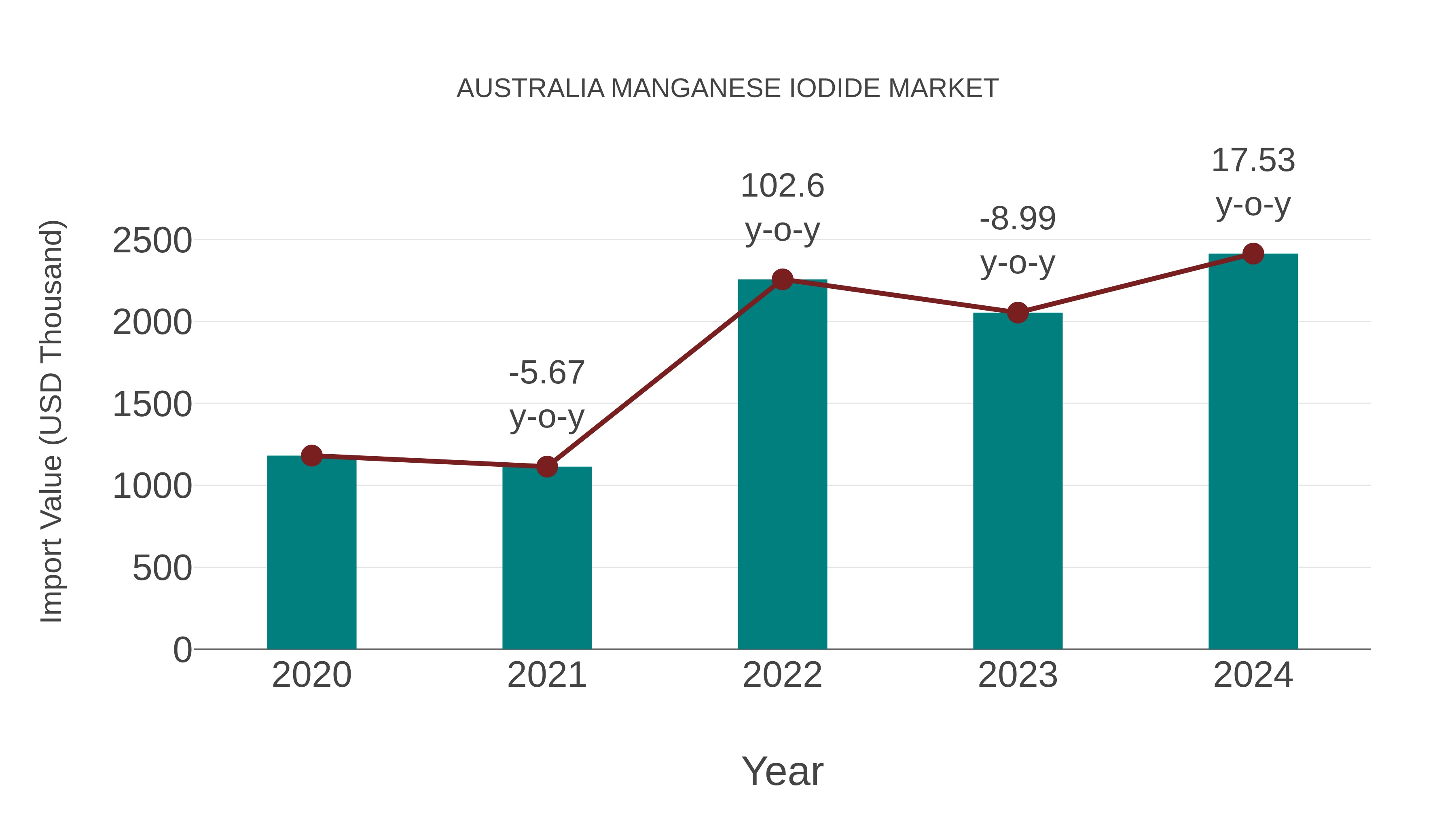
Australia`s import trend for manganese iodide in 2024 showed a notable growth rate of 17.53% compared to 2023, with a compound annual growth rate (CAGR) of 19.57% for the period 2020-2024. This uptrend in imports can be attributed to a consistent demand shift towards manganese iodide in various industries, indicating sustained market stability and a strong import momentum during the period.
Australia Manganese Iodide Market Overview
The manganese iodide market in Australia serves niche applications in chemical synthesis, pharmaceuticals, and research laboratories. Manganese iodide is used as a catalyst, reagent, and in the production of specialty chemicals. Market dynamics are influenced by factors such as research and development activities, regulatory approvals for pharmaceuticals, and advancements in chemical synthesis methods.
Drivers of the market
The manganese iodide market in Australia is influenced by factors such as the growing demand from the pharmaceutical and chemical industries, advancements in organic synthesis techniques, and the increasing focus on research and development. Manganese iodide is used as a chemical reagent in various organic synthesis reactions, including pharmaceutical intermediates, agrochemicals, and specialty chemicals. The expanding pharmaceutical sector, coupled with the rising investments in drug discovery and development, drives market growth. Moreover, the demand for high-purity manganese iodide for laboratory and industrial applications further stimulates market expansion.
Challenges of the market
The manganese iodide market in Australia encounters challenges related to limited market demand, production costs, and regulatory constraints. Manganese iodide, used in chemical synthesis and pharmaceutical applications, faces limited market demand due to niche applications and competition from alternative iodine compounds. Moreover, production costs associated with sourcing and processing raw materials, as well as meeting quality control standards, pose challenges for manufacturers to maintain profitability and competitiveness in the market. Additionally, regulatory requirements for product purity, safety, and handling further add complexity to the market landscape, influencing production practices and market positioning for manganese iodide suppliers.
Government Policy of the market
Government policies in Australia regulate the importation, distribution, and use of chemical substances like manganese iodide to ensure public safety and environmental protection. Agencies such as the Australia Industrial Chemicals Introduction Scheme (AICIS) oversee compliance with chemical safety standards and assess the risks associated with industrial chemicals. Additionally, government initiatives to promote research and innovation in chemical manufacturing may influence market opportunities for manganese iodide producers and users.
Key Highlights of the Report:
- Australia Manganese Iodide Market Outlook
- Market Size of Australia Manganese Iodide Market, 2025
- Forecast of Australia Manganese Iodide Market, 2032
- Historical Data and Forecast of Australia Manganese Iodide Revenues & Volume for the Period 2022-2032F
- Australia Manganese Iodide Market Trend Evolution
- Australia Manganese Iodide Market Drivers and Challenges
- Australia Manganese Iodide Price Trends
- Australia Manganese Iodide Porter's Five Forces
- Australia Manganese Iodide Industry Life Cycle
- Historical Data and Forecast of Australia Manganese Iodide Market Revenues & Volume By Application for the Period 2022-2032F
- Historical Data and Forecast of Australia Manganese Iodide Market Revenues & Volume By For CVD / ALD for the Period 2022-2032F
- Historical Data and Forecast of Australia Manganese Iodide Market Revenues & Volume By For Lighting for the Period 2022-2032F
- Historical Data and Forecast of Australia Manganese Iodide Market Revenues & Volume By Other for the Period 2022-2032F
- Historical Data and Forecast of Australia Manganese Iodide Market Revenues & Volume By Type for the Period 2022-2032F
- Historical Data and Forecast of Australia Manganese Iodide Market Revenues & Volume By 99.5% Manganese Iodide for the Period 2022-2032F
- Historical Data and Forecast of Australia Manganese Iodide Market Revenues & Volume By 99.95% Manganese Iodide for the Period 2022-2032F
- Historical Data and Forecast of Australia Manganese Iodide Market Revenues & Volume By 99.999% Manganese Iodide for the Period 2022-2032F
- Australia Manganese Iodide Import Export Trade Statistics
- Market Opportunity Assessment By Application
- Market Opportunity Assessment By Type
- Australia Manganese Iodide Top Companies Market Share
- Australia Manganese Iodide Competitive Benchmarking By Technical and Operational Parameters
- Australia Manganese Iodide Company Profiles
- Australia Manganese Iodide Key Strategic Recommendations






































