Australia Omega 3 Ingredients Market: Import Trend Analysis
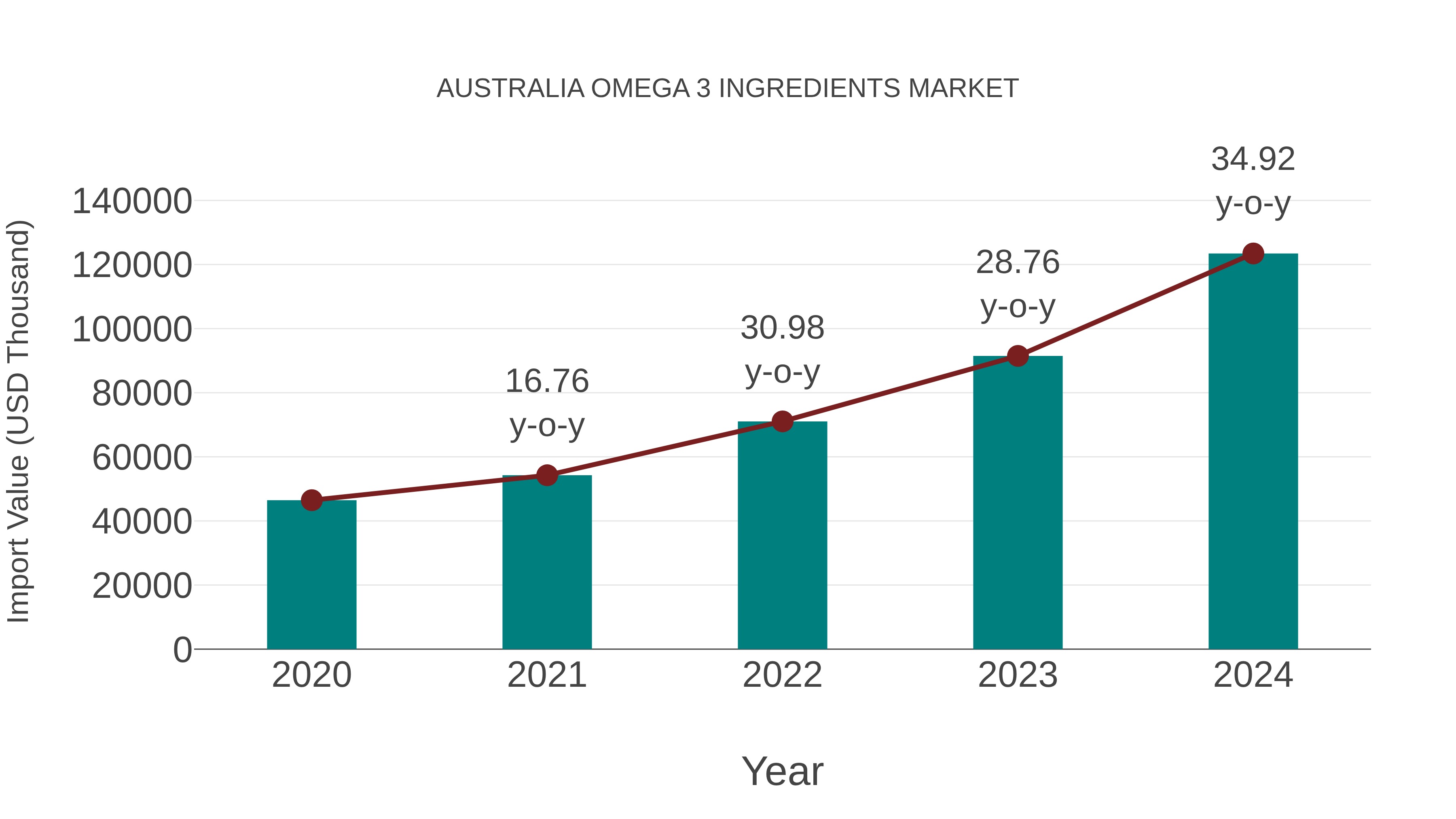
Australia`s import momentum for omega 3 ingredients in 2024 surged with a growth rate of 34.92%, marking a notable increase from the 27.67% compound annual growth rate observed from 2020 to 2023. This robust uptrend can be attributed to a significant demand shift towards health and wellness products, driving the market`s stability and resilience during this period.
Australia Omega 3 Ingredients Market Overview
The Omega-3 ingredients market in Australia is expanding as the demand for high-quality omega-3 components for various health applications increases. These ingredients are primarily derived from fish oils, algae, and other marine sources and are used in a wide range of industries, from pharmaceuticals to functional foods. The increasing awareness about the health benefits of omega-3 fatty acids, particularly for cardiovascular and cognitive health, has driven demand in both the retail and B2B markets. Additionally, omega-3s are gaining popularity in the nutraceutical and dietary supplement sectors, with consumers actively seeking out natural products to support long-term wellness. The growing trend of clean, sustainable sourcing, along with innovations in omega-3 encapsulation technologies, is expected to bolster the market`s growth. The sector also faces pressure to ensure traceability and sustainability in sourcing, which is influencing the development of more eco-friendly omega-3 ingredients.
Trends of the market
The omega-3 ingredients market in Australia is experiencing significant growth, driven by the increasing consumer demand for products that support cardiovascular and cognitive health. Omega-3 fatty acids are being incorporated into a broad range of consumer products, including functional foods, dietary supplements, and animal feed. The rising awareness of the health benefits of omega-3s, coupled with an increasing preference for natural and plant-based sources of omega-3s, is propelling market growth. Innovations in ingredient sourcing, such as algae-derived omega-3s, are also supporting the market`s expansion. As consumers become more health-conscious and seek out supplements to improve their overall well-being, the demand for omega-3 ingredients across various industries is expected to continue rising.
Challenges of the market
The omega-3 ingredients market in Australia faces volatility due to dependency on marine sources affected by overfishing and climate change. Plant-based alternatives like algae oil offer promise but are expensive and not yet mainstream. Regulatory compliance with food and pharmaceutical standards adds significant overhead. Maintaining stability during storage and transportation is a persistent technical issue. Price-sensitive consumers often opt for cheaper, lower-quality products, undermining market growth for premium-grade omega-3s. Competition from global markets, especially Asia and North America, forces Australian suppliers to continually innovate. Rising demand for vegan and sustainably sourced options adds pressure for costly reformulation and certification.
Investment opportunities in the Market
The omega-3 ingredients market in Australia is experiencing growth, driven by applications in food, pharmaceuticals, and nutraceuticals. Investing in the extraction and purification of omega-3s from sources like fish oil and algae can supply various industries. Developing sustainable sourcing methods aligns with environmental concerns and consumer preferences. Establishing partnerships with manufacturers across sectors can diversify revenue streams. As the health benefits of omega-3s gain recognition, the demand for high-quality ingredients is set to rise, presenting a lucrative investment landscape.
Government Policy of the market
The omega-3 ingredients market in Australia is supported by policies that balance industry growth with public health outcomes. Omega-3 ingredients used across food, beverage, and supplement sectors must comply with standards from FSANZ and the TGA. The government actively monitors the sourcing, labeling, and marketing of omega-3 ingredients to ensure they contribute to national nutritional goals. Innovation in omega-3 encapsulation and plant-based alternatives is encouraged, provided safety and efficacy are validated. Import and export of omega-3 ingredients are subject to biosecurity and trade compliance checks. Policies also aim to align domestic regulations with international best practices, aiding global market competitiveness. This comprehensive framework strengthens consumer trust and fosters sector expansion.
Key Highlights of the Report:
- Australia Omega 3 Ingredients Market Outlook
- Market Size of Australia Omega 3 Ingredients Market, 2025
- Forecast of Australia Omega 3 Ingredients Market, 2032
- Historical Data and Forecast of Australia Omega 3 Ingredients Revenues & Volume for the Period 2022 - 2032F
- Australia Omega 3 Ingredients Market Trend Evolution
- Australia Omega 3 Ingredients Market Drivers and Challenges
- Australia Omega 3 Ingredients Price Trends
- Australia Omega 3 Ingredients Porter's Five Forces
- Australia Omega 3 Ingredients Industry Life Cycle
- Historical Data and Forecast of Australia Omega 3 Ingredients Market Revenues & Volume By Type for the Period 2022 - 2032F
- Historical Data and Forecast of Australia Omega 3 Ingredients Market Revenues & Volume By Alpha-linolenic Acid (ALA) for the Period 2022 - 2032F
- Historical Data and Forecast of Australia Omega 3 Ingredients Market Revenues & Volume By Docosahexaenoic Acid (DHA) for the Period 2022 - 2032F
- Historical Data and Forecast of Australia Omega 3 Ingredients Market Revenues & Volume By Eicosapentaenoic Acid (EPA) for the Period 2022 - 2032F
- Historical Data and Forecast of Australia Omega 3 Ingredients Market Revenues & Volume By Source for the Period 2022 - 2032F
- Historical Data and Forecast of Australia Omega 3 Ingredients Market Revenues & Volume By Marine Source for the Period 2022 - 2032F
- Historical Data and Forecast of Australia Omega 3 Ingredients Market Revenues & Volume By Plant Source for the Period 2022 - 2032F
- Historical Data and Forecast of Australia Omega 3 Ingredients Market Revenues & Volume By Application for the Period 2022 - 2032F
- Historical Data and Forecast of Australia Omega 3 Ingredients Market Revenues & Volume By Supplements and Functional Foods for the Period 2022 - 2032F
- Historical Data and Forecast of Australia Omega 3 Ingredients Market Revenues & Volume By Pharmaceuticals for the Period 2022 - 2032F
- Historical Data and Forecast of Australia Omega 3 Ingredients Market Revenues & Volume By Infant Formula for the Period 2022 - 2032F
- Historical Data and Forecast of Australia Omega 3 Ingredients Market Revenues & Volume By Animal Feed for the Period 2022 - 2032F
- Australia Omega 3 Ingredients Import Export Trade Statistics
- Market Opportunity Assessment By Type
- Market Opportunity Assessment By Source
- Market Opportunity Assessment By Application
- Australia Omega 3 Ingredients Top Companies Market Share
- Australia Omega 3 Ingredients Competitive Benchmarking By Technical and Operational Parameters
- Australia Omega 3 Ingredients Company Profiles
- Australia Omega 3 Ingredients Key Strategic Recommendations






































