Australia Personal Hygiene Market: Import Trend Analysis
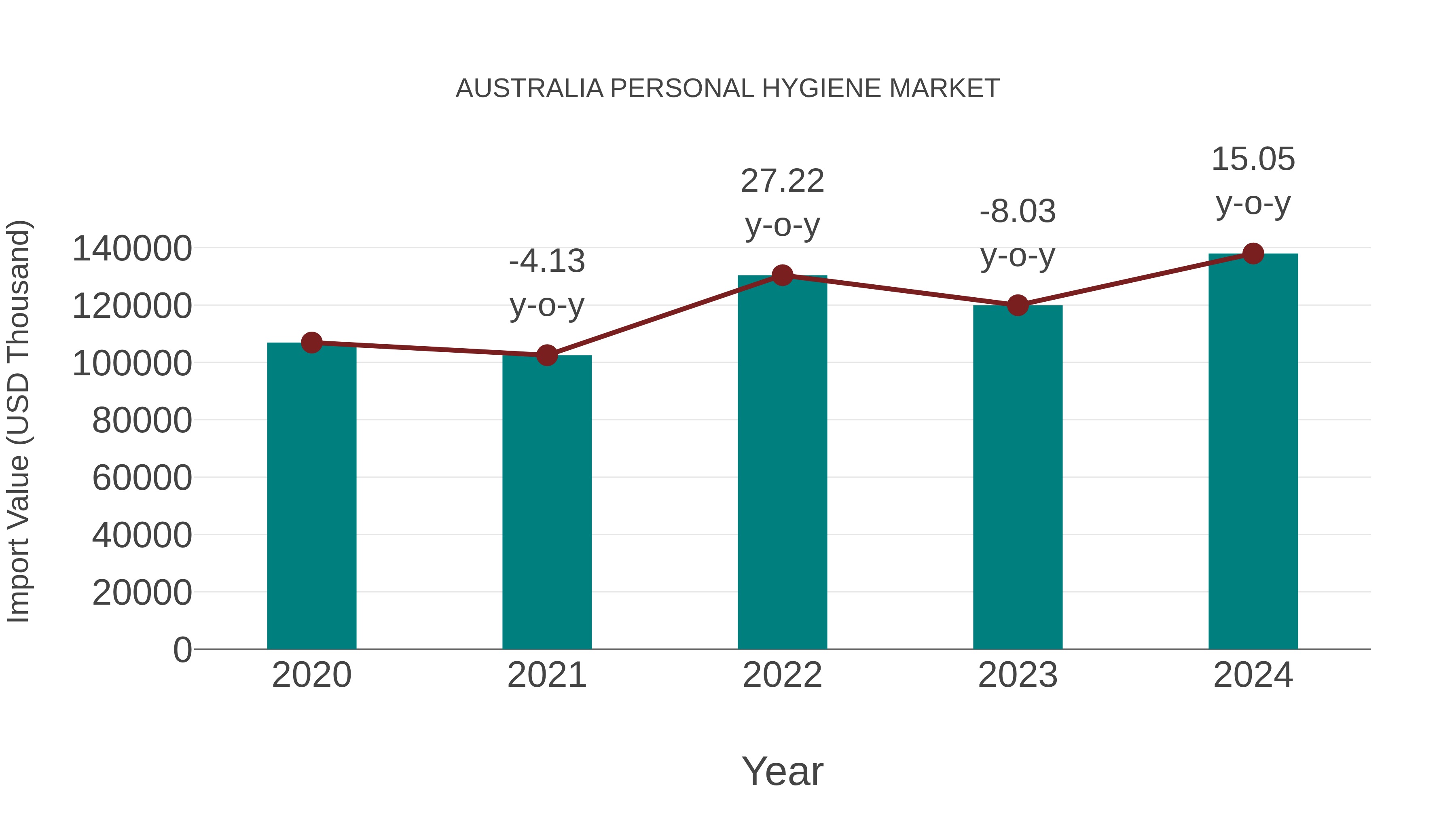
Australia`s personal hygiene market witnessed a notable import trend, with a growth rate of 15.05% from 2023 to 2024. The compound annual growth rate (CAGR) for imports between 2020 and 2024 stood at 6.58%. This surge in import momentum can be attributed to shifting consumer preferences towards premium international personal care products.
Australia Personal Hygiene Market Synopsis
The Australia Personal Hygiene Market is a thriving industry encompassing products such as soaps, body wash, deodorants, oral care, and feminine hygiene products. The market is driven by factors such as increasing awareness of personal grooming, growing disposable income, and a shift towards natural and organic products. Key players in the market include multinational companies like Unilever, Procter & Gamble, and Colgate-Palmolive, as well as local brands catering to specific consumer preferences. The market is witnessing a trend towards eco-friendly and sustainable products, with consumers becoming more conscious of the ingredients used in personal care items. E-commerce platforms have also played a significant role in the market`s growth by offering a wide range of products and convenient shopping options for consumers.
Australia Personal Hygiene Market Trends
The Australia Personal Hygiene Market is witnessing a shift towards natural and eco-friendly products, driven by increasing consumer awareness and concerns about sustainability and personal health. There is a growing demand for products that are free from harsh chemicals, artificial fragrances, and are cruelty-free. Key trends include the rising popularity of organic and vegan personal care products, such as natural deodorants, sulfate-free shampoos, and plastic-free packaging options. Additionally, there is a growing focus on personal hygiene products that offer additional health benefits, such as probiotic skincare and antibacterial formulations. Brands are also emphasizing transparency in ingredient sourcing and production processes to build trust with consumers. Overall, the market is moving towards offering cleaner, greener, and more ethical personal hygiene options to meet the evolving demands of Australian consumers.
Australia Personal Hygiene Market Challenges
In the Australia Personal Hygiene Market, one major challenge is the increasing consumer demand for natural and sustainable products. Consumers are becoming more conscious of the ingredients used in personal hygiene products and are seeking eco-friendly options that are gentle on the skin and the environment. This trend has put pressure on companies to reformulate their products, source sustainable ingredients, and improve their packaging practices. Additionally, the market is highly competitive with a wide range of local and international brands vying for consumer attention, making it challenging for newer or smaller companies to establish a strong foothold. Adapting to changing consumer preferences, meeting sustainability goals, and differentiating from competitors are key challenges faced by players in the Australia Personal Hygiene Market.
Australia Personal Hygiene Market Investment Opportunities
The Australia Personal Hygiene Market offers various investment opportunities due to the growing consumer awareness of personal care and hygiene. Key areas for investment include organic and natural personal care products, innovative and sustainable packaging solutions, advanced hygiene technologies such as sanitizing and disinfecting products, and personalized skincare and hygiene products tailored to specific consumer needs. Additionally, there is a rising demand for eco-friendly and cruelty-free products in the market, presenting opportunities for companies focusing on sustainable practices. Investing in research and development for new product formulations and technologies to meet evolving consumer preferences and regulatory standards could also be a lucrative opportunity in the Australia Personal Hygiene Market.
Jordan Agar Market Government Policies
Government policies related to the Australia Personal Hygiene Market focus on ensuring product safety, labeling requirements, and transparency for consumers. The Australian Competition and Consumer Commission (ACCC) oversees compliance with regulations such as the Australian Consumer Law, which prohibits false or misleading claims on personal hygiene products. Additionally, the Therapeutic Goods Administration (TGA) regulates certain personal hygiene products classified as therapeutic goods to ensure they meet safety and efficacy standards. The government also promotes sustainability in the personal hygiene market through initiatives such as the National Packaging Targets, which aim to reduce packaging waste and increase recycling rates. Overall, government policies in Australia aim to protect consumers, promote fair competition, and encourage environmentally-friendly practices in the personal hygiene market.
Australia Personal Hygiene Market Future Outlook
The Australia Personal Hygiene Market is expected to experience steady growth in the coming years due to increasing awareness about personal hygiene and wellness among consumers. The market is anticipated to be driven by factors such as the rising disposable income, changing consumer lifestyles, and a growing emphasis on health and cleanliness. Additionally, the demand for natural and organic personal hygiene products is projected to fuel market growth as consumers become more conscious of the ingredients in their products. With a focus on sustainability and eco-friendly solutions gaining traction, the market is likely to witness a shift towards environmentally friendly and cruelty-free products. Overall, the Australia Personal Hygiene Market is poised for expansion, with innovative product offerings and evolving consumer preferences shaping its future trajectory.
Key Highlights of the Report:
- Australia Personal Hygiene Market Outlook
- Market Size of Australia Personal Hygiene Market, 2025
- Forecast of Australia Personal Hygiene Market, 2032
- Historical Data and Forecast of Australia Personal Hygiene Revenues & Volume for the Period 2022 - 2032F
- Australia Personal Hygiene Market Trend Evolution
- Australia Personal Hygiene Market Drivers and Challenges
- Australia Personal Hygiene Price Trends
- Australia Personal Hygiene Porter's Five Forces
- Australia Personal Hygiene Industry Life Cycle
- Historical Data and Forecast of Australia Personal Hygiene Market Revenues & Volume By Product for the Period 2022 - 2032F
- Historical Data and Forecast of Australia Personal Hygiene Market Revenues & Volume By Soaps for the Period 2022 - 2032F
- Historical Data and Forecast of Australia Personal Hygiene Market Revenues & Volume By Hand Sanitizers for the Period 2022 - 2032F
- Historical Data and Forecast of Australia Personal Hygiene Market Revenues & Volume By Bath and Shower Products for the Period 2022 - 2032F
- Historical Data and Forecast of Australia Personal Hygiene Market Revenues & Volume By Face Care Products for the Period 2022 - 2032F
- Historical Data and Forecast of Australia Personal Hygiene Market Revenues & Volume By Other Products for the Period 2022 - 2032F
- Historical Data and Forecast of Australia Personal Hygiene Market Revenues & Volume By Gender for the Period 2022 - 2032F
- Historical Data and Forecast of Australia Personal Hygiene Market Revenues & Volume By Unisex for the Period 2022 - 2032F
- Historical Data and Forecast of Australia Personal Hygiene Market Revenues & Volume By Male for the Period 2022 - 2032F
- Historical Data and Forecast of Australia Personal Hygiene Market Revenues & Volume By Female for the Period 2022 - 2032F
- Historical Data and Forecast of Australia Personal Hygiene Market Revenues & Volume By Distribution Channel for the Period 2022 - 2032F
- Historical Data and Forecast of Australia Personal Hygiene Market Revenues & Volume By Retail Pharmacies for the Period 2022 - 2032F
- Historical Data and Forecast of Australia Personal Hygiene Market Revenues & Volume By Hospital based Pharmacies for the Period 2022 - 2032F
- Historical Data and Forecast of Australia Personal Hygiene Market Revenues & Volume By Supermarkets for the Period 2022 - 2032F
- Historical Data and Forecast of Australia Personal Hygiene Market Revenues & Volume By E-commerce for the Period 2022 - 2032F
- Australia Personal Hygiene Import Export Trade Statistics
- Market Opportunity Assessment By Product
- Market Opportunity Assessment By Gender
- Market Opportunity Assessment By Distribution Channel
- Australia Personal Hygiene Top Companies Market Share
- Australia Personal Hygiene Competitive Benchmarking By Technical and Operational Parameters
- Australia Personal Hygiene Company Profiles
- Australia Personal Hygiene Key Strategic Recommendations






































