Australia Phenol Market: Import Trend Analysis
Australia`s import trend for the phenol market experienced a notable decline with a Compound Annual Growth Rate (CAGR) of -19.52% during 2020-2024. This sharp decrease in import momentum may indicate shifts in demand dynamics or market stability challenges impacting trade performance.
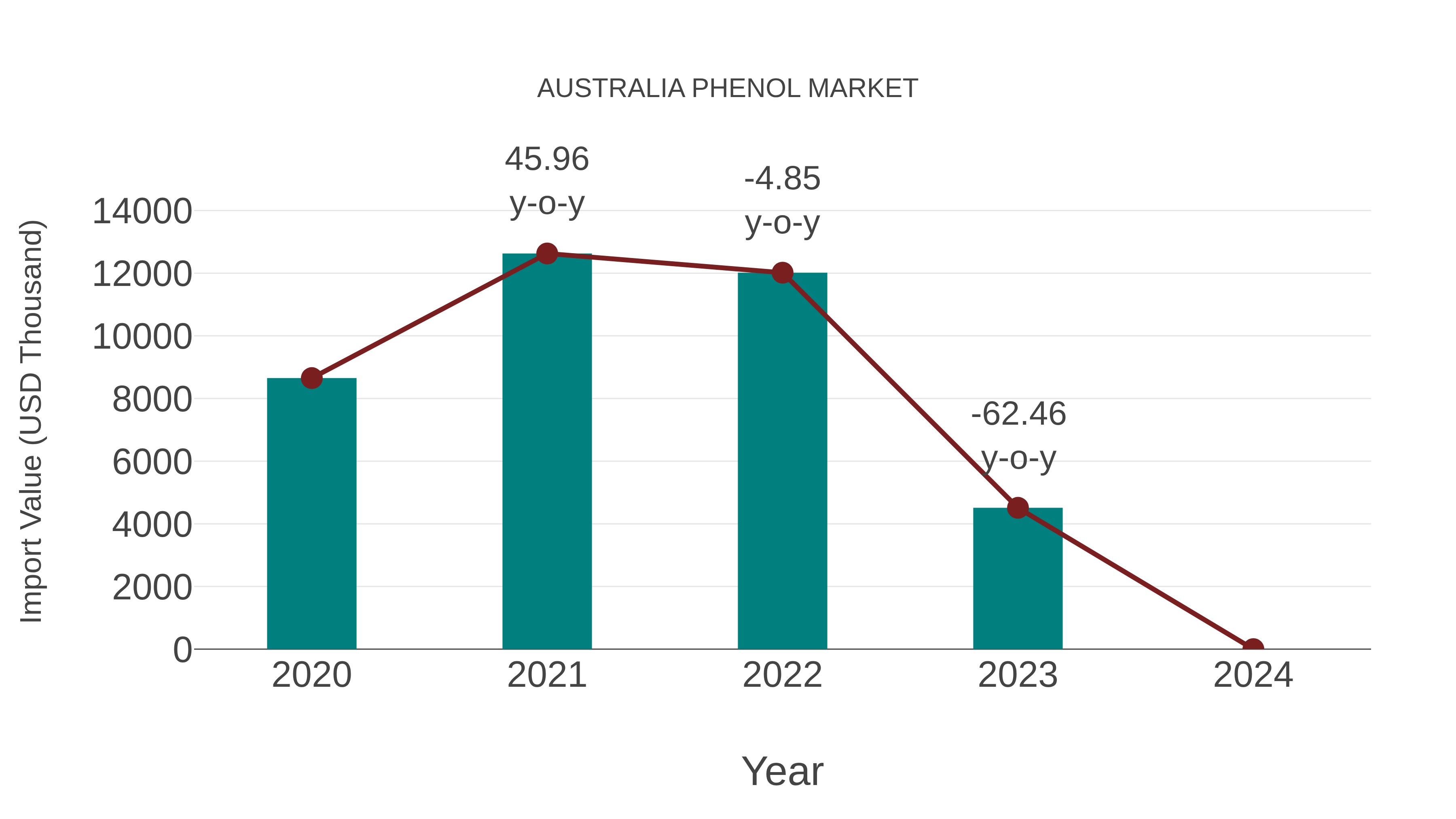
Australia Phenol Market Synopsis
Australias phenol market is shaped by its use in various industrial applications, including plastics, resins, and pharmaceuticals. The demand for phenol-based products, such as epoxy resins and polycarbonate plastics, supports market growth. Increasing construction and automotive activities contribute to higher consumption of phenol-derived materials. However, environmental concerns related to phenol production and handling regulations pose challenges for market expansion.
Drivers of the market
The Australia phenol market is expanding due to its crucial role in resin production, pharmaceuticals, and plastic manufacturing. Phenol is widely used in epoxy resins, laminates, and disinfectants. The rising demand for high-performance and fire-resistant materials is further fueling market growth.
Challenges of the market
The phenol market in Australia is affected by volatile crude oil prices, as phenol production relies on benzene, a petroleum derivative. Environmental concerns and regulatory restrictions on phenolic resins impact demand. Additionally, competition from bio-based alternatives poses a long-term challenge to market growth.
Investment opportunities in the Market
The phenol market in Australia is supported by demand from the plastics, adhesives, and chemical sectors. Investments can be made in phenol production plants, developing derivatives for specialized applications, and exploring bio-based alternatives. The market benefits from increasing construction and industrial production activities.
Government Policy of the market
The phenol market in Australia is governed by chemical manufacturing regulations, industrial safety policies, and environmental laws. The government enforces strict safety and handling guidelines due to the toxic nature of phenol. Policies promote the use of eco-friendly alternatives in industrial applications. Trade regulations impact the import and sale of phenol, ensuring compliance with global chemical industry standards.
Key Highlights of the Report:
- Australia Phenol Market Outlook
- Market Size of Australia Phenol Market, 2024
- Forecast of Australia Phenol Market, 2031
- Historical Data and Forecast of Australia Phenol Revenues & Volume for the Period 2018 - 2031
- Australia Phenol Market Trend Evolution
- Australia Phenol Market Drivers and Challenges
- Australia Phenol Price Trends
- Australia Phenol Porter's Five Forces
- Australia Phenol Industry Life Cycle
- Historical Data and Forecast of Australia Phenol Market Revenues & Volume By End-users for the Period 2018 - 2031
- Historical Data and Forecast of Australia Phenol Market Revenues & Volume By Bisphenol A for the Period 2018 - 2031
- Historical Data and Forecast of Australia Phenol Market Revenues & Volume By Phenolic Resins for the Period 2018 - 2031
- Historical Data and Forecast of Australia Phenol Market Revenues & Volume By Caprolactam for the Period 2018 - 2031
- Historical Data and Forecast of Australia Phenol Market Revenues & Volume By Alkyl Phenyls for the Period 2018 - 2031
- Historical Data and Forecast of Australia Phenol Market Revenues & Volume By Others for the Period 2018 - 2031
- Australia Phenol Import Export Trade Statistics
- Market Opportunity Assessment By End-users
- Australia Phenol Top Companies Market Share
- Australia Phenol Competitive Benchmarking By Technical and Operational Parameters
- Australia Phenol Company Profiles
- Australia Phenol Key Strategic Recommendations






































