Australia Processed Pork Market: Import Trend Analysis
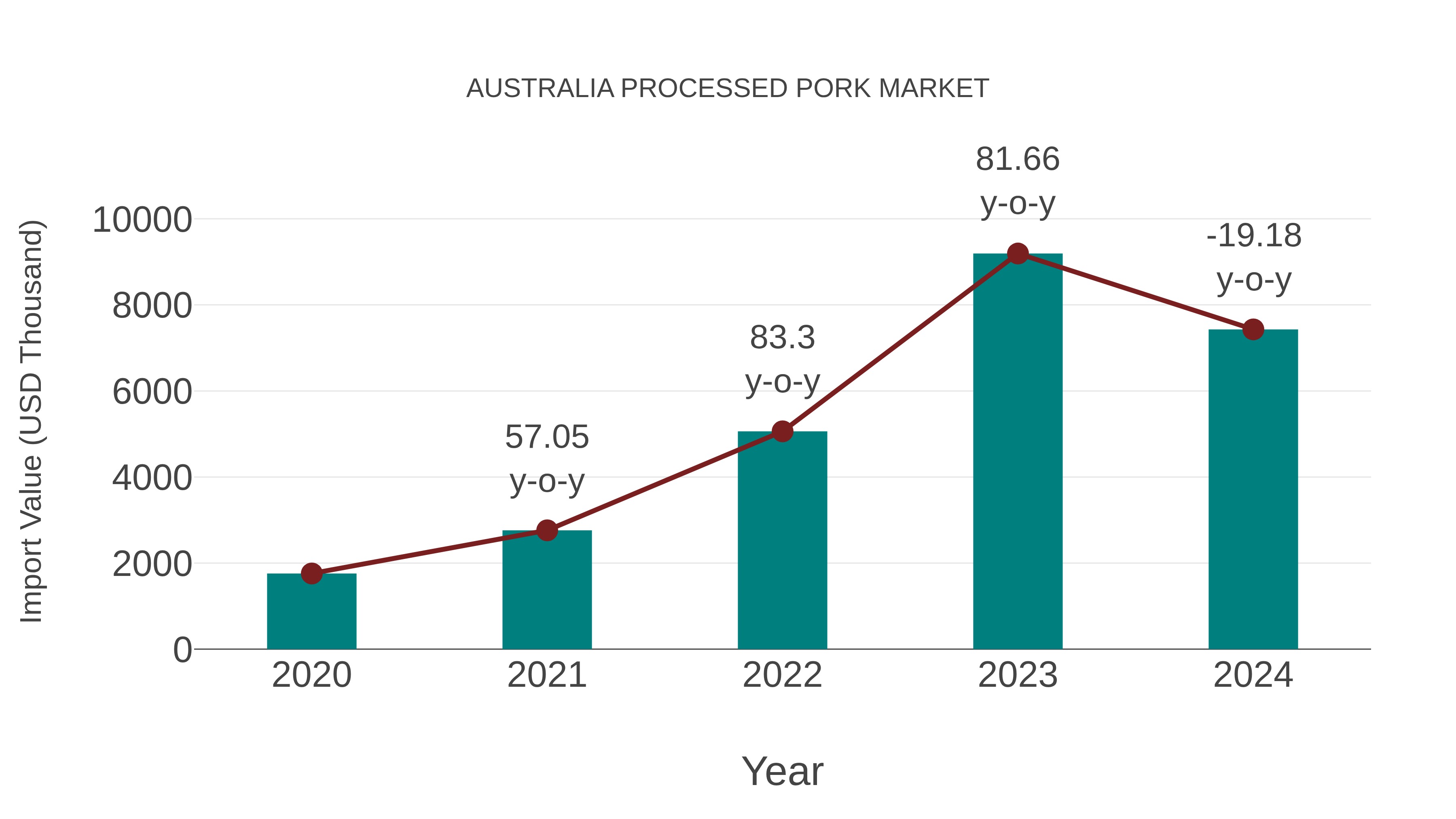
Australia`s import trend for the processed pork market exhibited a notable decline in growth from 2023 to 2024, with a rate of -19.18%. However, the compound annual growth rate (CAGR) for the period 2020-2024 stood at a robust 43.39%. This decline in import momentum could be attributed to shifting consumer preferences or changes in trade policies impacting market dynamics.
Australia Processed Pork Market Synopsis
The processed pork market in Australia is driven by strong consumer demand for convenient and ready-to-eat meat products. With increasing urbanization and busy lifestyles, consumers are opting for processed pork products such as bacon, ham, and sausages. The market is also influenced by health-conscious trends, leading to the emergence of nitrate-free and organic processed pork options. Government regulations regarding meat processing and food safety play a crucial role in shaping the industry.
Drivers of the market
The processed pork market in Australia is growing due to increasing consumer preference for convenient and ready-to-eat meat products. Rising demand for high-quality ham, bacon, and sausages, along with innovations in processing techniques, has driven market growth. Export opportunities and premium product offerings further support the industry.
Challenges of the market
The processed pork market in Australia struggles with fluctuating pork prices influenced by disease outbreaks, such as African swine fever, affecting global supply chains. Increasing health concerns over processed meat consumption also impact demand. Additionally, regulatory requirements related to preservatives and additives challenge manufacturers in maintaining product quality and compliance.
Investment opportunities in the Market
The processed pork market in Australia is expanding due to increasing demand for convenience foods. Investment in high-quality processing facilities, organic pork products, and export-oriented pork production can yield substantial gains. Value-added pork products, such as cured meats and sausages, also offer strong market potential.
Government Policy of the market
Processed pork products in Australia are regulated to ensure safety and quality. The APVMA oversees the use of veterinary chemicals in pork production, while FSANZ sets standards for processing and handling to prevent contamination and ensure consumer safety.
Key Highlights of the Report:
- Australia Processed Pork Market Outlook
- Market Size of Australia Processed Pork Market, 2025
- Forecast of Australia Processed Pork Market, 2032
- Historical Data and Forecast of Australia Processed Pork Revenues & Volume for the Period 2022-2032F
- Australia Processed Pork Market Trend Evolution
- Australia Processed Pork Market Drivers and Challenges
- Australia Processed Pork Price Trends
- Australia Processed Pork Porter's Five Forces
- Australia Processed Pork Industry Life Cycle
- Historical Data and Forecast of Australia Processed Pork Market Revenues & Volume By Meat Product for the Period 2022-2032F
- Historical Data and Forecast of Australia Processed Pork Market Revenues & Volume By Cured Meat for the Period 2022-2032F
- Historical Data and Forecast of Australia Processed Pork Market Revenues & Volume By Uncured Meat for the Period 2022-2032F
- Historical Data and Forecast of Australia Processed Pork Market Revenues & Volume By Pork Meat for the Period 2022-2032F
- Historical Data and Forecast of Australia Processed Pork Market Revenues & Volume By Fresh Pork Meat for the Period 2022-2032F
- Historical Data and Forecast of Australia Processed Pork Market Revenues & Volume By Processed Pork Meat for the Period 2022-2032F
- Historical Data and Forecast of Australia Processed Pork Market Revenues & Volume By Packaging Type for the Period 2022-2032F
- Historical Data and Forecast of Australia Processed Pork Market Revenues & Volume By Chilled Processed Meat for the Period 2022-2032F
- Historical Data and Forecast of Australia Processed Pork Market Revenues & Volume By Frozen Processed Meat for the Period 2022-2032F
- Historical Data and Forecast of Australia Processed Pork Market Revenues & Volume By Canned Processed Meat for the Period 2022-2032F
- Historical Data and Forecast of Australia Processed Pork Market Revenues & Volume By Distribution for the Period 2022-2032F
- Historical Data and Forecast of Australia Processed Pork Market Revenues & Volume By Supermarket for the Period 2022-2032F
- Historical Data and Forecast of Australia Processed Pork Market Revenues & Volume By Convenience Stores for the Period 2022-2032F
- Historical Data and Forecast of Australia Processed Pork Market Revenues & Volume By Grocery Stores for the Period 2022-2032F
- Historical Data and Forecast of Australia Processed Pork Market Revenues & Volume By Individual Retailers for the Period 2022-2032F
- Historical Data and Forecast of Australia Processed Pork Market Revenues & Volume By Online Sales Channel for the Period 2022-2032F
- Australia Processed Pork Import Export Trade Statistics
- Market Opportunity Assessment By Meat Product
- Market Opportunity Assessment By Pork Meat
- Market Opportunity Assessment By Packaging Type
- Market Opportunity Assessment By Distribution
- Australia Processed Pork Top Companies Market Share
- Australia Processed Pork Competitive Benchmarking By Technical and Operational Parameters
- Australia Processed Pork Company Profiles
- Australia Processed Pork Key Strategic Recommendations






































