Australia Rattan Furniture Market: Import Trend Analysis
Australia`s import trend for rattan furniture experienced a decline from 2023 to 2024, with a growth rate of -0.78%. The compound annual growth rate (CAGR) for the period 2020-2024 stood at -12.4%. This negative momentum can be attributed to shifting consumer preferences towards alternative materials or fluctuations in global supply chains affecting import volumes.
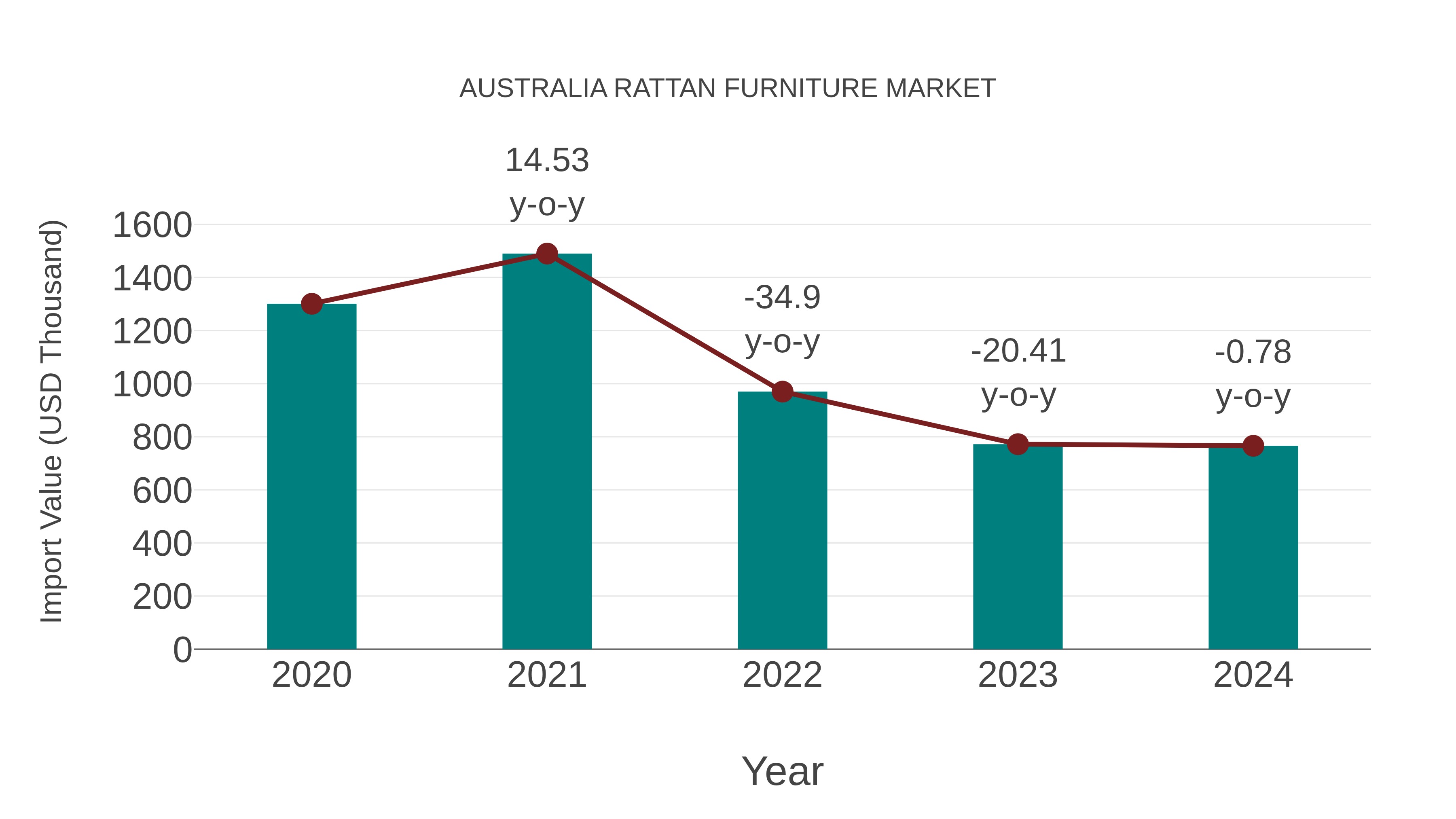
Australia Rattan Furniture Market Synopsis
The rattan furniture market in Australia is growing due to increasing consumer preference for natural and sustainable home decor. The hospitality and outdoor furniture sectors are also driving demand for stylish and lightweight rattan furniture. The market is influenced by trends in eco-friendly manufacturing and innovative synthetic rattan alternatives for weather-resistant designs.
Drivers of the market
The growth of the rattan furniture market in Australia is fueled by the rising preference for eco-friendly and stylish furniture options. Consumers are increasingly drawn to natural materials that offer durability and aesthetic appeal, especially for outdoor and patio settings. The hospitality and tourism sectors also play a significant role in boosting demand, as hotels and resorts incorporate rattan furniture into their décor to create a tropical and relaxed ambiance.
Challenges of the market
The rattan furniture market in Australia struggles with supply chain challenges, as natural rattan materials are primarily sourced from Southeast Asia. The increasing popularity of synthetic rattan alternatives affects traditional rattan furniture sales. Additionally, competition from lower-cost imports and the rising demand for locally sourced, sustainable furniture create pricing pressures. Changing consumer preferences toward modern and minimalist designs also require continuous product innovation.
Investment opportunities in the Market
The rising demand for eco-friendly furniture options has fueled the growth of the rattan furniture market in Australia. Investment opportunities lie in sustainable sourcing, innovative designs, and expansion into the luxury outdoor furniture segment.
Government Policy of the market
The rattan furniture market in Australia is regulated under consumer safety and environmental sustainability policies to ensure durability and compliance with local quality standards. The Australian Competition and Consumer Commission (ACCC) enforces safety standards for rattan furniture, including strength, stability, and fire resistance requirements. Import policies mandate that foreign-made rattan furniture meets stringent certification standards before being sold in Australia. Additionally, environmental initiatives promote the use of sustainably sourced rattan and eco-friendly manufacturing practices.
Key Highlights of the Report:
- Australia Rattan Furniture Market Outlook
- Market Size of Australia Rattan Furniture Market, 2024
- Forecast of Australia Rattan Furniture Market, 2031
- Historical Data and Forecast of Australia Rattan Furniture Revenues & Volume for the Period 2018 - 2031
- Australia Rattan Furniture Market Trend Evolution
- Australia Rattan Furniture Market Drivers and Challenges
- Australia Rattan Furniture Price Trends
- Australia Rattan Furniture Porter's Five Forces
- Australia Rattan Furniture Industry Life Cycle
- Historical Data and Forecast of Australia Rattan Furniture Market Revenues & Volume By Type for the Period 2018 - 2031
- Historical Data and Forecast of Australia Rattan Furniture Market Revenues & Volume By Table for the Period 2018 - 2031
- Historical Data and Forecast of Australia Rattan Furniture Market Revenues & Volume By Chairs for the Period 2018 - 2031
- Historical Data and Forecast of Australia Rattan Furniture Market Revenues & Volume By Storage for the Period 2018 - 2031
- Historical Data and Forecast of Australia Rattan Furniture Market Revenues & Volume By Beds for the Period 2018 - 2031
- Historical Data and Forecast of Australia Rattan Furniture Market Revenues & Volume By Others for the Period 2018 - 2031
- Historical Data and Forecast of Australia Rattan Furniture Market Revenues & Volume By Application for the Period 2018 - 2031
- Historical Data and Forecast of Australia Rattan Furniture Market Revenues & Volume By Residential for the Period 2018 - 2031
- Historical Data and Forecast of Australia Rattan Furniture Market Revenues & Volume By Commercial for the Period 2018 - 2031
- Historical Data and Forecast of Australia Rattan Furniture Market Revenues & Volume By Distribution Channel for the Period 2018 - 2031
- Historical Data and Forecast of Australia Rattan Furniture Market Revenues & Volume By Multi-brand Stores for the Period 2018 - 2031
- Historical Data and Forecast of Australia Rattan Furniture Market Revenues & Volume By Exclusive Stores for the Period 2018 - 2031
- Historical Data and Forecast of Australia Rattan Furniture Market Revenues & Volume By Online for the Period 2018 - 2031
- Historical Data and Forecast of Australia Rattan Furniture Market Revenues & Volume By Other Distribution Channel for the Period 2018 - 2031
- Australia Rattan Furniture Import Export Trade Statistics
- Market Opportunity Assessment By Type
- Market Opportunity Assessment By Application
- Market Opportunity Assessment By Distribution Channel
- Australia Rattan Furniture Top Companies Market Share
- Australia Rattan Furniture Competitive Benchmarking By Technical and Operational Parameters
- Australia Rattan Furniture Company Profiles
- Australia Rattan Furniture Key Strategic Recommendations






































