Australia Small Mammal and Reptile Food Market: Import Trend Analysis
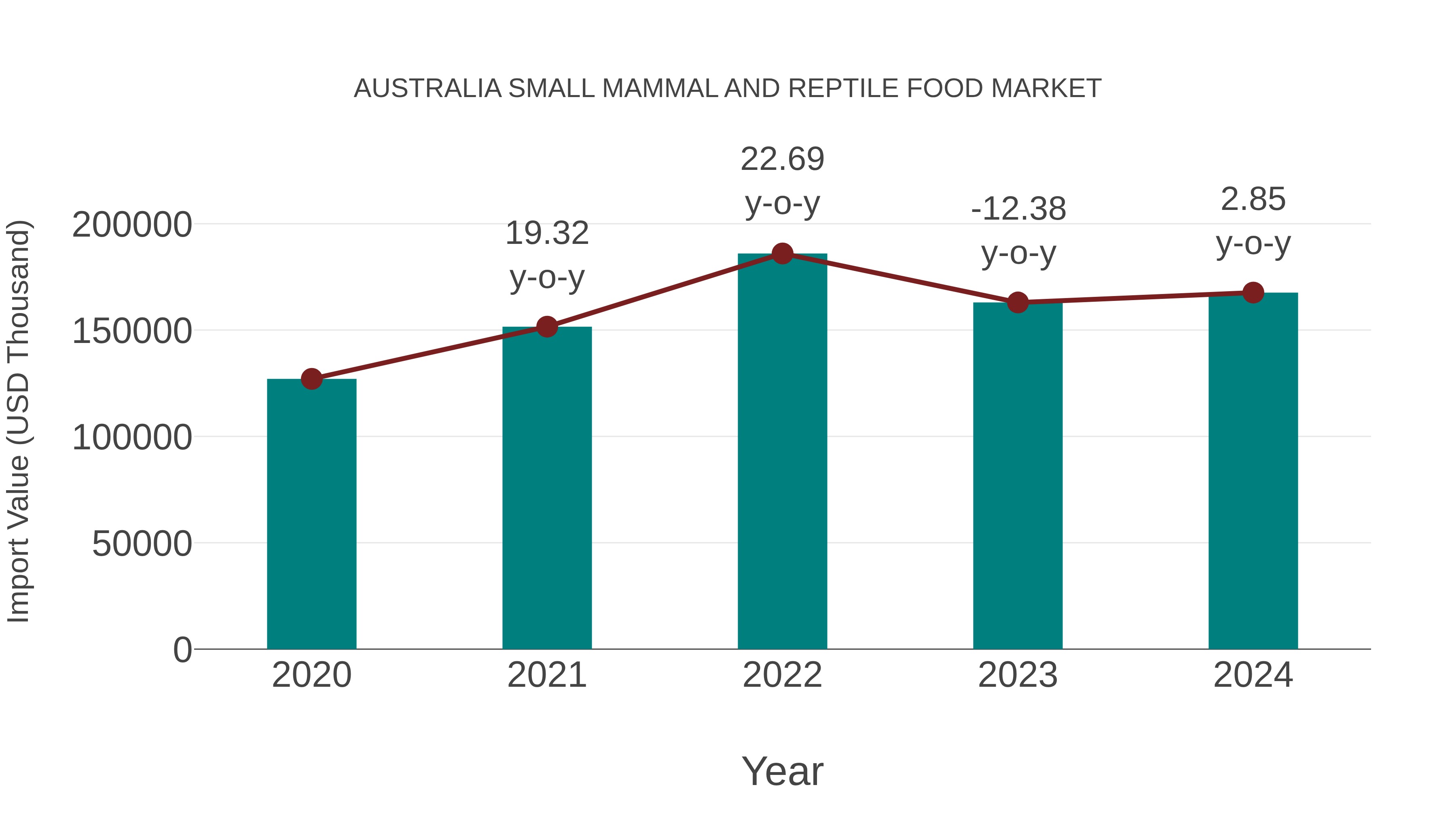
In the Australia small mammal and reptile food market, imports showed a growth rate of 2.85% from 2023 to 2024, with a compound annual growth rate (CAGR) of 7.17% from 2020 to 2024. This import momentum can be attributed to a steady demand shift towards high-quality and specialized products, indicating market stability and increasing consumer preferences for premium offerings.
Australia Small Mammal And Reptile Food Market Overview
The Australia small mammal and reptile food market have experienced notable growth in recent years, driven by the increasing popularity of keeping exotic pets. Pet owners are becoming more conscious of their animals` dietary needs, leading to a rise in demand for specialized and high-quality food products. Manufacturers in this market are focusing on innovation and nutrition to cater to the diverse requirements of small mammals and reptiles, creating a competitive landscape with a variety of product offerings.
Drivers of the market
The small mammal and reptile food market in Australia is being primarily driven by the rising trend of exotic pet ownership. As more Australias embrace the companionship of small mammals and reptiles, the demand for specialized and high-quality food products has surged. Additionally, growing awareness about the nutritional requirements of these pets has led to an increased focus on premium and customized food options. The market is also influenced by the expansion of the pet care industry, with an emphasis on health-conscious consumers seeking optimal nutrition for their pets.
Challenges of the market
The small mammal and reptile food market in Australia faces several challenges, ranging from sourcing high-quality ingredients to meeting the nutritional needs of diverse species. Supply chain disruptions and fluctuations in ingredient prices pose constant challenges for manufacturers. Additionally, ensuring compliance with stringent regulations related to pet food manufacturing and labeling adds complexity to the market. Balancing affordability with the demand for premium and organic products further complicates market dynamics.
Government Policy of the market
The Australia government has shown a keen interest in supporting the small mammal and reptile food market to ensure the well-being of the country`s diverse wildlife. Conservation efforts are aligned with policies that promote sustainable sourcing of food for these animals, emphasizing the need for ethical and environmentally friendly practices. Stringent regulations are in place to monitor the quality and nutritional content of small mammal and reptile food products, ensuring they meet the necessary standards to support the health of Australia unique fauna.
Key Highlights of the Report:
- Australia Small Mammal and Reptile Food Market Outlook
- Market Size of Australia Small Mammal and Reptile Food Market, 2025
- Forecast of Australia Small Mammal and Reptile Food Market, 2032
- Historical Data and Forecast of Australia Small Mammal and Reptile Food Revenues & Volume for the Period 2022-2032F
- Australia Small Mammal and Reptile Food Market Trend Evolution
- Australia Small Mammal and Reptile Food Market Drivers and Challenges
- Australia Small Mammal and Reptile Food Price Trends
- Australia Small Mammal and Reptile Food Porter's Five Forces
- Australia Small Mammal and Reptile Food Industry Life Cycle
- Historical Data and Forecast of Australia Small Mammal and Reptile Food Market Revenues & Volume By Type for the Period 2022-2032F
- Historical Data and Forecast of Australia Small Mammal and Reptile Food Market Revenues & Volume By Rabbits Food for the Period 2022-2032F
- Historical Data and Forecast of Australia Small Mammal and Reptile Food Market Revenues & Volume By Rodents Food for the Period 2022-2032F
- Historical Data and Forecast of Australia Small Mammal and Reptile Food Market Revenues & Volume By Small Reptiles Food for the Period 2022-2032F
- Historical Data and Forecast of Australia Small Mammal and Reptile Food Market Revenues & Volume By Other for the Period 2022-2032F
- Historical Data and Forecast of Australia Small Mammal and Reptile Food Market Revenues & Volume By Application for the Period 2022-2032F
- Historical Data and Forecast of Australia Small Mammal and Reptile Food Market Revenues & Volume By Pet-Speciality Stores for the Period 2022-2032F
- Historical Data and Forecast of Australia Small Mammal and Reptile Food Market Revenues & Volume By Supermarkets and Hypermarkets for the Period 2022-2032F
- Historical Data and Forecast of Australia Small Mammal and Reptile Food Market Revenues & Volume By Convenience Stores for the Period 2022-2032F
- Historical Data and Forecast of Australia Small Mammal and Reptile Food Market Revenues & Volume By Other for the Period 2022-2032F
- Australia Small Mammal and Reptile Food Import Export Trade Statistics
- Market Opportunity Assessment By Type
- Market Opportunity Assessment By Application
- Australia Small Mammal and Reptile Food Top Companies Market Share
- Australia Small Mammal and Reptile Food Competitive Benchmarking By Technical and Operational Parameters
- Australia Small Mammal and Reptile Food Company Profiles
- Australia Small Mammal and Reptile Food Key Strategic Recommendations






































